
Veg Korma, a rich and creamy curry, is a cherished dish in Indian cuisine, especially celebrated for its luscious texture and aromatic spices. The coconut-based gravy offers a subtly sweet and nutty flavor, making the dish both comforting and indulgent. This vegetarian delight is perfect for festive occasions, special dinners, or whenever you crave a luxurious meal that’s also wholesome and nutritious.
This article presents a comprehensive 7-step guide to cooking authentic Veg Korma with a coconut base, emphasizing fresh ingredients, balanced spices, and traditional cooking methods. By following these steps, you can create a restaurant-quality Veg Korma at home that’s flavorful, creamy, and completely vegetarian.
Step 1: Selecting Fresh Vegetables
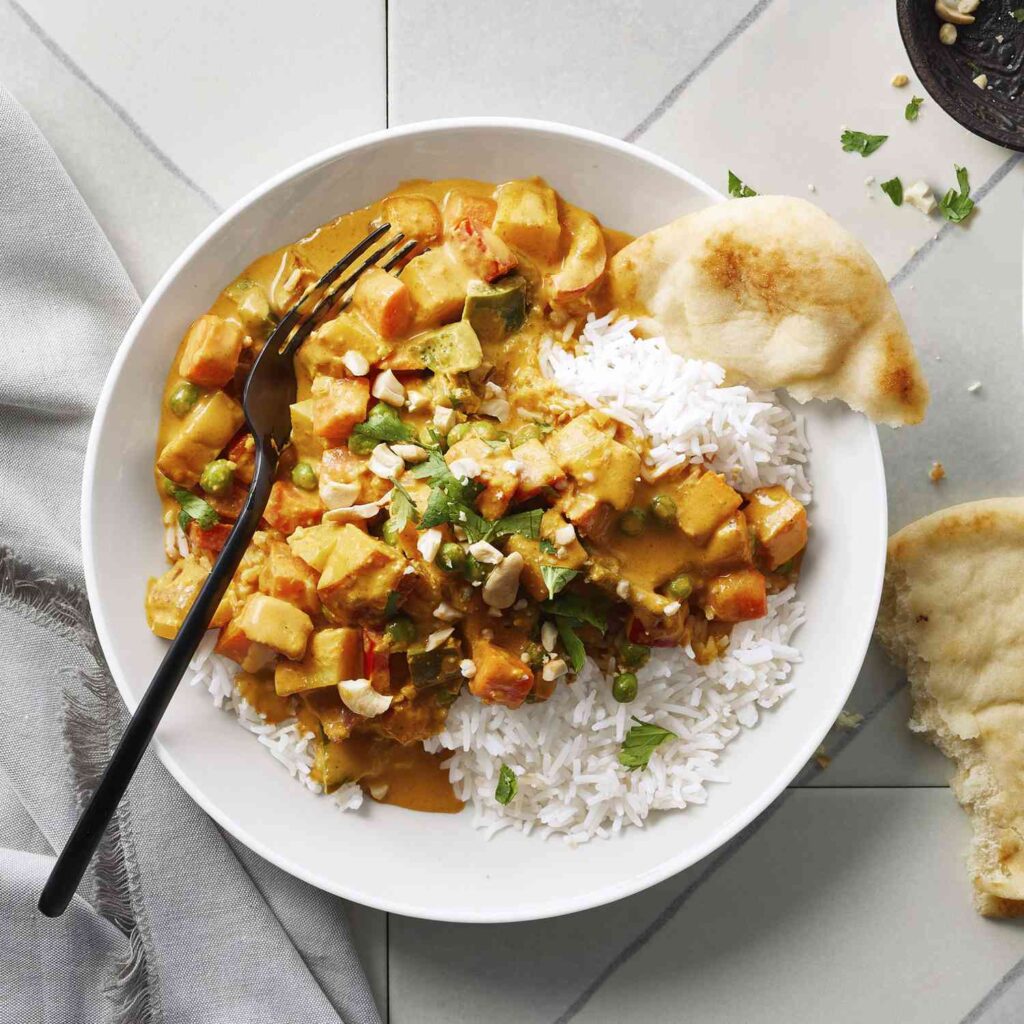
The essence of Veg Korma lies in its medley of fresh vegetables. Choosing a colorful variety not only enhances the taste but also adds nutritional value and visual appeal.
Recommended vegetables include:
- Carrots (cut into chunks or rounds)
- Green beans (trimmed and halved)
- Peas (fresh or frozen)
- Cauliflower florets
- Potatoes (cubed)
- Bell peppers (cut into strips or cubes)
- Green peas
- Baby corn (optional)
- Capsicum (optional)
Wash and chop vegetables uniformly to ensure even cooking. Using seasonal vegetables ensures freshness and boosts flavor.
Step 2: Preparing the Coconut Base
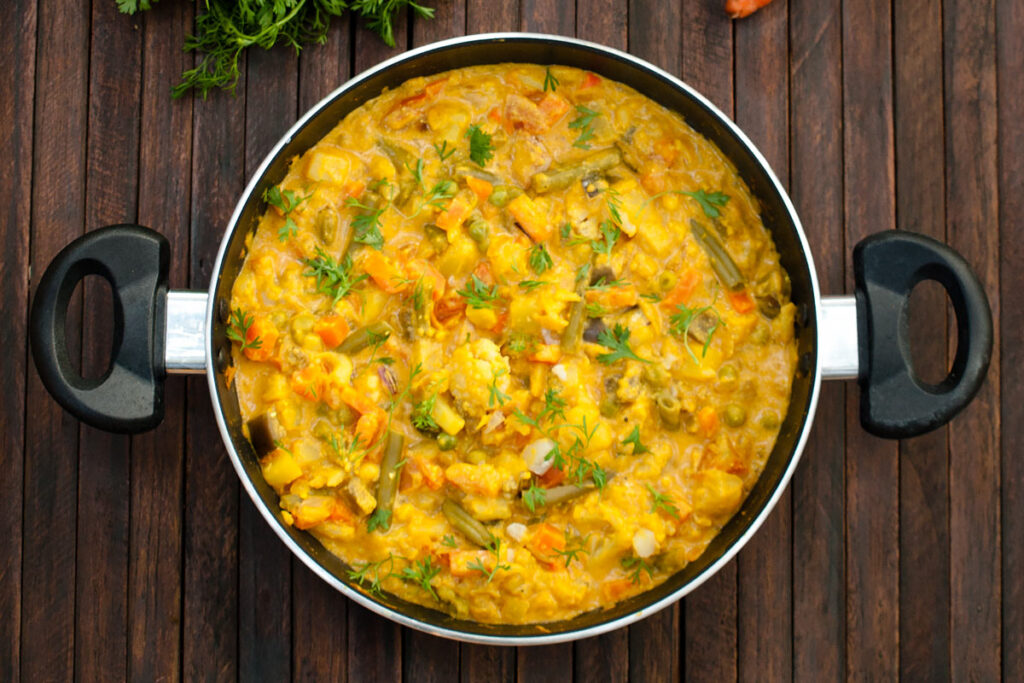
Coconut is the star ingredient in this korma, providing a creamy texture and a mildly sweet taste.
Ingredients:
- Fresh grated coconut (or unsweetened desiccated coconut) – 1 cup
- Cashew nuts – 10-12 (soaked in warm water for 15 minutes)
- Green chilies – 1-2 (adjust to heat preference)
- Ginger – 1-inch piece, chopped
- Water – as needed for grinding
Method:
- Grind the grated coconut, soaked cashews, green chilies, and ginger together with a little water to form a smooth, thick paste.
- Set aside this luscious coconut-cashew paste which will form the rich gravy base.
Step 3: Tempering the Spices
Tempering brings out the deep flavors of whole spices and aromatics essential for a fragrant korma.
- Heat 2 tablespoons oil or ghee in a heavy-bottomed pan.
- Add whole spices: 4-5 green cardamom pods, 3-4 cloves, 1-inch cinnamon stick, and 1 bay leaf.
- Once the spices begin to sizzle and release their aroma, add finely chopped onions and sauté until golden brown.
- Add ginger-garlic paste (1 tablespoon) and sauté until raw smell disappears.
- This step lays the flavor foundation for the korma.
Step 4: Cooking the Vegetables
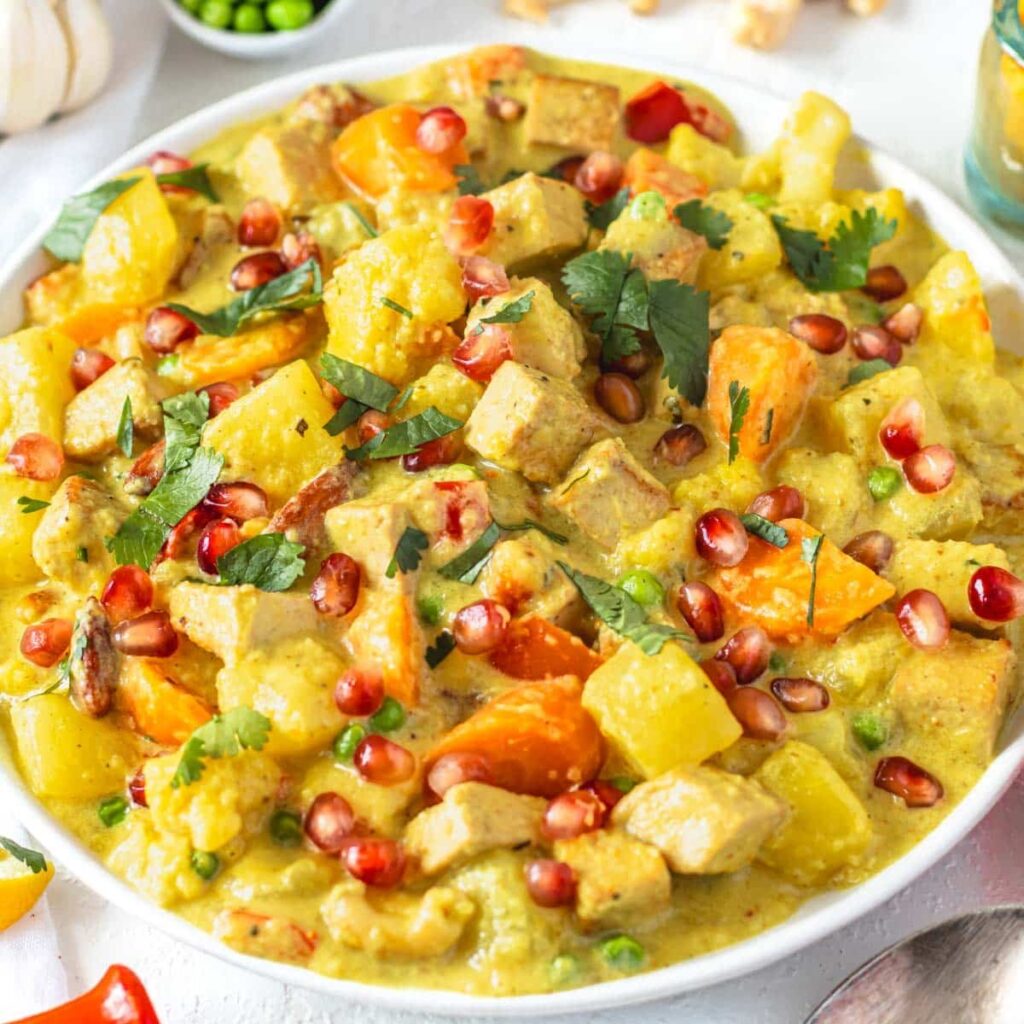
- Add the chopped vegetables to the pan and sauté for 5-7 minutes on medium heat.
- Sprinkle a pinch of salt to help vegetables release moisture and cook evenly.
- Stir occasionally to prevent sticking, ensuring the vegetables begin to soften but retain a slight crunch.
- This method preserves texture and prevents mushiness in the final dish.
Step 5: Adding the Coconut-Cashew Paste and Spices
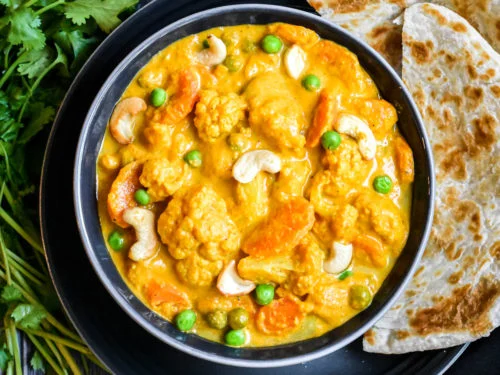
- Mix the prepared coconut-cashew paste into the pan with the sautéed vegetables.
- Stir well to coat the vegetables with the rich paste.
- Add ground spices such as turmeric (½ teaspoon), coriander powder (1 teaspoon), and a pinch of red chili powder or paprika for color and mild heat.
- Pour in about ½ to 1 cup of water to adjust the consistency of the gravy.
- Cover and simmer on low heat for 10-15 minutes, allowing the flavors to meld and the vegetables to cook through.
Step 6: Final Seasoning and Garnishing
- Check seasoning and adjust salt, spice levels, or sweetness as desired.
- Add a few drops of rose water or kewra essence (optional) for an authentic floral aroma often found in traditional kormas.
- Garnish with freshly chopped coriander leaves and toasted cashews for an elegant finish.
- For extra richness, a splash of fresh cream or coconut milk can be stirred in before serving.
Step 7: Serving Suggestions

Veg Korma pairs beautifully with various Indian breads and rice dishes:
- Naan or paratha: Soft, flaky breads complement the creamy gravy.
- Jeera rice or steamed basmati rice: Subtle flavors of cumin or plain rice balance the richness of korma.
- Pulao or biryani: For a festive spread, korma can be served alongside aromatic rice dishes.
- Roti: Whole wheat flatbreads add a wholesome touch.
Serve hot for the best experience, accompanied by a side of cooling raita or fresh salad.
Nutritional Benefits and Tips
- Rich in vitamins and fiber: The diverse vegetables provide essential nutrients and dietary fiber.
- Healthy fats: Coconut and cashews contribute beneficial fats and improve satiety.
- Protein: Cashews add a moderate protein boost.
- Gluten-free: Suitable for gluten-sensitive diets when paired with rice or gluten-free breads.
- Low glycemic impact: Balanced with vegetables and nuts for sustained energy release.
Tips for Perfect Veg Korma
- Use fresh coconut for authentic flavor; desiccated coconut is a convenient alternative.
- Avoid overcooking vegetables to maintain texture.
- Adjust spice levels based on preference; the coconut base naturally mellows heat.
- Soaking cashews softens them for a smoother paste and creamier gravy.
- Use ghee for a richer, more traditional taste.
Conclusion
Veg Korma with a coconut base is a luxurious, flavorful, and wholesome dish that celebrates the richness of Indian culinary heritage. By following these 7 simple steps, you can master the art of preparing a velvety, aromatic korma that is perfect for everyday meals or special occasions.
This recipe, free from non-vegetarian ingredients, highlights the beauty of plant-based cooking and demonstrates how simple, fresh ingredients combined with traditional techniques create a dish that is both indulgent and nourishing.