
A warm bowl of vegetable soup is more than just a comforting meal—it’s a powerhouse of nutrition. Packed with vitamins, minerals, fiber, and antioxidants, vegetable soup supports immunity, aids digestion, and contributes to overall well-being. In today’s fast-paced lifestyle, preparing a healthy, delicious soup at home is not only feasible but also cost-effective and customizable according to seasonal produce.
This article presents a 7-step guide to making healthy vegetable soup at home, entirely vegetarian, oil-free, and free from any non-veg ingredients. We will explore ingredient selection, step-by-step preparation, nutritional benefits, variations, and tips to enhance flavor and healthfulness.
Why Choose Homemade Vegetable Soup?

- Nutrient-dense: Homemade soup allows control over ingredients, ensuring maximum nutrients.
- Low in calories: Ideal for weight management or detox meals.
- Digestive aid: Light and easily digestible, suitable for all age groups.
- Customizable: Adjust vegetables, spices, and consistency according to preference.
- Hydration: High water content keeps you hydrated while providing essential nutrients.
Essential Ingredients
Vegetables (Choose Fresh or Seasonal)
- 1 cup carrots, diced
- 1 cup beans, chopped
- 1 cup broccoli florets
- 1 medium zucchini, diced
- 1 medium tomato, chopped
- 1 small onion, chopped
- 2–3 cloves garlic, minced
- 1–2 green chilies, optional, for mild heat
- ½ cup corn kernels
- 1 cup spinach or kale, chopped
Herbs and Seasoning
- 1 teaspoon black pepper powder
- 1 teaspoon dried oregano or thyme
- 1–2 bay leaves
- Salt, to taste
- Fresh coriander or parsley for garnish
- Lemon juice, optional for tang
Liquids
- 4 cups water or vegetable broth (homemade or store-bought)
- Optional: ½ cup low-fat milk or plant-based milk for creamy texture
7-Step Guide to Healthy Vegetable Soup
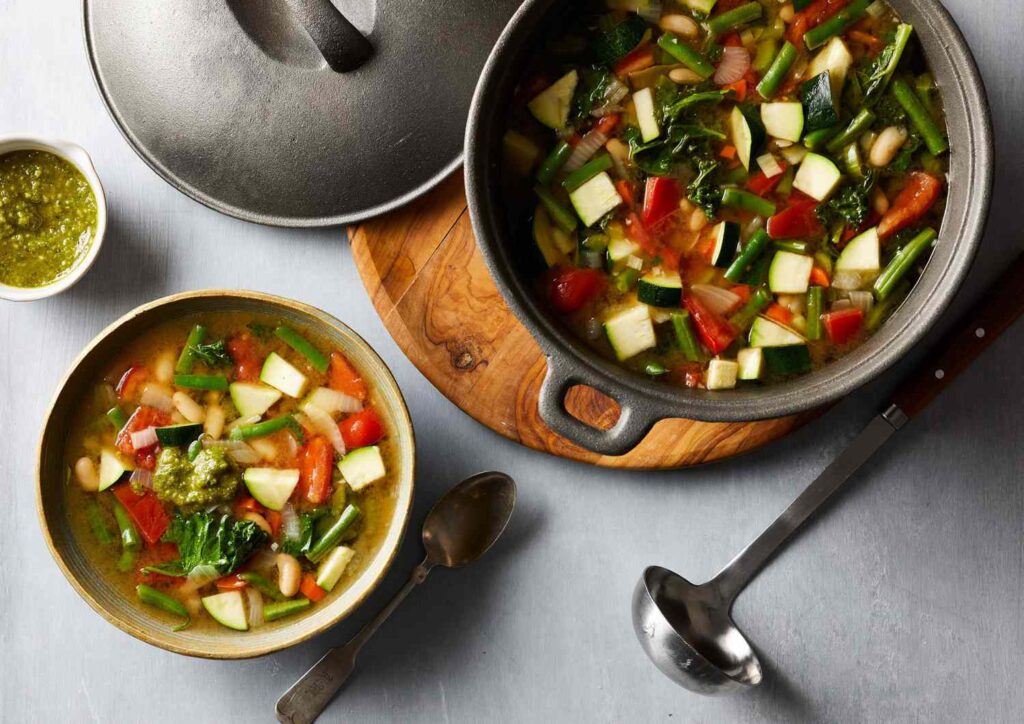
Step 1: Prepare the Vegetables
Wash all vegetables thoroughly. Dice carrots, beans, zucchini, and tomatoes into bite-sized pieces. Chop broccoli into small florets, mince garlic, and slice onions. Having ingredients prepped in advance ensures even cooking and a smooth workflow.
Step 2: Sauté Aromatics (Optional Oil-Free Method)
In a large non-stick pot, dry sauté onions and garlic for 2–3 minutes. If preferred, a teaspoon of water or vegetable broth can be used to prevent sticking. This step releases the natural aroma of garlic and onions, forming a flavorful base for the soup.
Step 3: Add Hard Vegetables
Add carrots, beans, and corn to the pot. Pour in water or vegetable broth. Bring the mixture to a boil, then reduce to a simmer. Hard vegetables need more time to cook, so they form the foundation of a thick, hearty soup.
Step 4: Cook Soft Vegetables
After 8–10 minutes of simmering, add zucchini, broccoli, and tomatoes. Cover and cook for another 5–7 minutes until all vegetables are tender but not mushy. Maintaining some crunch preserves vitamins and enhances texture.
Step 5: Season the Soup

Add black pepper, bay leaves, dried oregano or thyme, and salt. Stir well. Cover and let the soup simmer for 2–3 minutes to allow flavors to meld. For a richer taste, a small squeeze of lemon juice can be added just before serving.
Step 6: Blend or Keep Chunky
Depending on preference, the soup can be served chunky or blended:
- Chunky: Leave vegetables as they are for a hearty, rustic feel.
- Smooth: Use a hand blender or stand blender to puree until smooth. Adding milk or plant-based milk creates a creamy texture without using oil or cream.
Step 7: Garnish and Serve
Transfer soup to bowls. Garnish with fresh coriander or parsley. Serve hot, accompanied by whole-grain bread, multigrain crackers, or a side salad for a complete meal.
Nutritional Benefits of Vegetable Soup

- Rich in Vitamins and Minerals: Carrots provide vitamin A, broccoli supplies vitamin C and K, while spinach contributes iron and folate.
- High Fiber: Promotes satiety, improves digestion, and regulates blood sugar levels.
- Low-Calorie, Low-Fat: Ideal for weight management and detox diets.
- Antioxidant Properties: Vegetables and herbs help combat oxidative stress and inflammation.
- Hydration and Detoxification: High water content aids kidney function and skin health.
Variations of Vegetable Soup
- Creamy Vegetable Soup: Add cashew paste or blended tofu for a silky texture.
- Spicy Soup: Incorporate green chilies, ginger, and a pinch of cayenne pepper.
- Mediterranean Style: Use olive oil, garlic, rosemary, and diced bell peppers.
- Asian Twist: Add ginger, soy sauce, and noodles for a fusion soup.
- Detox Soup: Include cabbage, celery, and parsley for cleansing properties.
Tips for the Perfect Homemade Vegetable Soup

- Use fresh, seasonal vegetables for maximum flavor and nutrition.
- Avoid overcooking to retain color, texture, and vitamins.
- Adjust water or broth to control thickness—less water for a hearty soup, more for a light broth.
- Freeze leftovers in portions to enjoy soup on busy days.
- Experiment with herbs and spices to create unique flavor profiles.
Conclusion
Homemade vegetable soup is a simple, nourishing, and versatile dish that can be prepared in under 30 minutes. By following this 7-step guide, anyone can create a hearty, flavorful, and completely vegetarian soup that is ideal for all age groups.
This dish not only provides essential nutrients but also encourages mindful eating and the inclusion of a variety of vegetables in daily meals. Whether enjoyed as a light lunch, a starter, or a wholesome dinner, healthy vegetable soup is a comforting and sustainable way to support overall well-being.
With a little creativity, you can transform simple ingredients into a rainbow of flavors and textures, making every bowl both nutritious and satisfying. Embrace this guide to elevate your home cooking, maintain health, and enjoy the true essence of vegetarian cuisine.