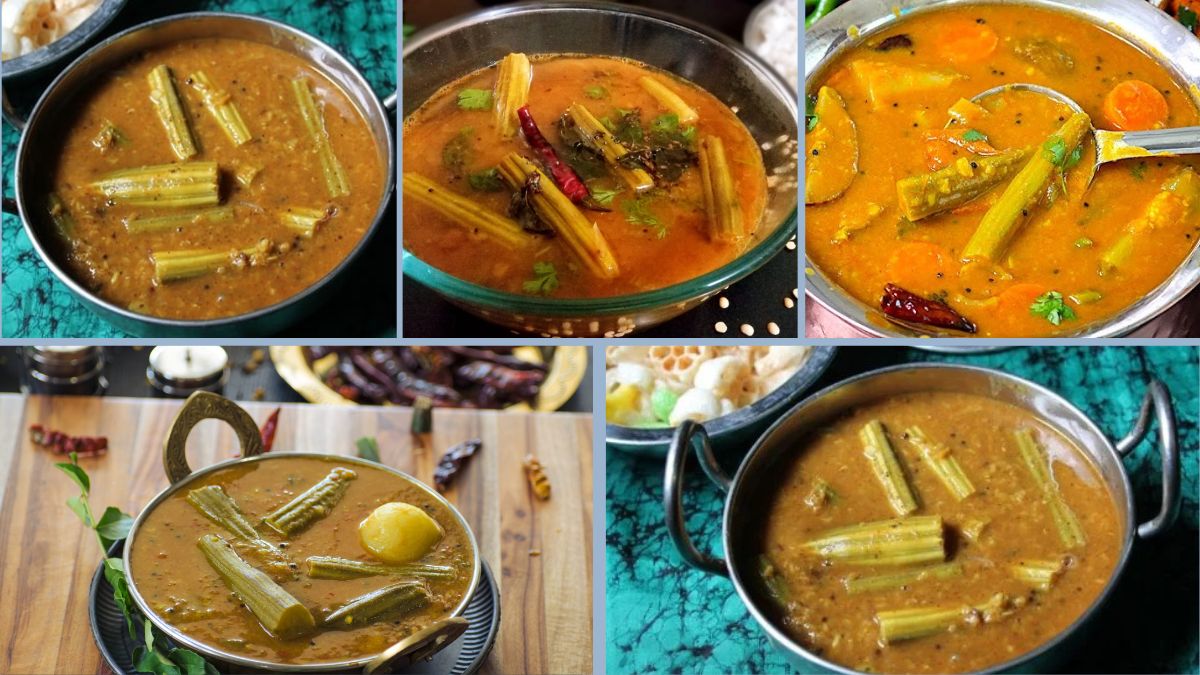
Sambar is a quintessential South Indian dish, loved for its tangy, spicy, and aromatic flavors. Among its many variations, drumstick sambar stands out for its unique taste and nutritional value. Drumsticks (Moringa oleifera) are rich in vitamins, minerals, and antioxidants, making sambar not just flavorful but also highly nutritious.
This article presents a 6-step guide to making drumstick sambar without hassle. The recipe is entirely vegetarian, avoids deep frying, and focuses on simplicity while preserving authentic South Indian flavors. You’ll learn the ingredients, step-by-step preparation, nutritional benefits, serving tips, and variations to make this classic dish a staple in your kitchen.
Step 1: Gather Fresh Ingredients
Fresh ingredients are key to a flavorful sambar.
Main Ingredients:
- 1 cup toor dal (pigeon peas)
- 1–2 medium drumsticks, cut into 2-inch pieces
- 1 medium tomato, chopped
- ½ cup tamarind pulp (soaked and extracted)
- 1 small onion, chopped (optional)
- 2–3 green chilies, slit
- 1 tsp turmeric powder
- Salt to taste
For Tempering (Tadka):
- 1 tsp mustard seeds
- 1 tsp cumin seeds
- 1–2 dried red chilies
- 8–10 curry leaves
- 1 tsp asafoetida (hing)
- 1 tsp oil
For Sambar Masala:
- 2 tbsp coriander seeds
- 1 tsp cumin seeds
- 1–2 dried red chilies
- 1 tsp black peppercorns
- ½ tsp fenugreek seeds
Fresh tamarind and drumsticks are essential for authentic tang and flavor. Pre-soaked tamarind pulp and well-cooked dal ensure the sambar has the right consistency.
Step 2: Cook the Dal
Properly cooked dal forms the base of sambar.
- Wash toor dal thoroughly under running water.
- Pressure cook with 2½ cups water, turmeric powder, and a pinch of salt until soft (usually 3–4 whistles).
- Mash the dal slightly after cooking for a smooth consistency.
Tip: Ensure dal is neither too thick nor too watery; adjust water quantity based on desired sambar consistency.
Step 3: Prepare the Sambar Masala
Homemade sambar masala enhances flavor naturally:
- Dry roast coriander seeds, cumin seeds, red chilies, black peppercorns, and fenugreek seeds until aromatic.
- Allow them to cool slightly.
- Grind to a fine powder using a spice grinder or mortar and pestle.
Using freshly ground masala gives the sambar a vibrant aroma and authentic South Indian taste.
Step 4: Cook Drumsticks and Vegetables
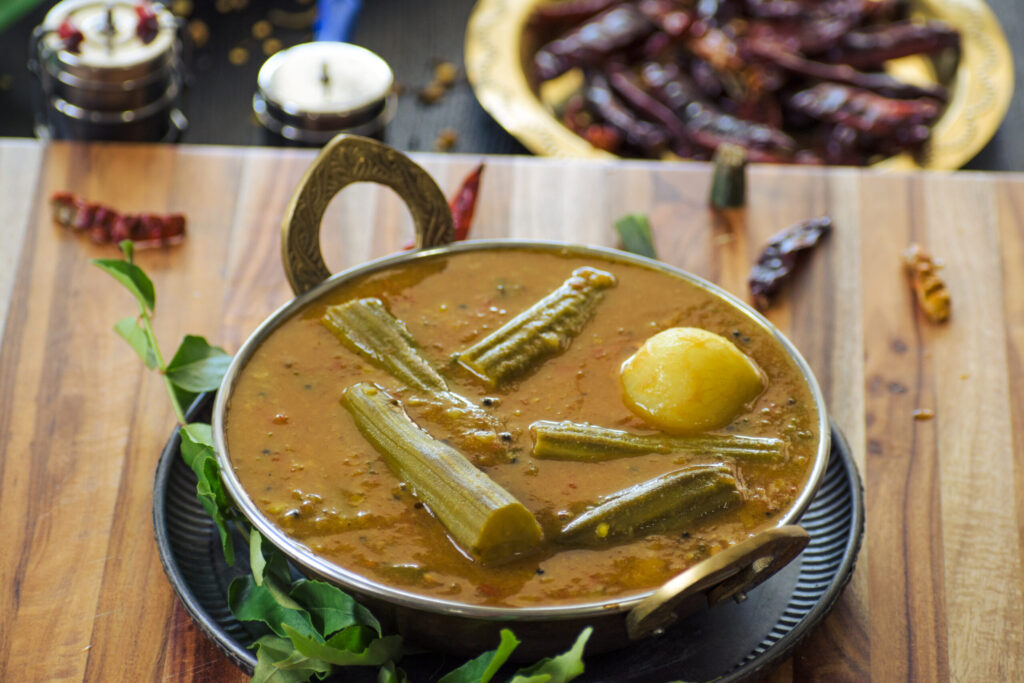
- In a deep pan, add chopped drumsticks, tomatoes, onions, and green chilies.
- Pour 1–2 cups of water and cook until the drumsticks are tender but not mushy.
- Add tamarind pulp and bring to a gentle boil.
Drumsticks should remain slightly firm to retain texture while absorbing the tangy flavors of tamarind and spices.
Step 5: Combine Dal, Vegetables, and Masala
- Add the cooked dal to the pan with drumsticks and vegetables.
- Stir in the freshly ground sambar masala.
- Adjust salt and simmer for 5–7 minutes until all flavors meld together.
- Ensure the sambar has a slightly thick but pourable consistency.
Tip: Avoid overcooking after adding tamarind to preserve its tangy flavor.
Step 6: Tempering and Serving
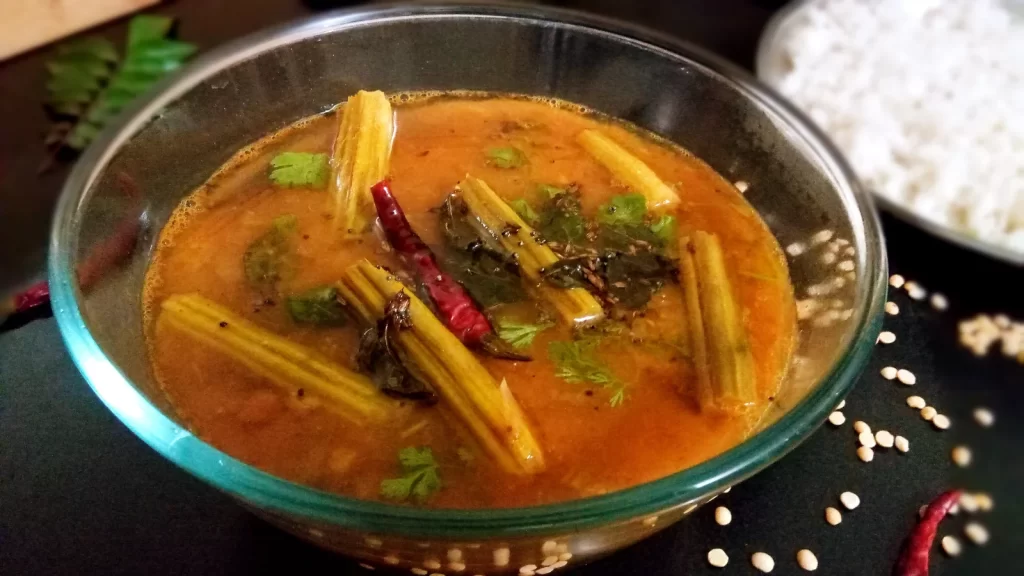
- Heat oil in a small pan.
- Add mustard seeds and let them splutter.
- Add cumin seeds, dried red chilies, curry leaves, and a pinch of asafoetida.
- Pour this tempering over the prepared sambar.
- Serve hot with steamed rice, idli, or dosa.
Optional garnishes include fresh coriander leaves or a sprinkle of freshly ground black pepper for added aroma.
Nutritional Benefits
Drumstick sambar is a wholesome, healthful dish:
- Drumsticks: High in vitamin C, calcium, and antioxidants; support immunity and bone health.
- Toor Dal: Provides plant-based protein and fiber for digestion.
- Tamarind: Adds tang and aids digestion.
- Spices: Boost metabolism, improve immunity, and add flavor without extra fat.
Being oil-free except for tempering, this sambar is ideal for weight-conscious and health-focused individuals.
Cultural Significance
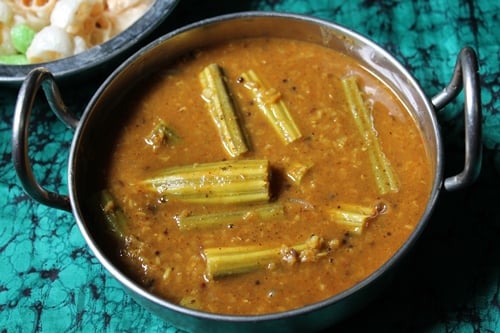
Sambar is integral to South Indian cuisine and is traditionally served with rice, idli, or dosa. Drumstick sambar is a favorite in Tamil Nadu and Kerala, often prepared for family meals and festivals. Its tangy, spicy flavor, combined with nutrient-rich drumsticks, represents the balance of taste and health that Indian cuisine emphasizes.
Common Mistakes to Avoid
- Overcooking drumsticks: Can make them mushy and lose texture.
- Too thick or watery dal: Adjust water while cooking to achieve ideal consistency.
- Skipping fresh masala: Pre-packaged masala can lack freshness; grind spices at home for best flavor.
- Overcooking after tamarind addition: Tamarind loses tang if simmered too long.
- Tempering incorrectly: Mustard seeds should splutter, but curry leaves and chilies should not burn.
Variations to Try
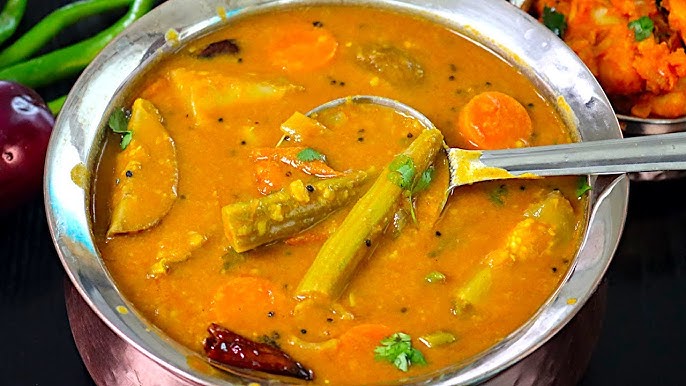
- Vegetable Drumstick Sambar: Add carrots, beans, and pumpkin for extra nutrition.
- Coconut Drumstick Sambar: Blend coconut with sambar masala for a creamy texture.
- Spicy Drumstick Sambar: Add extra red chilies or black pepper for a bolder taste.
- Instant Pressure Cooker Version: Combine all ingredients in a pressure cooker for a quick, hassle-free sambar.
Conclusion
This 6-step recipe for drumstick sambar provides a simple, authentic, and nutritious way to enjoy a classic South Indian dish. With minimal hassle, fresh ingredients, and stepwise preparation, you can create a flavorful sambar perfect for lunch, dinner, or festive occasions.
Drumstick sambar is not just a meal; it’s a balance of taste, health, and tradition. By following these steps, you can enjoy a wholesome, tangy, and aromatic dish that represents the essence of South Indian cuisine.