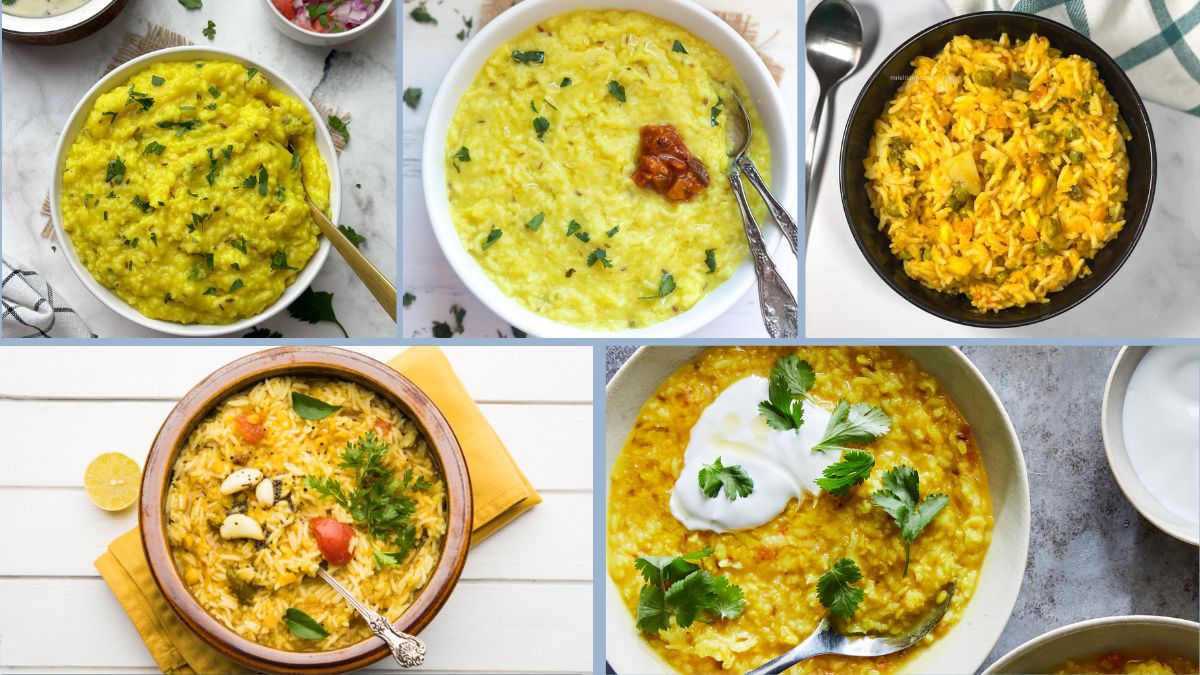
Moong dal khichdi is one of the most cherished dishes in Indian cuisine, often regarded as comfort food for its simplicity, digestibility, and nourishing qualities. Traditionally made with rice and split yellow moong dal, this one-pot dish combines protein, carbohydrates, and a subtle mix of spices to create a balanced, wholesome meal. Beyond being a staple in Indian households, khichdi is celebrated for its therapeutic and easily digestible nature, making it suitable for all ages.
This article presents a 6-step guide to preparing healthy moong dal khichdi, emphasizing vegetarian ingredients, step-by-step preparation, nutritional benefits, cultural significance, and expert tips to elevate the dish for everyday meals or special occasions.
Why Healthy Moong Dal Khichdi?
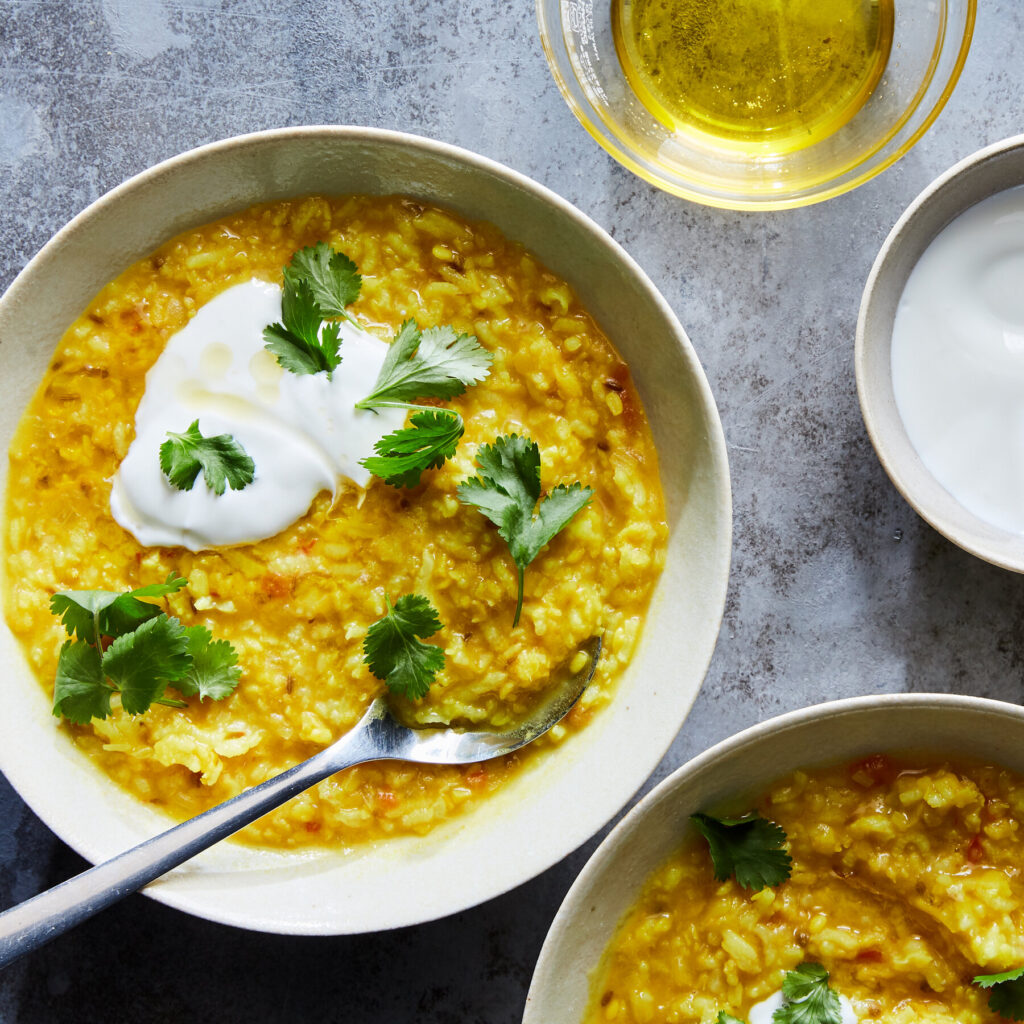
Moong dal khichdi is particularly popular due to its nutritional and functional properties:
- Highly Digestible – Light on the stomach, ideal for people recovering from illness or seeking a gentle meal.
- Balanced Nutrition – Combines protein from dal with carbohydrates from rice.
- Vegetarian-Friendly – Completely plant-based, suitable for all ages.
- Customizable – Can be adjusted with vegetables, spices, and herbs according to taste and dietary needs.
- Comfort Food – Provides warmth, satiety, and nourishment, often considered a healing or “soul” food.
Key Ingredients
For 4 servings of healthy moong dal khichdi, gather the following ingredients:
Grains and Lentils
- Split yellow moong dal (moong dal) – ½ cup
- Rice (preferably basmati or sona masuri) – ½ cup
Vegetables (Optional but Recommended for Nutrition)
- Carrot – ½ cup, diced
- Green peas – ½ cup
- Beans – ½ cup, chopped
- Spinach – ½ cup, chopped
- Pumpkin – ½ cup, diced
Aromatics and Spices
- Ginger – 1-inch piece, grated
- Green chili – 1, finely chopped (optional)
- Cumin seeds – ½ tsp
- Turmeric powder – ¼ tsp
- Black pepper – ¼ tsp
- Asafoetida (hing) – a pinch (for digestion)
- Salt – to taste
Garnish and Flavor Enhancers
- Fresh coriander leaves – 2 tbsp, chopped
- Lemon juice – 1 tsp
- Ghee – ½ tsp (optional, for aroma)
The 6-Step Guide
Step 1: Wash and Soak Grains and Dal
- Thoroughly rinse moong dal and rice in running water until the water runs clear.
- Soak them together for 15–20 minutes.
- Soaking improves digestibility, reduces cooking time, and ensures even cooking.
Tip: Pre-soaked grains yield a softer, creamier khichdi.
Step 2: Prepare Vegetables and Aromatics
- Wash, peel, and dice vegetables uniformly.
- Finely chop ginger and green chili.
- Heat a non-stick or heavy-bottomed pan, and add cumin seeds and a pinch of asafoetida.
- Sauté ginger and green chili until fragrant.
This step ensures the aromatic base enhances the subtle flavors of the khichdi without overpowering it.
Step 3: Cook the Dal and Rice
- Add soaked moong dal and rice to the pan with sautéed aromatics.
- Pour in 3–4 cups of water (adjust for desired consistency).
- Add turmeric and salt.
- Bring to a boil, then reduce heat to simmer.
- Cover and cook for 15–20 minutes, stirring occasionally to prevent sticking.
Tip: Adjust water for a thicker or thinner consistency depending on personal preference.
Step 4: Incorporate Vegetables
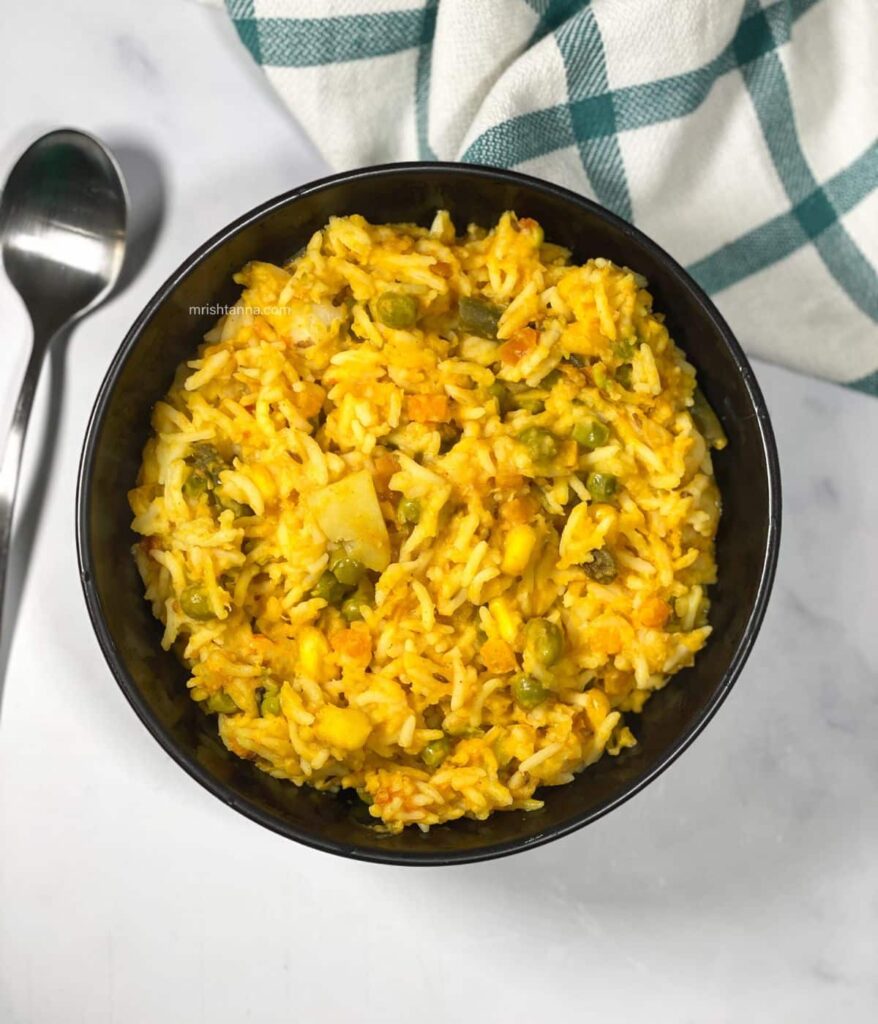
- Add diced carrots, beans, pumpkin, and peas after the dal and rice have partially cooked.
- Continue to simmer until vegetables are tender.
- Optionally, add leafy greens like spinach in the last 2–3 minutes of cooking to preserve color and nutrients.
Tip: Uniform vegetable size ensures even cooking and enhances presentation.
Step 5: Final Seasoning and Flavor Adjustments
- Check for salt and adjust as needed.
- Add freshly ground black pepper for subtle heat.
- Optional: Stir in a small teaspoon of ghee for aroma and richness.
- Squeeze fresh lemon juice just before serving for tanginess and enhanced flavor.
Tip: Adding lemon at the end preserves vitamin C and adds freshness.
Step 6: Garnish and Serve
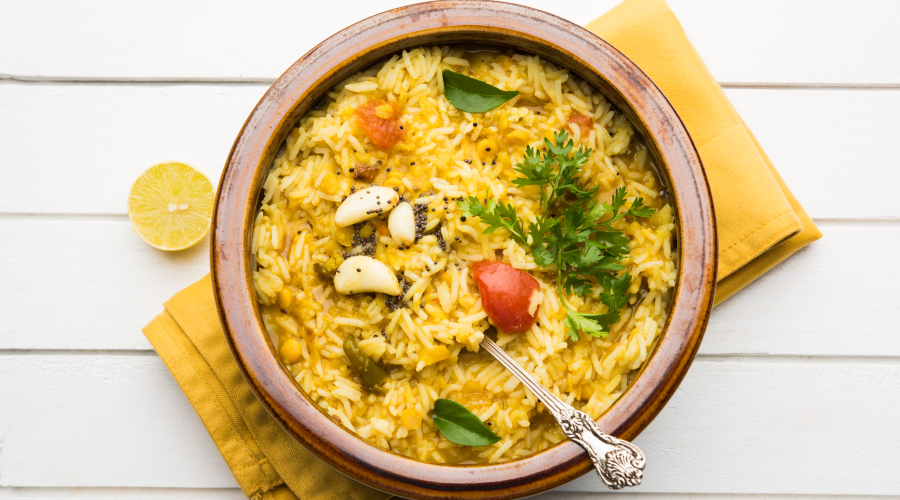
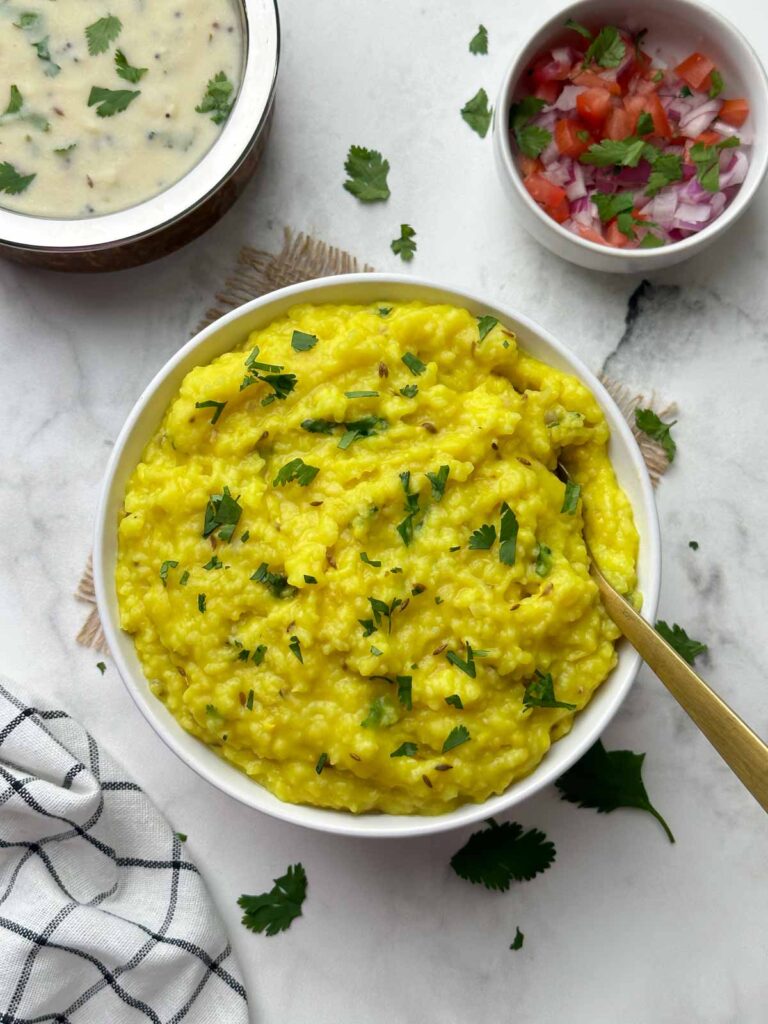
- Transfer khichdi to a serving bowl.
- Garnish with freshly chopped coriander leaves.
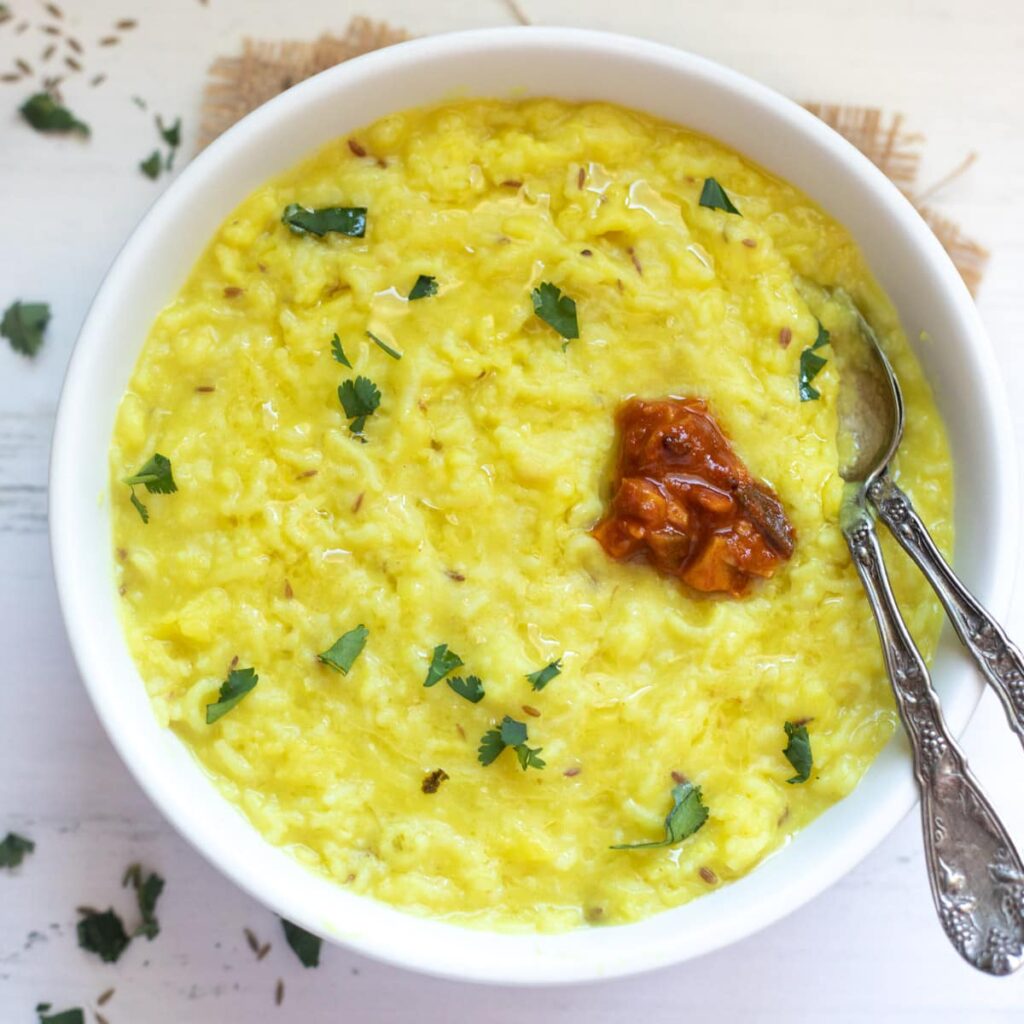
- Serve hot with accompaniments such as plain yogurt, pickle, papad, or a drizzle of ghee.
This final step enhances visual appeal, aroma, and taste while maintaining the dish’s wholesome character.
Serving Suggestions
Moong dal khichdi is a versatile meal suitable for various occasions:
- Everyday Meal – A light, nutritious option for lunch or dinner.
- Comfort Food – Ideal for recovery from illness or digestive sensitivity.
- Festive Variation – Add seasonal vegetables, mild spices, or cashew paste for celebration meals.
- Kids and Elderly Friendly – Mildly spiced and easily digestible, suitable for all ages.
- Meal Pairing – Can be served with yogurt, pickle, papad, or salad to complete a balanced meal.
Nutritional Benefits
Moong dal khichdi combines essential nutrients from grains, lentils, and vegetables:
- Moong Dal – Rich in protein, iron, and essential amino acids.
- Rice – Provides carbohydrates for energy.
- Vegetables – Supply fiber, vitamins, and antioxidants for overall health.
- Spices – Cumin, turmeric, and black pepper aid digestion and enhance metabolic benefits.
- Optional Ghee – Provides healthy fats and improves absorption of fat-soluble vitamins.
Approximate nutrition per serving (1 cup of khichdi with vegetables):
- Calories – 180–220 kcal
- Protein – 6–7 g
- Carbohydrates – 35 g
- Fat – 2–3 g (without ghee)
- Fiber – 5 g
This makes moong dal khichdi an ideal meal for balanced nutrition and easy digestion.
Cultural Significance
Moong dal khichdi holds a special place in Indian culinary tradition:
- Ancient Roots – Mentioned in Ayurvedic texts for its digestibility and healing properties.
- Pan-Indian Appeal – Prepared across regions with slight variations in spices, consistency, and accompaniments.
- Comfort and Healing Food – Often recommended during illness or for new mothers due to its nutrient-rich, easily digestible nature.
- Festive and Daily Dish – Versatile enough to serve as a daily staple or a simple celebratory meal.
Expert Tips for Perfect Khichdi
- Uniform Soaking – Ensures even cooking and a smooth texture.
- Consistent Stirring – Prevents grains from sticking to the bottom of the pan.
- Vegetable Choice – Use seasonal vegetables for optimal taste and nutrition.
- Adjust Water – Thicker for tikkas, thinner for soup-like consistency.
- Spice Control – Mild for children, slightly stronger for adults.
- Garnishing – Fresh herbs and a drizzle of ghee enhance aroma and presentation.
- Leftover Storage – Refrigerate and reheat gently, adding a splash of water to maintain consistency.
Comparison: Plain Moong Dal vs Vegetable Moong Dal Khichdi
| Feature | Plain Moong Dal Khichdi | Vegetable Moong Dal Khichdi |
|---|---|---|
| Ingredients | Rice + Moong Dal | Rice + Moong Dal + Vegetables |
| Flavor | Mild | More complex, aromatic, flavorful |
| Nutritional Value | High in protein | Higher fiber, vitamins, and antioxidants |
| Digestibility | Excellent | Excellent |
| Visual Appeal | Simple, yellow | Vibrant, colorful |
| Meal Versatility | Comfort food | Balanced meal with vegetables |
Adding vegetables enhances nutrition, flavor, and visual appeal while keeping the dish digestible.
Conclusion
Healthy moong dal khichdi is a classic example of a dish that balances nutrition, simplicity, and flavor. By following this 6-step guide—soaking grains, preparing aromatics and vegetables, cooking dal and rice, adding vegetables, seasoning, and garnishing—you can create a wholesome, comforting meal suitable for all ages.
This dish demonstrates that vegetarian cooking can be satisfying, nourishing, and adaptable. Whether served as a daily meal, a recovery dish, or a festive comfort food, moong dal khichdi exemplifies the richness of Indian culinary traditions while meeting modern dietary needs.
It is a dish that nourishes both the body and the soul, making it an essential part of Indian kitchens and a testament to the simplicity and depth of plant-based nutrition.