
Growing fresh, juicy tomatoes at home is one of the most rewarding experiences for gardeners, whether you live in a spacious house with a backyard or a small apartment with limited outdoor space. With the right approach, tomato plants thrive beautifully in containers, producing abundant fruits full of flavor. Container gardening not only makes the process manageable but also gives you greater control over soil quality, watering, and placement for maximum sunlight.
This comprehensive guide explores every step of growing tomatoes in pots, from choosing the right containers and soil mix to harvesting and caring for your plants. By the end, you will be equipped with practical knowledge to achieve a bountiful harvest of plump, juicy tomatoes right from your balcony or patio.
1. Why Grow Tomatoes in Pots?

Tomatoes are one of the most popular crops for home gardeners because they are versatile, nutrient-rich, and relatively easy to grow. Container gardening, in particular, offers several benefits:
- Space efficiency: Ideal for urban dwellers with limited ground space.
- Soil control: Pots allow you to create the perfect soil environment, free from garden pests and diseases.
- Mobility: You can move pots around to chase sunlight or protect plants from extreme weather.
- Pest management: Growing in containers helps reduce the chances of soil-borne diseases and makes monitoring easier.
2. Selecting the Right Tomato Varieties
Not all tomato plants are equally suited for pots. Choosing the correct variety is essential for success.
- Determinate (Bush) Varieties: Compact and self-limiting in growth, these tomatoes stop growing once fruit sets on the top bud. Perfect for small containers. Examples: Roma, Bush Early Girl, Patio Princess.
- Indeterminate (Vining) Varieties: These keep growing and producing fruit until frost. They require larger containers and strong support. Examples: Sungold, Sweet 100, Better Boy.
- Cherry Tomatoes: Especially well-suited to pots, producing abundant bite-sized fruits.
For beginners, cherry or determinate varieties are recommended because of their ease of care and reliability in limited space.
3. Choosing the Perfect Container
Container size directly affects plant growth and fruit yield. Here are some key considerations:
- Size: A minimum of 5-gallon (20-liter) capacity is required, but larger pots (10–20 gallons) are better for indeterminate varieties.
- Material: Clay pots are attractive but dry out quickly. Plastic or fabric grow bags retain moisture better. Wooden barrels also work well.
- Drainage: Ensure there are adequate drainage holes to prevent waterlogging, which can lead to root rot.
Pro tip: Place a layer of gravel or broken clay pieces at the bottom of the container to enhance drainage.
4. Preparing the Ideal Soil Mix

Tomatoes in pots depend entirely on the soil mix you provide, so it must be rich, light, and well-draining. A recommended potting mix includes:
- 40% high-quality potting soil
- 30% compost (homemade or organic store-bought)
- 20% coco peat or peat moss (for moisture retention)
- 10% perlite or vermiculite (for aeration and drainage)
Adding a handful of organic slow-release fertilizer at planting time boosts growth. You can also mix in crushed eggshells for calcium, which helps prevent blossom-end rot.
5. Planting Tomatoes in Pots
Once your container and soil mix are ready, follow these steps:
- Transplanting Seedlings:
- Start with healthy seedlings about 6–8 inches tall.
- Remove the lower leaves and bury two-thirds of the stem in the soil. Tomatoes grow roots along buried stems, leading to a stronger root system.
- Spacing:
- Plant one tomato seedling per pot for optimal growth.
- Mulching:
- Add a 2-inch layer of organic mulch (straw, shredded leaves, or coco husk) to retain moisture and suppress weeds.
6. Watering Requirements

Tomatoes love consistent moisture but dislike soggy conditions. Here’s the golden rule: deep and consistent watering.
- Water thoroughly until excess drains out from the bottom.
- Avoid shallow, frequent watering as it promotes weak root systems.
- During hot summer days, you may need to water daily.
- Use a drip irrigation system or self-watering containers for consistent hydration.
- Always water at the base, avoiding wetting the leaves, which can cause fungal diseases.
7. Feeding and Fertilization
Tomatoes are heavy feeders, and in containers, nutrients are used up quickly.
- Base fertilizer: Add a balanced organic fertilizer (NPK 10:10:10) when planting.
- Growth stage feeding: Once the first flowers appear, switch to a fertilizer high in phosphorus and potassium but lower in nitrogen. Too much nitrogen results in leafy growth instead of fruits.
- Homemade options:
- Compost tea
- Diluted seaweed extract
- Banana peel fertilizer (rich in potassium)
Feed every 2–3 weeks during the fruiting stage for maximum yields.
8. Providing Support
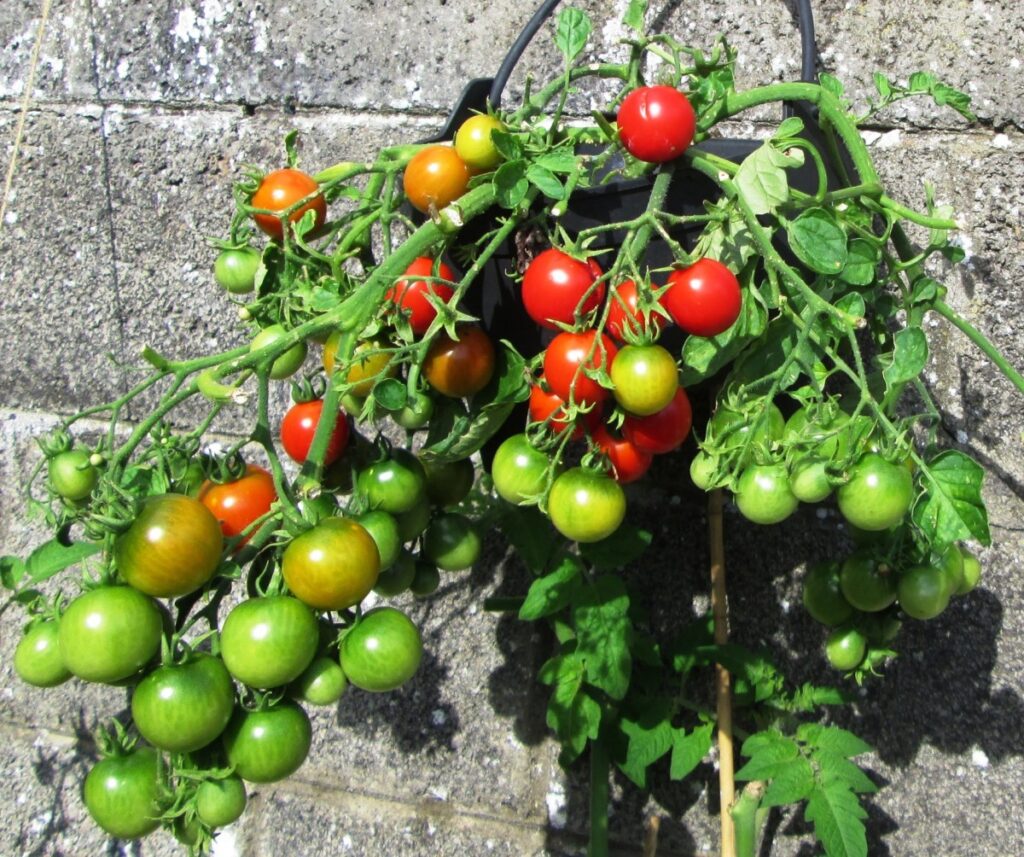
Even in pots, tomato plants need support to prevent stems from breaking under the weight of fruits.
- Tomato cages: Perfect for determinate varieties.
- Stakes: Drive a sturdy stake into the pot and tie the stem loosely as it grows.
- Trellises: Best for indeterminate varieties that grow tall.
Use soft ties or fabric strips to avoid damaging stems.
9. Sunlight and Temperature
Tomatoes are sun-loving plants.
- Light: They require at least 6–8 hours of direct sunlight daily. If you live in a cloudy area, consider supplementing with LED grow lights.
- Temperature: The ideal range is 70–85°F (21–29°C) during the day and not below 55°F (13°C) at night.
Moving pots allows you to maximize light exposure and protect plants from extreme conditions.
10. Pest and Disease Management
Container gardening reduces many soil-borne issues but tomatoes can still face problems.
- Common pests: Aphids, whiteflies, and tomato hornworms.
- Organic solutions: Neem oil spray, insecticidal soap, or introducing beneficial insects like ladybugs.
- Diseases: Fungal infections such as blight and powdery mildew can occur in humid conditions. Prevent by watering at the base and ensuring good air circulation.
Regularly prune yellowing leaves and remove any diseased plant parts promptly.
11. Pruning and Maintenance
Pruning helps direct the plant’s energy towards fruit production.
- Remove suckers (small shoots growing in the leaf axils) to promote larger fruits.
- Trim excess foliage to improve airflow and reduce disease risks.
- Avoid over-pruning, as leaves are essential for photosynthesis.
12. Harvesting Tomatoes
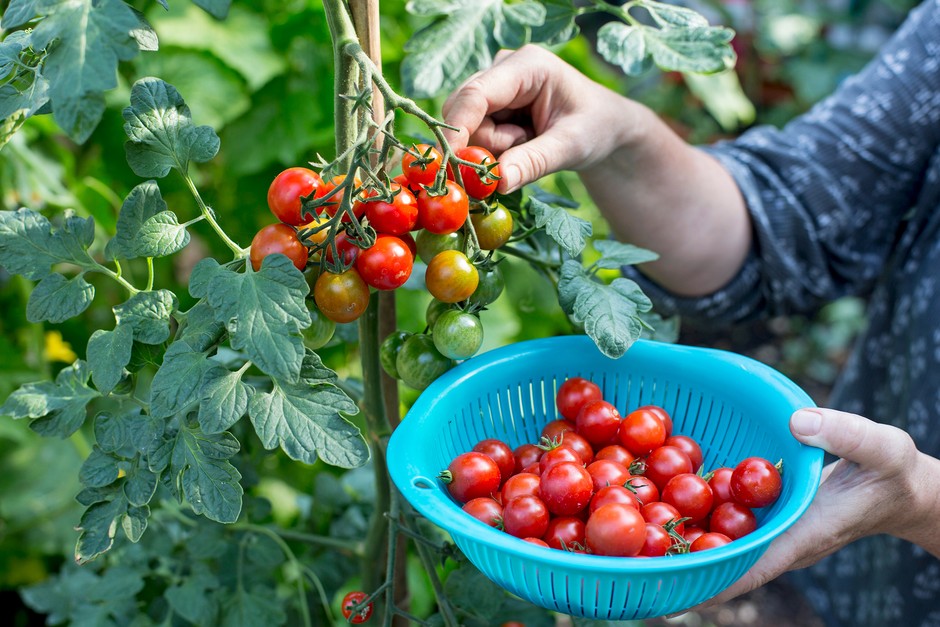
Nothing beats the joy of picking sun-ripened tomatoes from your own pots.
- When to harvest: Tomatoes are ready when they are fully colored (red, yellow, or orange depending on the variety) and slightly soft to touch.
- Harvesting tip: Twist gently or cut with scissors to avoid damaging the plant.
- Ripening indoors: If cold weather arrives, pick green tomatoes and let them ripen indoors in a paper bag with a banana or apple.
13. Storing and Using Your Harvest
Freshly harvested tomatoes can be enjoyed in countless vegetarian recipes:
- Tossed into salads for freshness.
- Blended into homemade tomato sauce for pasta.
- Roasted with herbs for a rich flavor.
- Preserved as sun-dried tomatoes or tomato chutney.
Avoid refrigeration unless necessary, as it alters the texture and flavor. Store at room temperature for the best taste.
14. Tips for Bigger, Juicier Harvests
- Rotate pots occasionally for even sunlight exposure.
- Use larger containers for indeterminate varieties.
- Fertilize regularly but don’t overdo nitrogen.
- Water deeply and consistently to prevent fruit cracking.
- Keep an eye on pests early before they spread.
Conclusion
Growing tomatoes in pots is not only practical but also incredibly rewarding. With careful attention to container size, soil quality, watering, feeding, and sunlight, you can enjoy a continuous supply of delicious, homegrown tomatoes, even in the smallest of spaces. Whether you are a beginner or an experienced gardener, container-grown tomatoes promise juicy harvests that enrich your meals and bring the satisfaction of self-sufficiency.
By following the methods outlined above, you will transform your balcony, terrace, or patio into a miniature tomato garden bursting with life and flavor.