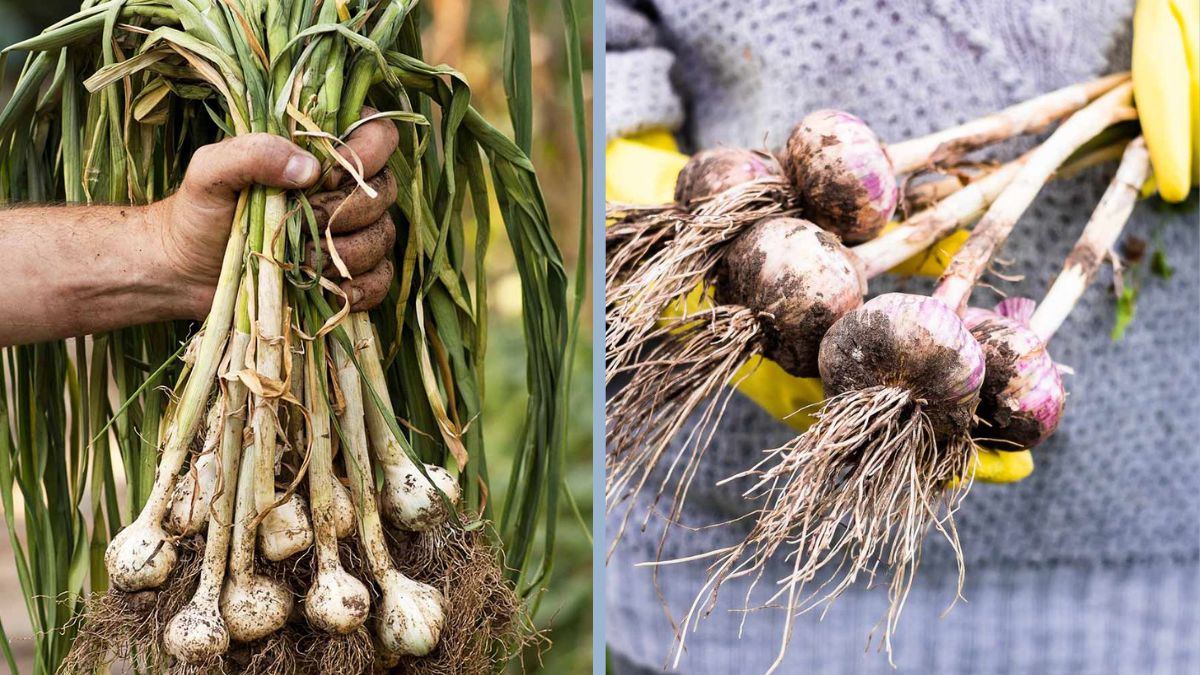
Garlic is more than just a flavorful addition to your meals; it’s also one of the easiest and most rewarding crops you can grow at home. Known for its pungent aroma and medicinal properties, garlic has been cultivated for thousands of years as both a kitchen essential and a natural remedy. The good news? You don’t need a large plot of land to grow it. With just a small kitchen garden or even a few pots, you can cultivate garlic and enjoy a steady, endless supply throughout the year.
This article will guide you through every step of planting, growing, and harvesting garlic in your kitchen garden, from preparing the soil to storing bulbs for future use. By the end, you’ll see how simple it is to make garlic a sustainable part of your homegrown diet—all without any non-vegetarian options, focusing solely on plant-based living.
Why Grow Garlic at Home?
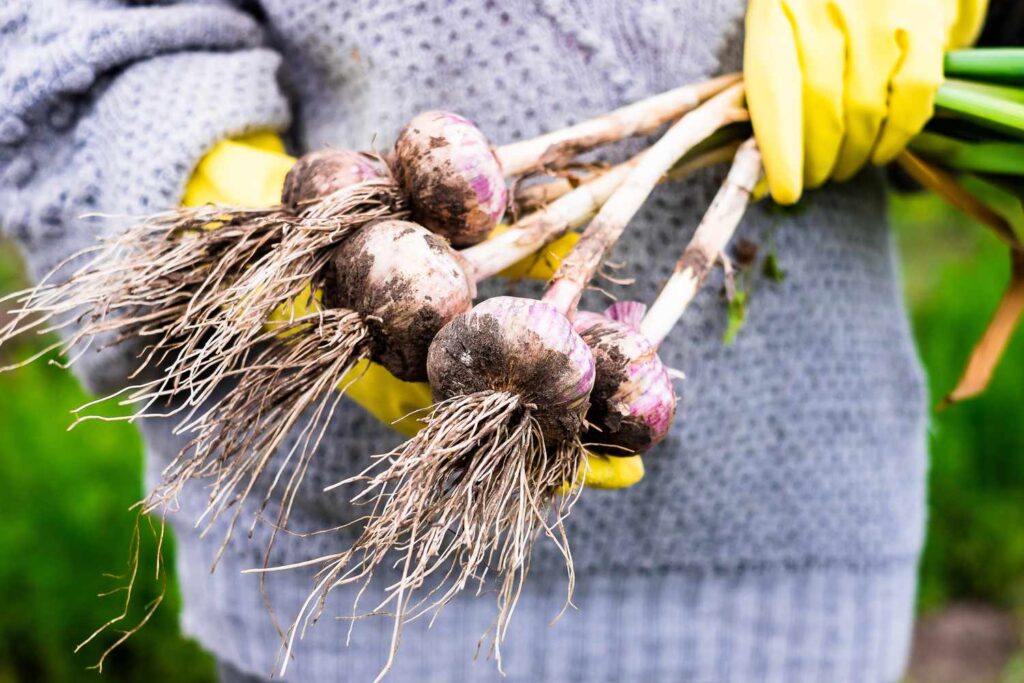
Before diving into the details, let’s look at why garlic deserves a spot in your kitchen garden:
- Easy to Grow: Garlic requires minimal care once planted.
- Compact Size: It doesn’t take up much space and fits easily into raised beds, garden plots, or pots.
- High Yield: A single clove can produce a whole bulb with 8–12 cloves.
- Long Shelf Life: Properly cured garlic can last for months.
- Nutritional Powerhouse: Garlic is rich in vitamins B6 and C, manganese, and antioxidants.
- Medicinal Benefits: Supports immunity, heart health, and digestion.
Choosing the Right Garlic
Garlic is generally categorized into two main types:
- Softneck Garlic:
- Best for mild climates.
- Produces more cloves per bulb.
- Stores longer (up to 9–12 months).
- Hardneck Garlic:
- Better suited for colder regions.
- Produces fewer but larger cloves.
- Develops a scape (flower stalk) that can also be harvested and eaten.
For beginners, softneck garlic is often the easiest to start with, especially in warmer regions.
Preparing Your Kitchen Garden for Garlic

Garlic thrives in fertile, well-drained soil with plenty of sunlight. Whether you’re planting in the ground, raised beds, or containers, proper preparation ensures a healthy harvest.
- Soil Requirements:
- Loamy, crumbly soil is ideal.
- pH between 6.0 and 7.0.
- Enrich with compost or well-rotted organic matter.
- Sunlight:
- Garlic requires 6–8 hours of direct sunlight daily.
- Spacing:
- Even in small kitchen gardens, garlic can be grown efficiently by spacing cloves about 4–6 inches apart.
Planting Garlic: Step-by-Step
1. Break the Bulbs

- Take a healthy bulb of garlic and gently separate it into individual cloves.
- Do not peel off the papery skin; it protects the clove during growth.
2. Select the Best Cloves
- Use only large, firm cloves for planting.
- Avoid damaged or soft cloves, as they may not sprout properly.
3. Prepare the Soil Bed or Container
- Dig holes about 2 inches deep.
- Space them 4–6 inches apart in rows.
4. Plant the Cloves
- Place each clove pointed side up and flat root side down.
- Cover with soil and gently press down.
5. Mulch for Protection
- Add a 2–3 inch layer of straw, dried leaves, or compost mulch to retain moisture and suppress weeds.
Caring for Garlic Plants
Once planted, garlic requires little maintenance, but consistency is key for healthy bulbs.
- Watering:
- Keep the soil moist but not soggy.
- Water deeply once a week during dry spells.
- Reduce watering once the tops begin to yellow before harvest.
- Weeding:
- Keep the bed weed-free to avoid competition for nutrients.
- Fertilizing:
- Apply a balanced organic fertilizer or compost tea once or twice during the growing season.
- Mulching:
- Refresh mulch periodically to regulate soil temperature and retain moisture.
Harvesting Garlic
Garlic takes 7–8 months to mature, depending on the type and climate.
- Signs of Maturity:
- Lower leaves turn yellow and dry, while the upper leaves remain green.
- Bulbs feel firm when gently squeezed.
- How to Harvest:
- Loosen the soil gently with a garden fork or trowel.
- Pull out the bulbs carefully, avoiding damage.
- Shake off excess soil but do not wash.
Curing and Storing Garlic
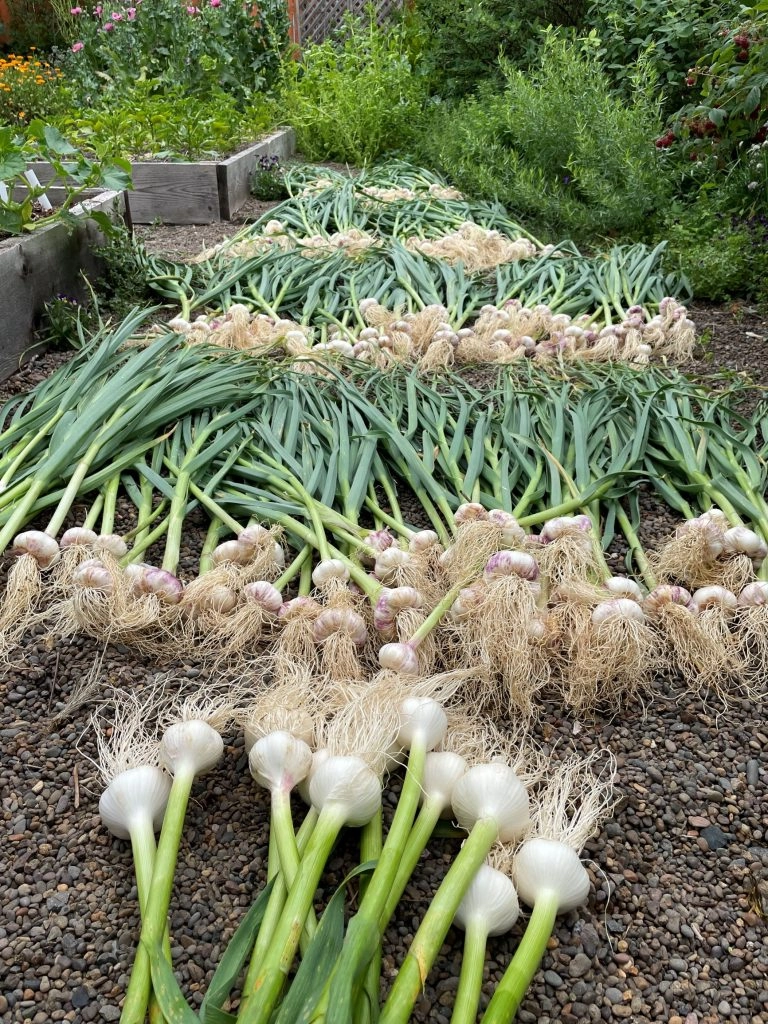
Curing is essential for long-term storage.
- Curing Process:
- Hang or spread bulbs in a warm, dry, airy spot for 2–3 weeks.
- Allow the outer layers to dry and form a papery skin.
- Storage Tips:
- Store bulbs in mesh bags, baskets, or braids.
- Keep in a cool, dry place away from direct sunlight.
- Avoid refrigeration, which can trigger premature sprouting.
Properly cured garlic can last 6–12 months, ensuring a year-round supply.
Growing Garlic in Containers
For those with limited space, garlic grows beautifully in pots or planters.
- Container Size: At least 8–10 inches deep.
- Soil Mix: A blend of compost, garden soil, and sand for drainage.
- Spacing: Plant cloves 3–4 inches apart in the container.
- Care: Place the pot in a sunny spot and water regularly.
This method is perfect for apartment dwellers who want fresh garlic on their windowsill or balcony.
Garlic as a Companion Plant

Garlic isn’t just valuable for its bulbs—it’s also an excellent companion plant in your kitchen garden.
- Benefits:
- Repels pests like aphids, whiteflies, and beetles.
- Enhances flavor and growth of neighboring crops like tomatoes, peppers, and carrots.
- Deters fungal diseases in some plants.
Avoid planting garlic too close to beans or peas, as it may stunt their growth.
Creative Uses for Homegrown Garlic
- Culinary Uses: Fresh cloves, roasted bulbs, garlic paste, garlic oil.
- Medicinal Uses: Infusions, teas, or raw consumption for immunity.
- Garden Uses: Homemade garlic spray for natural pest control.
Nutritional Benefits of Garlic
Garlic is more than a kitchen flavor—it’s a health booster.
- Rich in Antioxidants: Helps reduce inflammation and oxidative stress.
- Immune Support: Boosts resistance against colds and infections.
- Heart Health: Supports healthy cholesterol levels and blood pressure.
- Digestive Aid: Promotes gut health and fights harmful bacteria.
Including homegrown garlic in your vegetarian meals ensures you’re consuming a fresh, chemical-free superfood.
Tips for Endless Supply of Garlic
- Save the Best Bulbs: After each harvest, set aside the largest cloves for replanting.
- Stagger Planting: Plant small batches every few weeks for a continuous cycle.
- Experiment with Varieties: Try both softneck and hardneck types to extend your growing season.
- Integrate into Succession Planting: Combine garlic with quick crops like lettuce or radishes for efficient use of garden space.
By saving and replanting, you can maintain an endless garlic supply without ever buying bulbs again.
Conclusion
Garlic is one of the easiest and most rewarding crops for your kitchen garden. From selecting healthy cloves and preparing nutrient-rich soil to harvesting, curing, and storing, garlic fits beautifully into any gardening setup—big or small. Its compact size, long shelf life, and countless culinary and medicinal uses make it a truly indispensable crop.
By growing garlic at home, you not only enjoy a constant supply of this versatile vegetable but also contribute to a more sustainable and healthy lifestyle. Whether in raised beds, garden plots, or pots on your balcony, garlic is the perfect addition to your kitchen garden for an endless, year-round supply of flavor and nutrition.