Mangoes are often called the “king of fruits” for good reason. Their golden flesh, sweet aroma, and tropical flavor make them one of the most beloved fruits worldwide. From juices and smoothies to desserts and savory dishes, mangoes can elevate almost any recipe. However, despite their popularity, one common challenge remains: cutting a mango neatly without creating a sticky mess.
Unlike apples or pears, mangoes contain a large, flat seed in the center that makes them difficult to slice evenly. Their slippery flesh and thin skin also increase the risk of waste, spillage, or improper cuts. Fortunately, with the right knowledge and techniques, it is entirely possible to cut a mango efficiently, minimizing mess and maximizing the amount of usable fruit.
This article explores step-by-step methods, tools, and professional tips for cutting mangoes cleanly. It also discusses storage strategies, serving ideas, and the science behind handling this tropical fruit—all with vegetarian-friendly practices.
Understanding the Structure of a Mango
Before cutting a mango, it is essential to understand its anatomy.
- Seed (Pit): Mangoes have a single, large, flat seed in the center that extends vertically. This pit is the main obstacle to clean cutting.
- Flesh: The juicy, fiber-rich pulp surrounds the seed and is tightly attached to it.
- Skin: Mango skin is thin but inedible and can be slippery when handled improperly.
Knowing the seed’s placement and the alignment of the flesh helps guide precise cuts.
Tools That Help Prevent Mess

Cutting a mango neatly depends not only on technique but also on the tools used.
- Sharp Chef’s Knife: Ensures clean slices without crushing the flesh.
- Paring Knife: Useful for smaller mango varieties.
- Cutting Board with Juice Groove: Catches excess juice and prevents spillage.
- Mango Splitter (Optional): A specialized tool that separates flesh from the pit in one motion.
- Spoon or Glass Rim: Handy for scooping or separating mango flesh from the peel.
Proper tools make the process safer, faster, and less messy.
Step-by-Step Methods to Cut a Mango
1. The Classic Hedgehog Method
This is one of the most popular and beginner-friendly ways of cutting mango.
- Step 1: Stand the mango upright on a cutting board.
- Step 2: Slice off the two “cheeks” of the mango by cutting parallel to the pit.
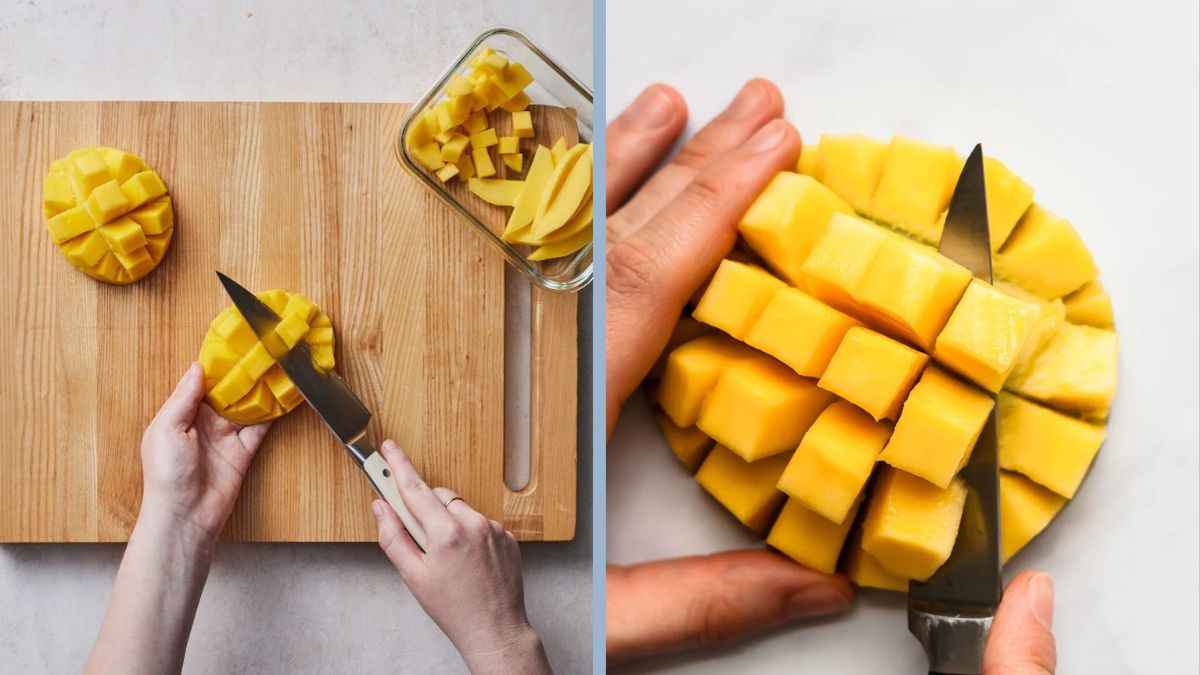
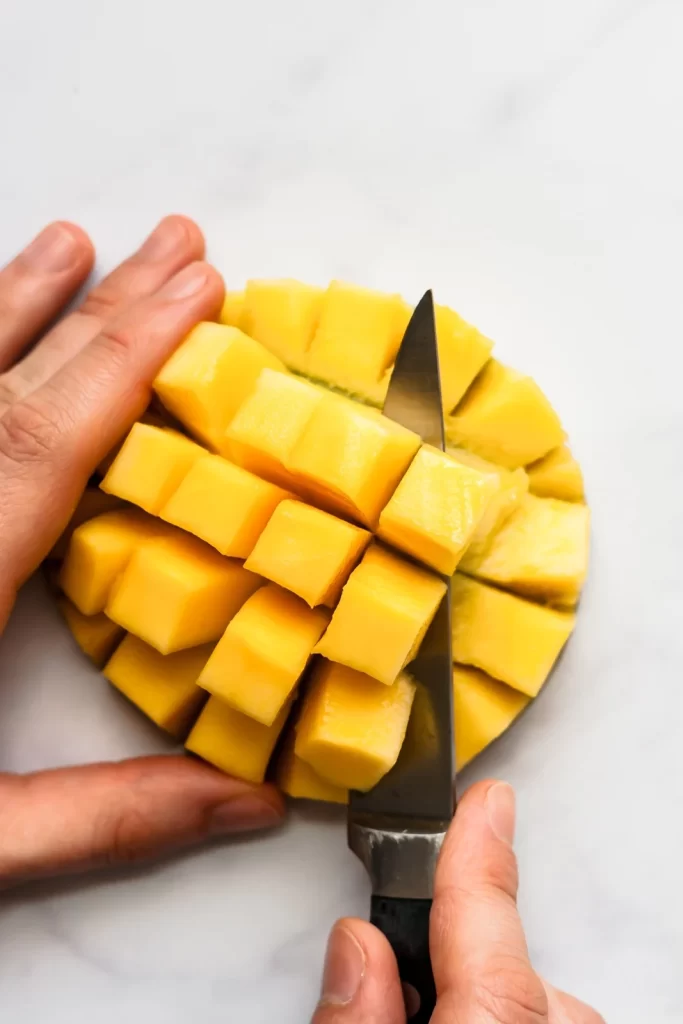
- Step 3: Take one cheek and score the flesh in a crisscross pattern without piercing the skin.
- Step 4: Push the skin outward so the cubes pop up like a hedgehog.
- Step 5: Slice off the cubes or eat them directly with a spoon.
Advantages: Quick, visually appealing, and minimizes juice loss.
Best For: Serving in fruit platters or snacking.
2. The Glass Method

This method is perfect if you want to avoid sticky hands.
- Step 1: Slice off the mango cheeks.
- Step 2: Place the edge of a mango cheek against the rim of a sturdy glass.
- Step 3: Push downward so the flesh separates from the skin and drops into the glass.
- Step 4: Cut the flesh into cubes as desired.
Advantages: Very clean, minimal mess, and quick.
Best For: Smoothies, juices, or recipes that require peeled mango.
3. The Slice-and-Scoop Method
This technique works well when precision is needed.
- Step 1: Slice the cheeks off the pit.
- Step 2: Use a spoon to scoop out the flesh in one piece.
- Step 3: Place it on a cutting board and slice into cubes or strips.
Advantages: Preserves maximum flesh without waste.
Best For: Recipes requiring uniform mango slices, like salads or sushi.
4. The Peel-First Method
For cooks who prefer handling peeled fruit directly.
- Step 1: Use a vegetable peeler or paring knife to remove the mango skin.
- Step 2: Hold the peeled mango firmly and slice along the pit to remove cheeks.
- Step 3: Cut into cubes, strips, or wedges.
Advantages: Provides maximum control over cuts.
Best For: Fruit salads, desserts, and presentation dishes.
5. Using a Mango Splitter
If available, a mango splitter tool simplifies the process.
- Step 1: Stand the mango upright.
- Step 2: Center the splitter over the fruit and press down.
- Step 3: The splitter separates the pit and leaves two mango cheeks ready for cutting.
Advantages: Fast and beginner-friendly.
Best For: Large batches or commercial kitchens.
Tips for Reducing Mess and Maximizing Yield

- Choose Ripe but Firm Mangoes: Overripe mangoes are harder to handle and release more juice. A slightly firm mango is easier to cut cleanly.
- Use a Non-Slip Cutting Board: Prevents accidents and helps collect juice.
- Chill Before Cutting: Cold mangoes are firmer and less slippery.
- Cut Near the Sink: For easier cleanup if juice spills.
- Save Scraps: Any fruit left around the seed can be scraped off with a spoon for smoothies.
Storing Cut Mango
Once mango is cut, proper storage is crucial to maintaining freshness.
- Short-Term Storage: Store cut mango in airtight containers in the refrigerator for up to 3–4 days.
- Long-Term Storage: Freeze mango cubes in a single layer on a tray, then transfer to freezer bags. Frozen mango lasts up to 6 months and is perfect for smoothies and desserts.
- Avoid Excess Moisture: Lining containers with a dry paper towel prevents sogginess.
Culinary Uses for Neatly Cut Mango

A cleanly cut mango enhances presentation and makes cooking more enjoyable. Some ideas include:
- Smoothies and Shakes: Blend cubes for a creamy tropical drink.
- Fruit Salads: Combine with papaya, pineapple, and berries.
- Salsa: Dice mango with onion, tomato, and cilantro for a refreshing dip.
- Desserts: Use as toppings for ice cream, yogurt, or puddings.
- Main Dishes: Add to curries, rice bowls, or grilled vegetable dishes.
By cutting mangoes properly, you can unlock their versatility without waste.
The Science of Mango Handling
Why does mango cutting become messy? The answer lies in its texture and composition.
- High Water and Sugar Content: Mangoes are juicy, and cutting releases liquid quickly.
- Fiber Density: Fibrous varieties cling tightly to the pit, making clean separation harder.
- Ripeness Factor: As mangoes ripen, pectin breaks down, making the flesh softer but also more slippery.
By choosing the right ripeness stage and applying proper techniques, you can overcome these natural challenges.
Sustainability: Reducing Mango Waste
Mango waste is a global issue, particularly in tropical countries where production is high. Simple practices such as cutting properly, storing efficiently, and using scraps can significantly reduce waste at the household level.
- Scraps for Smoothies: Scrape leftover fruit from the seed.
- Mango Skin Uses: While not eaten directly, skins can be used in composting.
- Seed Applications: Mango seeds can be dried, ground, and used in traditional remedies or compost.
Proper handling benefits both the environment and household budgets.
Conclusion
Cutting a mango may seem messy at first, but with the right knowledge and techniques, it becomes a simple and enjoyable task. Whether you prefer the hedgehog method for snacking, the glass method for juice preparation, or the peel-first approach for precision, there is a clean and efficient option for every occasion.
By investing in sharp tools, choosing mangoes at the right ripeness, and applying careful storage techniques, you can enjoy this tropical delicacy without unnecessary waste or frustration. Learning how to cut a mango without making a mess not only improves presentation but also maximizes yield, saves money, and supports sustainable food practices.
With these practical, vegetarian-friendly hacks, the “king of fruits” can truly be enjoyed to its fullest—without the sticky struggle.