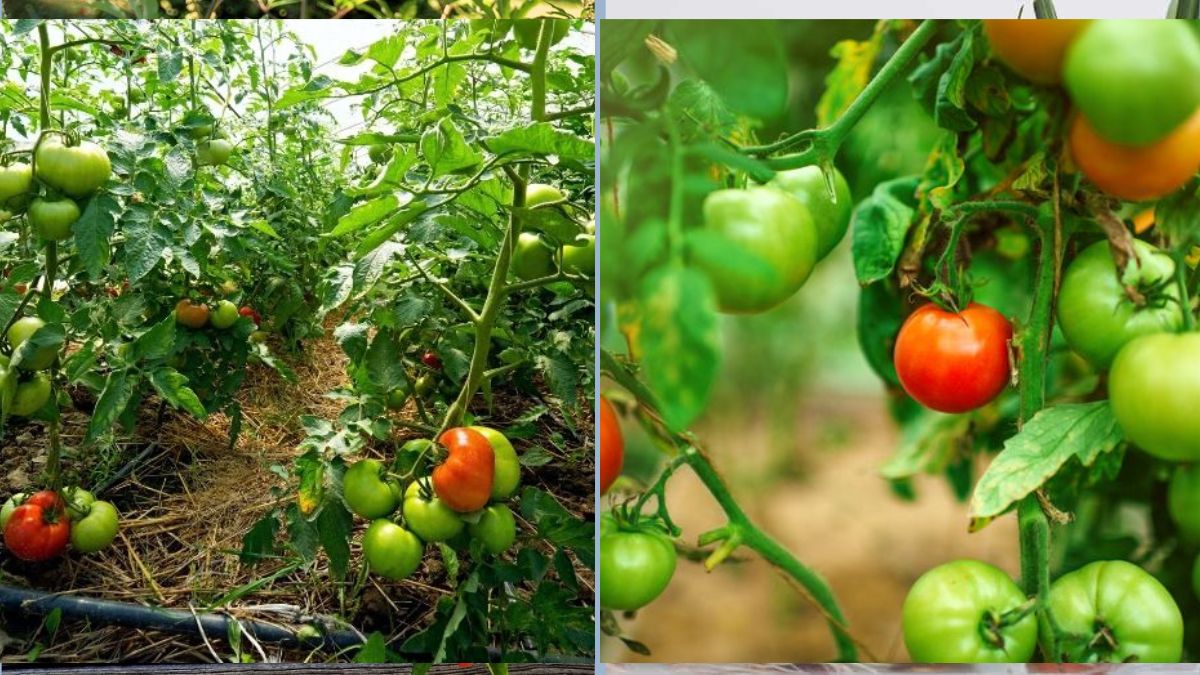
Yellowing leaves in vegetable plants are a common physiological disorder that can result from nutrient imbalances, water stress, pest damage, soil issues, or environmental factors. For students, researchers, and cultivators, understanding both the causal factors and the corrective measures is essential to maintaining healthy plant growth and improving yield quality. This article provides a comprehensive, plant-based, and sustainable guide to diagnosing and fixing yellow leaves on vegetable plants.
1. Understanding Chlorosis and Its Importance
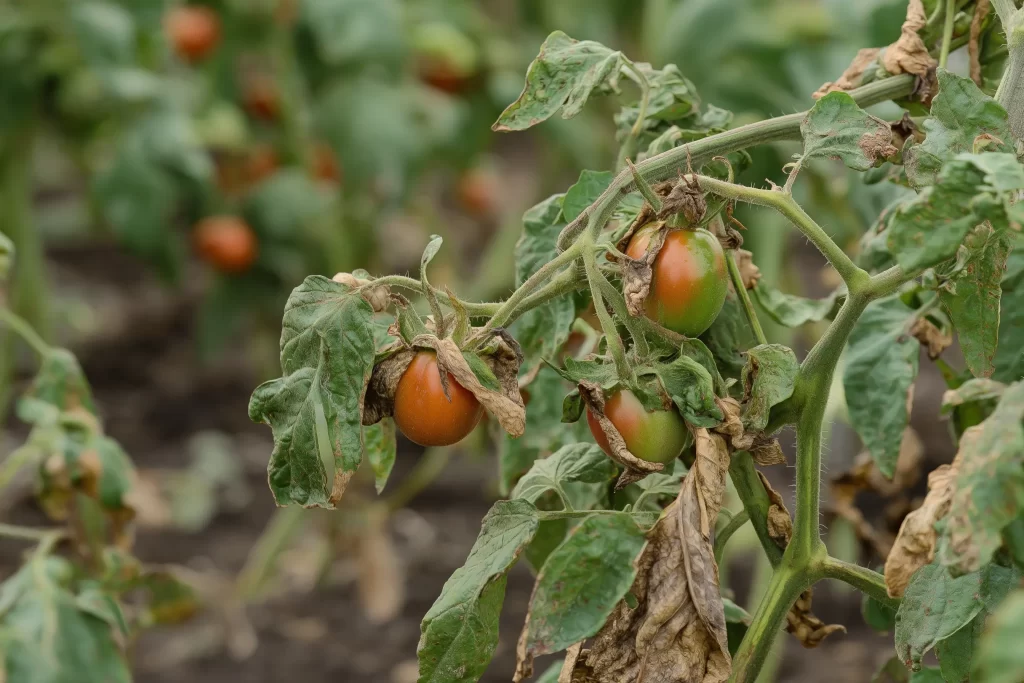
Yellowing of leaves, known as chlorosis, occurs when chlorophyll production is reduced or compromised. Chlorophyll is responsible for photosynthesis, the process that converts light energy into chemical energy. When plants cannot produce adequate chlorophyll, they exhibit pale, yellow, or spotted leaves. Chlorosis may start from the leaf tips, edges, or veins and can affect young or old leaves depending on the underlying cause. Early identification followed by an appropriate response is crucial to preventing irreversible damage.
2. Nutrient Deficiencies: The Most Common Cause
One of the leading causes of leaf yellowing in vegetable plants is nutritional imbalance. Different deficiencies manifest in specific ways, making diagnosis easier through symptom observation.
a. Nitrogen Deficiency
Nitrogen is a key component of chlorophyll and amino acids. When nitrogen is deficient:
- Older leaves turn uniformly pale yellow or light green.
- The plant shows stunted growth and weak stems.
Solution:
Use plant-based nitrogen sources such as:
- Compost made from vegetable scraps or leaf mold
- Well-aged plant-based manure alternatives (e.g., green compost)
- Liquid fertilizers from fermented plant matter (like diluted compost tea)
Avoid animal-based fertilizers such as fish emulsion or bone meal, as per the non-veg restriction.
b. Iron Deficiency
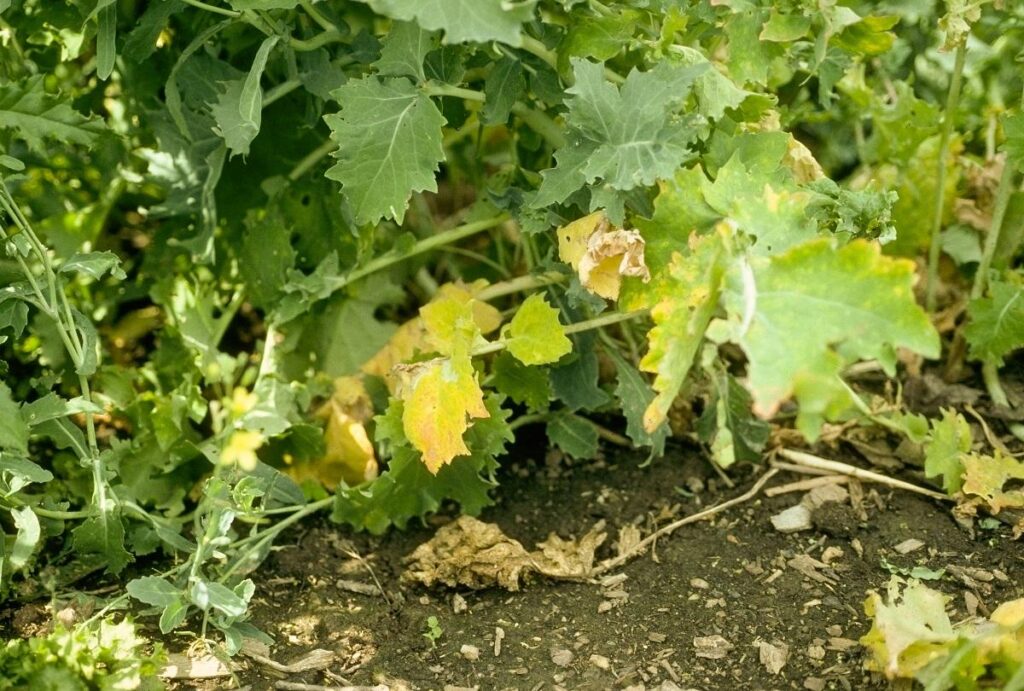
Iron chlorosis typically affects new leaves first:
- Leaves turn yellow while veins remain green (interveinal chlorosis).
Solution:
- Apply chelated iron derived from plant-based sources.
- Adjust soil pH (especially in alkaline soils) using elemental sulfur or pine needle compost to improve iron availability.
c. Magnesium Deficiency
Magnesium is central to chlorophyll synthesis.
- Older leaves show yellowing between green veins.
- Leaves may curl upward or show reddish spotting.
Solution:
Use Epsom salt (magnesium sulfate) dissolved in water as a soil drench or foliar spray.
d. Potassium Deficiency
- Edges of leaves turn yellow and eventually brown.
- Plants may show weak stems and increased susceptibility to stress.
Solution:
Incorporate wood ash, banana peel compost, or kelp-based fertilizer into the soil.
3. Water Stress and Irrigation Issues
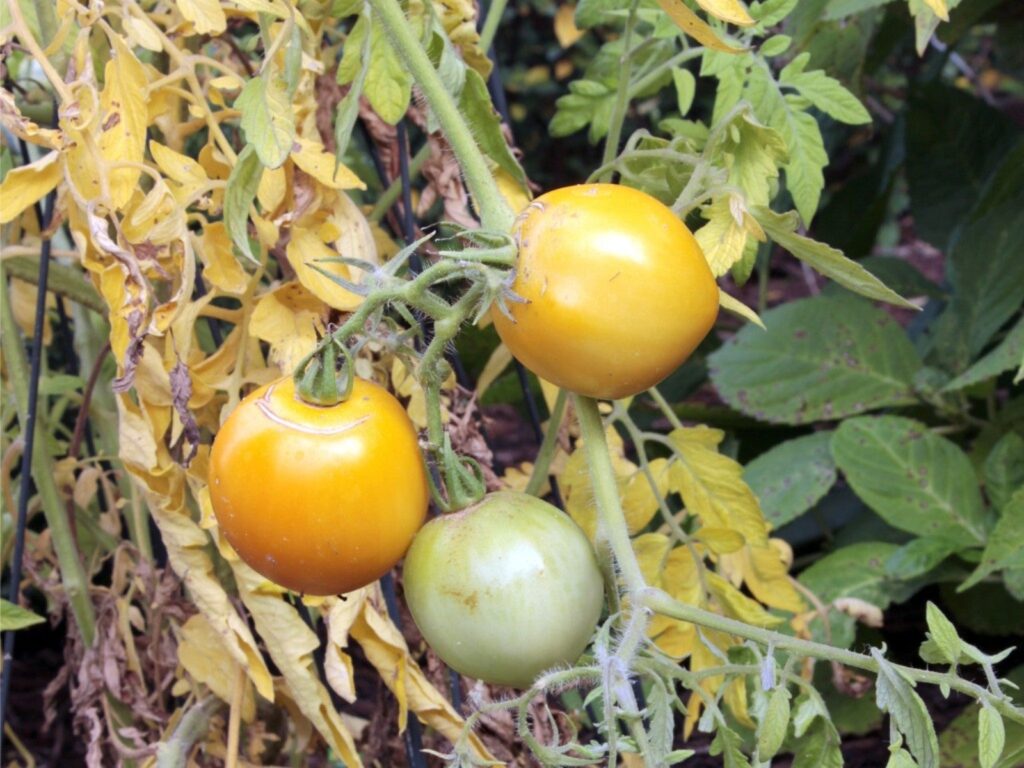
Improper watering practices are another major contributor to yellow leaves.
a. Overwatering
When roots sit in waterlogged soil:
- Leaves turn yellow due to root rot and reduced oxygen uptake.
- Soil may develop fungal growth.
Correction:
- Improve drainage using coco coir, perlite, or coarse compost.
- Water only when the top 2–3 cm of soil becomes dry.
- Use raised beds or containers with drainage holes.
b. Underwatering
Lack of moisture leads to:
- Leaf tip burn and yellowing.
- Wilting and premature leaf drop.
Correction:
- Mulch with dry leaves, grass clippings, or straw to retain moisture.
- Water deeply but less frequently to promote strong root systems.
4. Soil pH and Structure Management
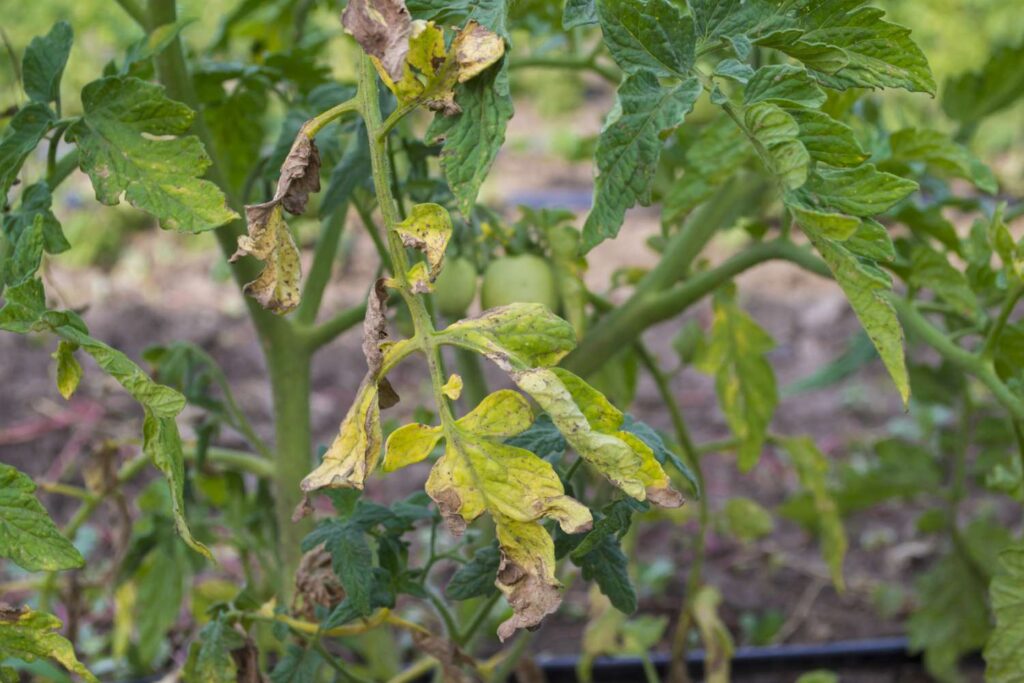
Soil pH governs nutrient absorption. Most vegetables prefer a slightly acidic to neutral pH (6.0–7.0).
a. Acidic Soil
- May restrict uptake of magnesium, calcium, and phosphorus.
Correction:
Apply wood ash or agricultural lime in moderate quantities.
b. Alkaline Soil
- Often leads to iron and zinc deficiencies.
Correction:
- Incorporate sphagnum peat moss, vinegar solution (very diluted), or pine compost.
c. Soil Compaction
Compacted soil limits root respiration and nutrient movement.
Correction:
- Loosen soil with a hand fork without disturbing roots.
- Add organic matter like compost, biochar, or leaf litter.
5. Pest and Disease Management Using Plant-Based Solutions
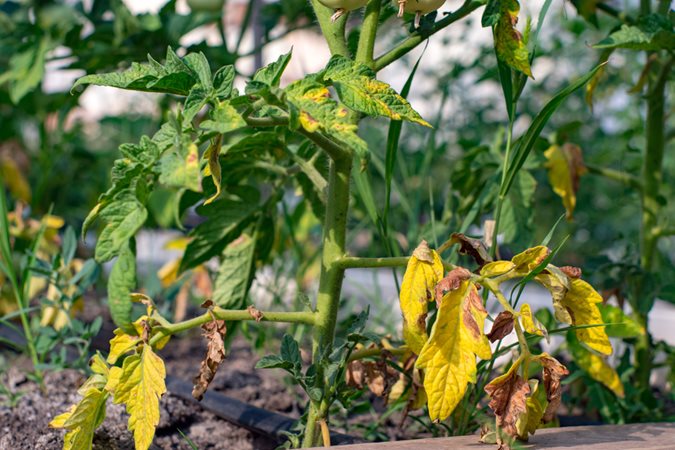
Pests and pathogens often disrupt nutrient flow, causing yellow spots or entire leaf chlorosis.
a. Aphids, Whiteflies, and Spider Mites
These insects suck sap from the leaf underside, limiting chlorophyll synthesis.
Plant-Based Remedies:
- Spray neem oil, garlic-pepper extract, or soap solution (mild).
- Introduce natural predators such as ladybugs (non-invasive and plant-safe).
b. Fungal Diseases
Root rot, mildew, and blight can lead to yellow leaves.
Solutions:
- Remove infected plant parts.
- Treat with baking soda solution, neem oil, or aerated compost tea.
- Improve airflow and avoid wetting leaves.
6. Environmental and Climatic Factors
External conditions also influence chlorosis.
a. Excessive Heat or Cold
- High temperatures cause moisture stress.
- Frost damages chloroplasts and leaf cells.
Mitigation:
- Use shade nets or mulching.
- Plant cold-sensitive vegetables in suitable seasons.
b. Insufficient Sunlight
- Plants deprived of sunlight produce fewer chloroplasts, leading to yellow leaves.
Solution:
- Relocate potted plants to sunnier spots.
- Trim surrounding foliage that blocks sunlight.
c. Wind Damage
Strong winds can cause dehydration and nutrient loss.
Solution:
- Install natural windbreaks using hedges or bamboo screens.
7. Organic and Preventive Practices
To minimize yellow leaves in the long term, adopt routine and sustainable practices.
a. Mulching
Mulching helps retain moisture, regulate temperature, and supply nutrients.
Use:
- Shredded leaves
- Coconut husk
- Dry grass clippings
b. Crop Rotation
Growing the same vegetables repeatedly in one spot depletes nutrients and increases disease susceptibility.
Practice:
Rotate families (e.g., legumes → leafy greens → root crops) annually.
c. Companion Planting
Certain plant combinations reduce pest attacks and improve soil fertility.
Examples:
- Marigolds with tomatoes or peppers
- Basil with beans or cucumbers
d. Regular Observation
Inspect leaves weekly for:
- Color changes
- Pest presence
- Soil moisture level
Early action prevents systemic damage.
8. Homemade Plant-Based Fertilizers and Tonics
To improve plant vigor without non-veg inputs, consider these organic formulations:
a. Banana Peel Tea
- Soak chopped banana peels in water for 2–3 days.
- Use as a potassium-rich liquid feed.
b. Compost Tea
- Steep finished compost in water for 24 hours.
- Dilute and apply as a foliar spray or root drench.
c. Seaweed or Kelp Extract
- Rich in micronutrients and growth hormones.
d. Green Manure Liquid
- Fermented weeds or grass clippings can be strained into fertilizer tea.
These options enhance nutrient availability and promote microbial life in the rhizosphere.
9. When to Prune Yellow Leaves
Removing yellow leaves depends on the extent and cause.
- Mild or localized yellowing: Trim affected leaves to prevent disease spread.
- Severe or widespread chlorosis: Focus on improving conditions before heavy pruning to reduce stress.
Dispose of diseased leaves away from the garden.
10. Conclusion
Yellow leaves on vegetable plants are indicators rather than mere disturbances. They reflect underlying issues in nutrient availability, water management, soil structure, pests, or environment. Addressing these problems through sustainable, plant-based techniques not only restores leaf health but also enhances crop productivity. By adopting preventive practices such as mulching, composting, companion planting, and routine monitoring, cultivators can ensure long-term vitality without resorting to non-vegetarian interventions.
A holistic approach that combines correct diagnosis, natural inputs, and environmental management will provide an effective and ethical solution to chlorosis, enabling healthier vegetable crops and more resilient agricultural systems.