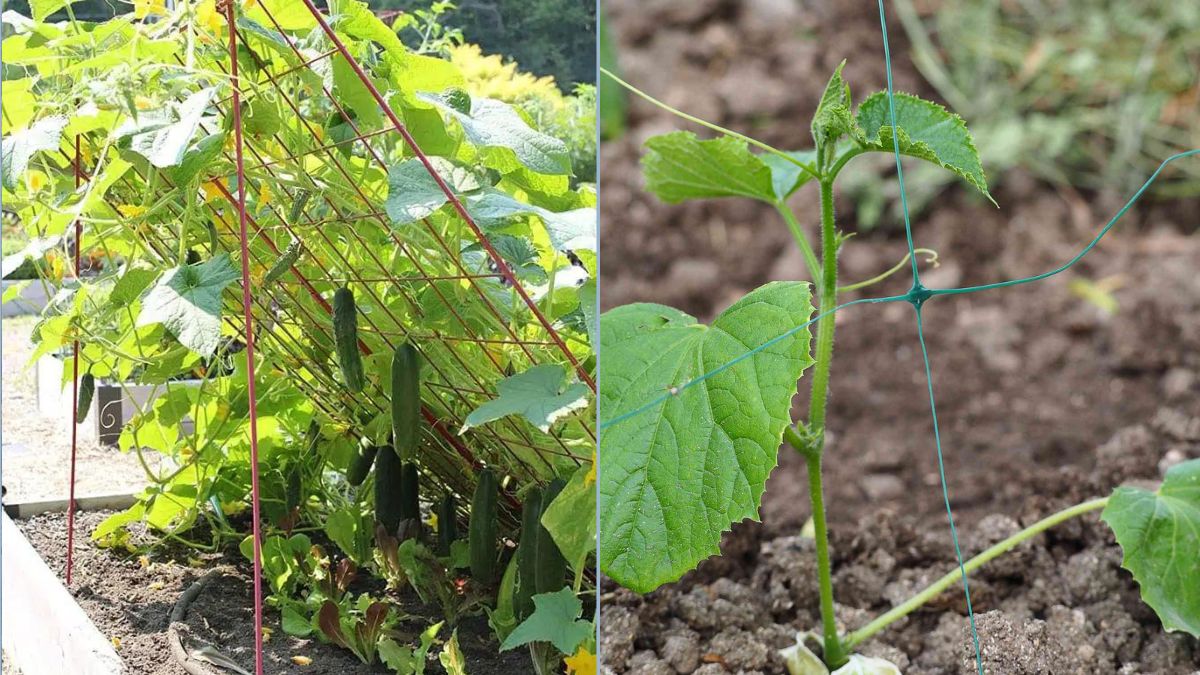
Cultivating cucumbers in limited spaces has become an increasingly relevant practice for urban gardeners, students, and researchers exploring sustainable agriculture in constrained environments. A trellis system enables vertical growth, increases yield per square foot, and improves plant health. This article provides an in-depth, thesis-style guide on how to start a cucumber trellis in a small area, emphasizing structure design, plant selection, maintenance, and productivity strategies.
1. Introduction
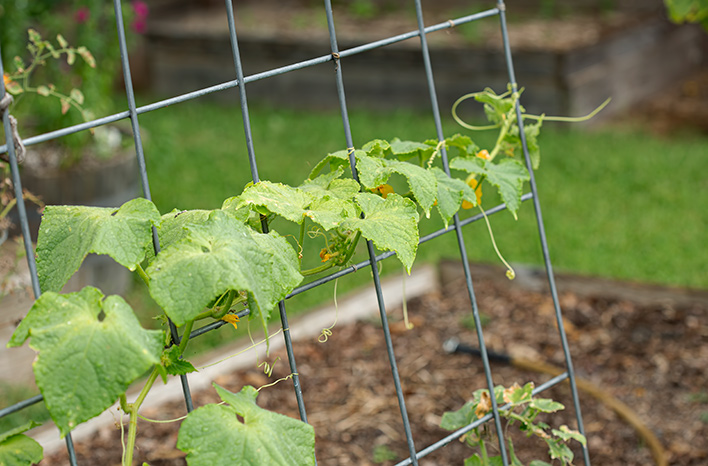
Growing cucumbers (Cucumis sativus) traditionally requires ample space due to their vining nature. However, spatial limitations in urban homes, balconies, patios, and institutional settings make horizontal gardening impractical. A vertical trellis allows cucumbers to climb upward, conserving ground space while enhancing air circulation, ease of harvesting, and disease prevention. Implementing a small-area trellis system aligns with sustainable land-use practices and supports research in compact agriculture techniques.
2. Benefits of Trellising Cucumbers in Small Spaces
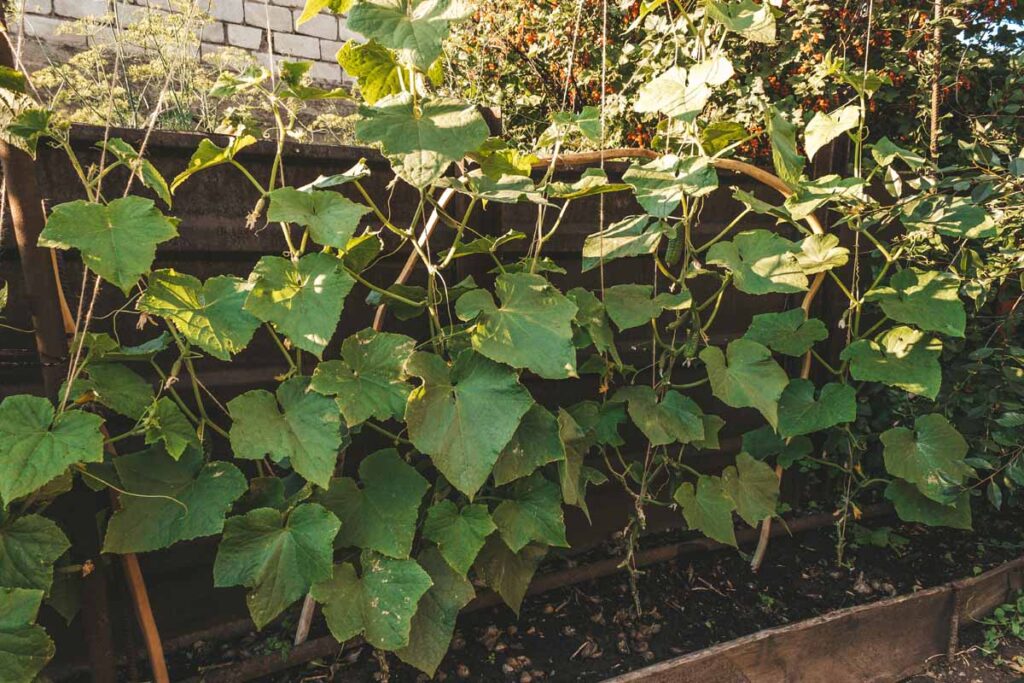
a. Space Optimization
Vertical growth frees up soil surface for companion plants or additional crops. Even a one-square-meter area can support multiple cucumber vines when properly trellised.
b. Better Air Circulation
Elevating vines prevents moisture buildup around foliage, reducing the risk of fungal diseases like powdery mildew.
c. Higher Yield and Accessibility
Fruits are easier to spot, pick, and monitor, leading to increased harvest efficiency and minimal crop loss.
d. Cleaner and Healthier Fruit
Since cucumbers do not rest on the ground, they remain clean, uniform, and less prone to rot and pest damage.
3. Choosing the Right Cucumber Variety for Small Areas
Compact or climbing varieties perform best in limited spaces. The following cultivars are well-suited for trellised environments:
- ‘Spacemaster’ – Bred specifically for small areas and container gardening.
- ‘Picolino’ – Produces small, abundant fruits with compact vines.
- ‘Bush Champion’ – Short-vine hybrid suitable for patios and decks.
- ‘Tendergreen Burpless’ – Climbing type with manageable vine length.
- ‘Miniature White’ or ‘Parisian Pickling’ (for smaller fruits and vertical growth).
Selecting a vining rather than bush type ensures better trellis integration and upward growth efficiency.
4. Planning the Trellis System
Trellis planning involves selecting appropriate materials and configurations suited for limited space.
a. Trellis Types Suitable for Small Areas
- A-Frame Trellis
Can be positioned over containers or raised beds; ideal for folding or mobility. - Vertical Panel or Grid Trellis
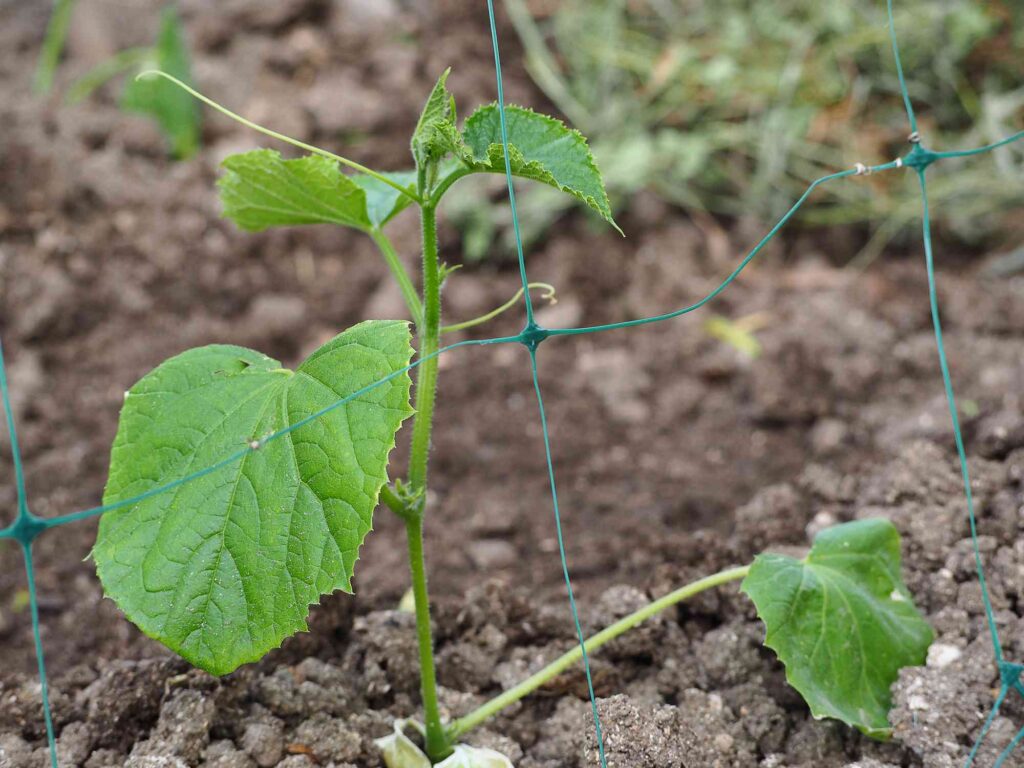
Made from wire mesh, bamboo, or wooden slats; attached to walls, fences, or stakes. - String or Net Trellis
Lightweight and suitable for balconies, indoor grow setups, and small garden beds. - Obelisk or Tower Trellis
Freestanding and space-saving, commonly used in containers or pots.
b. Materials
- Bamboo stakes
- Wooden frames
- Metal mesh or cattle panel
- Plastic garden netting
- Recycled rods, PVC pipes, or rope
Lightweight, sturdy, and weather-resistant materials are preferred for long-term stability.
c. Ideal Dimensions
- Height: 4 to 6 feet (1.2–1.8 m)
- Width: Adaptable to 1–3 feet of growing space
- Spacing: 6–12 inches between plants for proper airflow
5. Container and Soil Setup for Trellised Cucumbers
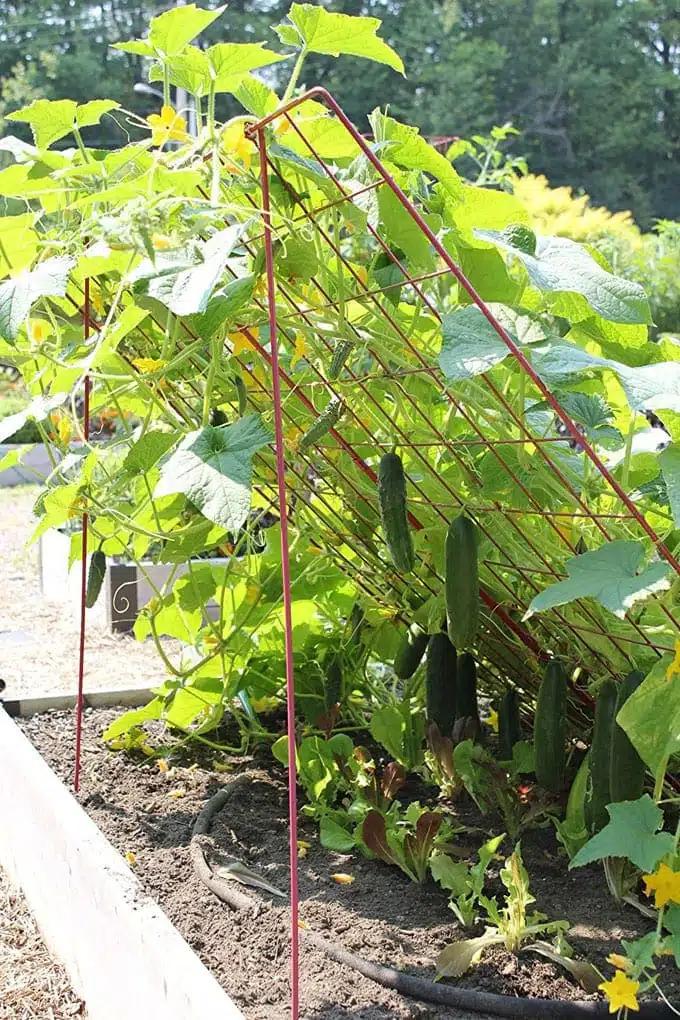
If gardening on balconies, rooftops, or patios, container selection is critical.
a. Containers
- Minimum 5–7 gallons per plant
- Options: grow bags, fabric pots, plastic or wooden planters, recycled buckets
- Ensure adequate drainage holes to prevent root rot
b. Soil Mixture
A high-quality growing medium supports root stability and nutrient uptake.
Recommended Mix:
- 40% compost or organic matter
- 40% loamy soil or coco coir
- 20% perlite or vermiculite for aeration
Soil pH should stay within 6.0–7.0 for optimal growth.
6. Planting Process
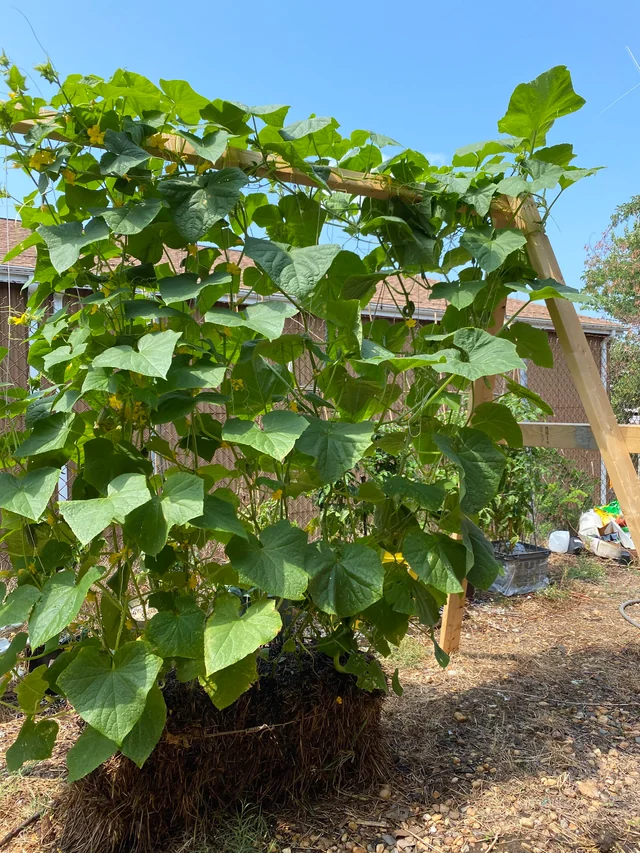
a. Starting from Seeds
- Sow seeds ½ inch deep in pots or small starter trays.
- Begin indoors if temperature is below 18°C (65°F).
- Transplant seedlings once they have 2–3 true leaves.
b. Direct Sowing
If climate allows, plant seeds directly into the final container or ground below the trellis.
c. Spacing
Keep 10–12 inches between seedlings to avoid overcrowding.
7. Installation of the Trellis
Set up the trellis before or immediately after planting to prevent disturbing the root zone later.
Steps:
- Position the trellis along the north side of the planter to ensure sunlight access.
- Drive stakes or anchors 6–12 inches deep into the soil or container.
- Attach mesh, netting, bamboo, or wires between supports.
- Angle the trellis slightly if wind exposure is high.
- Gently guide seedlings toward the structure when they grow 6–8 inches tall.
8. Training and Support
Cucumbers naturally climb using tendrils, but early guidance improves vertical alignment.
Techniques:
- Wrap vines loosely around the nearest support.
- Use soft ties, clips, or fabric strips to secure stems.
- Remove tangled growth to maintain direction.
- Monitor weekly for steady upward growth.
Avoid tight bindings that restrict stem expansion.
9. Watering and Feeding for Maximum Yield
a. Watering
- Keep soil moist but not soggy.
- Water deeply at the base rather than overhead.
- Morning watering is ideal to reduce fungal growth.
b. Fertilization
- Apply diluted compost tea, vermicompost solution, or organic liquid fertilizer every 10–14 days.
- Avoid over-fertilization, as excess nitrogen promotes foliage over fruit.
c. Mulching
Use straw, dry leaves, or coco mulch to retain moisture and suppress weeds.
10. Pest and Disease Management (Non-Toxic Methods Only)
Growing vertically in a small area naturally prevents many pest issues. Still, some concerns may arise.
Common Pests:
- Aphids
- Spider mites
- Whiteflies
- Cucumber beetles (less common indoors)
Preventive Measures:
- Spray neem oil or mild biodegradable soap solution.
- Remove affected leaves promptly.
- Promote airflow with adequate spacing.
- Rotate containers annually if possible.
Disease Control:
- Avoid wetting leaves to prevent mildew.
- Use trellising to prevent soil contact with vines and fruit.
- Remove yellowing or infected foliage early.
11. Pollination in Small Trellised Setups
In outdoor small areas, natural pollinators may be limited. For indoor or sheltered trellis gardening, alternative pollination methods are necessary.
Hand Pollination:
- Use a cotton swab or soft brush to transfer pollen from male to female flowers.
- Perform in the morning for best results.
Alternatively, gentle shaking of the trellis can assist pollen movement.
12. Harvesting and Maintenance
Harvesting Guidelines:
- Pick cucumbers when they are firm, evenly colored, and appropriately sized for the variety.
- Regular harvesting promotes continuous growth.
Ongoing Maintenance:
- Prune excess lateral shoots to focus plant energy.
- Remove old, damaged, or diseased leaves.
- Reinforce trellis stability as vines and fruit increase weight.
13. Maximizing Productivity in Limited Space
- Use succession planting by starting new seedlings every 3–4 weeks.
- Grow companion plants like basil, dill, or marigold at the base.
- Install drip irrigation or self-watering systems for consistency.
- Track growth patterns for academic or research purposes.
14. Sustainability and Small-Area Impact
Using trellises in small spaces supports environmental sustainability by:
- Reducing garden footprint
- Enhancing urban food security
- Lowering waste through organic growing practices
- Supporting educational research and data collection
15. Conclusion
Starting a cucumber trellis in a small area is both practical and highly productive when planned strategically. With the right variety, well-structured support, optimal soil preparation, and vertical training methods, cucumbers thrive even in limited spaces. This approach improves harvest quality, reduces disease, and aligns with sustainable urban cultivation practices.
Whether implemented in balconies, patios, rooftops, greenhouses, or academic settings, a compact trellis system offers an effective solution for maximizing cucumber production without requiring large land resources.