
Roasting is one of the most effective cooking techniques for enhancing the natural flavors, colors, and textures of vegetables. Unlike boiling or steaming, roasting uses dry heat to caramelize the natural sugars present in vegetables, producing rich, deep flavors and appealing aromas. This paper explores the science behind roasting, factors affecting flavor development, nutritional implications, and practical methods for achieving maximum flavor from a variety of vegetables. The focus remains exclusively on vegetarian ingredients, aligning with sustainable and plant-based dietary practices.
Introduction

Vegetables are a cornerstone of a balanced diet, providing essential vitamins, minerals, dietary fiber, and antioxidants. However, the method of cooking can significantly influence both the flavor and nutritional content of these foods. Among various cooking techniques—such as steaming, boiling, sautéing, and grilling—roasting stands out as a particularly effective method for unlocking deeper flavors while maintaining a pleasant texture.
Roasting transforms vegetables through a combination of Maillard reactions and caramelization, processes that occur when natural sugars and amino acids are exposed to high heat. This method not only enhances taste but also promotes a desirable golden-brown color and crisp texture. Moreover, roasting is convenient, versatile, and compatible with a variety of vegetables available from home gardens or local markets.
The Science of Roasting Vegetables
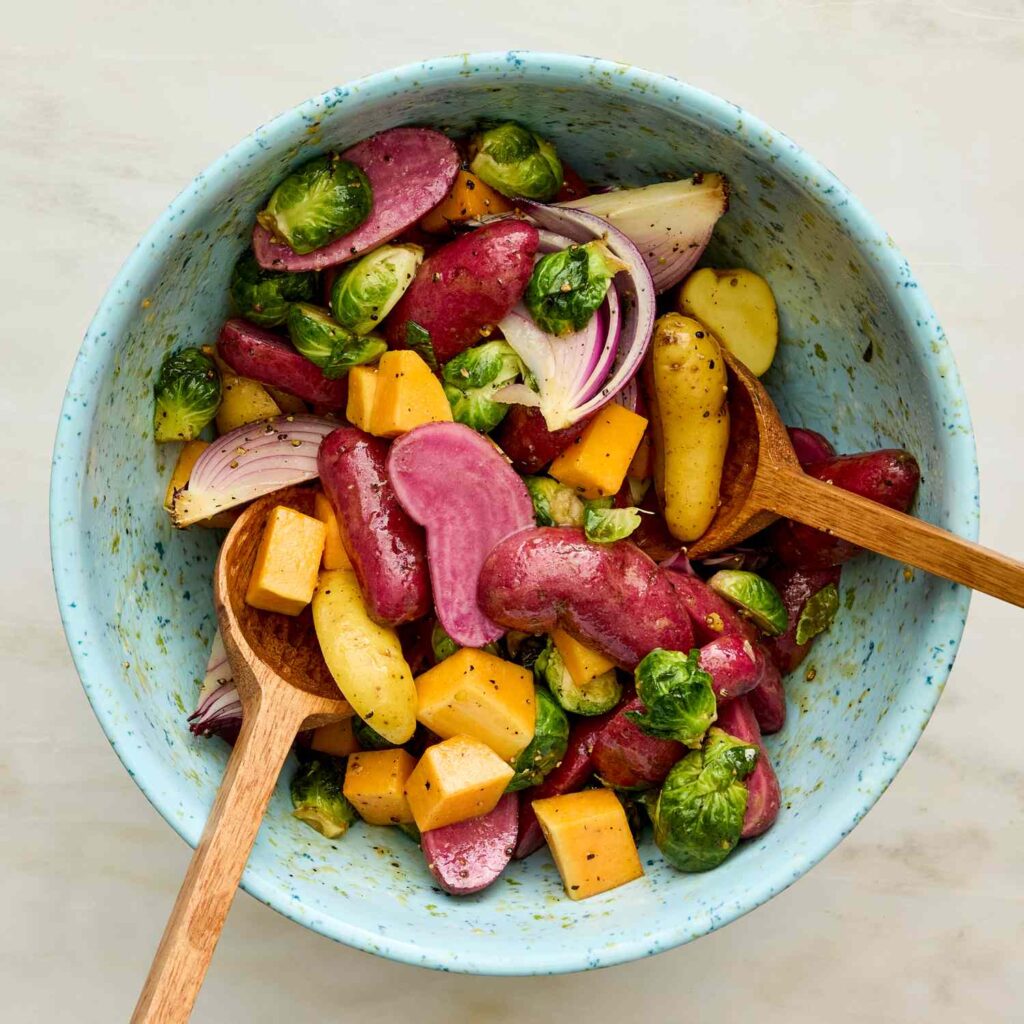
Roasting involves cooking food in an oven using dry heat, typically at temperatures between 180°C and 220°C (350°F–425°F). During this process, several chemical transformations occur:
- Caramelization:
The natural sugars in vegetables (such as sucrose, fructose, and glucose) undergo caramelization when exposed to high temperatures. This reaction produces rich, sweet, and slightly nutty flavors, as well as the characteristic golden-brown hue. - The Maillard Reaction:
This complex reaction between amino acids and reducing sugars contributes to the formation of hundreds of aromatic compounds. It gives roasted vegetables their depth of flavor and enhances overall palatability. - Moisture Reduction:
As vegetables roast, their water content decreases, intensifying both flavor and texture. The result is a crisp exterior and tender interior.
The combination of these processes explains why roasted vegetables often taste sweeter, more savory, and more complex compared to their boiled or steamed counterparts.
Selecting Vegetables for Roasting

Almost any vegetable can be roasted, but some varieties perform particularly well due to their sugar and starch content. Common examples include:
- Root Vegetables: Potatoes, carrots, beets, sweet potatoes, parsnips, and turnips develop deep sweetness and crisp edges when roasted.
- Cruciferous Vegetables: Broccoli, cauliflower, and Brussels sprouts gain a nutty flavor and light char when exposed to high heat.
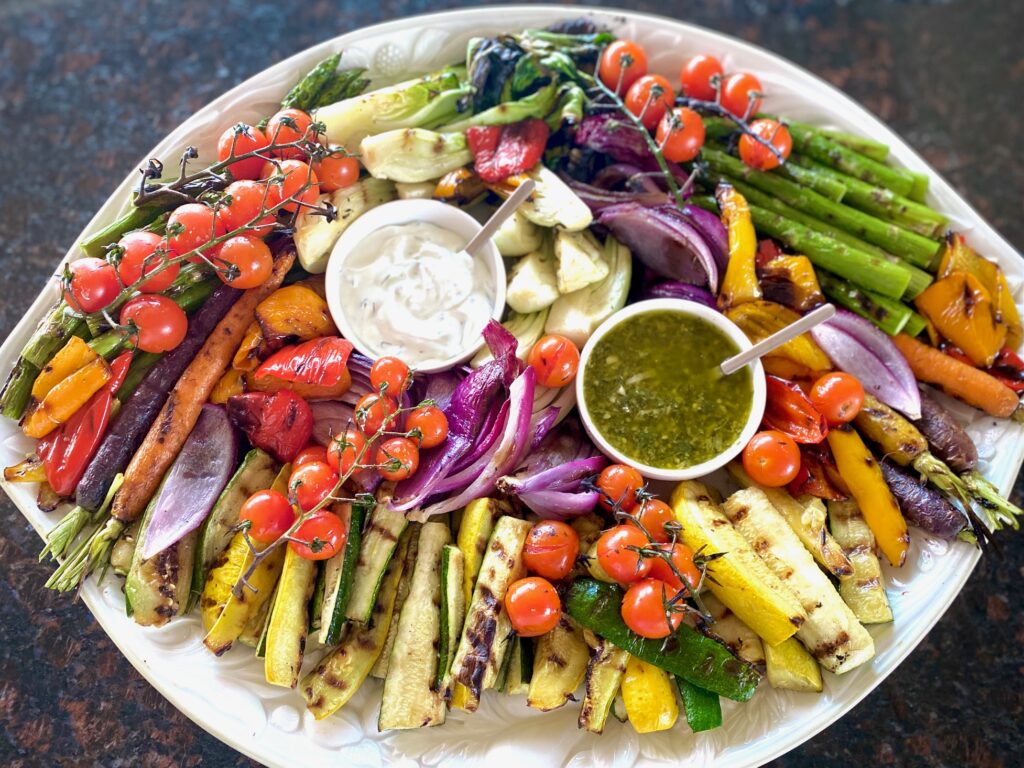
- Fruiting Vegetables: Bell peppers, zucchini, eggplant, and tomatoes soften beautifully and develop smoky undertones.
- Alliums: Onions, garlic, and shallots caramelize exceptionally well, providing sweetness and aroma.
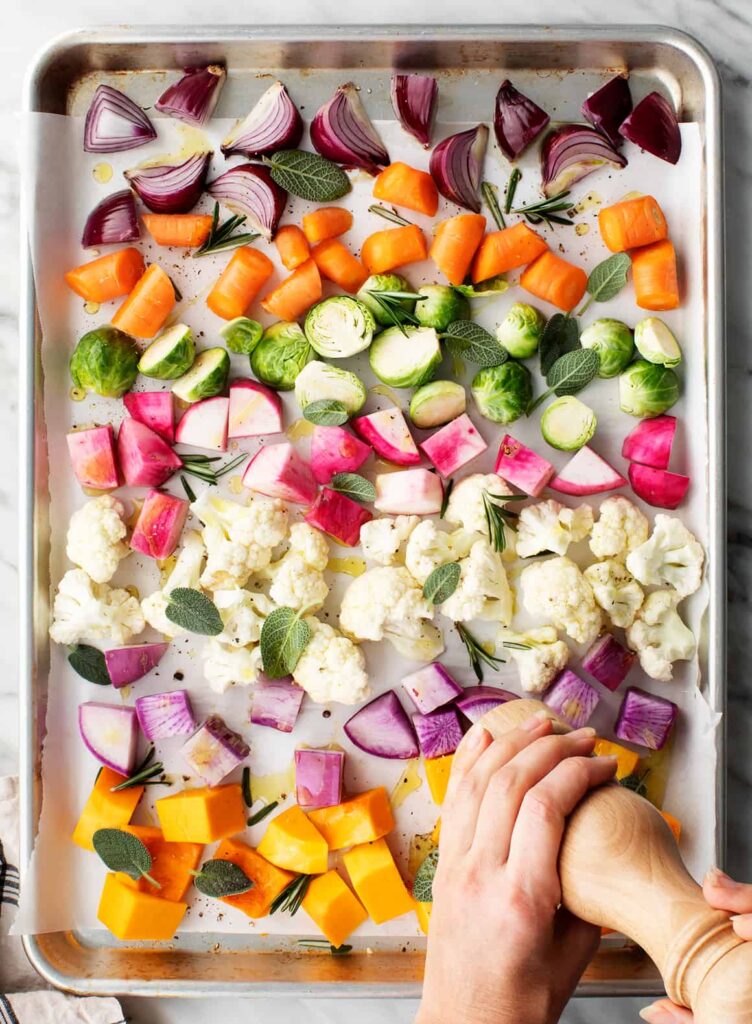
A combination of these vegetables in one roasting pan can create a colorful, nutrient-dense, and flavorful meal.
Preparation Techniques
Achieving maximum flavor begins with proper preparation. Key steps include:
- Cutting Uniformly:
Vegetables should be cut into evenly sized pieces to ensure consistent cooking. Smaller pieces roast faster and develop crisp edges, while larger pieces retain more moisture. - Drying the Vegetables:
Excess moisture prevents proper caramelization. After washing, vegetables should be thoroughly dried with a clean cloth or paper towel. - Using the Right Fat:
Coating vegetables lightly with oil—preferably olive oil, avocado oil, or sunflower oil—helps promote even browning and enhances flavor. Too much oil, however, can cause sogginess. - Seasoning:
Salt is essential for drawing out moisture and intensifying flavor. Herbs and spices such as rosemary, thyme, cumin, paprika, and black pepper can be added for complexity. - Optimal Temperature and Timing:
Most vegetables roast best at 200°C (400°F). Cooking time varies depending on the vegetable—typically 20–40 minutes, with occasional tossing to ensure even browning.
Flavor Enhancement Strategies
To maximize the flavor of roasted vegetables, several techniques can be employed:
- Layering Flavors:
Adding herbs, citrus zest, garlic, or balsamic vinegar either before or after roasting enhances aroma and taste complexity. - Combining Textures:
Mixing vegetables with different densities and water contents creates contrast—crisp carrots with tender zucchini, for example. - Finishing Touches:
A drizzle of lemon juice, tahini dressing, or freshly chopped herbs post-roasting can elevate the dish’s freshness. - Using Marinades:
Light marinades made from olive oil, herbs, and mild acids (like lemon juice or apple cider vinegar) can infuse vegetables with subtle undertones before roasting.
Nutritional Considerations
While roasting enhances flavor, it can influence the nutrient profile of vegetables. Moderate roasting preserves most nutrients, especially fiber and minerals. However, certain heat-sensitive vitamins, such as vitamin C and some B vitamins, may decrease during prolonged exposure to high temperatures.
Interestingly, roasting can increase the bioavailability of some antioxidants. For instance, lycopene in tomatoes and beta-carotene in carrots and sweet potatoes become more absorbable after roasting. Therefore, this cooking method strikes a valuable balance between taste enhancement and nutrient preservation.
To further support nutritional value:
- Use minimal oil to reduce calorie intake.
- Avoid over-roasting, which may lead to charring and the formation of undesirable compounds.
- Include a mix of colorful vegetables to maximize phytonutrient diversity.
Sustainability and Health Benefits
Roasting vegetables aligns with sustainable dietary practices. It minimizes the use of water and energy compared to boiling, reduces food waste (since slightly overripe vegetables roast beautifully), and encourages consumption of plant-based meals.
Health benefits of regular vegetable consumption include improved digestion, better cardiovascular health, and reduced risk of chronic diseases such as diabetes and hypertension. Roasting makes vegetables more appealing, thereby encouraging increased intake among children and adults alike.
Moreover, home-grown vegetables offer superior flavor and freshness, free from harmful pesticides. Using these in roasting contributes to both environmental preservation and personal well-being.
Examples of Flavorful Roasted Vegetable Combinations
- Mediterranean Mix:
Zucchini, bell peppers, cherry tomatoes, onions, and eggplant with olive oil, oregano, and garlic. - Root Vegetable Medley:
Carrots, parsnips, sweet potatoes, and beets roasted with rosemary and thyme. - Asian-Inspired Blend:
Broccoli, cauliflower, mushrooms, and tofu (optional) with sesame oil, soy sauce, and ginger. - Spiced Indian Roast:
Potatoes, cauliflower, and peas tossed with turmeric, cumin, and coriander. - Simple Garlic Herb Roast:
Mixed seasonal vegetables drizzled with olive oil and sprinkled with sea salt, black pepper, and fresh parsley.
Each of these combinations exemplifies how simple ingredients can yield gourmet-level flavors through proper roasting.
Common Mistakes to Avoid
- Overcrowding the pan: Causes steaming rather than roasting.
- Using too low a temperature: Prevents browning and flavor development.
- Skipping seasoning: Results in bland taste.
- Overcooking: Leads to dryness and loss of nutrients.
Understanding these errors ensures consistently successful results.
Conclusion
Roasting vegetables is both a culinary art and a science. It transforms simple plant ingredients into rich, aromatic dishes that are visually appealing and nutritionally rewarding. Through caramelization and Maillard reactions, vegetables achieve complex flavor profiles that surpass other cooking methods.
By applying proper techniques—such as temperature control, balanced seasoning, and mindful use of oil—home cooks and researchers alike can achieve maximum flavor without sacrificing health. Furthermore, the focus on plant-based, sustainable eating aligns with modern dietary and environmental goals.
In conclusion, roasting is not merely a cooking technique but a gateway to rediscovering the natural beauty and flavor potential of vegetables. When performed thoughtfully, it can elevate everyday meals into nourishing, flavorful experiences that support both human health and ecological balance.