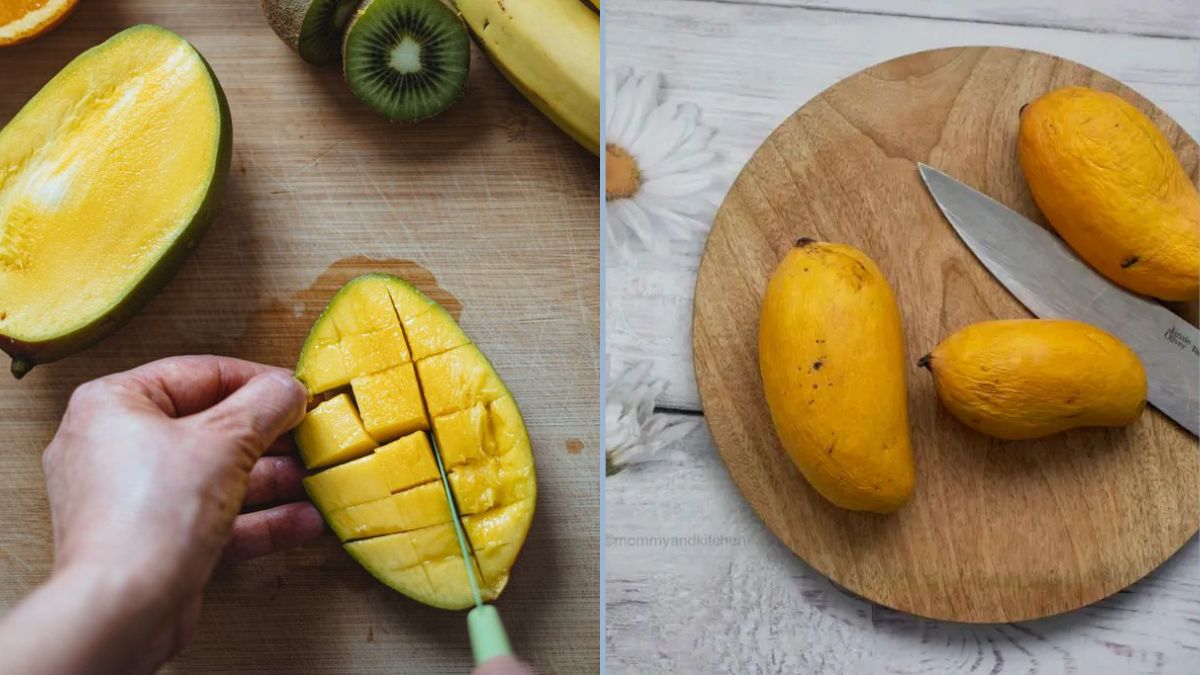
Mangoes, often called the “king of fruits,” are among the most beloved tropical fruits worldwide. Their luscious sweetness, vibrant color, and unique aroma make them a staple in vegetarian cuisines, smoothies, salads, and desserts. However, cutting mangoes neatly can be challenging due to their slippery texture and large seed, often resulting in a sticky mess and wasted fruit. This article explores the science, techniques, and practical tips behind cutting mangoes efficiently and cleanly. It examines the anatomy of the mango, the best tools and methods for slicing, and innovative ways to prepare the fruit for various dishes — all while minimizing waste and maintaining hygiene.
Introduction
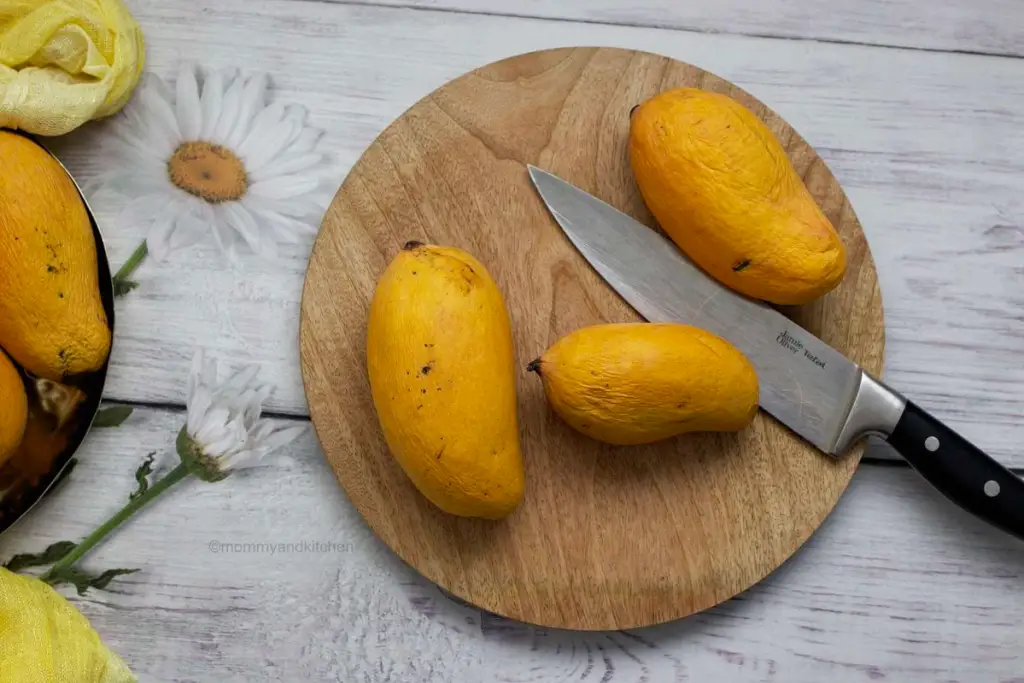
Mangoes are a quintessential fruit in many tropical and subtropical regions. Their golden flesh, juicy texture, and aromatic sweetness have earned them a revered status in both home kitchens and gourmet cuisines. However, despite their appeal, mangoes can be notoriously tricky to handle. The large, flat pit and slippery pulp often lead to messy cutting surfaces, wasted juice, and uneven pieces.
For vegetarians and fruit enthusiasts who wish to present mangoes beautifully in salads, desserts, or beverages, learning to cut them neatly is an essential culinary skill. This article explores how to prepare and cut mangoes effectively — without creating a mess — while preserving their nutritional value and aesthetic appeal.
Understanding Mango Anatomy
Before mastering the cutting process, it’s important to understand the internal structure of a mango. Each fruit consists of three main parts:
- The Skin (Peel): The outer layer, which can range in color from green to yellow, orange, or red. Though generally not eaten, it protects the fruit’s soft interior.
- The Flesh (Pulp): The juicy, edible part rich in vitamins and antioxidants.
- The Seed (Pit): A large, flat kernel that occupies much of the fruit’s center, making cutting more challenging.
The shape of the seed is oblong and thin, running along the center from top to bottom. Understanding its position helps guide the knife for clean, even cuts.
Nutritional Benefits of Mangoes
Mangoes are not just delicious; they are nutritionally dense and fit perfectly in vegetarian diets.
- Vitamin A: Supports eye health and skin regeneration.
- Vitamin C: Boosts immunity and aids collagen formation.
- Fiber: Promotes digestion and supports gut health.
- Antioxidants: Help neutralize free radicals and protect cells.
- Enzymes (like amylases): Aid in carbohydrate digestion.
Because mangoes are often eaten raw, cutting them properly helps maintain their nutrients by minimizing oxidation and juice loss.
Choosing the Right Mango
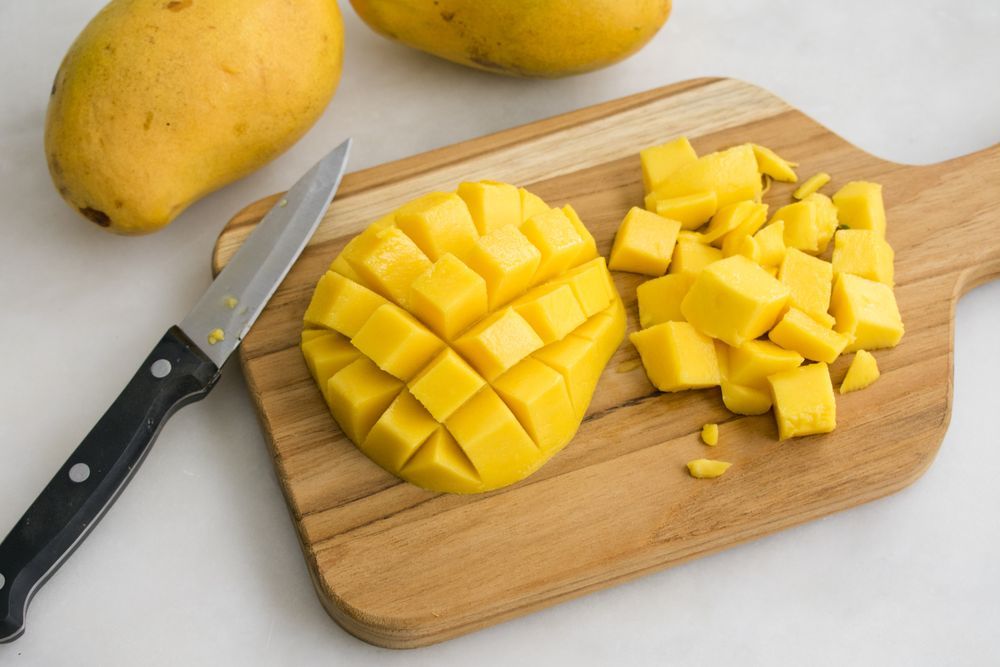
Cutting a mango cleanly begins with selecting the right fruit.
- Ripeness: A ripe mango should yield slightly to gentle pressure. Overripe mangoes tend to be mushy and harder to handle without making a mess.
- Texture: Choose mangoes with smooth skin free of blemishes or dark spots.
- Shape: A uniformly oval mango is easier to cut than one with an irregular shape.
Firm-ripe mangoes, which are sweet but not overly soft, provide the best texture for clean slicing.
Tools You’ll Need
A few simple tools make a significant difference in cutting mangoes efficiently:
- A sharp paring knife or chef’s knife: For clean cuts without crushing the flesh.
- A cutting board: Preferably non-slip, to avoid accidents.
- A spoon or mango slicer: To help scoop out or remove the flesh neatly.
- A towel or paper napkin: To wipe away juice and maintain grip.
Clean, dry tools ensure minimal slippage and help prevent the spread of sticky residue.
The Step-by-Step Process: Cutting Mangoes Without a Mess
Step 1: Wash and Dry the Mango
Rinse the mango under cool water to remove dirt or pesticide residues. Pat dry with a towel. Dry skin is easier to grip, reducing slippage during cutting.
Step 2: Identify the Seed Orientation
Hold the mango upright, stem side facing up. The flatter sides of the mango indicate the position of the seed. Visualizing the seed’s alignment helps determine where to make your first cuts.
Step 3: Slice Along the Seed
Using a sharp knife, make the first cut about 1 centimeter from the center of the fruit, slicing down vertically along the seed. Repeat on the other side to separate two large oval halves, commonly known as the “cheeks.”
You’ll now have three parts: two cheeks and one middle section containing the seed.
Step 4: Score the Mango Flesh
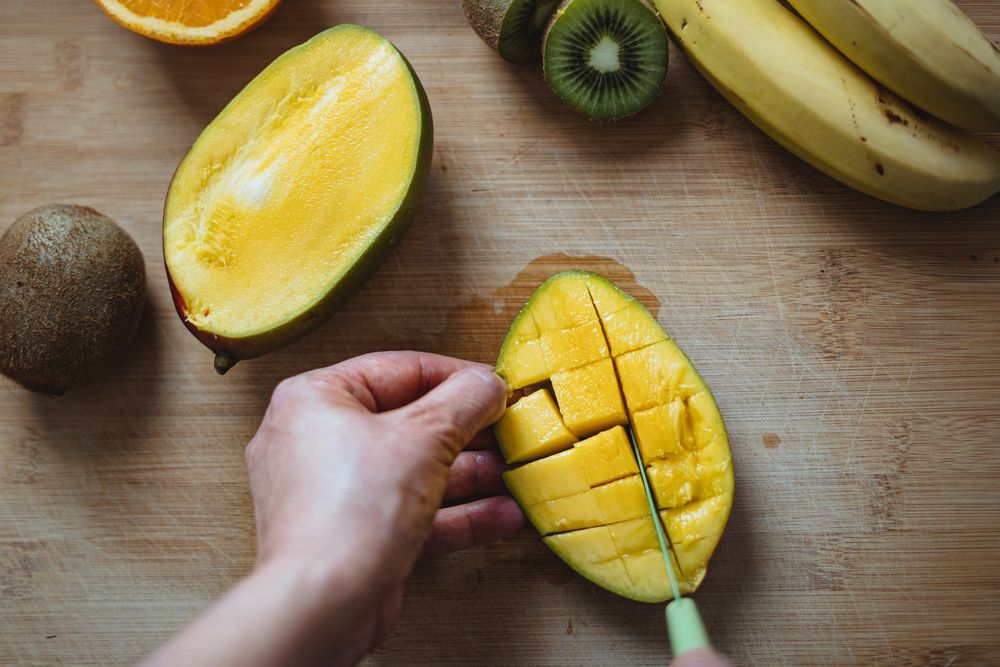
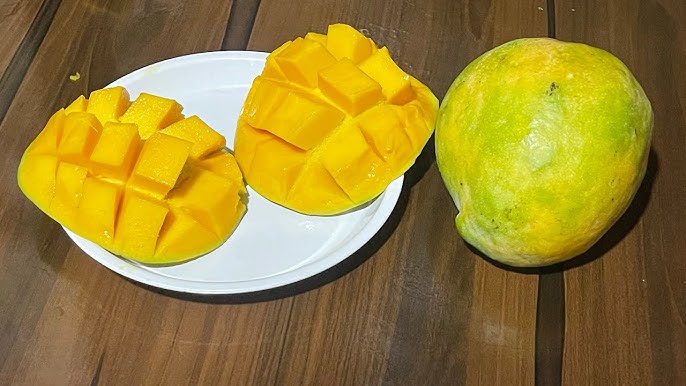
Take one cheek and, without cutting through the skin, score the flesh into cubes or thin slices. Make horizontal and vertical cuts with the knife tip.
This grid pattern helps release even mango cubes when inverted.
Step 5: Invert and Scoop
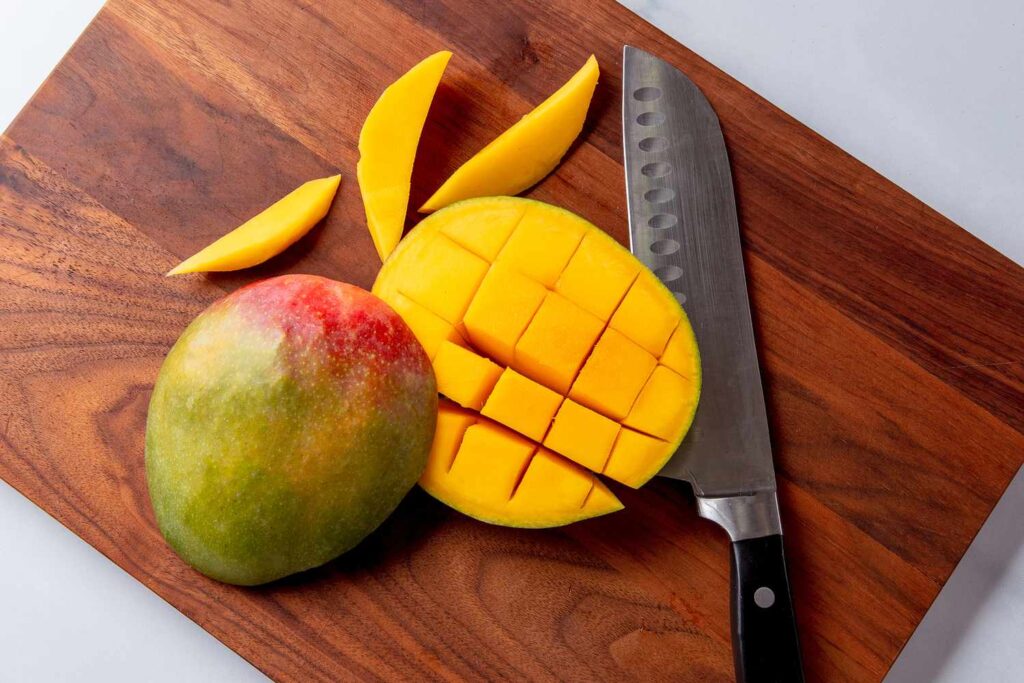
Gently push the skin side upward so the scored mango flesh pops outward in a hedgehog-like pattern. Using a spoon, scoop the cubes cleanly into a bowl.
This method prevents the need to handle slippery pulp directly, keeping your hands and surfaces clean.
Step 6: Trim the Remaining Flesh
For the center section containing the seed, carefully trim away remaining bits of fruit using small slicing motions. Scoop these pieces with a spoon to minimize waste.
Alternative Cutting Methods
1. The Glass Method
This creative approach eliminates much of the mess.
- Slice the cheeks as described earlier.
- Place the edge of one mango half against a glass rim.
- Slide downward so the skin stays outside while the flesh falls neatly into the glass.
Result: A quick, mess-free way to remove mango flesh with minimal juice loss.
2. Using a Mango Splitter
A mango splitter is a handy kitchen tool designed specifically for this fruit. It has a circular blade that cuts around the pit in one motion.
While it may not be as precise as a knife, it saves time and works especially well when preparing large quantities.
3. The Peeling Method
For some recipes, peeled slices work better than cubes.
- Use a vegetable peeler to remove the mango skin.
- Hold the peeled fruit upright and slice the cheeks off as before.
- Cut the flesh into thin strips or wedges.
This technique produces smooth, uniform slices ideal for desserts or salads.
Minimizing Waste
Every mango has a surprising amount of usable fruit around its seed. To minimize waste:
- Use a spoon to scrape off leftover pulp near the pit.
- Add these small pieces to smoothies or chutneys.
- Save peels and seeds for compost — contributing to sustainable kitchen practices.
Cleaning Up Efficiently
To avoid sticky surfaces:
- Use a plastic cutting board that’s easy to rinse.
- Wipe surfaces immediately with a damp cloth to prevent residue buildup.
- Wash knives and utensils in warm water right after cutting — dried mango juice can be stubborn to remove.
Adding a few drops of lemon juice to the cleaning water helps dissolve sugars and neutralize stickiness naturally.
Creative Ways to Use Cleanly Cut Mangoes
Once you’ve mastered the art of mess-free cutting, mangoes can enhance countless vegetarian dishes:
- Fresh Mango Salad: Combine diced mango with cucumbers, mint, and lime juice.
- Mango Smoothie: Blend with banana, yogurt, and a touch of honey.
- Mango Salsa: Mix with diced tomatoes, onions, and cilantro for a tropical twist.
- Mango Chutney: A tangy condiment for rice or whole-grain bread.
- Mango Popsicles: Puree and freeze for a refreshing summer dessert.
Clean cutting ensures presentation-worthy results and enhances the texture of each dish.
Health and Culinary Benefits
Cutting mangoes properly offers more than aesthetic appeal:
- Preserves Nutrition: Less exposure to air reduces vitamin degradation.
- Improves Hygiene: Reduces bacterial contamination from messy handling.
- Reduces Waste: Maximizes edible yield from each fruit.
- Enhances Presentation: Clean, uniform pieces improve visual appeal.
- Encourages Mindful Eating: Promotes appreciation for natural foods and careful preparation.
Discussion
The process of cutting mangoes efficiently highlights the connection between technique, nutrition, and sustainability. In vegetarian cooking, where fruits often serve as both flavor and nutrient sources, proper preparation ensures maximum benefit with minimal waste.
From a scientific perspective, understanding mango anatomy helps reduce friction, optimize knife movement, and minimize juice loss. Furthermore, the techniques discussed promote cleanliness, safety, and environmental consciousness — essential principles in sustainable food preparation.
Conclusion
Cutting mangoes without a mess is not only a matter of technique but also of respect for the fruit’s natural structure and nutritional value. By choosing the right tools, understanding the seed’s placement, and using strategic cutting methods like scoring, glass extraction, or mango splitters, anyone can master the art of clean mango preparation.
These vegetarian-friendly practices help maintain hygiene, preserve nutrients, and present the fruit attractively — whether for a quick snack, salad, or gourmet dessert.
Ultimately, learning to cut mangoes neatly embodies the principles of mindful, sustainable cooking: minimal waste, maximum flavor, and appreciation for nature’s bounty.