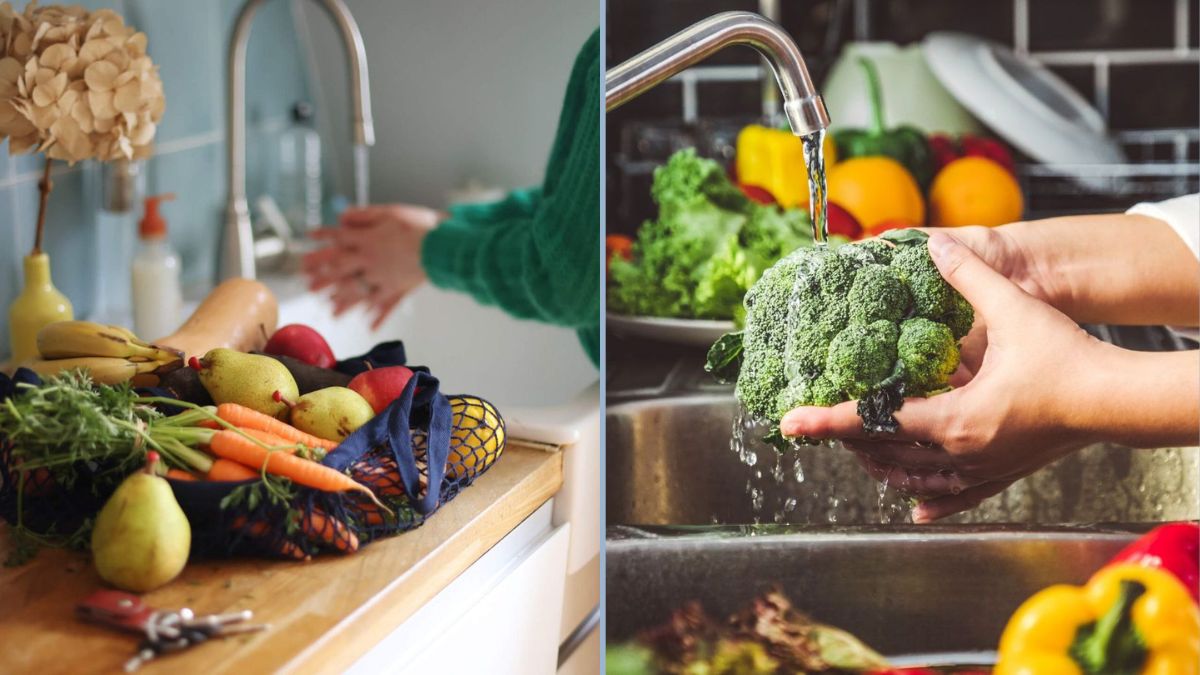
Washing fruits and vegetables is one of the most crucial steps in maintaining food safety, hygiene, and nutritional quality in fresh cooking. Contaminants such as pesticides, soil residues, bacteria, and wax coatings can remain on produce surfaces even after harvest. Efficient washing methods not only ensure cleanliness but also help preserve nutrients, texture, and flavor. This article explores the importance of cleaning produce properly, effective washing techniques, water-saving methods, and natural cleaning alternatives. By following scientific and practical guidelines, individuals can minimize health risks, enhance food quality, and promote sustainable household practices.
Introduction
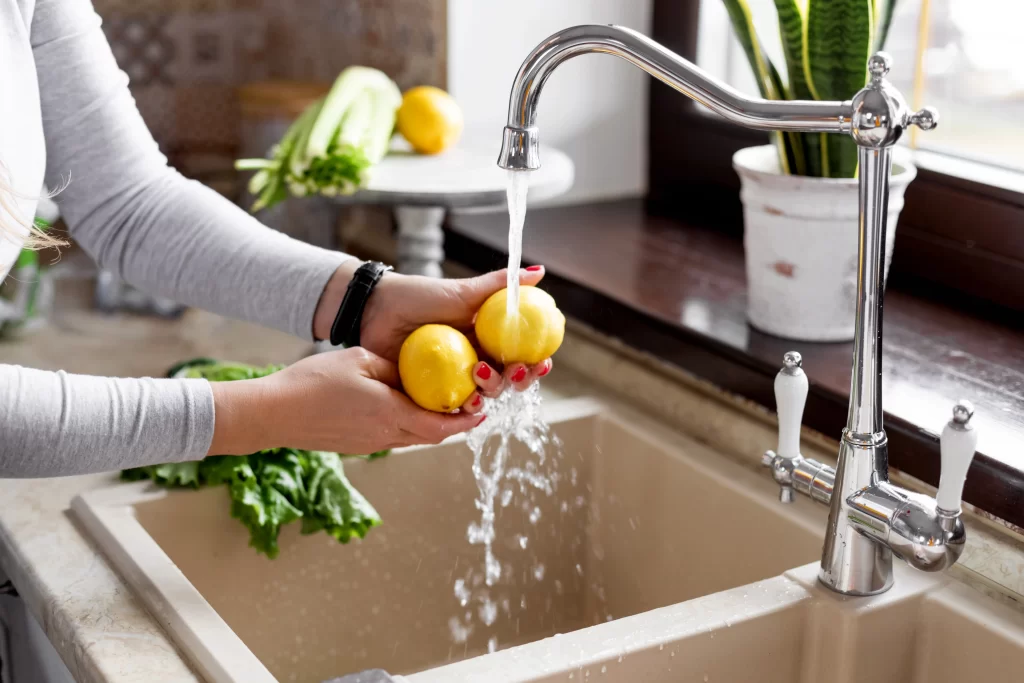
Fruits and vegetables form the foundation of a healthy vegetarian diet, offering essential vitamins, minerals, antioxidants, and fiber. However, their direct contact with soil, water, fertilizers, and handling processes makes them vulnerable to contamination. Inadequate washing can lead to ingestion of harmful bacteria, pesticide residues, and dirt particles that compromise both taste and health.
Efficient washing does not simply mean rinsing produce under water. It involves understanding the type of contaminants present, applying the right cleaning methods, and minimizing waste. With growing awareness about food safety and sustainability, knowing how to wash fruits and vegetables properly has become essential in every home and professional kitchen.
This article provides an in-depth guide to effective cleaning methods, highlighting natural solutions, water conservation techniques, and best practices for handling different types of produce.
The Importance of Washing Fruits and Vegetables
Proper washing serves multiple purposes beyond surface cleaning:
- Removal of Pesticide Residues:
Conventional farming often uses pesticides to protect crops from pests and diseases. Traces can remain on the skin even after harvest. - Elimination of Dirt and Dust:
Produce, especially root vegetables, may carry soil particles that harbor bacteria and microorganisms. - Reduction of Pathogens:
Harmful microorganisms such as E. coli, Salmonella, and Listeria can cause foodborne illnesses if not removed. - Improved Taste and Appearance:
Clean produce looks more appealing and retains its natural flavor and texture. - Extended Shelf Life:
Washing and drying correctly can help fruits and vegetables last longer by reducing microbial activity. - Promotes Hygiene and Safety:
Especially important for raw consumption—like salads, smoothies, or juices—where cooking cannot kill germs.
Understanding Contamination Sources
To wash efficiently, one must first understand how produce becomes contaminated.
- Soil and Water: Can carry bacteria, fertilizers, and heavy metals.
- Handling and Transport: Produce may come in contact with dirty surfaces or unwashed hands.
- Storage Conditions: Damp environments promote microbial growth.
- Chemical Residues: Wax or pesticide coatings applied post-harvest for preservation.
Knowing these sources helps determine appropriate cleaning methods for each type of produce.
Efficient Washing Techniques
Different fruits and vegetables require different cleaning approaches based on texture, skin type, and contamination level.
1. Running Water Rinse
The simplest and most effective method for most produce.
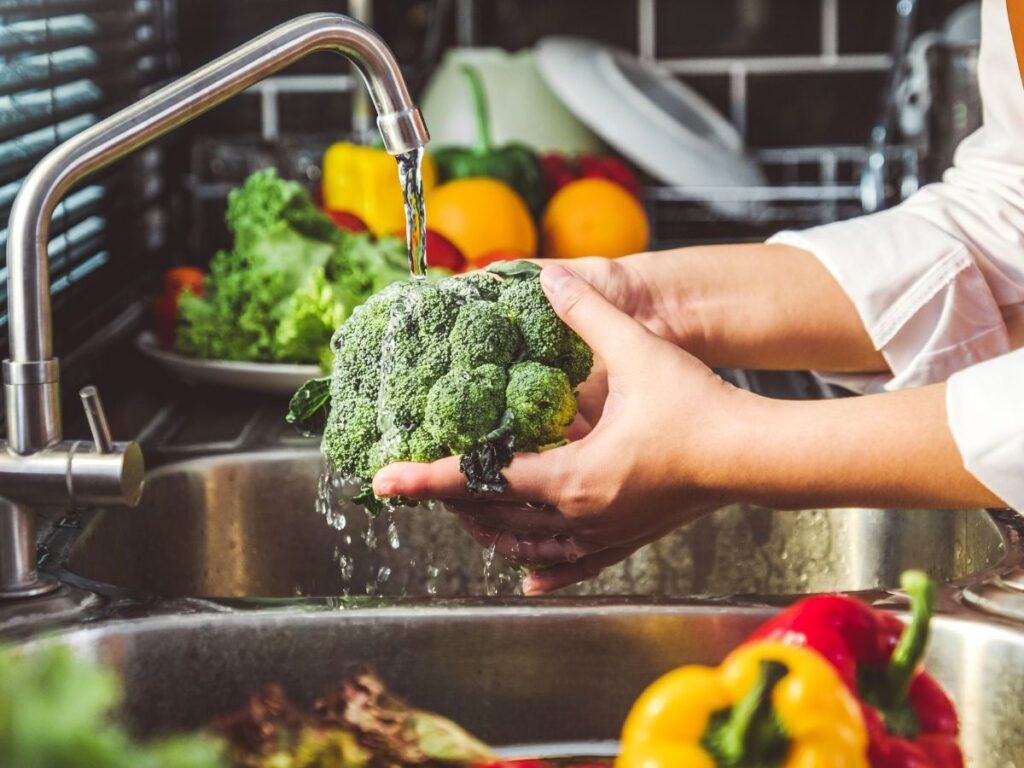
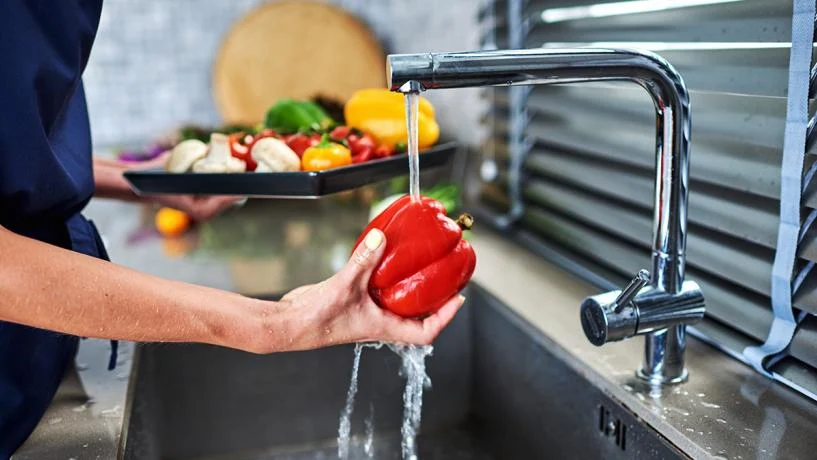
- Hold fruits and vegetables under cool running water for 20–30 seconds.
- Gently rub the surface with your hands to remove residues.
- Use a soft brush for firm produce like cucumbers or melons.
This method is ideal for most everyday cleaning and does not require special solutions.
2. Soaking Method
For leafy greens or items with crevices:
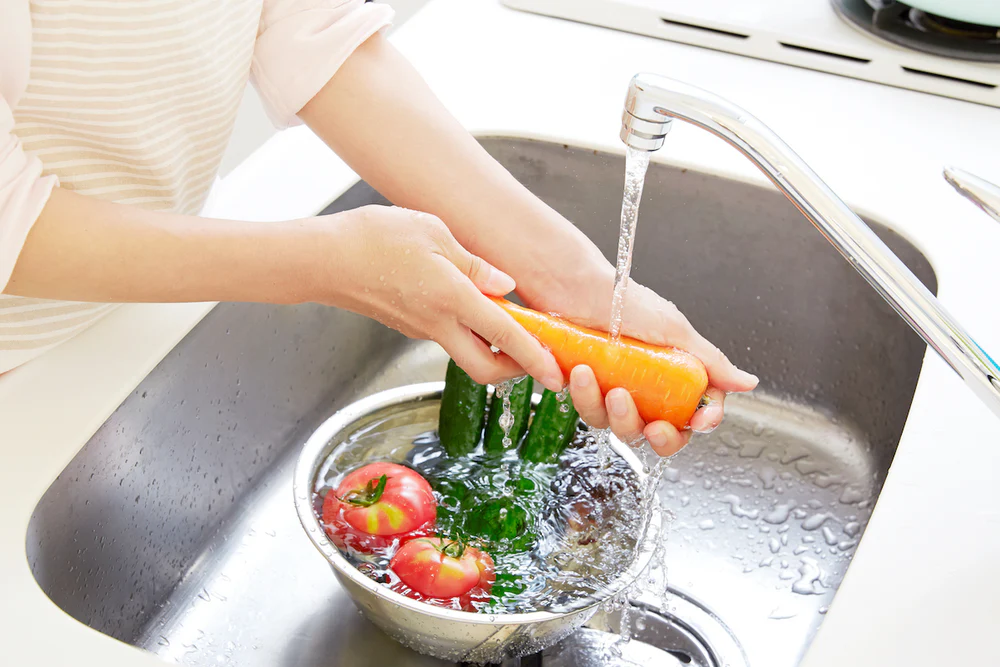
- Fill a large bowl with clean water.
- Add the vegetables and let them soak for 2–3 minutes.
- Swirl gently to dislodge dirt or insects.
- Rinse under running water before drying.
This technique is especially effective for spinach, lettuce, cabbage, and herbs.
3. Natural Vinegar Solution
Vinegar is a natural disinfectant and helps remove wax and bacteria.
- Mix 1 part white vinegar with 3 parts water.
- Soak produce for 5–10 minutes.
- Rinse thoroughly with plain water to remove vinegar taste.
This method works well for apples, grapes, and tomatoes.
4. Baking Soda Wash
Baking soda (sodium bicarbonate) is known for its ability to neutralize pesticides.
- Mix 1 teaspoon of baking soda per 2 cups of water.
- Soak produce for 10–15 minutes, then rinse well.
Studies suggest this method can effectively remove certain chemical residues from apple skins and other fruits.
5. Saltwater Solution
Saltwater has antimicrobial properties that can help remove dirt and bacteria.
- Dissolve 1 tablespoon of salt in 1 liter of water.
- Soak fruits or vegetables for 5 minutes.
- Rinse thoroughly afterward.
Useful for produce like cauliflower or broccoli, which may harbor small insects.
6. Brushing and Scrubbing
Hard-skinned produce such as potatoes, carrots, and melons should be scrubbed with a vegetable brush under running water. Avoid using soap or detergent, as they can leave chemical residues.
7. Peeling and Trimming
In cases where residues cannot be fully removed (e.g., wax-coated fruits), peeling is an effective solution. Trim away damaged or bruised areas that may harbor bacteria.
Handling Different Types of Produce
1. Leafy Greens
Remove outer leaves and soak in cold water. Rinse several times to ensure no dirt or insects remain. Use a salad spinner or clean towel to dry before storing.
2. Root Vegetables
Scrub thoroughly under running water. If consumed raw (like carrots), consider peeling after washing.
3. Berries and Soft Fruits
Berries should be rinsed gently just before eating to prevent spoilage. Do not soak for long as they absorb water easily.
4. Citrus Fruits
Even though peels are not usually consumed, wash them before cutting to prevent transferring bacteria from the skin to the flesh.
5. Herbs
Submerge in cold water for a few minutes to remove dirt. Pat dry with paper towels or air-dry before use.
Drying and Storing After Washing
Proper drying prevents bacterial growth and extends shelf life.
- Use a clean kitchen towel or paper towel to pat produce dry.
- For leafy greens, use a salad spinner.
- Store in breathable bags or containers with slight ventilation.
Avoid sealing wet produce in airtight containers—it promotes mold growth.
For long-term freshness, store items like herbs or greens wrapped in slightly damp paper towels inside perforated bags.
Water Conservation Tips
While cleanliness is important, conserving water during washing is equally crucial.
- Use a large bowl instead of running water for initial rinsing.
- Reuse leftover rinse water for watering plants.
- Wash produce in batches to avoid excess water use.
- Fix leaky faucets and use low-flow taps to reduce waste.
These simple measures ensure sustainability while maintaining hygiene standards.
Common Mistakes to Avoid
- Using Soap or Detergents:
These leave chemical residues not safe for consumption. - Washing Too Early:
Cleaning fruits and vegetables long before storage increases spoilage risk. Wash closer to cooking or eating time. - Ignoring Hidden Areas:
Dirt often hides in stems, folds, and under leaves—inspect carefully. - Reusing Dirty Water:
Always rinse with clean water after soaking to remove loosened contaminants. - Not Drying Properly:
Damp produce encourages mold and bacterial growth in storage.
Scientific Insight: The Role of Washing in Food Safety
Scientific studies have shown that washing under running water can remove up to 90% of surface contaminants. While washing cannot eliminate all pesticide residues, it significantly reduces microbial risk.
Natural acids like vinegar and mild alkaline agents like baking soda work by altering the pH environment, making it difficult for bacteria to survive.
Additionally, mechanical friction—rubbing or scrubbing—plays a vital role in removing microorganisms from surfaces, particularly for firm vegetables.
Sustainable and Eco-Friendly Alternatives
As awareness about environmental sustainability grows, natural and eco-friendly washing options are gaining popularity:
- Lemon Juice: Natural acid helps clean soft fruits effectively.
- Homemade Citrus Wash: Mix lemon peel with vinegar for added antibacterial benefits.
- Reusable Vegetable Brushes: Reduce plastic waste compared to disposable scrubbers.
These practices promote healthy living without harming the planet.
Discussion
Washing fruits and vegetables efficiently is a simple yet powerful practice that bridges hygiene, health, and sustainability. In vegetarian households, where fresh produce forms the main dietary component, ensuring cleanliness is paramount.
Proper washing techniques not only prevent illness but also preserve natural nutrients and flavor. By combining traditional wisdom with scientific understanding, individuals can enjoy safe, fresh, and sustainable food preparation habits.
Conclusion
Efficient washing of fruits and vegetables is a cornerstone of healthy and mindful cooking. From removing contaminants and pesticides to enhancing flavor and texture, proper washing contributes significantly to food safety and quality.
By using clean water, natural solutions like vinegar or baking soda, and careful drying and storage, one can maintain hygiene while conserving resources. Avoiding harsh chemicals and over-washing further ensures nutrient preservation.
Ultimately, washing produce efficiently reflects respect for nature’s gifts, ensuring that every meal prepared with fresh ingredients is both wholesome and safe. Through simple, consistent practices, households can embrace a lifestyle of health, freshness, and sustainability.