
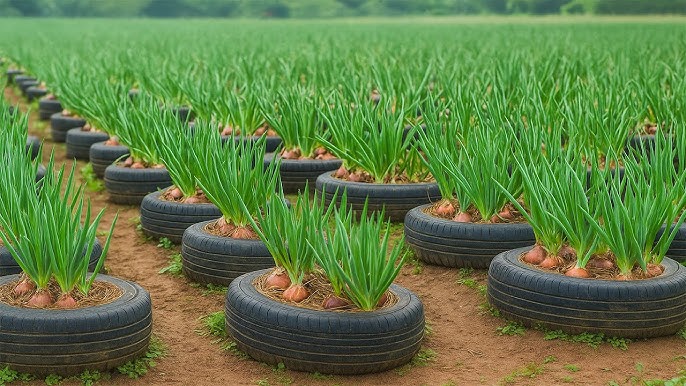
In a world where sustainability and creativity are becoming essential parts of daily life, repurposing household items has never been more rewarding. One of the most overlooked objects we discard is the old tire. Instead of sending it to a landfill or letting it gather dust in the garage, you can turn that tire into a thriving garden bed—specifically, an incredibly productive onion planter.
This guide will walk you through how to grow onions using old tires, the benefits of this method, and tips to help you get a hearty harvest from something you might have thought was junk.
Why Use an Old Tire for Growing Onions?

Before diving into the step-by-step process, it’s worth understanding why tires make surprisingly excellent garden containers:
1. Sustainability and Waste Reduction
Each year, millions of tires end up in landfills or illegal dumps. Repurposing them for gardening reduces waste and gives them a second life.
2. Great Heat Retention
Tires absorb and retain heat from the sun, gently warming the soil inside. Onions love warm conditions, especially in the early stages of growth.
3. Affordable Raised Bed Alternative
Instead of spending money on pots or wooden beds, tires provide a free or low-cost option that works well in small and large spaces.
4. Space Efficiency
Tires can be used in backyards, patios, balconies, or small homestead plots. You can even stack them vertically for tiered planting.
5. Weed and Pest Control
Since you control the soil inside the tire, you reduce the risk of invasive weeds and some soil-borne pests.
Step 1: Select and Clean the Tire
Choose a regular car tire, tractor tire, or even a motorcycle tire depending on how much space you have. Avoid tires that are excessively damaged or cracked.
To prep it:
- Scrub off dirt and debris.
- Rinse with water.
- Optional: Paint the outside with non-toxic exterior paint to make it attractive and reduce heat absorption if you’re in a hot climate.
Step 2: Create Proper Drainage

Good drainage is essential for onions, as soggy soil can lead to rot.
Options include:
- Drill or puncture several drainage holes into the bottom side.
- Alternatively, place the tire directly on soil or gravel to allow excess water to escape.
If using the tire on a patio or balcony, add a layer of stones or broken terracotta pieces at the base.
Step 3: Fill the Tire with Soil
Onions perform best in loose, well-draining soil. You’ll want:

- 50% garden soil or topsoil
- 30% compost or well-rotted manure
- 20% sand or perlite for aeration
Mix thoroughly and fill the tire until it’s just below the rim.
To boost onion health, you can also add:
- Bone meal or wood ash for phosphorus and potassium
- A sprinkle of organic fertilizer if your soil is nutrient-poor
Step 4: Choose the Right Onion Type
Depending on where you live and your growing goals, choose from:
- Onion Sets: Small, immature onions—great for beginners.
- Seedlings (transplants): Already sprouted, saves time.
- Seeds: Cost-effective but require more attention.
Select varieties suited to your day-length zone:
- Short-day onions for southern/warm regions
- Long-day onions for northern/cooler regions
- Intermediate-day onions for mixed climates
Step 5: Planting the Onions in the Tire
For onion sets or transplants:
- Make holes 1–1.5 inches (2–4 cm) deep.
- Space each onion 4–6 inches apart.
- Gently place them with the pointed side up.
- Cover lightly with soil and press gently.
For seeds:
- Scatter or sow in rows.
- Lightly cover with ½ inch of soil.
- Mist gently with water.
You can typically fit 10–20 onions in a standard tire, depending on spacing.
Step 6: Watering the Right Way
Onions need consistent moisture but dislike waterlogged soil. Ideally:
- Keep the soil moist during germination and bulb formation.
- Water when the top inch feels dry.
- Avoid overhead watering once bulbs begin swelling, as it can cause rot.
A drip line, watering can, or gentle hose setting works well.
Step 7: Provide Sunlight and Nutrients
Tires should be placed in a sunny spot, as onions need at least 6–8 hours of direct light daily.
Fertilize lightly every 3–4 weeks with:
- Compost tea
- Fish emulsion
- Balanced organic fertilizer
Avoid heavy nitrogen later in the season or the plant will focus on greens over bulbs.
Step 8: Weed, Mulch, and Protect
Though tires reduce weeds, a few may still pop up. Remove weeds carefully to avoid disturbing the onion roots.
Consider mulching with:
- Straw
- Leaves
- Grass clippings
Mulch helps retain moisture and moderate soil temperature.
Keep an eye out for:
- Thrips
- Onion maggots
- Aphids
Neem oil or insecticidal soap can help if needed.
Step 9: Harvesting Your Tire-Grown Onions
Harvest time depends on the variety and climate, but generally:
- Green onions: Harvest when tops are 6–12 inches tall.
- Bulbing onions: Harvest when tops turn yellow and fall over.
To avoid damaging the bulbs:
- Gently loosen the soil with your hands or a trowel.
- Pull the onions from the base.
Lay them out in a warm, dry, well-ventilated area to cure for 1–2 weeks before storing.
Stacking Tires for Bigger Yields
Want more vertical growing space? You can stack two or three tires to create deeper beds. Here’s how:
- Fill the first tire with soil and plant onions.
- As they grow, stack another tire and add more soil around the greens.
- This mimics “hilling” and can boost bulb size.
You can also plant onions in the top tire and flowers or herbs in the lower ones for a multi-layer garden design.
Creative Tire Garden Variations
There’s room to get creative with this method:
- Painted tire planters: Add color and personality.
- Half-tire beds: Cut tires in half for semicircle beds.
- Tire towers: Stack them like rings for multiple layers.
- Mixed planting: Combine onions with spinach, lettuce, radishes, or herbs.
This approach is especially useful in urban gardening, small yards, homesteads, or off-grid setups.
Key Advantages of Growing Onions in Tires
Here’s a quick recap of the perks:
Low cost and eco-friendly
Easy to set up and move
Fewer weed issues
Better soil control
Ideal for beginners and small spaces
Can extend the growing season due to heat retention
Is It Safe to Grow Food in Tires?
This is a common question. While tires do break down slowly over time, especially in hot conditions, most gardeners consider them safe for short- to medium-term use. To reduce contact between roots and rubber:
- Use a liner (like landscaping fabric) inside the tire
- Raise soil level above the inner rim
- Ensure drainage to avoid leaching buildup
If safety is a concern, you can grow onions in the tire shell with a thick inner pot or compost bag lining.
Final Thoughts: From Trash to Treasure
Growing onions in old tires is a brilliant example of upcycling meeting practicality. It’s a budget-friendly, eco-conscious, and highly effective gardening method that helps you turn waste into food. Whether you’re a homesteader, a backyard gardener, or someone with limited space, this technique offers surprising productivity with minimal effort.
The next time you’re about to toss an old tire, think twice. With a bit of soil, some onion sets, and sunshine, you could turn that discarded rubber ring into a mini farm bursting with flavor and life.
If sustainability, creativity, and homegrown food sound like the perfect combo, this is a project worth trying. Your onions—and the planet—will thank you!