
Bitter melon—also called bitter gourd or karela—is a beloved vegetable in many Asian, African, and tropical regions. Known for its distinct taste and exceptional medicinal properties, it’s a staple in traditional meals and home remedies. In my village, growing bitter melon isn’t just gardening—it’s a tradition passed down through generations.
What makes our method special is how quickly we go from planting seeds to harvesting a healthy crop. By using natural techniques adapted to local weather and soil, we ensure fast growth, strong vines, and abundant yields. In this blog post, I’ll walk you through the exact process—from seed to harvest—just the way we do it in our village.
Why Grow Bitter Melon?

Before diving into the method, it’s worth knowing why bitter melon is so popular.
Health Benefits:
- Helps regulate blood sugar levels
- Supports digestion
- Boosts immunity
- Rich in vitamins A, C, and folate
Culinary Versatility:
- Stir-frying
- Stuffing
- Soups, stews, and pickles
- Juicing
For those who value fresh, organic vegetables, growing bitter melon at home promises unbeatable flavor and nutrition—especially when you can fast-track the harvest.
Choosing the Best Seeds
In the village, selecting the right seeds is the foundation of success. We often save seeds from the healthiest fruits from the previous season. If you’re starting fresh, look for:
- Mature, brownish seeds from fully ripened bitter melon
- Local, open-pollinated varieties known for quick growth
- Hybrid seeds if you’re aiming specifically for shorter harvest time
Tip: Avoid very light or cracked seeds—they have a low germination rate.
Seed Preparation for Faster Germination

To speed up sprouting, we prepare the seeds using simple traditional techniques:
1. Nicking or Cracking the Seed Coat
The seed coat is hard, so gently cut or file the tip of each seed. This helps water penetrate faster.
2. Warm Water Soak
Soak seeds in lukewarm water for 12–24 hours. Some villagers add a few drops of homemade compost tea or cow dung water to boost natural microbial activity.
3. Pre-Sprouting in Cloth
Place soaked seeds in a damp cloth or paper towel for two days. Keep them in a warm corner until small roots emerge. This step reduces germination time significantly.
Preparing the Soil: The Village Way
Bitter melon thrives in fertile, well-drained soil. Here’s how we prepare:
- Location: Full sun (6–8 hours daily)
- Soil Type: Sandy loam or loamy soil
- pH Range: 6.0–6.7
Natural Soil Enrichment:
About two weeks before planting, we mix the soil with:
- Well-rotted cow dung or goat manure
- Ash from firewood or rice husks (for potassium)
- Compost made from kitchen scraps and leaves
This combination improves drainage, boosts microbial life, and provides balanced nutrition.
Sowing the Seeds

There are two main ways we plant seeds in the village:
1. Direct Sowing
- Create small mounds or raised beds.
- Space the hills 3–4 feet apart.
- Plant 2–3 sprouted seeds per mound, ½–1 inch deep.
- Cover lightly with soil and mulch.
2. Nursery Planting (for early harvest)
- Start seeds in biodegradable pots filled with compost-rich soil.
- Transplant seedlings to the main bed once they have 2–3 true leaves.
- This approach gives you a head start by 1–2 weeks.
Support Structures: Encourage Faster Growth
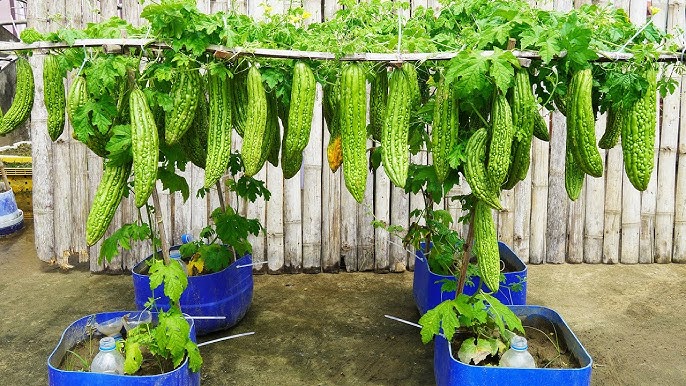
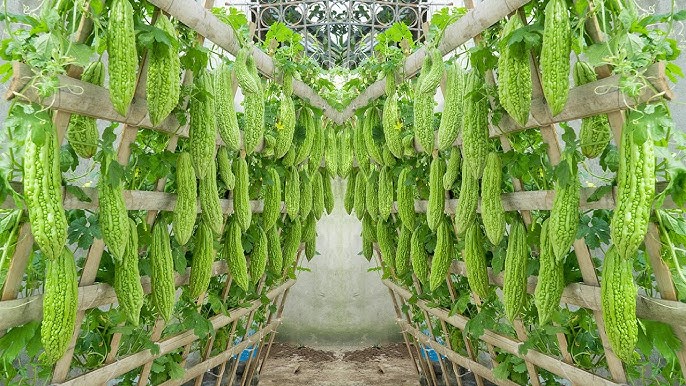
Bitter melon is a climbing vine, so vertical support is essential. In the village, we use:
- Bamboo poles
- Jute ropes
- Old branches
- Locally made wooden trellises
Install supports early to guide vines upward. This improves sunlight exposure, air circulation, and fruit development—speeding up harvest time.
Watering the Right Way
We avoid overwatering, which can cause root rot and slow growth.
Village Watering Method:
- Light watering daily during early stages
- Deep watering 2–3 times a week once vines spread
- Use of clay pot irrigation or hose channels for slow moisture release
- Mulching with dried leaves, straw, or banana peels to retain moisture
If rainfall is steady, we adjust accordingly to prevent soggy soil.
Natural Fertilizers for Faster Growth
Synthetic fertilizers are rarely used. Instead, we rely on:
Every 15–20 days:
- Diluted cow dung slurry
- Vermicompost tea
- Liquid manure made from soaked leaves
- Banana peel compost for potassium
These organic inputs promote lush vines and faster flowering.
Encouraging Bushier Vines and More Fruits
To speed up harvest and increase yield, we use these techniques:
- Pinching the Growing Tips:
Once vines reach about 1.5–2 feet, we pinch the main tip to encourage side shoots. - Removing Weak Sprouts:
Unhealthy or yellowing stems are pruned early for better energy distribution. - Hand Pollination (if needed):
If bees are fewer, we transfer pollen manually using a soft brush. - Training the Vines:
We guide vines up the trellis to prevent overcrowding and pest issues.
Pest and Disease Control Using Village Remedies
Instead of chemicals, we use simple organic solutions:
Common Issues:
- Aphids
- Fruit flies
- Powdery mildew
- Leaf miners
Natural Remedies:
- Neem leaf spray
- Garlic-chili spray
- Soap water mist
- Cow urine solution (diluted)
- Ash dusting around the base
Healthy vines grow faster and give earlier fruits.
Flowering and Fruit Development
With proper care, flowering starts within 35–45 days. Male flowers appear first, followed by female flowers (identified by a tiny fruit at the base).
To boost flowering:
- Apply compost tea during this stage
- Ensure sunlight and airflow
- Avoid overloading with nitrogen
Once pollinated, fruits grow rapidly—some varieties are ready in as little as 55–65 days.
Fast Harvest Techniques
In our village, the goal is to harvest early for tender, flavorful fruits. Here’s how we know it’s time:
- Fruits are 4–6 inches long (for short types) or 8–12 inches (long types)
- Skin is bright green and firm
- Seeds inside are still soft and white
We harvest every 2–3 days to encourage continuous fruiting. Using a sharp knife or scissors avoids damage to the vine.
How Long From Seed to Harvest?
Using our traditional methods, bitter melon can be harvested faster than usual:
- Seed germination: 4–7 days
- Seedling stage: 2–3 weeks
- Flowering: 5–6 weeks
- First harvest: 50–65 days after sowing
In optimal weather, some heirloom varieties can produce even earlier.
Best Varieties for Quick Harvest
Villagers often grow local varieties suited to climate and soil. For faster harvest, here are recommended types:
- Pusa Do Mausami
- CO 1 & CO 2
- Priya
- Green Long
- Chinese Hybrid White
Choose based on your region’s temperature and space.
Saving Seeds for Next Season
From the healthiest ripe fruits (yellow-orange), we collect seeds by:
- Cutting open the fruit
- Removing seeds and washing off the pulp
- Sun-drying for 2–3 days
- Storing in a cloth or airtight container
This keeps the cycle going naturally.
Final Thoughts
Growing bitter melon from seed to fast harvest doesn’t require expensive tools or chemicals. The traditional village approach is based on patience, natural inputs, and understanding the plant’s needs.
To recap the process:
Select mature seeds
Soak and pre-sprout
Prepare nutrient-rich soil
Sow in mounds or start in trays
Provide trellis support early
Water wisely and mulch
Feed with organic fertilizers
Control pests naturally
Train vines and pinch tips
Harvest young and regularly
By following these time-tested methods, you can enjoy fresh, organic bitter melon in less time—and with far less effort.