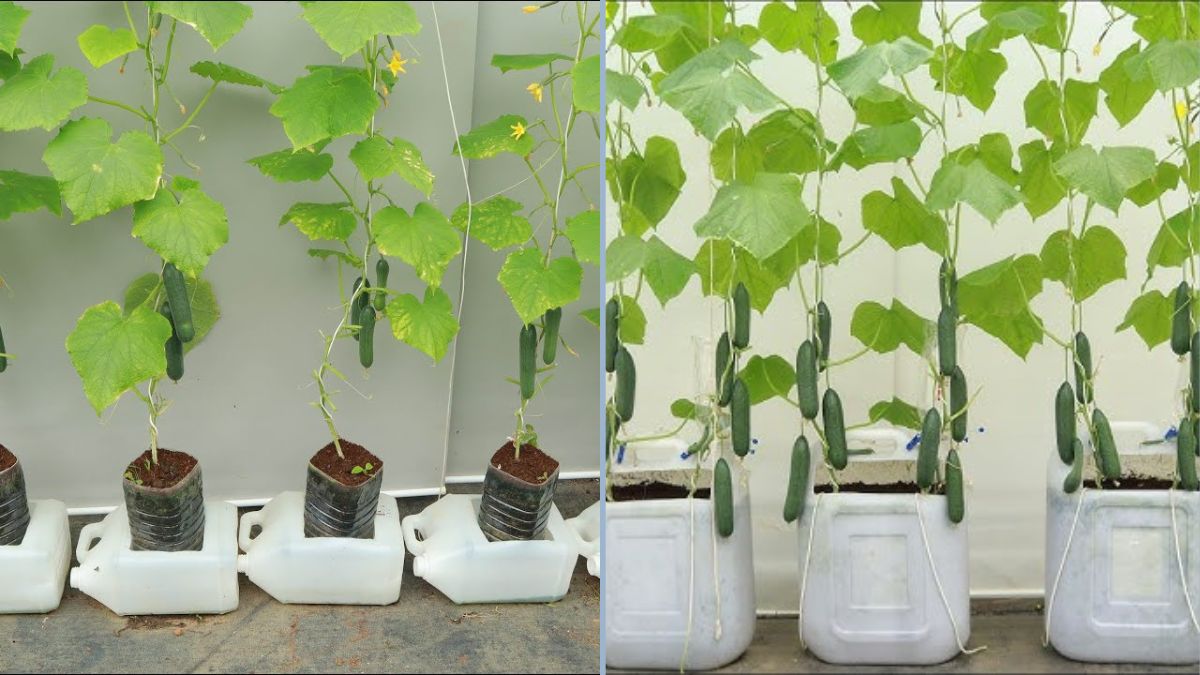
Container gardening has taken on dozens of creative forms over the years, but one method that’s been turning heads lately involves growing cucumbers upside down in plastic bottles. It may sound like a quirky science experiment or eco-art project, but the results are practical, space-saving, and surprisingly productive. For gardeners with limited room, poor soil, or a passion for recycling, this technique may very well become your new favorite growing method.
In this in-depth guide, we’ll explore exactly how upside-down cucumber growing works, why plastic bottles make excellent mini-planters, and how you can get impressive results step-by-step. From choosing the right varieties to mastering watering techniques, this approach proves that innovation and sustainability can absolutely go hand-in-hand in gardening.
Why Grow Cucumbers Upside Down?
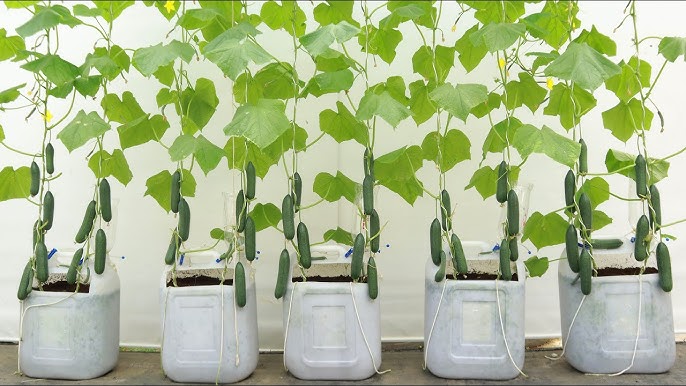
Cucumbers are vigorous climbers, but they don’t necessarily need to be grown up a trellis. In fact, flipping gravity on its head offers several unique benefits:
1. Space Savings
Perfect for balconies, patios, window frames, fences, or small gardens. Vertical space becomes your growing area.
2. Pest Reduction
Growing upward (or downward, in this case) keeps plants off the ground, discouraging slugs, beetles, and soil-borne diseases.
3. Natural Airflow
Hanging plants receive more airflow around foliage, reducing the risk of powdery mildew and fungal infections.
4. Less Weeding
There’s zero ground space involved, eliminating weeds entirely.
5. Efficient Water Use
Plastic bottles conserve moisture and give you control over drainage and feeding.
6. Eco-Friendly Gardening
Reusing plastic bottles reduces waste and saves money on planters.
This method is ideal for gardeners who love innovation, sustainability, or simply the satisfaction of growing healthy cucumbers in a compact and creative fashion.
Choosing the Right Cucumber Varieties
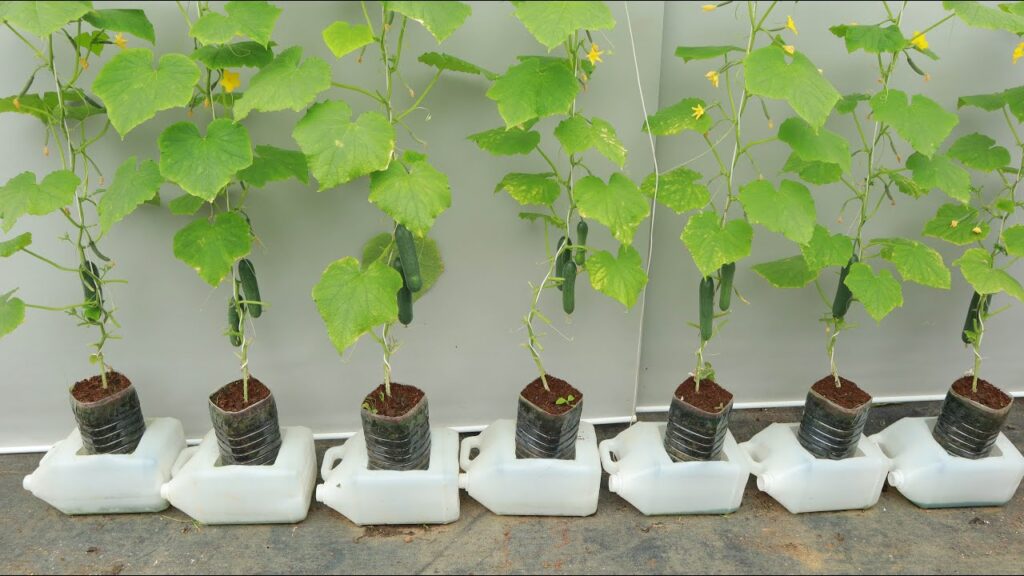
Not all cucumber varieties are created equal when it comes to upside-down growing. Compact, lightweight, and bush or mini-vining types perform best.
Recommended Varieties:
- Spacemaster
- Bush Champion
- Patio Snacker
- Salad Bush
- Picolino
- Miniature Whites
- Corinto
- Bush Pickle
Avoid large, heavy cucumbers or sprawling field types like Marketmore or Suyo Long unless you’re prepared to support the vines and fruits.
What You Need to Get Started
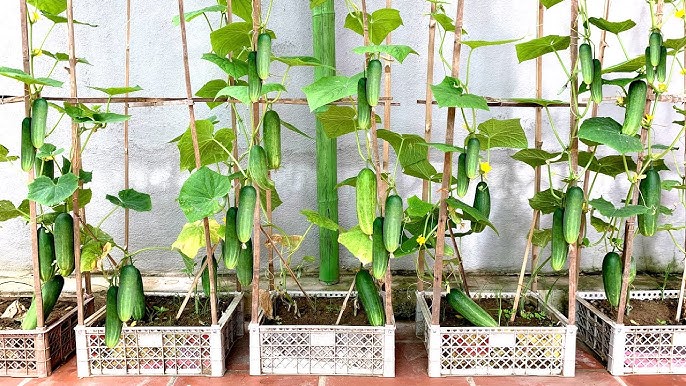
Setting up an upside-down cucumber garden using plastic bottles is inexpensive and straightforward.
Materials List:
- 2-liter or 3-liter plastic bottles (sturdy and clean)
- Craft knife or utility blade
- Potting mix (light, loamy, well-draining)
- Coffee filters, mesh, or small cloth piece
- Twine, wire, or rope for hanging
- Slow-release fertilizer or compost
- Cucumber seedlings or seeds
- Drill or heated nail (for drainage holes)
Optional:
- Paint or fabric wrap for sun protection
- Support hooks, railings, or hanging brackets
Step-by-Step: Building the Bottle Planter
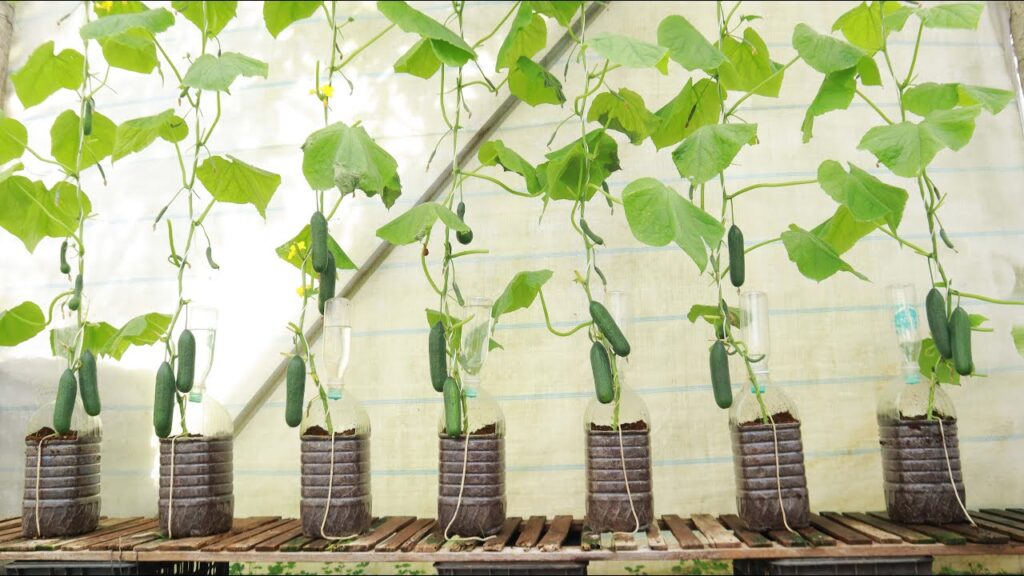
Step 1: Prepare the Bottle
- Remove labels and wash thoroughly.
- Cut the bottom off the bottle using a sharp knife—this will serve as the “top” for filling.
- Leave the neck (with the cap) intact for planting.
Step 2: Create Drainage
- Drill or poke 3–5 small holes in the bottle cap.
- Place a coffee filter or small fabric circle over the cap inside the bottle to keep soil from escaping.
Step 3: Add Soil
Fill the inverted bottle with a soil mix like:
- 60% potting soil
- 20% compost
- 20% coco coir or peat moss
- Perlite or vermiculite for drainage
Mix in some slow-release fertilizer before planting.
Step 4: Planting the Cucumber
You can either:
- Transplant a seedling: Gently guide the stem through the bottle opening before the soil is completely filled.
- Start from seed: Plant 2–3 seeds near the opening, thin to one healthy plant once sprouted.
Make sure the stem and leaves emerge from the bottle neck, pointing downward.
Step 5: Hang the Planter
Secure the bottle using rope, wire, or macrame hangers. Ideal locations:
- Balcony railing
- Overhead crossbeam
- Sunny balcony hook
- Strong fence post
- Inside a greenhouse frame
IMPORTANT: The bottle should hang upside down, with the plant emerging from the neck.
Caring for Upside-Down Cucumbers
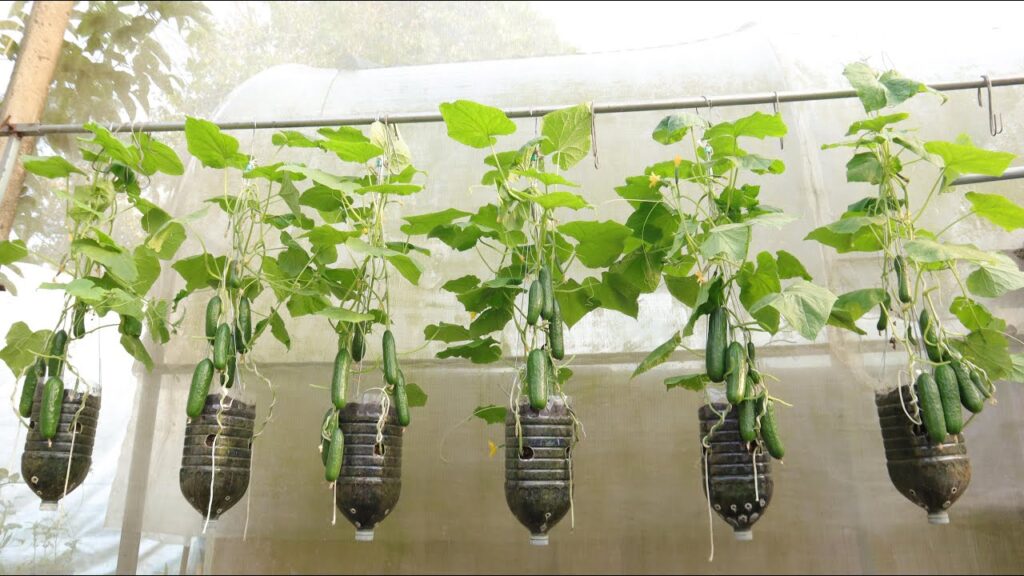
This method changes how you water, feed, and maintain your plants. Here’s how to ensure success:
Sunlight
Provide 6–8 hours of daily sunlight. East or south-facing locations work best.
Watering Techniques
Since water flows downward with gravity, consistent hydration is key:
- Water from the top opening (formerly the bottle’s base)
- Add slowly so soil absorbs evenly
- Consider drip spikes, funnels, or mulch to retain moisture
Check daily in hot seasons.
Feeding
Supplement with:
- Compost tea every 2 weeks
- Liquid kelp or fish emulsion during flowering
- Extra potassium for fruit production
Training and Pruning
As vines grow downward, gravity helps guide direction. You may:
- Pinch off excess suckers
- Support heavy fruits with nets or strings (if needed)
- Trim damaged or yellow leaves
Common Problems & Solutions
Even with this innovative method, cucumbers can face common challenges. Here’s how to tackle them:
Wilting
Likely due to underwatering or excessive sun. Increase hydration and shade during hottest hours.
Blossom End Rot or Poor Fruit Set
Often caused by inconsistent watering or nutrient deficits—feed and water regularly.
Pests
Though minimized, pests like aphids may still appear. Use neem oil, insecticidal soap, or companion plants like basil and marigolds.
Heat Stress
Wrap bottles in burlap or cloth to prevent root overheating.
Creative Styling and Adaptations
Want to take this method to the next level? Try these ideas:
Paint the Bottles
Use white or light colors to reflect heat and improve appearance.
Grow Multiple Bottles
Hang several bottles along a railing or beam for a mini vertical farm.
Companion Planting
Plant basil, marigolds, or nasturtiums nearby to deter pests and boost pollination.
DIY Water Reservoir
Attach a small funnel and tube into the top for easy watering access.
Advantages Over Traditional Growing
Why do so many gardeners love this upside-down bottle system? Here’s how it compares to ground growing:
| Feature | Traditional | Upside-Down Bottle |
|---|---|---|
| Space Use | Horizontal | Vertical |
| Weeding | Frequent | None |
| Pests | High risk | Minimal |
| Water Use | Moderate losses | High efficiency |
| Soil Needs | Large bed | Minimal volume |
| Portability | None | High |
| Cost | Moderate–high | Very low |
For renters, balcony gardeners, or anyone experimenting with alternatives, it’s an unbeatable solution.
When to Harvest
Upside-down cucumbers grow just as well as traditional ones—sometimes even better. Harvest when fruits are:
- Firm
- Uniform in color
- Smooth or slightly bumpy (depending on variety)
- 4–7 inches long (for most types)
Frequent harvesting encourages more fruit.
Is This Really the Ultimate Gardening Method?
For many growers, yes. The combination of recycling, space efficiency, pest control, and productivity makes this method a standout. Plus, it’s fun and impressive to look at—kids and garden visitors love the novelty.
Best suited for:
- Urban gardeners
- Balcony growers
- Homesteaders with pest pressure
- DIY enthusiasts
- Vertical gardeners
- Schools and community projects
Final Thoughts
Growing cucumbers upside down in plastic bottles is more than just a clever gardening hack—it’s a practical, sustainable, and high-yield method that challenges traditional thinking. With a few tools and a bit of creativity, you can turn everyday waste into a thriving food-producing system.
If you’ve been searching for a low-cost, low-space, high-impact way to grow fresh cucumbers, this may just be the ultimate method you’ve been waiting for.
Ready to hang your first bottle garden? Your next harvest might literally grow upside down!