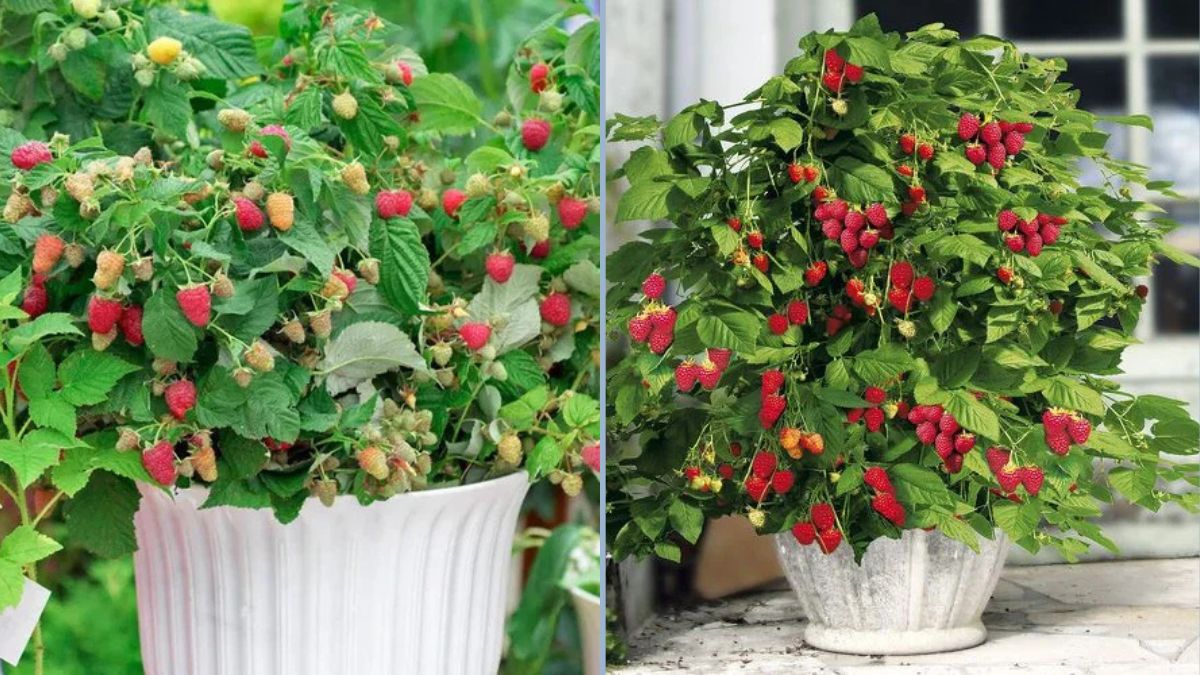
Raspberries are one of the most rewarding fruits to grow — vibrant, juicy, and packed with antioxidants. Their sweet-tart flavor makes them perfect for smoothies, desserts, or fresh snacking straight off the bush.
Many people think raspberries require a big backyard or sprawling garden beds. But the truth is, with the right container setup, you can grow healthy, fruit-laden raspberry bushes in pots — right on your balcony, patio, or terrace.
In this comprehensive guide, we’ll explore how to plant and care for raspberry bushes in pots, turning even the smallest outdoor space into a mini backyard orchard.
1. Why Grow Raspberries in Pots?
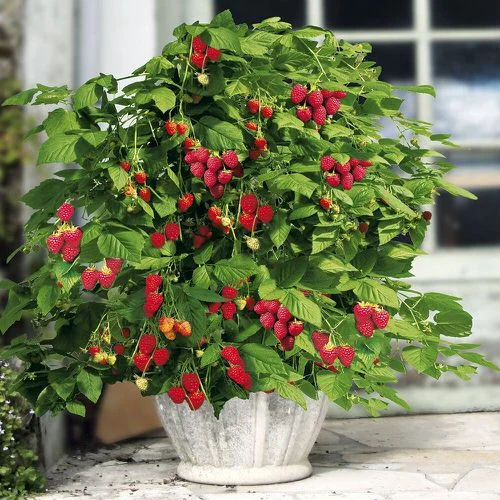
Container gardening isn’t just for herbs and flowers — it’s perfect for fruiting plants like raspberries too.
Benefits of container-grown raspberries:
- 🌿 Space-saving: Perfect for small homes, patios, or balconies.
- ☀️ Mobility: You can move pots to chase sunlight or protect from frost.
- 🌱 Pest and soil control: No worries about invasive roots or poor garden soil.
- 🍓 Cleaner harvests: Fruits stay off the ground, safe from slugs or soil splashes.
- 🌼 Beautiful and productive: The lush foliage and colorful berries double as décor.
Even if you dream of having your own “backyard orchard” but lack the land, potted raspberries are the next best thing.
2. Choosing the Right Raspberry Variety for Pots
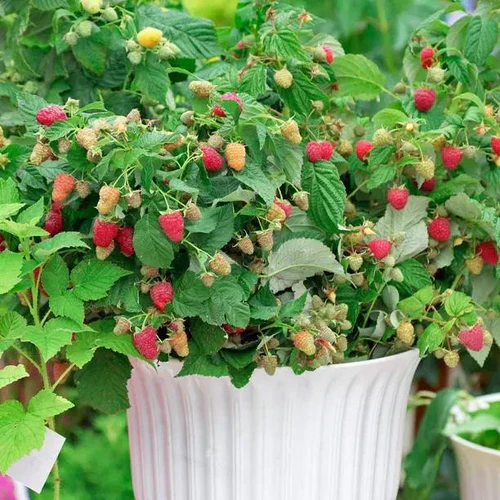
Raspberries come in two main types — and choosing the right one makes all the difference for container growing.
Types of raspberry plants:
- Summer-bearing (Floricane)
- Produces one large crop in early to mid-summer.
- Needs pruning of old canes after harvest.
- Examples: Latham, Boyne, Tulameen.
- Ever-bearing (Primocane)
- Produces two harvests — one in midsummer, another in fall.
- Easier to manage in containers.
- Examples: Heritage, Autumn Bliss, Raspberry Shortcake.
💡 Best choice for pots:
Compact and ever-bearing varieties like ‘Raspberry Shortcake’ or ‘Heritage’ — they stay bushy, produce abundantly, and adapt well to containers.
3. Choosing the Perfect Pot
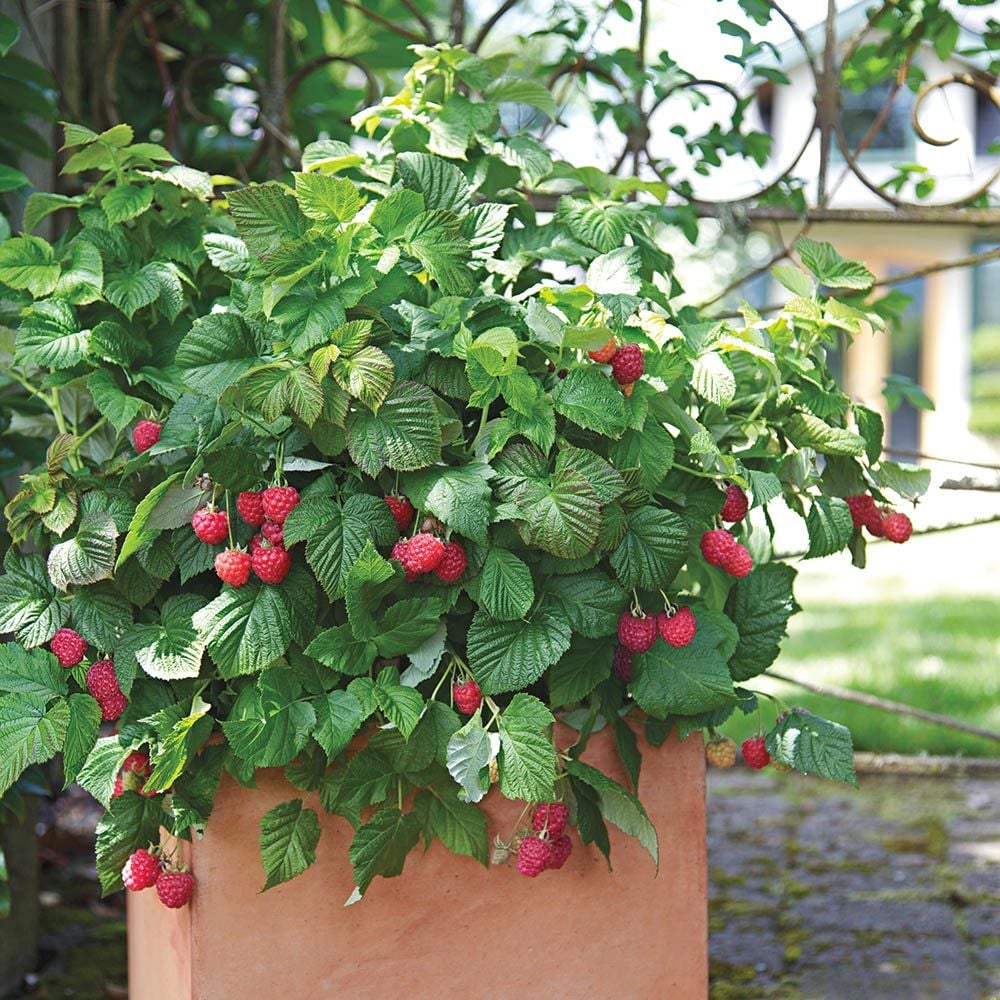
Raspberries have vigorous root systems that need space to spread, so pot size and design are crucial.
Container requirements:
- Minimum size: 16–20 inches deep, 18–24 inches wide.
- Material: Plastic, ceramic, wooden barrels, or fabric grow bags.
- Drainage: At least 4–5 holes at the bottom for proper airflow and drainage.
If you’re planting multiple canes, use large rectangular tubs or barrels. You can even line them along a wall or railing for a lush berry hedge effect.
💧 Tip: Raise pots slightly off the ground with bricks or pot stands to prevent waterlogging.
4. Preparing the Ideal Soil Mix
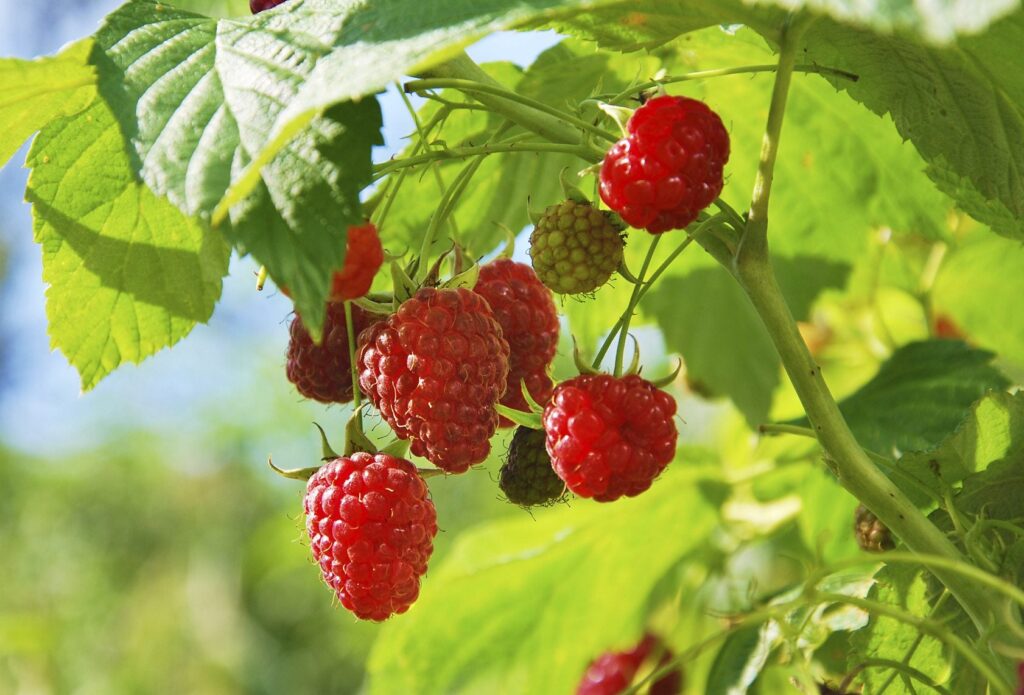
Raspberries prefer rich, loamy, well-drained soil with a slightly acidic pH (around 6.0–6.5). Garden soil alone isn’t ideal for containers — it tends to compact and suffocate roots.
Here’s how to create the perfect mix for thriving raspberry plants:
DIY Raspberry Potting Mix:
- 40% high-quality garden soil
- 30% organic compost or well-rotted manure
- 20% coco peat or peat moss (for moisture retention)
- 10% coarse sand or perlite (for aeration)
Add a handful of bone meal or neem cake powder for slow-release nutrients and pest prevention.
💡 Pro Tip: Raspberries don’t like soggy feet. Make sure your mix is light, airy, and drains well while staying slightly moist.
5. Planting Raspberry Bushes in Pots
Whether you’re starting from bare-root canes or nursery plants, proper planting sets the foundation for healthy growth.
Step-by-step planting guide:
- Prepare the pot: Fill it halfway with your potting mix.
- Position the plant: Place the raspberry cane in the center. Spread out roots gently.
- Depth: The crown (where roots meet stem) should be just below the soil surface.
- Backfill: Add more soil and press gently to remove air pockets.
- Water thoroughly: Ensure the mix is evenly moist.
- Mulch: Add a 2-inch layer of straw, pine bark, or dried leaves to conserve moisture and prevent weeds.
If you’re planting more than one cane, space them about 12–15 inches apart in a large container.
6. Light and Temperature Needs
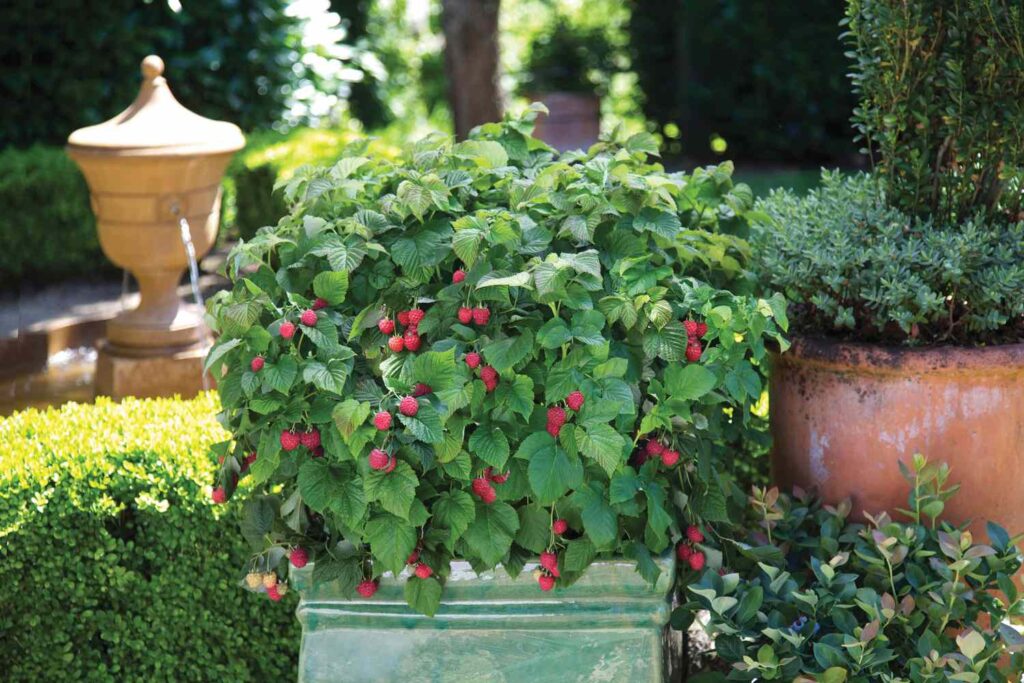
Raspberries are sun-loving plants. The more sunlight they receive, the sweeter the berries.
Ideal conditions:
- Sunlight: 6–8 hours of direct sunlight daily.
- Temperature: Prefers 15–28°C (59–82°F).
- Climate: Tolerates light frost, but extreme heat may scorch leaves — offer light shade in very hot climates.
If growing on a balcony, choose a south- or west-facing location for maximum light exposure.
7. Watering and Moisture Control
Raspberries have shallow roots that dry out quickly — but they also dislike standing water. Maintaining consistent moisture is key.
Watering guide:
- Water 2–3 times per week during warm months.
- Check soil regularly — top 1 inch should feel slightly moist.
- Use a drip system or watering can to avoid splashing the leaves.
- Reduce watering in winter when the plant is dormant.
Adding mulch helps regulate temperature and moisture, reducing stress on the plant.
8. Feeding and Fertilizing
Raspberry bushes are heavy feeders, especially in containers where nutrients wash out faster.
Fertilizer schedule:
- Early spring: Add compost or slow-release organic fertilizer.
- Mid-season: Feed with balanced fertilizer (10-10-10 NPK or organic compost tea).
- After harvest: Apply compost and bone meal to support root health.
Organic options:
- Vermicompost
- Banana peel compost (for potassium)
- Fish emulsion or seaweed extract
Avoid over-fertilizing — too much nitrogen leads to leafy growth but fewer berries.
9. Supporting Raspberry Canes
As your raspberry plants grow, they’ll produce long canes that can droop under the weight of fruit. Support prevents breakage and improves air circulation.
Support methods:
- Use bamboo stakes, trellis, or tomato cages inside the pot.
- Tie canes loosely with soft twine or garden tape.
- Keep canes upright to expose berries to sunlight for even ripening.
Compact varieties may not need much support, but taller ones benefit greatly from it.
10. Pruning and Maintenance
Pruning is essential for healthy, productive raspberry plants. It prevents overcrowding, improves airflow, and stimulates new fruiting canes.
Pruning guide by type:
- Summer-bearing:
- After harvest, cut old (floricane) canes at ground level.
- Leave new green canes to produce next year’s fruit.
- Ever-bearing:
- Cut all canes back to 3–4 inches in late winter for a single big fall crop.
- Or keep some for early summer fruiting.
Regularly remove weak, dead, or crossing branches to keep plants tidy and vigorous.
11. Pollination and Fruit Set
Raspberries are self-pollinating, but pollinators like bees dramatically improve yield and fruit size.
If you’re growing indoors or in an enclosed balcony:
- Gently shake the canes during bloom time.
- Use a small paintbrush to transfer pollen between flowers.
You’ll start to see small green berries forming, which will ripen into deep red jewels in a few weeks.
12. Pests and Disease Management
Container raspberries are less prone to pests, but vigilance is key.
Common issues:
- Aphids or spider mites: Spray neem oil solution every 10–15 days.
- Powdery mildew: Ensure good airflow; avoid overhead watering.
- Birds: Cover with garden netting when berries start ripening.
Healthy soil, sunlight, and regular pruning are your best defenses.
13. Harvesting Raspberries
The most exciting part — harvest time!
When and how to harvest:
- Raspberries are ready when they turn deep red and detach easily when tugged.
- Pick every few days to encourage more fruiting.
- Morning harvests produce the juiciest, sweetest berries.
A mature potted plant can yield 2–4 pounds (1–2 kg) of berries per season — enough for fresh eating and even a jar or two of homemade jam!
14. Overwintering and Long-Term Care
In cold climates, raspberries go dormant during winter.
Winter care:
- Move pots to a sheltered spot or cover with mulch or straw.
- Reduce watering but don’t let roots dry out completely.
- Resume regular care in early spring when new growth appears.
Every 2–3 years, repot with fresh soil mix to replenish nutrients and keep plants vigorous.
15. Creating a Mini Backyard Orchard
Once you’ve mastered raspberries, try adding other container fruits like blueberries, strawberries, or dwarf apples to your space.
Together, they create a mini backyard orchard that’s productive, beautiful, and sustainable — even on a small balcony.
The mix of colors, fragrances, and fruits will transform your home into a vibrant edible paradise.
16. Final Thoughts: Sweet Rewards of Container Raspberries
Growing raspberries in pots is easier than most people imagine — and the rewards are endless.
With the right soil, sunlight, and care, even a few containers can yield bowls of fresh, tangy berries each summer. Plus, there’s something magical about stepping onto your balcony and picking your own fruit — grown naturally, pesticide-free, and full of flavor.
So, grab a pot, mix up some soil, and start planting your raspberry bushes today. In just a season or two, you’ll be enjoying the taste of your very own backyard orchard — no large garden required.