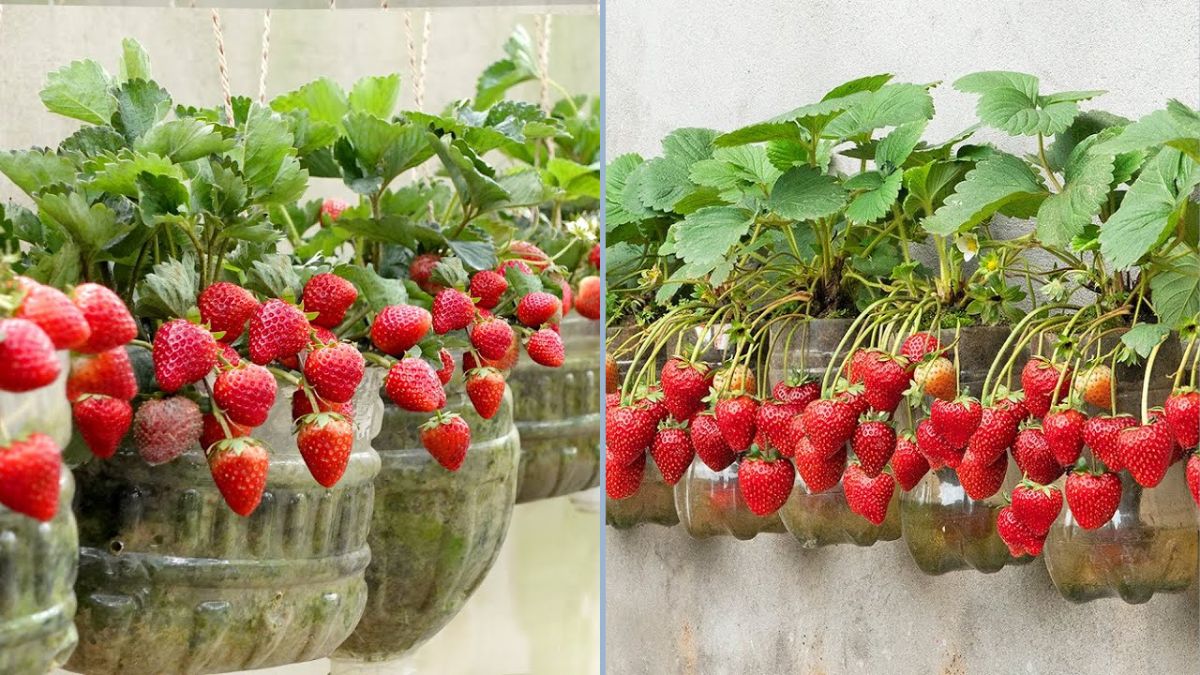
Imagine walking to your balcony or windowsill in the morning, plucking a handful of bright red strawberries, and tasting their juicy sweetness straight from the vine. Sounds like a dream? It’s not — it’s completely possible.
Even if you don’t have a garden, you can grow strawberries right at home in containers, hanging pots, or vertical planters. With the right technique, a few healthy plants can produce dozens of sweet, fragrant berries throughout the season.
In this post, you’ll learn how to grow strawberries at home — from choosing the best containers and soil mix to harvesting juicy fruits all year round.
1. Why Grow Strawberries at Home?
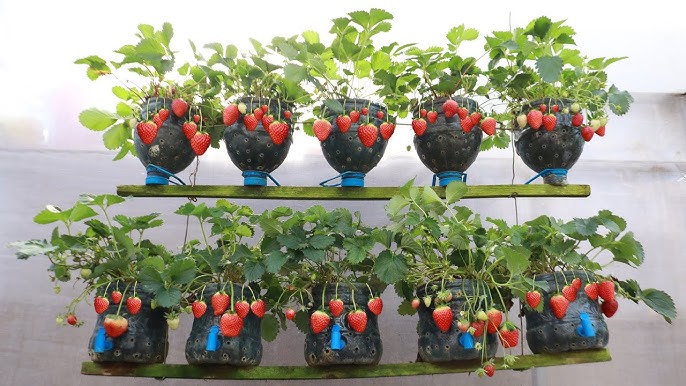
Strawberries (Fragaria × ananassa) are among the most beloved fruits in the world. They’re delicious, rich in vitamin C and antioxidants, and perfect for smoothies, desserts, or just snacking.
But store-bought strawberries often contain chemical residues, and they lose flavor quickly after harvest. Growing your own ensures:
- Pure, pesticide-free fruits
- Freshness and aroma unmatched by store-bought berries
- A rewarding, therapeutic hobby
- Aesthetic beauty — strawberries are as pretty as they are tasty!
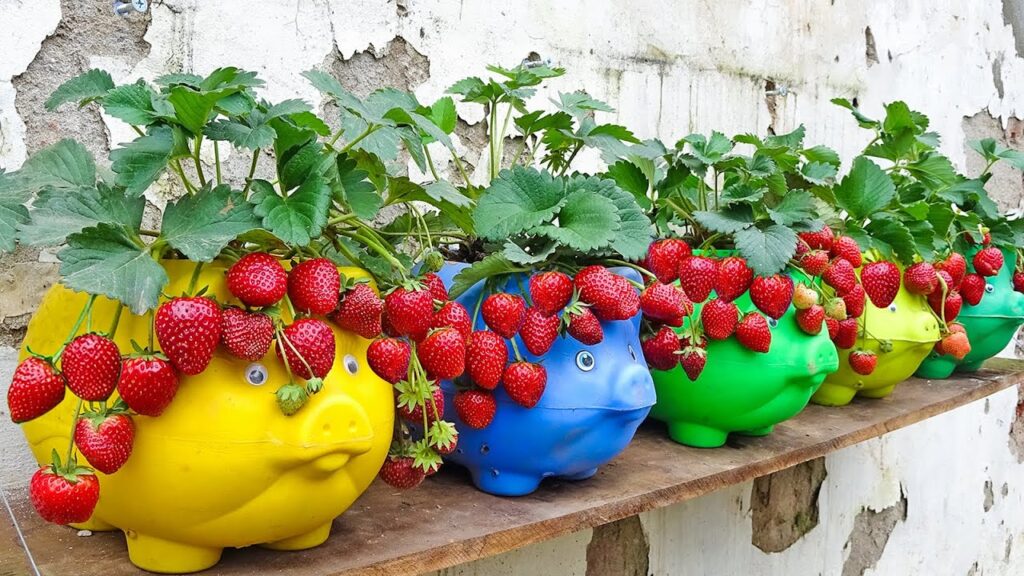
And the best part? They require minimal space. You can grow them in pots, recycled bottles, hanging baskets, or vertical towers on your balcony or terrace.
2. Choosing the Right Strawberry Variety
Not all strawberries are equal when it comes to container gardening. Some varieties spread aggressively (great for gardens), while others are compact and perfect for pots.
Recommended types for home growing:
- Alpine Strawberries (Fragaria vesca) – Small, super sweet, and perfect for containers.
- Everbearing Varieties – Produce fruit multiple times a year. Examples: Seascape, Albion, Mara des Bois.
- Day-Neutral Varieties – Bear fruits continuously regardless of day length (ideal for balconies).
These compact plants don’t need sprawling soil space — they focus on producing consistent, flavorful fruits in small environments.
3. Best Containers for Strawberries
Since we’re growing strawberries without a garden, choosing the right container is key.
Container options:
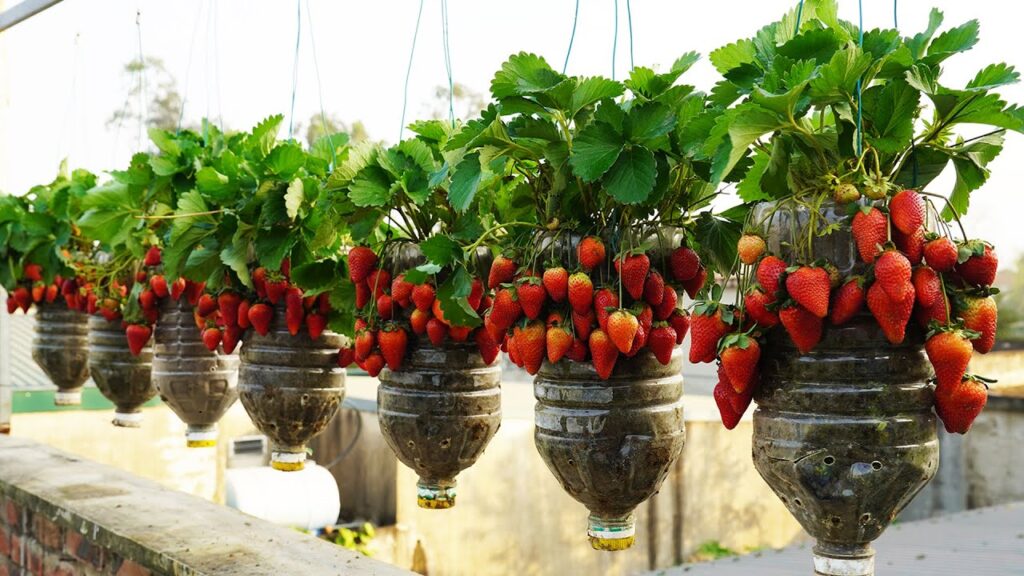
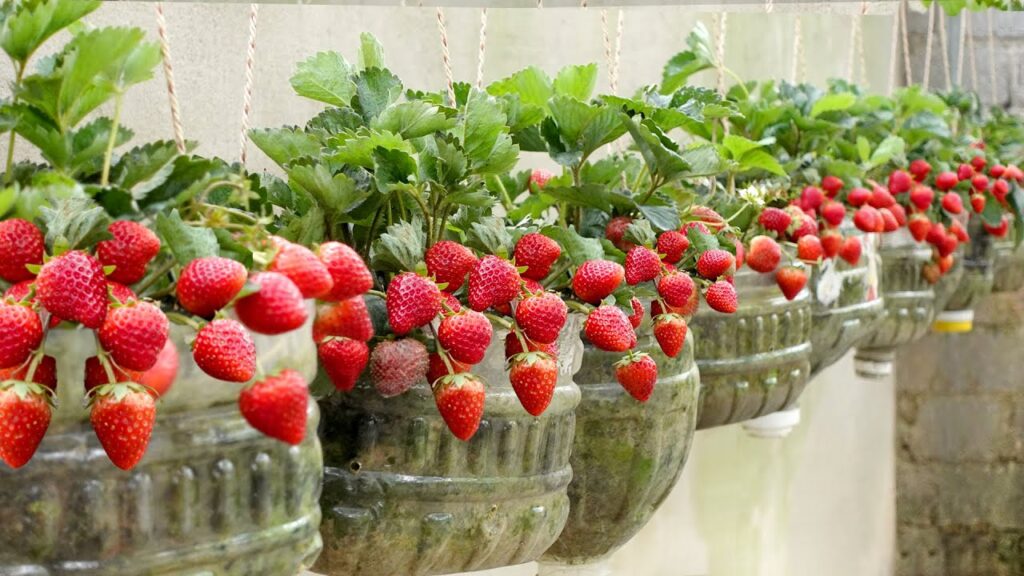
- Hanging baskets: Ideal for small spaces and decorative displays.
- Plastic pots (8–12 inches deep): Great for individual plants.
- Strawberry towers or vertical planters: Maximize harvest in minimal space.
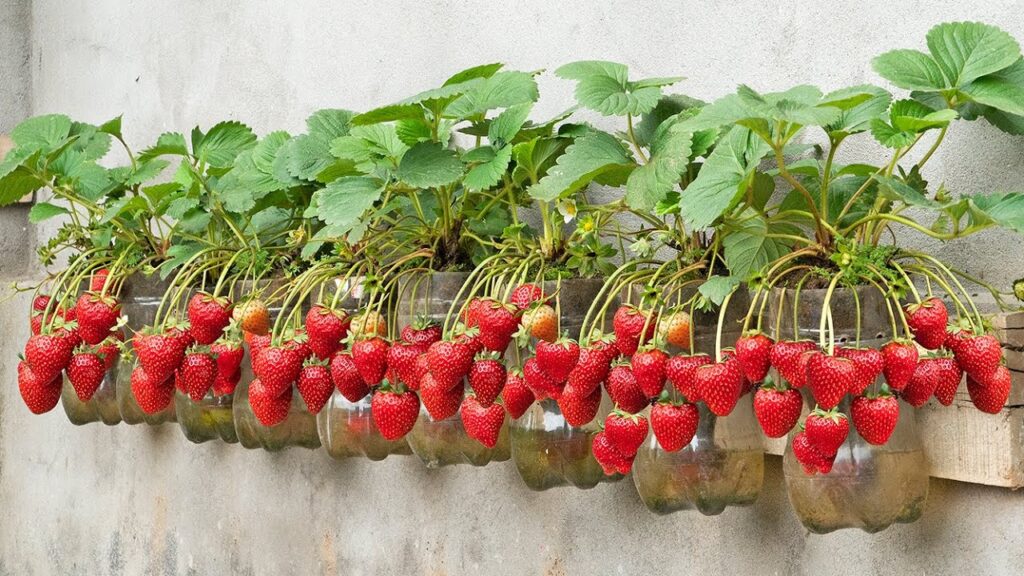
- Reused materials: Old buckets, bottles, or PVC pipes — just make sure they have drainage holes.
Tip: Strawberries don’t like “wet feet.” Ensure your container drains well to avoid root rot.
4. Preparing the Perfect Soil Mix
Strawberries thrive in well-drained, nutrient-rich, slightly acidic soil (pH 5.5–6.5).
Ideal potting mix (per container):
- 40% garden soil or loam
- 30% organic compost or cow manure
- 20% coco peat or perlite (for aeration)
- 10% sand or vermicompost
Mix in a tablespoon of bone meal or neem cake powder to boost calcium and keep soil pests away.
This rich, fluffy medium allows roots to breathe and helps your plants absorb nutrients efficiently.
5. Propagation: Starting from Runners or Seeds
You can grow strawberries from runners (baby plants that shoot off from the mother plant) or from seeds.
Option 1: Runners (Recommended)
- Get a healthy, fruit-bearing strawberry plant.
- Allow runners (long stems with small baby plants) to grow.
- Pin them down into small pots with moist soil.
- Once they root and grow 4–5 leaves, cut them from the mother plant.
These clones bear fruit faster and stay true to the parent plant.
Option 2: Seeds
- Take seeds from a ripe strawberry (the tiny dots on the skin).
- Dry them for a few hours.
- Sprinkle over moist seed-starting mix in a small tray.
- Cover lightly and keep in a warm, bright spot.
- Germination takes 2–3 weeks.
Once seedlings have 3–4 leaves, transplant them into individual pots.
6. Light and Temperature Requirements
Strawberries are sun-loving plants. The more sunlight they receive, the sweeter the fruits.
- Light: Minimum 6–8 hours of direct sunlight daily.
- Temperature: Ideal range: 15–28°C (59–82°F).
- Indoor growing: Place near a sunny window or use LED grow lights.
If you live in a hot region, provide light shade during the harsh afternoon sun to protect delicate leaves.
7. Watering Schedule
Strawberries love moist soil but can’t stand waterlogging. The goal is consistent moisture without sogginess.
Watering tips:
- Water 3–4 times a week, depending on heat.
- Use a watering can or drip system to avoid splashing water on leaves.
- Add a layer of mulch (dry leaves or coco husk) to retain moisture and prevent weeds.
- Reduce watering once fruits begin to ripen to enhance sweetness.
If your leaves start turning yellow, it’s often a sign of overwatering — let the top inch of soil dry out before watering again.
8. Feeding Your Strawberry Plants
To get lots of sweet fruits, your plants need regular feeding.
Organic feeding schedule:
- At planting: Mix compost and bone meal into the soil.
- Every 15 days: Apply liquid seaweed, compost tea, or diluted fish emulsion.
- During flowering and fruiting: Feed with potassium-rich fertilizer (banana peel tea works wonders!).
Avoid excessive nitrogen — it promotes leaf growth instead of fruits.
9. Pollination Tips
Strawberries are self-pollinating, but natural pollinators like bees help increase yield.
If you’re growing indoors or on a balcony with fewer insects:
- Use a small paintbrush or cotton swab to gently transfer pollen between flowers.
- Do this in the morning for best results.
This simple trick dramatically improves fruit size and number.
10. Managing Runners and Pruning
Runners are useful for propagation but can drain energy from your main plant.
- If your goal is more fruit: Trim most runners so the plant focuses on berries.
- If your goal is new plants: Let runners root, then transplant them.
Also, remove yellow or damaged leaves regularly to improve air circulation and reduce pests.
11. Pest and Disease Control
Common strawberry pests include aphids, spider mites, and slugs.
Natural remedies:
- Spray neem oil (5 ml per liter of water) every 10–15 days.
- Use garlic spray to repel insects.
- Place crushed eggshells around plants — they deter snails and slugs naturally.
For fungal issues like powdery mildew, ensure your plants get plenty of sunlight and airflow. Remove affected leaves promptly.
12. Supporting and Protecting the Fruits
As your strawberries begin to form, you’ll notice tiny green fruits growing under the leaves.
To protect them:
- Use straw mulch under fruits to prevent contact with wet soil (hence the name “straw-berry”!).
- Cover plants with a net to keep birds away.
- For hanging pots, fruits naturally dangle freely, staying clean and dry.
Your berries will start turning red within 2–3 weeks of flowering.
13. Harvesting Strawberries
Strawberries are usually ready to harvest 90–100 days after planting (faster in warm weather).
Signs of ripeness:
- Fully red color with no white tips.
- Sweet aroma when you lean close.
- Slight softness to touch.
Harvest by cutting the stem just above the fruit — don’t pull, as it can damage the plant.
Freshly picked strawberries can last 2–3 days at room temperature or up to a week when refrigerated.
14. Extending Your Harvest
With good care, strawberries can produce fruits for 2–3 years before needing replacement.
To keep them fruiting longer:
- Regularly remove old leaves and runners.
- Replenish the topsoil every few months with compost.
- Keep them in partial shade during extreme summer heat.
Everbearing and day-neutral varieties can even provide multiple harvests per year with consistent feeding and light.
15. Reusing Old Containers or Plastic Bottles
You don’t need fancy planters to grow strawberries — reuse what you have!
Cut old plastic bottles horizontally or vertically, fill them with soil, and hang them with strings or place them on shelves.
This method:
- Saves space and plastic waste.
- Keeps fruits clean and elevated.
- Looks creative and modern.
Vertical gardens made from bottles or pipes can hold dozens of plants in just a few square feet!
16. Common Problems and Quick Fixes
| Problem | Cause | Solution |
|---|---|---|
| Flowers but no fruits | Poor pollination | Hand-pollinate using a brush |
| Yellow leaves | Overwatering or poor drainage | Check soil moisture, improve drainage |
| Small, sour fruits | Lack of sunlight or nutrients | Increase light and add compost tea |
| Fruit rot | Fruit touching wet soil | Use straw mulch or hanging baskets |
17. Final Thoughts: Sweet Success in Small Spaces
Who says you need a big backyard to grow delicious fruits? With just a few containers and a sunny corner, you can grow strawberries bursting with flavor right in your apartment.
It’s easy, eco-friendly, and rewarding — plus, it turns any balcony into a mini edible garden.
Once you taste your first homegrown berry — sun-warmed, juicy, and sweet — you’ll never look at store-bought strawberries the same way again.
So grab a few pots, some compost, and a handful of seeds or runners.
Your journey to a home full of fresh, red strawberries starts today!