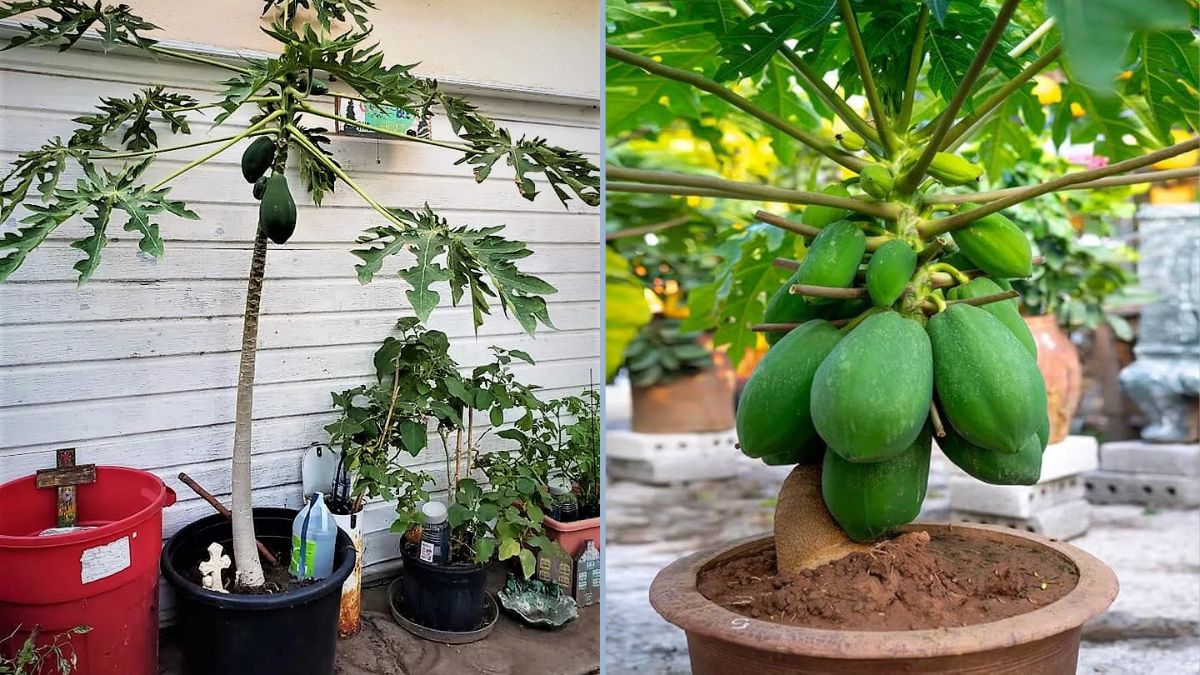
If you’ve ever dreamed of plucking fresh, golden papayas right from your terrace, you’re in for a treat.
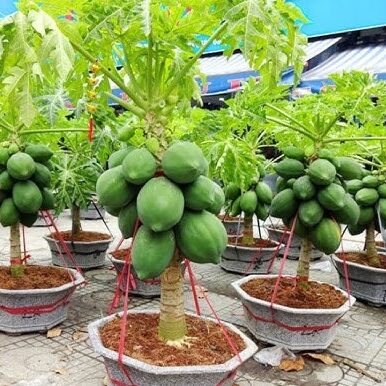
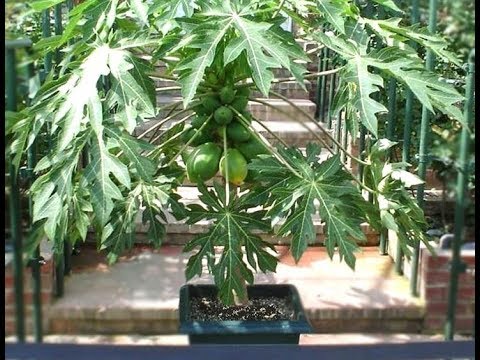
Papaya (Carica papaya) is one of the easiest and fastest fruit trees to grow — and the best part? You can successfully cultivate it in pots or containers with the right technique.
This step-by-step guide will show you exactly how to grow papaya in pots, boost fruit yield, and enjoy a steady harvest even from a small terrace or balcony. Whether you’re an urban gardener or just starting your terrace garden journey, these papaya cultivation secrets will help you succeed.
1. Why Grow Papaya in Pots?
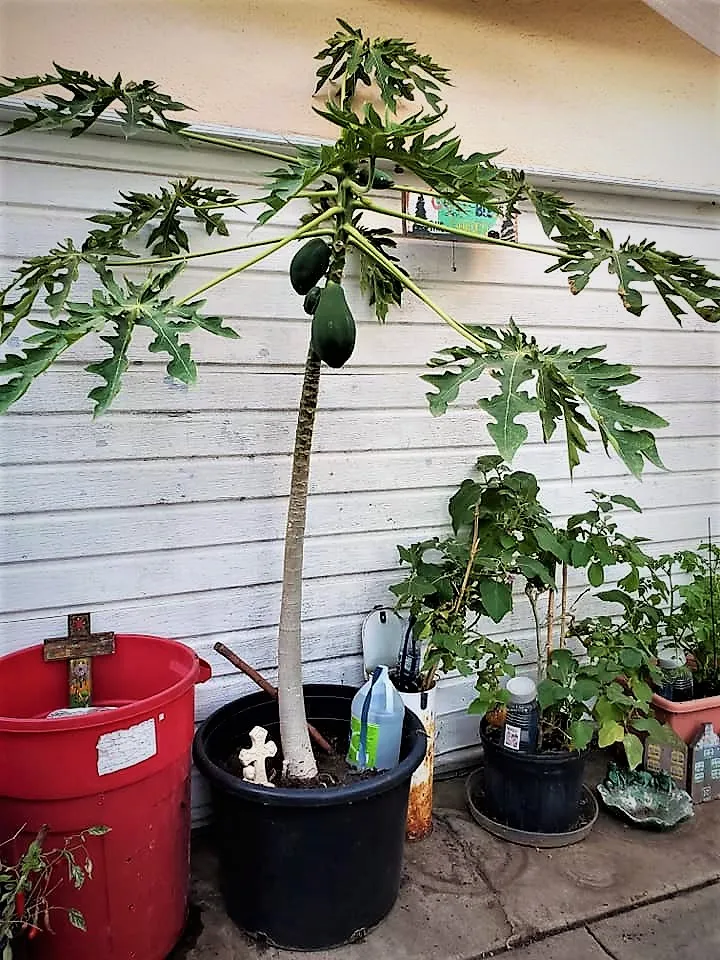
Papayas are tropical plants that thrive in warm, sunny environments. Traditionally, they’re grown in open ground, but with modern terrace gardening techniques, you can easily grow them in containers.
Here’s why growing papayas in pots is awesome:
- Space-saving: Perfect for terraces, balconies, or compact gardens.
- Faster growth: Papaya trees grow quickly — from seed to fruit in as little as 8–10 months.
- Continuous yield: A single healthy tree can produce dozens of fruits per year.
- Pest control: Growing in pots helps manage soil quality and pests more effectively.
- Beautiful and tropical: The broad leaves add lush greenery to your terrace space.
2. Choosing the Right Papaya Variety
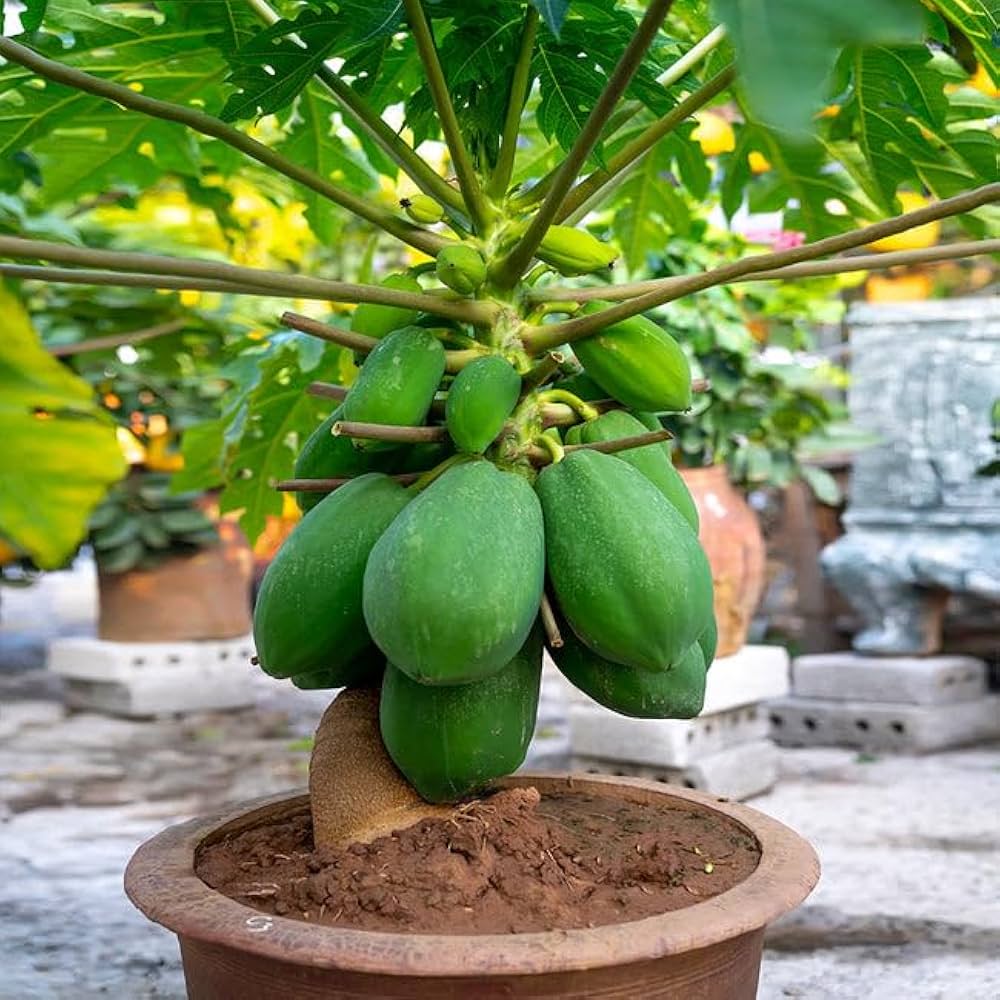
The key to success starts with selecting a dwarf or hybrid papaya variety that performs well in containers.
Some excellent varieties include:
- Pusa Dwarf
- Red Lady (a very popular hybrid for high yield)
- Surya
- Taiwan 786
These varieties grow up to 4–6 feet tall, making them ideal for pots or terrace gardens. They also tend to bear fruit earlier and more abundantly.
3. Selecting the Perfect Pot or Container
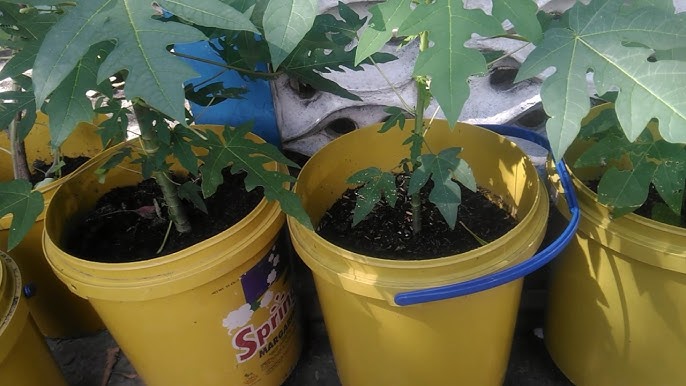
Papayas have long taproots, so they need deep containers to grow healthy and strong.
Container requirements:
- Size: Minimum 20–24 inches deep and wide (about 60–70 liters capacity).
- Material: Choose sturdy containers like HDPE grow bags, cement pots, or large plastic drums (with holes drilled for drainage).
- Drainage: Ensure at least 4–6 holes at the bottom — papaya roots rot easily in stagnant water.
If possible, place the pot on bricks or stands so that excess water drains freely.
4. Best Soil Mix for Papaya in Pots
Papaya plants thrive in light, fertile, well-drained soil rich in organic matter.
A good mix ensures healthy roots, faster growth, and better fruit yield.
Recommended potting mix:
- 40% garden soil (loamy and well-draining)
- 30% compost or well-rotted cow dung
- 20% coco peat or sand for aeration
- 10% vermicompost for nutrient boost
Add a handful of neem cake or bone meal as a natural pest deterrent and slow-release fertilizer.
Mix everything thoroughly before filling your pot.
5. Propagation: How to Start Papaya from Seeds
You can grow papaya plants either from store-bought seeds or from fresh papaya fruit.
If using fresh fruit:
- Scoop out the seeds and wash off the sticky coating under running water.
- Spread them on a paper towel and dry for 1–2 days in the shade.
- Sow seeds directly into the pot or in small seed trays.
Sowing tips:
- Plant 5–6 seeds in the center of each pot (about ½ inch deep).
- Keep the soil moist but not soggy.
- Seeds germinate in 1–3 weeks, depending on temperature.
- Once the seedlings reach 6–8 inches in height, keep only the healthiest two plants in the pot — cut the rest at soil level.
This increases your chances of getting at least one female or hermaphrodite plant that bears fruit.
6. Male vs. Female Papaya Plants: How to Identify
Papayas are either male, female, or hermaphrodite (both male and female flowers).
- Male plants: Produce only flowers, no fruits.
- Female plants: Produce fruits but need pollination from male plants.
- Hermaphrodite plants: Self-pollinating — perfect for pot cultivation!
How to identify them:
- Male flowers: Appear in clusters on long stalks.
- Female flowers: Large, single, and close to the stem.
- Hermaphrodite flowers: Have both male and female parts and usually grow close to the stem.
Keep the hermaphrodite or female plant and remove male ones if you want more fruit yield.
7. Light, Temperature & Location
Papaya plants love sunlight and warmth.
- Sunlight: Provide at least 6–8 hours of direct sunlight daily.
- Temperature: Ideal range is 22–35°C (72–95°F).
- Avoid cold winds or frost — papaya is sensitive to low temperatures.
- Place pots in the sunniest corner of your terrace, ideally facing south or west.
If you live in a cooler region, you can cover the plants with plastic sheets during winter nights to retain warmth.
8. Watering the Papaya Plant
Papayas love moisture but hate standing water.
Watering tips:
- Keep the soil evenly moist, especially during hot months.
- Water deeply 2–3 times a week (daily in peak summer).
- Avoid wetting the leaves excessively to prevent fungal infections.
- During monsoon, reduce watering and ensure proper drainage.
A layer of mulch (dry leaves, coco husk, or grass) on top of the soil helps retain moisture and keeps roots cool.
9. Fertilizing for Maximum Fruit Yield
Papayas are heavy feeders, so regular fertilization is key to healthy growth and abundant fruiting.
Fertilizer schedule:
- At planting: Mix compost and neem cake into the soil.
- After 30 days: Apply 100 g of organic compost or vermicompost.
- Every month: Continue feeding compost or a balanced fertilizer (NPK 10-10-10).
- During fruiting: Increase potassium (K) for sweet, large fruits — use banana peel compost or organic potash.
For organic gardeners, liquid fertilizers like compost tea or seaweed extract work wonders every 15 days.
10. Pruning and Maintenance
Papaya trees don’t need much pruning, but a little maintenance helps them stay productive.
- Remove yellow or diseased leaves regularly.
- If your plant becomes too tall, gently top the growing tip after fruiting — this encourages side shoots.
- Keep one or two strong stems for continued fruiting.
- Support the plant with a bamboo stake if fruits make it top-heavy.
Keeping airflow around the plant prevents fungal diseases and promotes better pollination.
11. Pollination Tips for More Fruits
In open spaces, wind and insects handle pollination. But on terraces, you may need to assist.
Hand pollination method:
- Identify a male flower (long stalk with pollen).
- Pluck it and gently brush the pollen onto the stigma of a female flower (short, fat one near the stem).
- Repeat this early in the morning for best results.
Within a few days, if the pollination is successful, you’ll notice the small fruit beginning to swell behind the flower.
12. Pest & Disease Management
Common papaya pests include aphids, whiteflies, and mealybugs.
To manage them naturally:
- Spray neem oil solution (5 ml neem oil + 1 liter water + few drops of soap) once every two weeks.
- Remove infected leaves immediately.
- Ensure proper air circulation around the plants.
Avoid waterlogging to prevent root rot and stem diseases.
13. Harvesting Your Terrace-Grown Papayas
Papaya plants usually start fruiting within 8–10 months after planting, depending on variety and care.
You’ll know the fruit is ready when:
- The skin turns from dark green to light yellow.
- The fruit gives slightly when pressed.
- A sweet aroma develops at the base.
Harvest gently using a knife or pruning shear. The fruits will continue to ripen at room temperature over a few days.
14. Bonus Tip: Growing New Plants from Suckers
Once your papaya matures, it often produces side shoots or “suckers” near the base.
These can be separated and planted into new pots to grow fresh papaya plants.
This method ensures faster growth than starting from seed and gives you genetically similar fruit.
15. Quick Troubleshooting Guide
| Problem | Possible Cause | Solution |
|---|---|---|
| Leaves yellowing | Overwatering or poor drainage | Check pot holes, reduce watering |
| No fruits | Male plant or lack of pollination | Replace with hermaphrodite or hand-pollinate |
| Fruits dropping early | Sudden temperature change or water stress | Maintain consistent watering |
| Small fruits | Lack of nutrients | Feed potassium-rich compost regularly |
16. Final Thoughts: A Tropical Paradise on Your Terrace
Growing papaya in pots is not just practical — it’s a joy that connects you with nature every day.
With sunlight, good soil, and consistent care, you can turn your terrace into a tropical orchard, harvesting sweet, homegrown papayas all year round.
Whether you’re using a small balcony or a spacious rooftop, this awesome papaya cultivation technique truly works.
Start today with one pot — and soon, you’ll be enjoying baskets of golden papayas, proudly grown right on your terrace.