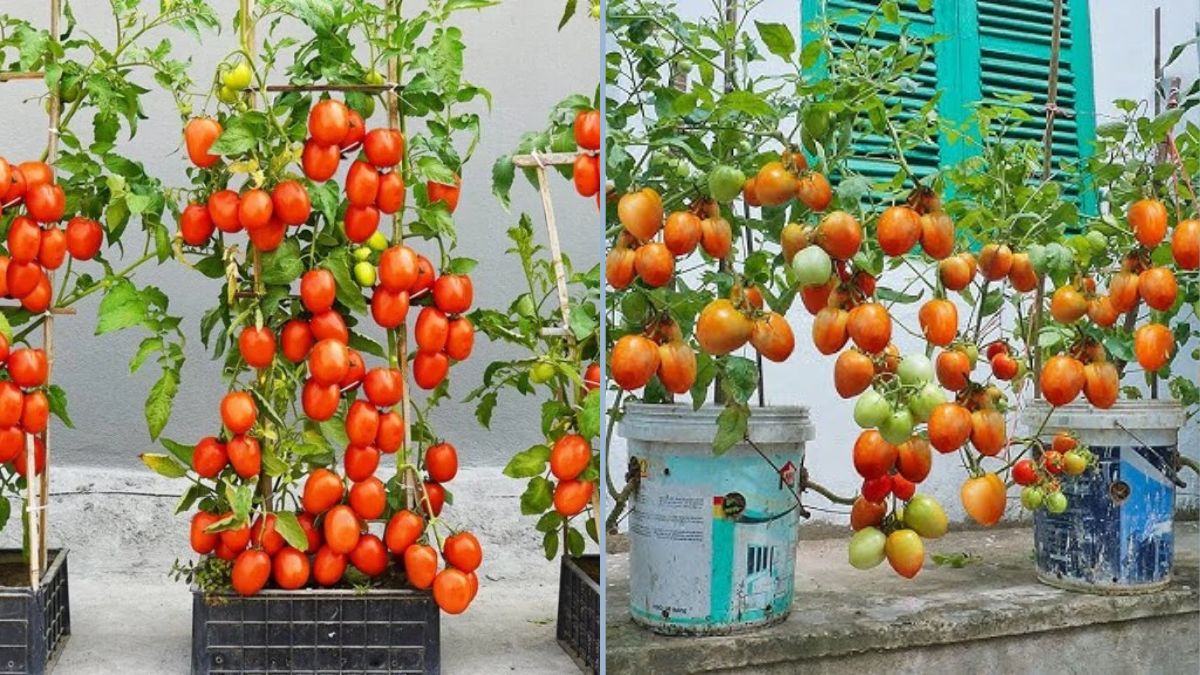
Tomatoes are one of the most satisfying plants to grow at home — whether you have a full garden or only a terrace or balcony. If you’re short on space, a very effective method is to grow tomatoes in plastic containers. Even better, you can boost productivity by using an unconventional but effective trick: bananas. In this post, I’ll walk you through how to set this up, and why the banana element works so well.
Why plastic containers?
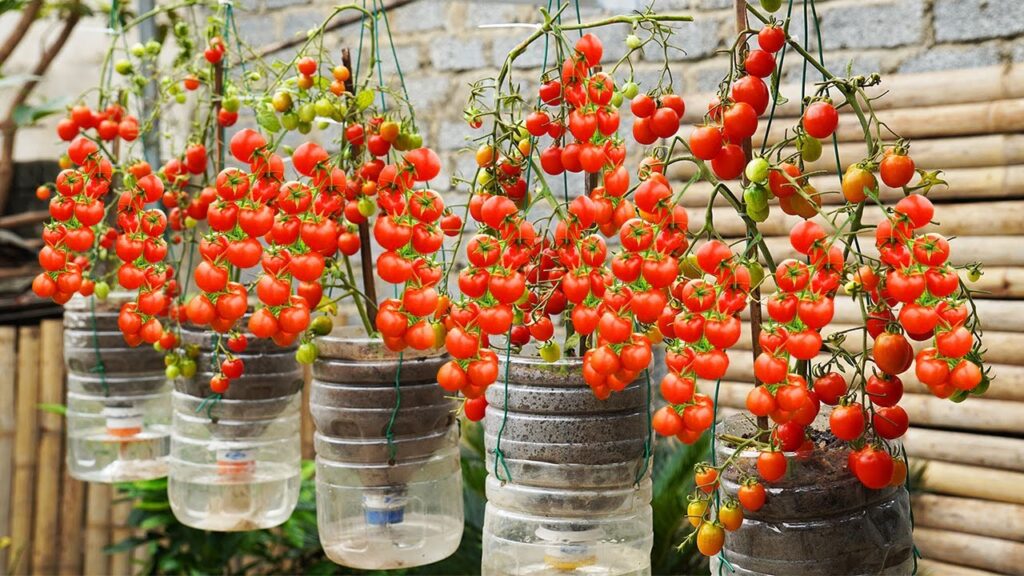
Growing tomatoes in plastic containers has many advantages:
- Flexibility of location: You can place containers on terraces, balconies, rooftops, or anywhere you have light.
- Soil control: You can control the soil type, drainage, and nutrients more easily than planting directly in the ground.
- Mobility: If a container is too hot or gets too much sun, you can move it, or protect it.
- Pest & disease isolation: Containers reduce risk of certain soil-borne diseases that may be present in traditional beds.
When using plastic containers, make sure they are large enough (at least 12 inches deep / ~30 cm) and have proper drainage holes. Without sufficient size and drainage, your tomato plant will struggle. For instance, one gardening post suggested that plastic buckets “make excellent containers for tomato plants… just ensure they’re at least 12 inches deep” for proper root growth.
Step-by-step: Setting up the container tomato system
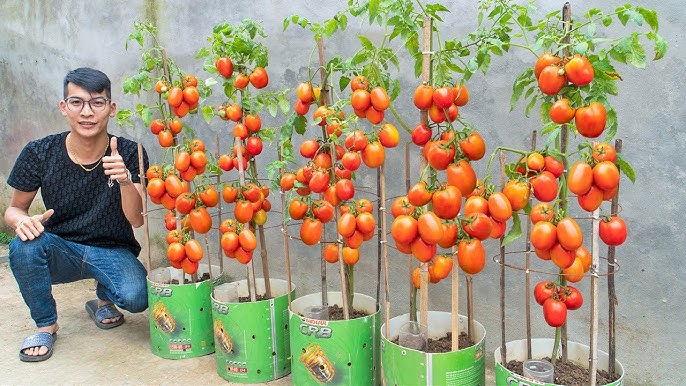
1. Choose the right container
Pick a plastic container that’s sturdy and has ample depth and width (minimum ~30 cm deep and wide). Drill or ensure there are drainage holes at the bottom. A big bucket or large plastic tub works well.
2. Prepare the soil mixture
Use a good quality potting mix or garden soil enriched with compost. Ensure it is well-draining (tomatoes dislike “wet feet”). A mixture of coconut coir or peat + compost + some perlite or coarse sand works well in containers.
3. Planting the tomato
Select a healthy young tomato seedling. (Alternatively you can start from seed and then transplant when strong.) Plant it at a slight angle or deeper than in its nursery pot (so that part of the stem is buried) to encourage extra root formation. Position it in a spot that receives at least 6-8 hours of sunlight daily.
4. Watering & feeding
Because the container has limited soil volume, watering must be more frequent than in-ground tomatoes. Keep the soil moist but not soggy. Use a balanced tomato fertilizer or compost tea every few weeks.
5. Supporting the tomato plant
As the plant grows, provide support: a stake, cage or trellis. Especially in containers, the plant may lean or topple.
The banana trick: Why bananas?
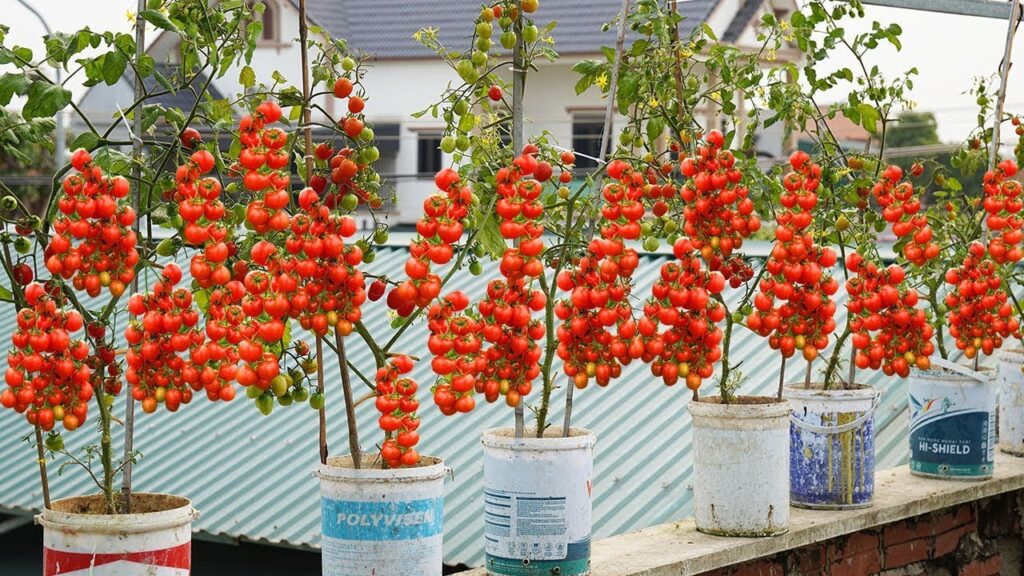
Now for the interesting part — using bananas (or banana peels) to boost your tomato yield. The concept is covered in the video and in several gardening resources: bananas are rich in potassium and also help with microbial activity, both of which encourage fruiting in tomatoes.
Here are ways bananas can help:
- Potassium boost: Bananas (and banana peel compost) are a natural source of potassium (K). Potassium is a key nutrient for fruit formation in tomatoes (and many fruiting plants).
- Microbial benefit: As banana peels decompose in the soil or compost, they support beneficial microbes that help root and plant health.
- Slow-release nutrient: If you bury banana peels in the soil (away from the main stem) or add composted bananas, you provide a steady nutrient supply rather than a “one-off” chemical feed.
- Cost-effective and eco-friendly: Using bananas is an inexpensive and sustainable way to boost yield rather than relying only on commercial fertilizers.
In fact, the video shows using banana peels — or composted banana matter — in the container pot to get “many fruits” on the tomatoes.
How to incorporate bananas into your container tomato system
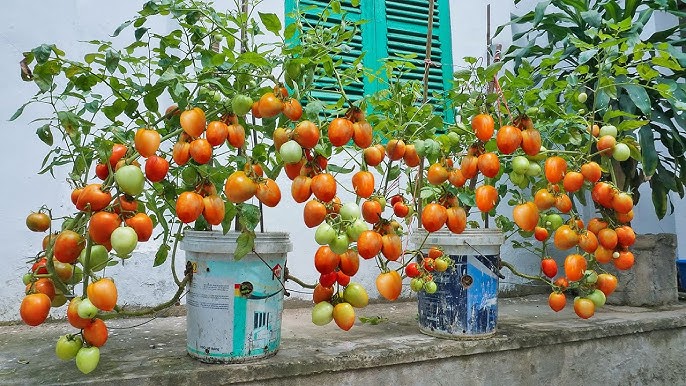
Here’s how to do it discretely and effectively:
- When you transplant your tomato seedling into the container, you can place a few chopped banana peels around the perimeter of the soil (not too close to the stem, to avoid rot or pests).
- Alternatively, you might bury a whole or half banana peel (or small pieces) about 5–10 cm deep in the soil, around 10–15 cm away from the main plant stem.
- Use composted banana if available: If you can compost banana peels for a few weeks until partially broken down, mix them into the potting soil prior to planting.
- As the plant grows, you can occasionally top-dress the container with banana peel pieces or banana-based compost, then lightly work them into the top soil and water well.
Important tips & safety:
- Avoid placing banana peels right against the plant stem — moisture and decay too close may attract pests or cause stem rot.
- Make sure the soil remains well-draining — adding too much organic matter without drainage can lead to soggy conditions.
- Cover the soil surface with mulch or a thin layer of compost once the plant is established — this helps retain moisture and slowly release nutrients.
- Watch for pests such as fruit flies that may be attracted to decaying banana matter. If fruit flies or pests become a problem, bury the peels more deeply or use them as compost ahead of time.
Maximising fruit production: Additional container-tomato tips
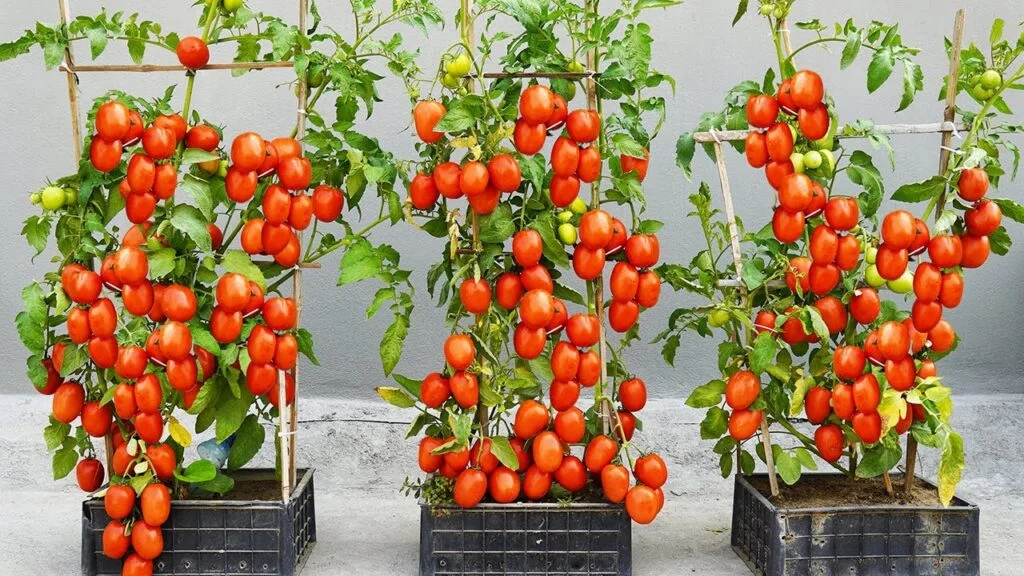
While bananas provide a great boost, there are further steps to ensure a heavy yield of tomatoes:
- Choose a high-yield variety: For containers, look for determinate or “bush” tomato varieties, or compact indeterminate types that are labelled “container” or “patio”.
- Prune for focus: Remove lower leaves (to improve airflow) and pinch off early side-shoots if you are growing indeterminate types. This focuses the plant’s energy toward fruit.
- Feed regularly: Even with bananas, the volume of soil in a container is limited. Use a liquid tomato feed or compost tea every 2–3 weeks once fruiting begins.
- Consistent water supply: Avoid letting the pot dry out completely or become water-logged. Fluctuations stress plants and reduce fruit set.
- Place for maximum sun: More fruit = more sun. At least 6–8 hours of direct sunlight per day is ideal. If on a terrace in India (like Maharashtra), make sure heat is managed (shade cloth in extreme midday sun if necessary).
- Use proper support: Strong stems encourage better fruiting. Use stakes or cages from the start so you don’t disturb the roots later.
- Harvest regularly: Remove ripe fruit without delay. This encourages the plant to make more new fruit rather than focusing on ripening what’s already there.
What to expect: Yield & harvest timing
Using the container + banana method, you can expect a good yield — perhaps up to double what you’d get in a similar container without the banana trick (depending on conditions). Of course, actual yield depends on variety, sunlight, soil fertility, watering, and local climate.
In a favourable terrace-setting (warm, sunny, protected), you might begin harvesting tomatoes roughly 50-70 days after transplanting (varies by variety). Then maintain steady picking for many weeks until the plant slows.
Troubleshooting: Common issues & how to fix them
- Yellowing leaves: Could be over-watering, poor drainage, or nutrient imbalance. Check that drainage holes are not clogged, and reduce watering if soil feels soggy.
- Blossom drop (flowers but no fruit): Often due to high heat (above 35 °C) or erratic watering. Keep consistent moisture and consider some midday shade in very hot climates.
- Fruit cracking or splitting: This can happen when heavy watering follows a dry spell. Water regularly and consistently.
- Pests/disease: Tomatoes in containers are less prone to some soil-borne diseases, but watch for common pests (aphids, whiteflies, tomato hornworms). Banana peels may attract fruit flies, so bury them and monitor.
- Low yield: If the plant is healthy but not producing many fruits, consider increasing potassium (your banana-peel trick helps) and ensure plenty of sunlight and good feeding.
Why this works especially well in India / terrace gardens
If you’re in India (for example Maharashtra, where terrace or balcony space is common), this method is especially aligned with your situation:
- Space-efficient: Plastic containers can fit on terraces or balconies where in-ground beds are impractical.
- Climate friendly: In a warm region you can get excellent tomato growth; containers allow you to manage heat (move shade if needed).
- Resource-efficient: Using banana peels (which you likely have in the kitchen) reduces reliance on expensive fertilisers and repurposes waste.
- Easy to manage: Containers reduce the labor of weeding and bed preparation; they are ideal for urban gardening.
Final thoughts
If you’ve ever wondered “How can I get more tomatoes from my small terrace garden?”, using plastic containers with a little banana-boost is a practical, low-cost, high-return method. You’ll get the benefits of controlled conditions, flexibility of placement, and the natural fertilising power of banana peels.
Here’s a quick checklist to get started:
- Choose a large plastic container (30 cm+ deep & wide) with drainage holes.
- Fill with good quality potting mix + compost.
- Bury banana peel pieces ~10 cm deep, around the edge of the pot, away from the stem.
- Plant your tomato seedling, stake or cage it immediately.
- Place in full sun (6-8 hours).
- Water regularly to keep soil evenly moist; feed every 2-3 weeks once fruiting begins.
- Harvest regularly, maintain support and airflow, watch for pests.
- Make sure banana peels are buried and the soil remains well-draining.
- Enjoy your abundant harvest of home-grown, delicious tomatoes!
Give it a try this season. With a little planning and the banana trick, you can turn even a small terrace space into a productive tomato patch. Happy gardening!
Regards for sharing the information with us.