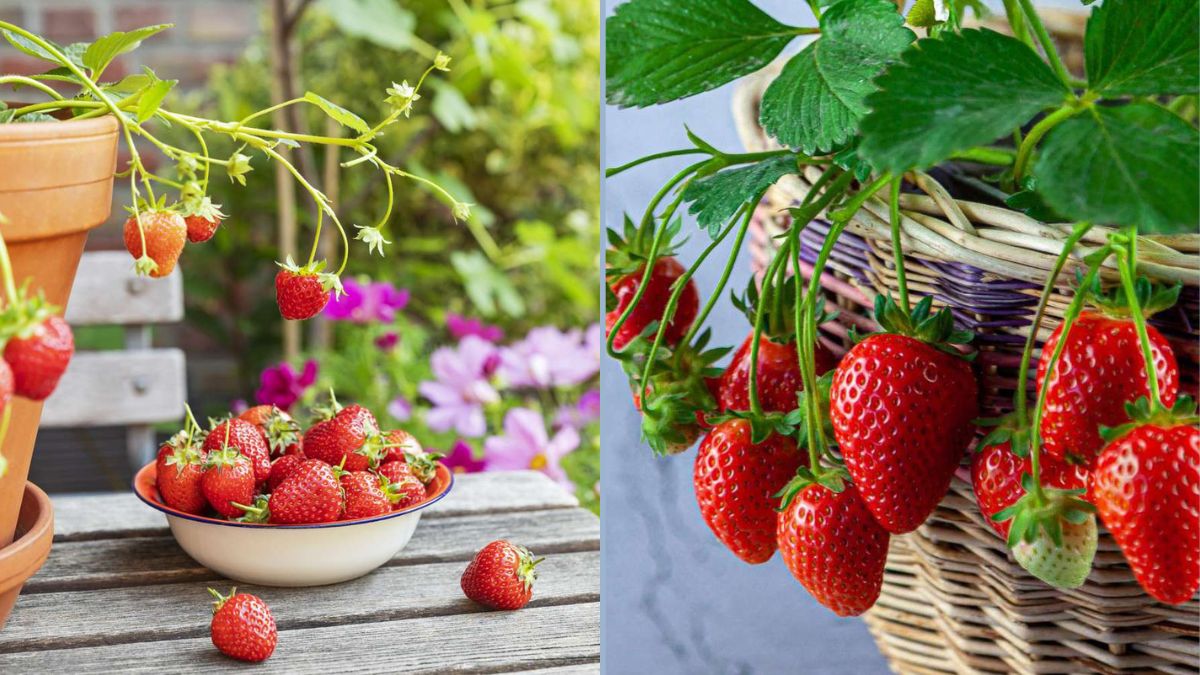
Few garden treats compare to the charm of alpine strawberries. These tiny, jewel-like fruits pack a fragrance and flavor that rivals any berry in the garden. Known for their rich aroma, sweet-tart balance, and continuous summer production, alpine strawberries (Fragaria vesca) are a beloved favorite for home gardeners and gourmet chefs alike.
Unlike their large-fruited cousins, alpine strawberries are smaller, daintier, and exceptionally flavorful. They’re also perennial, easy to manage, and ideal for containers, window boxes, or garden borders.
If you’ve been growing alpine or wild strawberries for a season or two, dividing them is one of the best ways to expand your patch, rejuvenate old plants, and ensure steady harvests. In this guide, we’ll walk you through how to divide alpine strawberries, why and when to do it, and how to grow them successfully in pots for beautiful, productive plants year after year.
What Makes Alpine Strawberries Special
Before we dive into dividing, let’s understand why these plants are so unique.
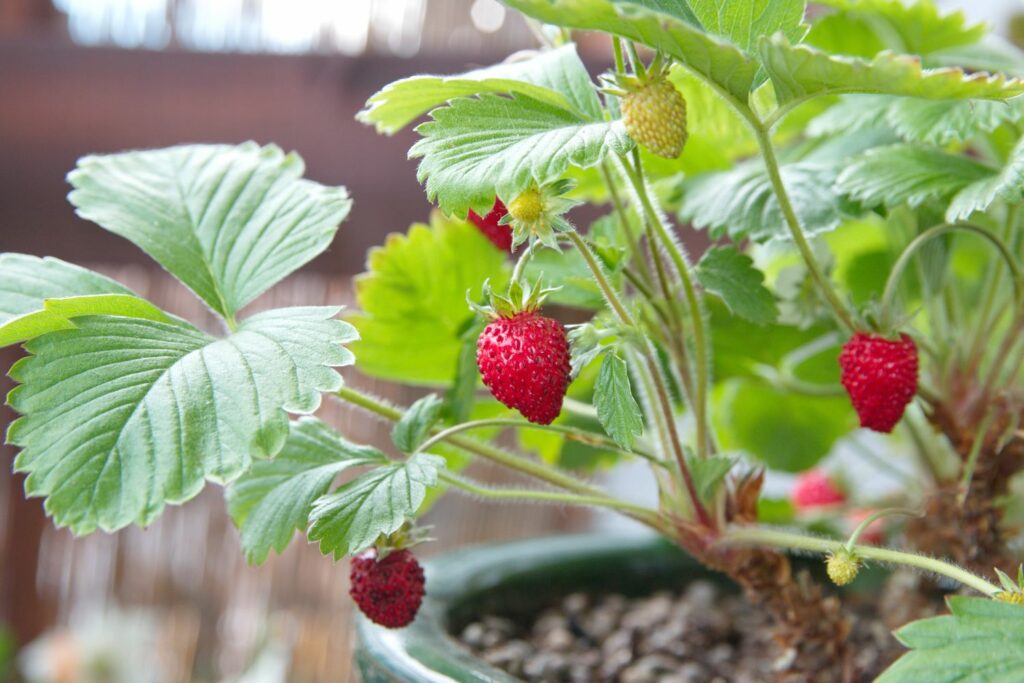
Alpine strawberries are native to Europe and Asia, where they often grow wild along woodland edges and meadows. Unlike modern hybrid strawberries, alpines typically don’t send out runners (though a few cultivars might). Instead, they form compact clumps that gradually grow wider and denser each year.
Here’s why gardeners love them:
- Continuous harvest: Many alpine varieties are everbearing, producing fruit from late spring through fall.
- Intense flavor: The berries are small but packed with aromatic sweetness—often described as “wild strawberry perfume.”
- Low maintenance: They thrive in cooler climates, require little care, and resist many common strawberry diseases.
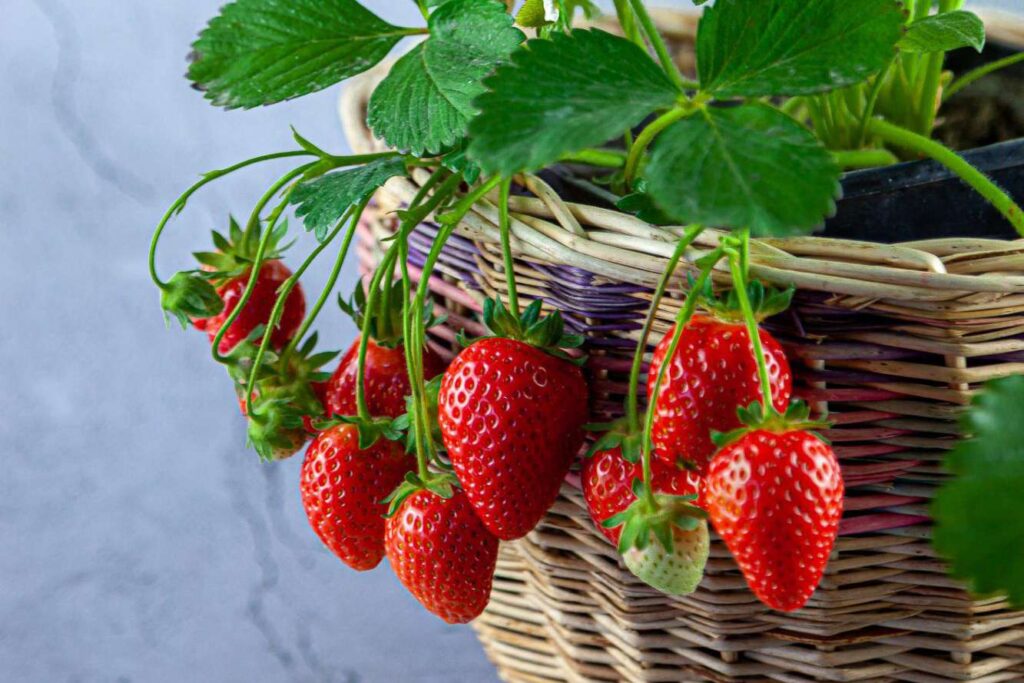
- Perfect for pots: Their tidy growth habit makes them excellent for containers, hanging baskets, or window boxes.
- Perennial nature: Once established, they can live and produce for several years, especially if divided periodically.
Why Divide Alpine Strawberry Plants
Dividing is a natural and necessary step for maintaining the health and productivity of alpine strawberries. Over time, the central part of the clump becomes woody, crowded, and less vigorous. By separating and replanting the younger outer sections, you can rejuvenate your patch and multiply your plants.
Key Benefits of Division:
- Rejuvenation: Dividing prevents overcrowding and encourages new root and leaf growth.
- Propagation: Each division can become a new plant—perfect for expanding your garden or sharing with friends.
- Improved yield: Younger plants tend to produce more and better-quality fruit.
- Disease prevention: Removing old, decaying centers reduces the risk of fungal or pest issues.
- Better airflow: Thinning clumps helps air circulate around the leaves, keeping plants dry and healthy.
When to Divide Alpine Strawberries
Timing matters. You want to divide when the plants are neither under stress from heat nor deep in dormancy.
Best times to divide:
- Early spring (just as new growth begins)
- Early fall (after fruiting has finished, but while the soil is still warm)
Dividing in spring allows the plants to establish before summer fruiting. Dividing in fall gives them time to settle and root before winter dormancy.
Avoid dividing during extreme heat or when the soil is frozen—both can shock the plants and reduce survival.
Tools and Materials You’ll Need
Before you start, gather everything you’ll need for clean, efficient work:
- A sharp garden trowel or knife
- Garden fork or spade
- Pots or planting trays (if potting up divisions)
- Fresh potting mix or compost-enriched soil
- Watering can or hose
- Labels (optional, if you’re keeping track of varieties)
Clean tools are essential—dirty or dull blades can spread disease or tear roots.
How to Divide Alpine Strawberry Plants
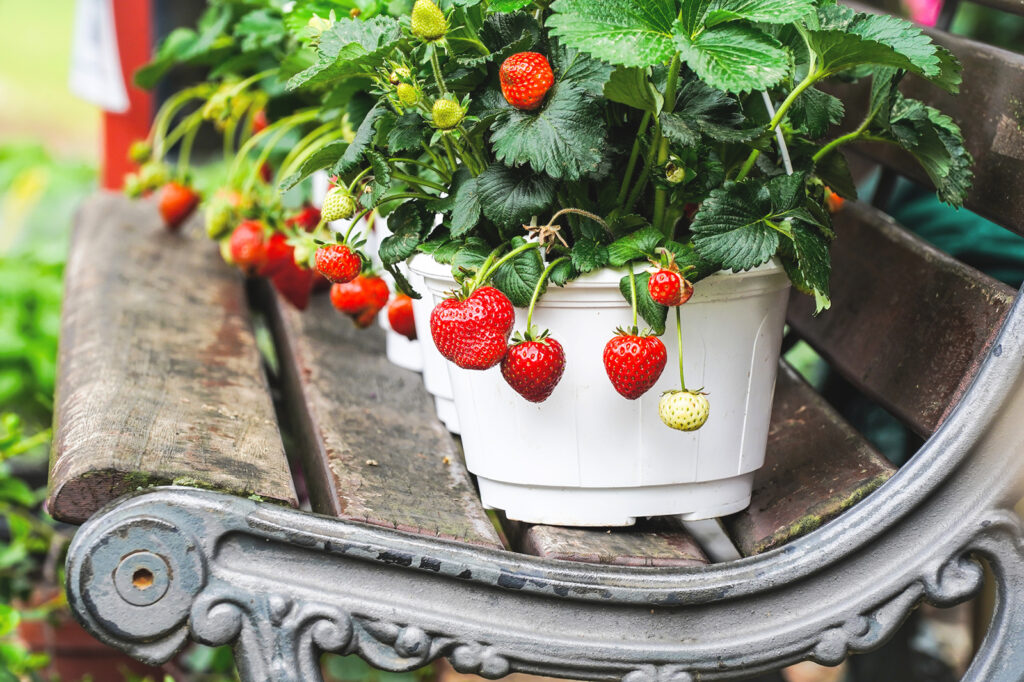
Follow these simple steps to divide your alpine strawberries properly:
Step 1: Water the plants
Water the strawberry plants thoroughly the day before dividing. This makes the soil easier to work with and reduces stress on the roots.
Step 2: Lift the clump
Use a garden fork or trowel to gently lift the entire plant from the soil. Be careful not to damage the crown (the central growing point where leaves and roots meet).
If you’re dividing potted strawberries, tip the plant out of its container and gently shake off excess soil.
Step 3: Examine the plant
Look for natural divisions in the clump. Healthy alpine strawberries will have several small crowns connected by short roots. Each section should have its own leaves, crown, and root system.
Step 4: Separate the divisions
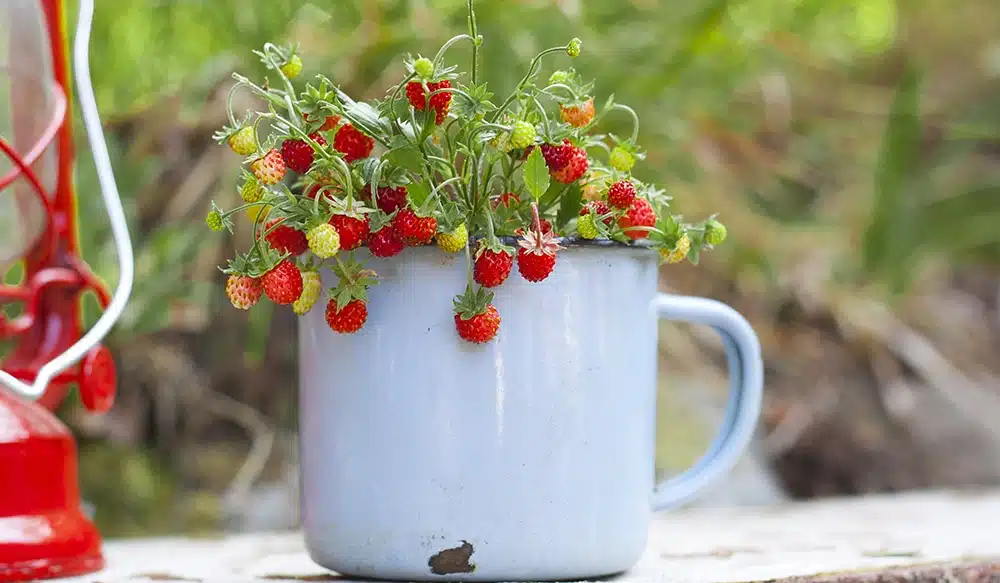
Use your hands or a clean, sharp knife to gently tease apart the crowns. Try to keep a good amount of roots attached to each section. If some roots break, don’t worry—they’ll regrow.
Discard any old, woody, or diseased centers.
Step 5: Replant immediately
Plant the divisions right away to prevent the roots from drying out. Whether you’re replanting in the ground or into pots, set the crowns so they sit level with the soil surface—neither buried too deep nor exposed.
Step 6: Water well
After planting, water the divisions thoroughly to settle the soil around the roots. Keep the soil consistently moist (but not soggy) for the first few weeks as new roots establish.
Growing Alpine Strawberries in Pots
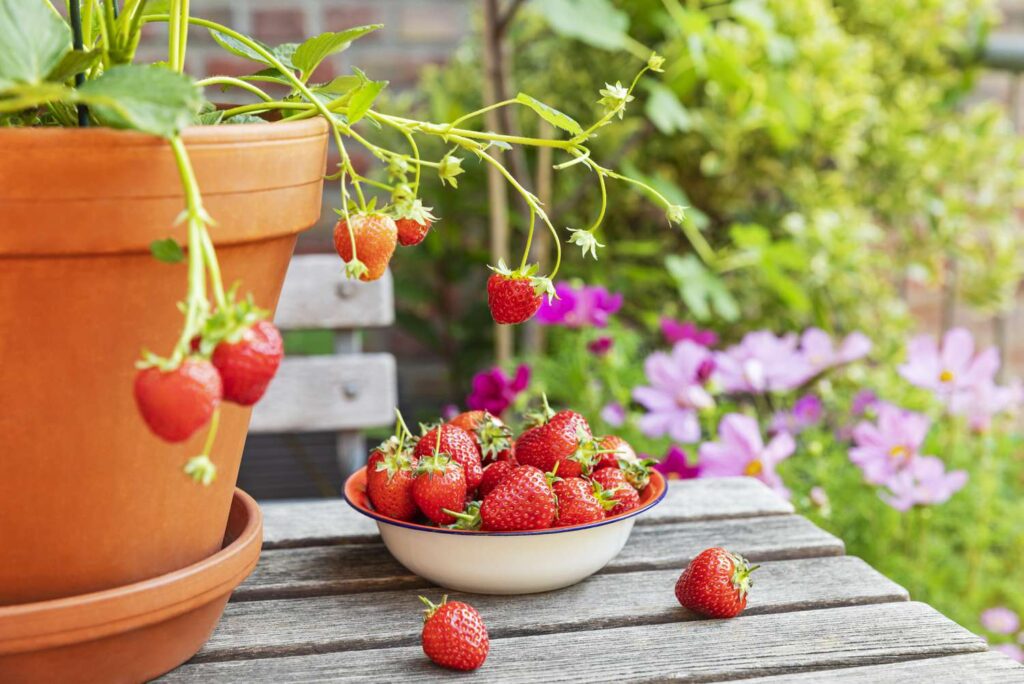
Alpine strawberries are perfect for containers, balconies, and small gardens. Their compact growth and shallow root systems make them ideal for pot culture.
1. Choose the Right Container
Select a pot that’s at least 8–10 inches wide and 6–8 inches deep. Clay or terracotta pots are great for breathability, but plastic or resin containers retain moisture better in hot climates.
Make sure your pot has drainage holes to prevent root rot.
2. Use Quality Potting Mix
A loose, rich potting mix works best. Combine:
- 2 parts high-quality potting soil
- 1 part compost
- 1 part perlite or sand for drainage
A slightly acidic pH (around 6.0) is ideal for strawberries.
3. Planting the Divisions
Plant one or two divisions per pot. Set the crown level with the soil, firm gently, and water thoroughly. Leave a small space at the top for watering.
4. Sunlight and Location
Place pots in a sunny spot that receives at least 6 hours of sunlight daily. In very hot regions, some afternoon shade helps prevent stress.
If you’re growing indoors, a south-facing window or a grow light can provide sufficient light.
5. Watering and Feeding
Keep the soil consistently moist—strawberries dislike drying out. Water whenever the top inch of soil feels dry.
Feed every two to three weeks with a balanced liquid fertilizer or an organic compost tea during the growing season. Avoid over-fertilizing, which encourages leafy growth at the expense of fruit.
6. Mulching and Maintenance
Add a thin layer of straw or leaf mulch around the plants to keep moisture in and protect fruit from soil splash. Trim off any dead or yellowing leaves to maintain airflow and prevent disease.
7. Winter Care
In colder regions, move pots to a sheltered location or lightly mulch the crowns to protect from freezing. In mild climates, they’ll often overwinter without issue.
Harvesting and Enjoying Alpine Strawberries
One of the best things about alpine strawberries is their extended harvest season. Unlike June-bearing varieties that produce one big flush, alpines keep flowering and fruiting continuously through summer and early autumn.
Pick the berries as soon as they turn deep red and detach easily from the stem. Because they’re small and delicate, handle them gently. Enjoy them fresh—straight from the plant—or add them to desserts, salads, or smoothies. Their flavor is so intense that even a handful can perfume a dish.
For long-term enjoyment, you can freeze or dehydrate the berries, or make small batches of jam to capture their exquisite aroma.
Common Problems and Simple Solutions
While alpine strawberries are generally low-maintenance, here are a few things to watch for:
- Dry soil: Leads to poor fruiting. Keep soil evenly moist.
- Crowding: Divide every 2–3 years to keep plants vigorous.
- Slugs and snails: Protect pots by elevating them or using barriers.
- Gray mold (Botrytis): Avoid overhead watering; remove old leaves and ensure good airflow.
Healthy alpine strawberries rarely suffer from serious pests or diseases if kept in well-drained, fertile soil.
Final Thoughts
Dividing alpine strawberries is one of the simplest and most rewarding garden tasks. In just an hour, you can turn an aging clump into a fresh collection of healthy, productive plants ready to fill your pots, beds, and borders with beauty and flavor.
Whether you grow them for their ornamental value, sweet aroma, or gourmet fruit, alpine strawberries bring joy season after season. By dividing regularly and giving them the right care, you’ll ensure that your plants stay vigorous—and your harvests abundant—for years to come.
So grab a trowel, some pots, and your favorite alpine variety. A few small divisions today will grow into a garden full of delicious rewards tomorrow.