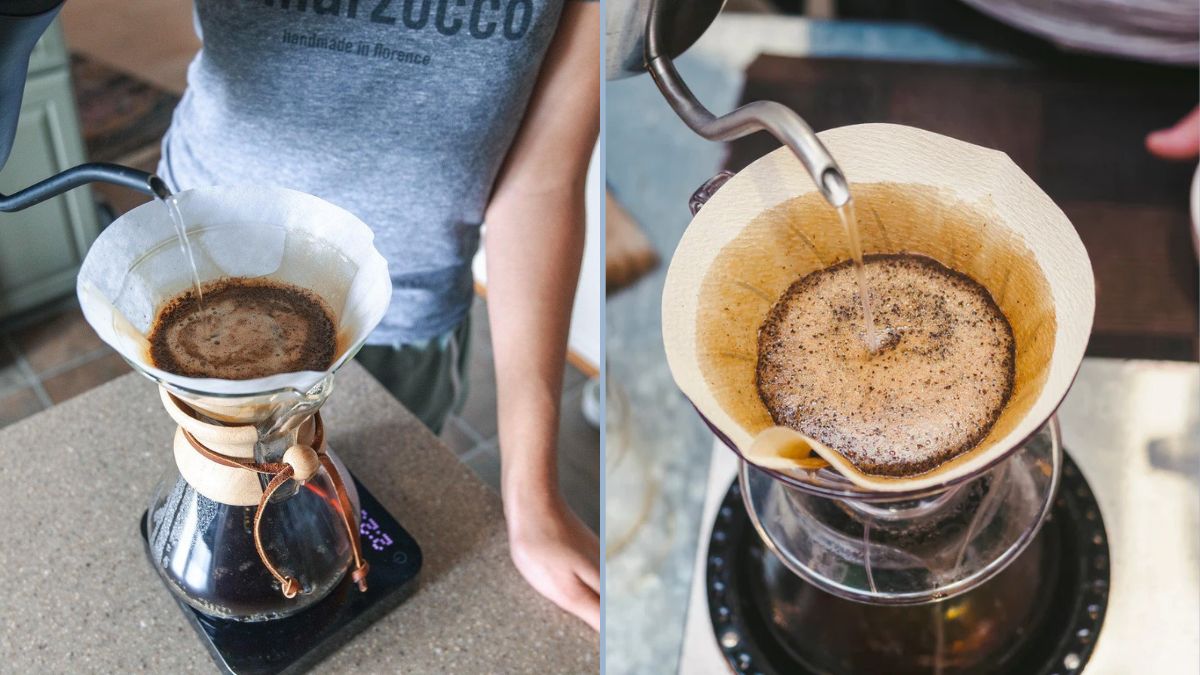
In a world where convenience often rules our coffee habits, there’s something timeless and grounding about the art of pour-over coffee. The ritual of slowly pouring hot water over freshly ground beans may seem simple, but it’s one of the most precise and rewarding ways to brew a cup that truly reflects the character of your coffee.
Unlike automatic machines or instant blends, pour-over coffee gives you complete control over flavor, aroma, and strength — resulting in a clean, bright, and deeply satisfying cup. It’s not just coffee; it’s craftsmanship, mindfulness, and science combined in one soothing ritual.
In this article, we’ll explore what makes pour-over coffee special, the science behind it, how to perfect the technique at home, and why every minute you spend on it is absolutely worth it — all in a 100% vegetarian-friendly way.
1. What Is Pour-Over Coffee?
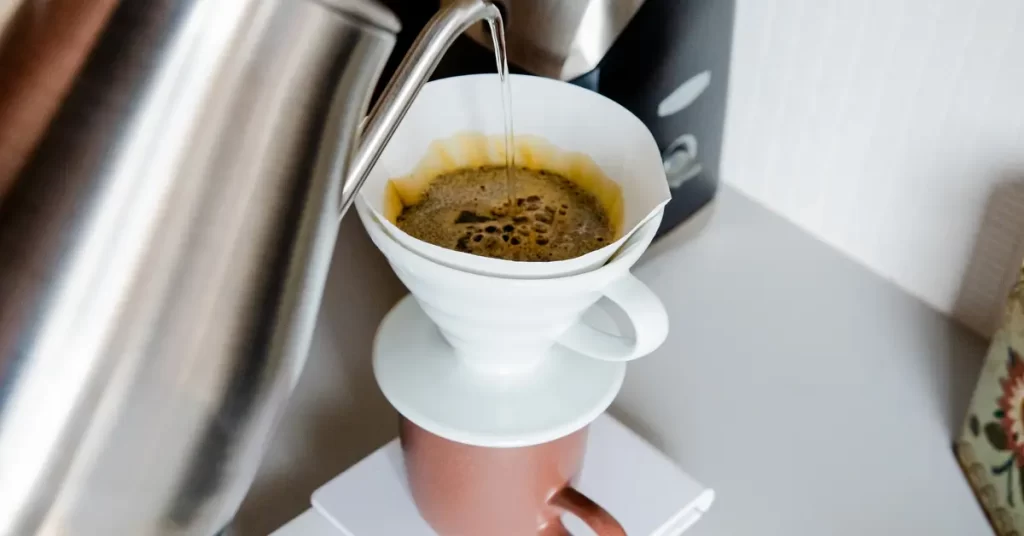
Pour-over coffee is a manual brewing method where hot water is slowly poured over coffee grounds in a filter, allowing it to drip through into a carafe or mug below. This technique extracts flavors more evenly than most automatic machines, producing a clean, aromatic cup that highlights the subtle notes of your beans.
The process might sound simple, but it’s a delicate balance of temperature, timing, grind size, and pouring technique. Every variable influences the flavor, making pour-over coffee as much an art as it is a science.
Popular pour-over devices include:
- Hario V60 – Known for its cone shape and spiral ridges that promote even extraction.
- Chemex – A glass brewer that produces a bright, smooth cup and doubles as a design icon.
- Kalita Wave – Features a flat bottom that ensures balanced brewing, ideal for beginners.
2. The Science Behind Pour-Over Coffee
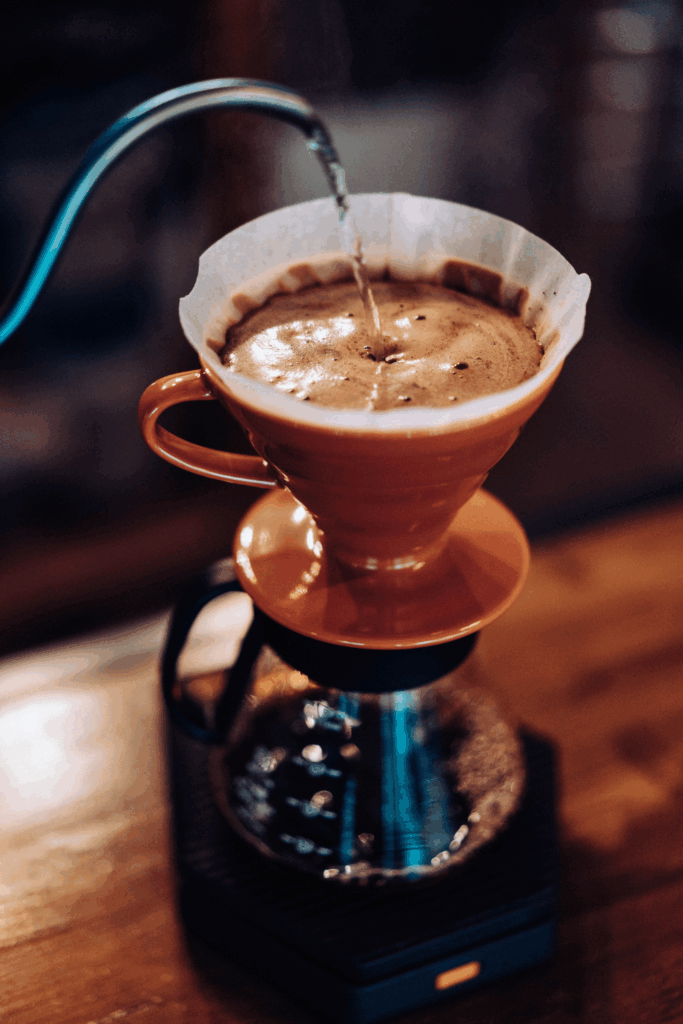
The magic of pour-over coffee lies in controlled extraction. When hot water interacts with coffee grounds, it dissolves soluble compounds that determine flavor, aroma, and body. The goal is to extract just the right balance — not too much (which makes coffee bitter) and not too little (which makes it sour or weak).
a) Extraction Phases
- Blooming (First 30 seconds):
When you first pour hot water over the grounds, carbon dioxide trapped inside the coffee is released. This “bloom” creates bubbles and prepares the grounds for even extraction. - Main Pour:
As you continue to pour slowly in a circular motion, water extracts flavorful compounds — oils, sugars, acids — creating a layered and nuanced cup. - Final Drip:
The last phase determines the body of the coffee. Over-pouring here can cause over-extraction, while cutting off too early can leave your coffee underdeveloped.
b) Temperature and Timing
Water temperature plays a crucial role. Ideally, it should be between 90°C and 96°C (195–205°F). Too hot, and the coffee tastes bitter; too cool, and it turns flat.
The entire brewing process typically takes 3–4 minutes, allowing enough time for optimal flavor development.
c) The Role of Grind Size
Grind size is one of the most critical elements.
- Too fine: Over-extracted, bitter coffee
- Too coarse: Under-extracted, sour coffee
For pour-over, a medium-coarse grind (like sea salt) is ideal. It allows steady water flow and balanced extraction.
3. Why Pour-Over Coffee Is Worth the Effort
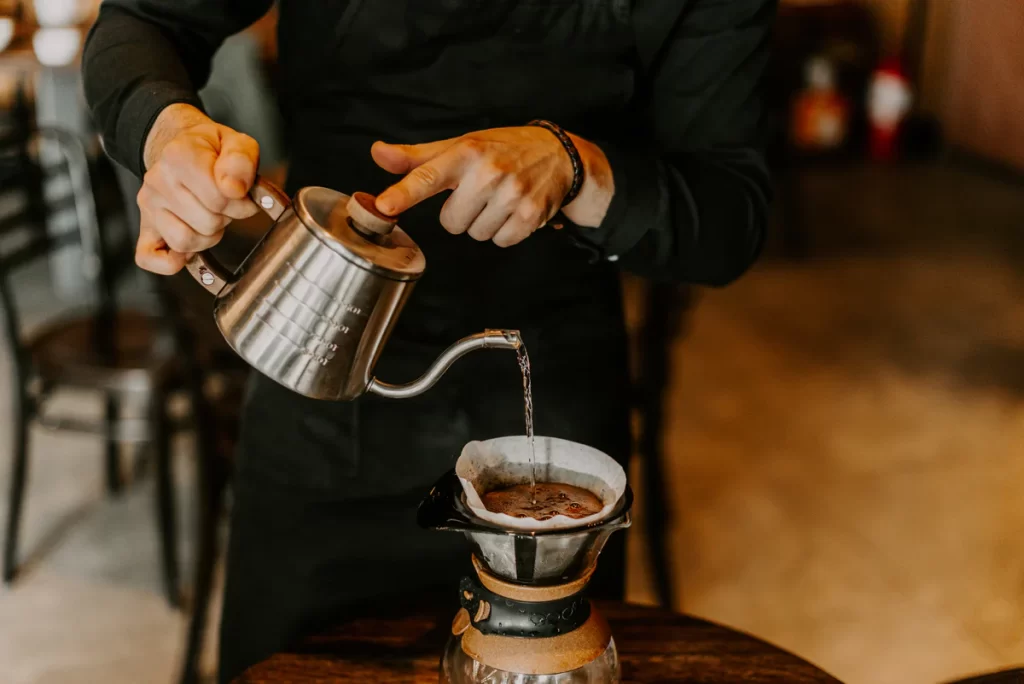
Some might say pour-over coffee takes too long. But those who’ve tried it know that it’s not just about the coffee — it’s about the experience.
a) Complete Control Over Flavor
You decide everything — water temperature, grind size, pouring speed, and brew ratio. This means you can fine-tune every cup until it’s exactly how you love it: fruity, nutty, bold, or mellow.
b) Cleaner and Smoother Taste
Paper filters used in pour-over brewing trap oils and fine particles that make coffee cloudy or bitter. The result? A clean, aromatic, and smooth cup with bright flavor notes.
c) Mindful Brewing Experience
Pour-over coffee encourages you to slow down. The rhythmic pouring, the aroma of freshly ground beans, the quiet drip — it’s a meditative ritual that turns your morning brew into a mindful moment of calm.
d) Eco-Friendly and Simple
Unlike capsules or pods, pour-over brewing uses minimal waste. You can compost the paper filters and coffee grounds, making it an environmentally friendly choice.
e) Consistency
Once you master the pour-over method, you’ll enjoy consistent results every time. No more guessing — just pure precision in every cup.
4. Step-by-Step Guide to Making the Perfect Pour-Over Coffee
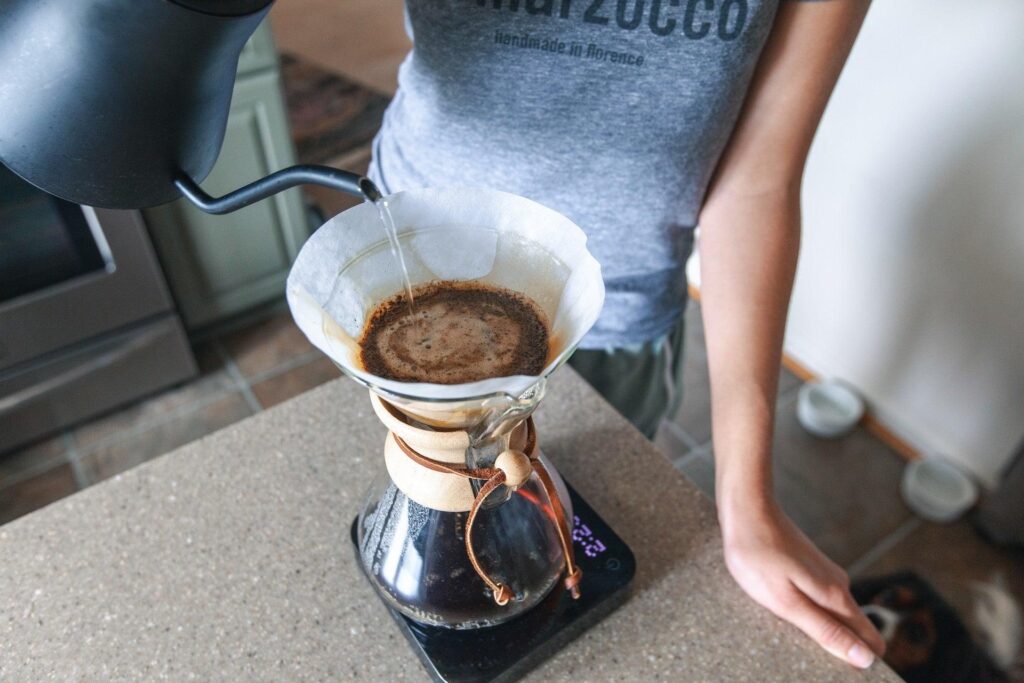
You’ll Need:
- 1 pour-over dripper (Hario V60, Chemex, or Kalita Wave)
- 1 paper filter
- Freshly roasted coffee beans (medium roast recommended)
- Grinder (burr grinder preferred)
- Kettle (gooseneck type helps with control)
- Digital scale (optional but useful)
- Hot water (90–96°C)
Ingredients:
- Coffee: 20 grams (about 2 tablespoons)
- Water: 300 ml (10 oz)
Step 1: Heat the Water
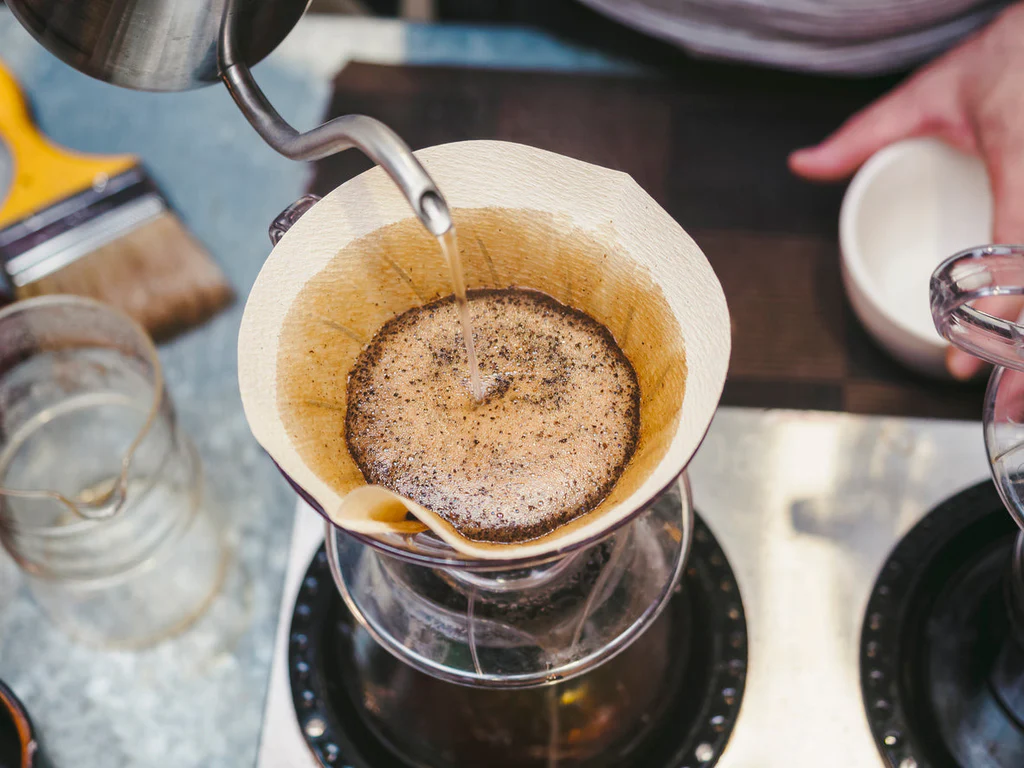
Boil water and let it cool slightly to around 90–96°C. This temperature range ensures even extraction without bitterness.
Step 2: Rinse the Filter
Place the paper filter in your dripper and rinse it with hot water. This removes any papery taste and preheats the dripper. Discard the rinse water.
Step 3: Grind Your Beans
Grind your coffee to a medium-coarse consistency. Freshly ground beans are key to flavor — pre-ground coffee loses aroma and oils quickly.
Step 4: Add Coffee Grounds
Place the dripper over your mug or carafe, add the coffee grounds, and gently shake to level the surface.
Step 5: Bloom
Start by pouring a small amount of water (about 40 ml) in circular motions, just enough to wet all the grounds. Let it bloom for 30–45 seconds. You’ll see bubbles as gases escape — a sign of fresh coffee!
Step 6: Main Pour
Slowly pour the rest of the water in small, circular motions, starting from the center and moving outward. Keep the pour steady and continuous, avoiding the filter walls. This should take around 2–3 minutes.
Step 7: Let It Drip
Allow all the water to pass through. The final drip should finish at around 3½ to 4 minutes total.
Step 8: Serve and Enjoy
Remove the dripper, swirl the coffee gently, and take a moment to inhale the aroma before sipping. You’ve just created café-quality pour-over coffee at home.
5. Tips to Perfect Your Brew
- Use filtered water: Chlorinated tap water can affect taste.
- Adjust ratios: Start with a 1:15 coffee-to-water ratio and tweak according to your preference.
- Stay consistent: Weighing coffee and water ensures repeatable results.
- Pour gently: A slow, spiral pour prevents channeling and promotes even extraction.
- Keep your equipment clean: Residue oils from previous brews can alter the flavor.
6. Enhancing Your Pour-Over Experience
Once you master the basics, you can elevate your pour-over with simple, vegetarian-friendly tweaks:
a) Flavor Infusions
Add subtle hints to your brew without overpowering it:
- Cinnamon stick or cardamom pod in the carafe
- A few drops of vanilla extract
- Cocoa nibs for a chocolatey aroma
b) Serving Suggestions
- Black and pure: Appreciate the clarity of flavors.
- With plant-based milk: Almond, oat, or soy milk adds a creamy touch without dairy.
- Sweetened naturally: Use honey, jaggery syrup, or maple syrup for sweetness.
These variations keep your cup natural and entirely vegetarian.
7. The Health Benefits of Pour-Over Coffee
Pour-over coffee doesn’t just taste better — it’s healthier too, especially when enjoyed in moderation.
a) Rich in Antioxidants
Coffee contains powerful antioxidants that help combat free radicals and support heart health. Freshly brewed pour-over coffee preserves these compounds beautifully.
b) Less Acidity
The slow, even extraction of pour-over coffee often results in a smoother drink that’s easier on the stomach compared to machine-brewed coffee.
c) No Additives
Unlike store-bought or instant options, pour-over coffee is pure — no preservatives, artificial flavors, or unhealthy creamers.
d) Boosts Focus and Energy
Moderate caffeine levels provide steady energy and mental alertness without the harsh crash of stronger brews.
e) Supports Mindfulness
The slow, intentional brewing process helps reduce stress and encourages a moment of calm in a busy day — something both your mind and body will appreciate.
8. Why Pour-Over Coffee Is a Lifestyle, Not Just a Brew
Pour-over coffee is about intention, connection, and appreciation. Every cup you make reflects your patience, care, and respect for the process. It’s a chance to slow down, tune in to your senses, and start your day with something beautiful and handcrafted.
It’s sustainable, accessible, and endlessly customizable — a small daily ritual that can bring big joy.
Conclusion
The art of pour-over coffee is more than a brewing method — it’s a mindful journey that celebrates simplicity, precision, and flavor. By controlling every variable — from grind size to water flow — you’re not just making coffee; you’re creating an experience.
And while it takes a few extra minutes, the reward is a cup that’s cleaner, richer, and more vibrant than anything from a machine. It’s coffee in its purest form — honest, aromatic, and deeply satisfying.
So, grab your dripper, heat your water, and take a moment to pour with intention. Because when done right, pour-over coffee isn’t just worth the effort — it becomes the best part of your day.