
Tempura is one of Japan’s most beloved culinary traditions—a light, crisp batter coating vegetables (or seafood, though here we’ll focus on vegetables only). Unlike heavy fried foods, a good tempura has an airy crunch that almost shatters as you bite, revealing tender vegetables inside.
Yet, making tempura at home can be tricky. Too often, the batter turns soggy, greasy, or heavy. But with the right techniques, you can master tempura that rivals what you’d find in a Japanese restaurant—entirely plant-based, light, and irresistibly crispy.
Here are eight secrets to making perfect crispy tempura vegetables every single time.
Secret 1: Choose the Right Vegetables
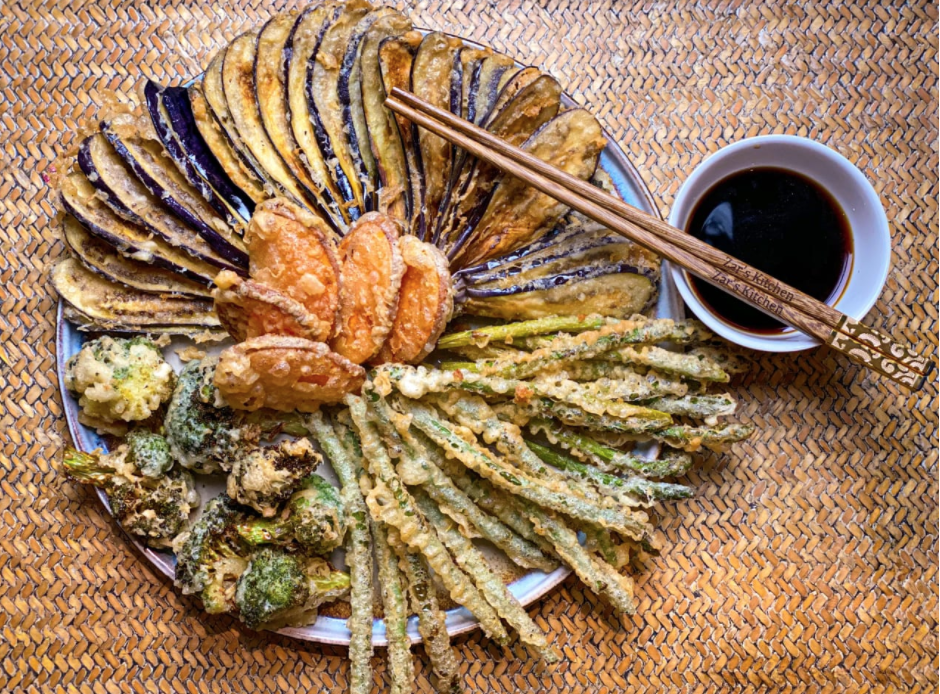
Not all vegetables are equally suited to tempura. For best results, choose vegetables that cook quickly and maintain texture.
- Great choices: Sweet potato slices, zucchini, eggplant, mushrooms, green beans, bell peppers, asparagus, broccoli, pumpkin, and carrots.
- Avoid water-heavy vegetables: Tomatoes or cucumbers release too much moisture, which softens the batter.
- Cut evenly: Slice vegetables into uniform, bite-sized pieces. Thin slices (about ¼ inch) crisp better without overcooking.
A thoughtful mix of textures—root vegetables, leafy greens, and tender veggies—makes a colorful and satisfying platter.
Secret 2: Keep Everything Ice-Cold
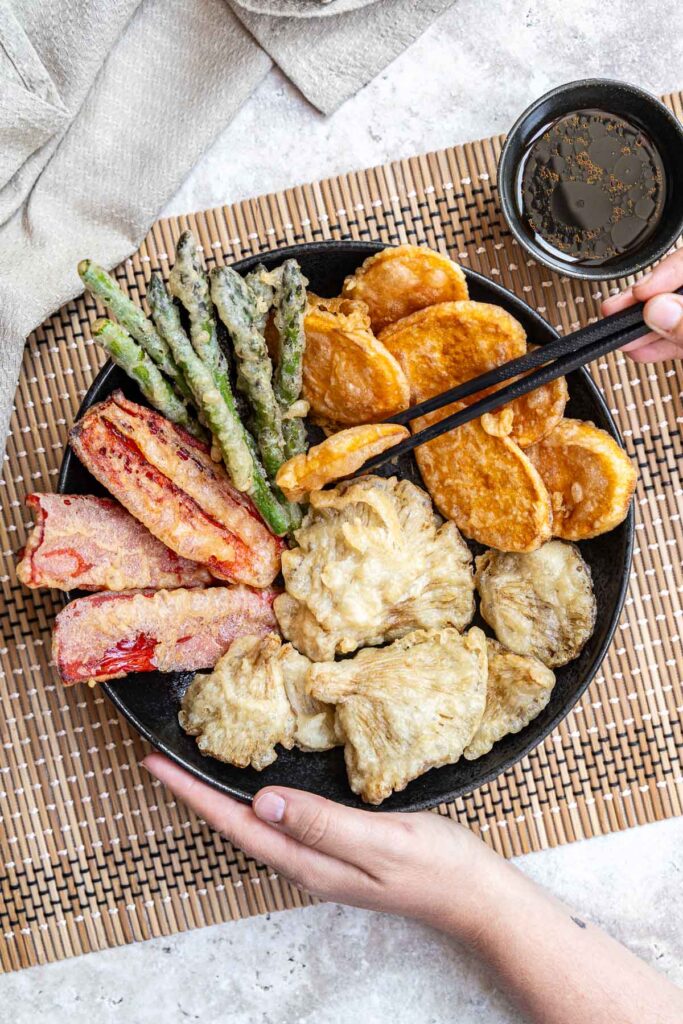
Cold is the cornerstone of tempura success. A chilled batter creates a light, crisp coating.
- Chilled water: Always use ice-cold water, even adding ice cubes directly to the mixing bowl.
- Cold flour: Keep flour in the fridge or freezer for at least 30 minutes before making the batter.
- Quick mixing: Mix batter just before frying so it stays cold.
The temperature difference between cold batter and hot oil is what produces that signature airy crunch.
Secret 3: Mix the Batter Lightly
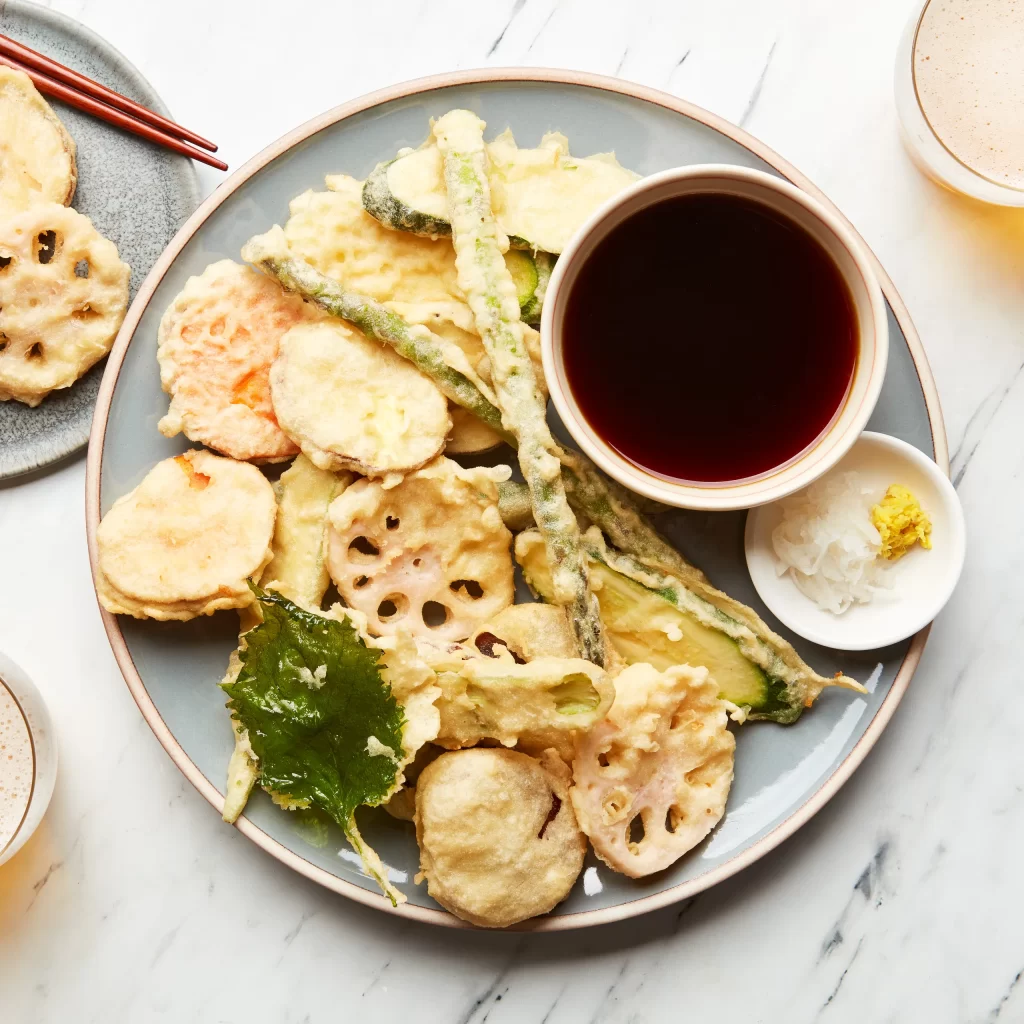
Overmixing batter is the most common mistake in tempura-making.
- Technique: Stir flour and water together gently with chopsticks or a fork. A few lumps are perfectly fine.
- Why it matters: Overmixing activates gluten, resulting in a heavy, chewy coating instead of a delicate crisp.
- Timing: Mix batter right before frying to prevent thickening.
Think of tempura batter as a quick stir, not a smooth pancake batter.
Secret 4: Use the Right Flour Blend
Traditional tempura uses wheat flour, but the type and blend can dramatically affect texture.
- All-purpose flour: Works well but can be heavy if overmixed.
- Rice flour or cornstarch: Mix with wheat flour (about 1:1 ratio) for lighter, crispier results.
- Gluten-free option: A mix of rice flour and cornstarch makes a delicate, crunchy batter perfect for those avoiding gluten.
Experimenting with blends lets you find your ideal texture.
Secret 5: Maintain the Oil Temperature

The oil’s temperature is the heart of perfect tempura. Too hot, and the batter burns before vegetables cook; too cool, and the batter absorbs oil, turning greasy.
- Ideal temperature: 340–360°F (170–180°C).
- Test method: Drop a little batter into the oil—it should sink slightly, then quickly rise to the surface.
- Consistency: Fry in small batches to avoid lowering oil temperature.
Using a deep, heavy-bottomed pot helps keep the heat stable.
Secret 6: Don’t Overcrowd the Pan
Overcrowding is another common reason tempura turns soggy.
- Small batches: Fry 3–5 pieces at a time, depending on your pot size.
- Space matters: Give vegetables room to float and crisp evenly.
- Between batches: Skim off any floating batter bits from the oil to keep it clean and prevent burning.
Patience ensures every piece comes out perfectly crisp.
Secret 7: Drain and Serve Immediately
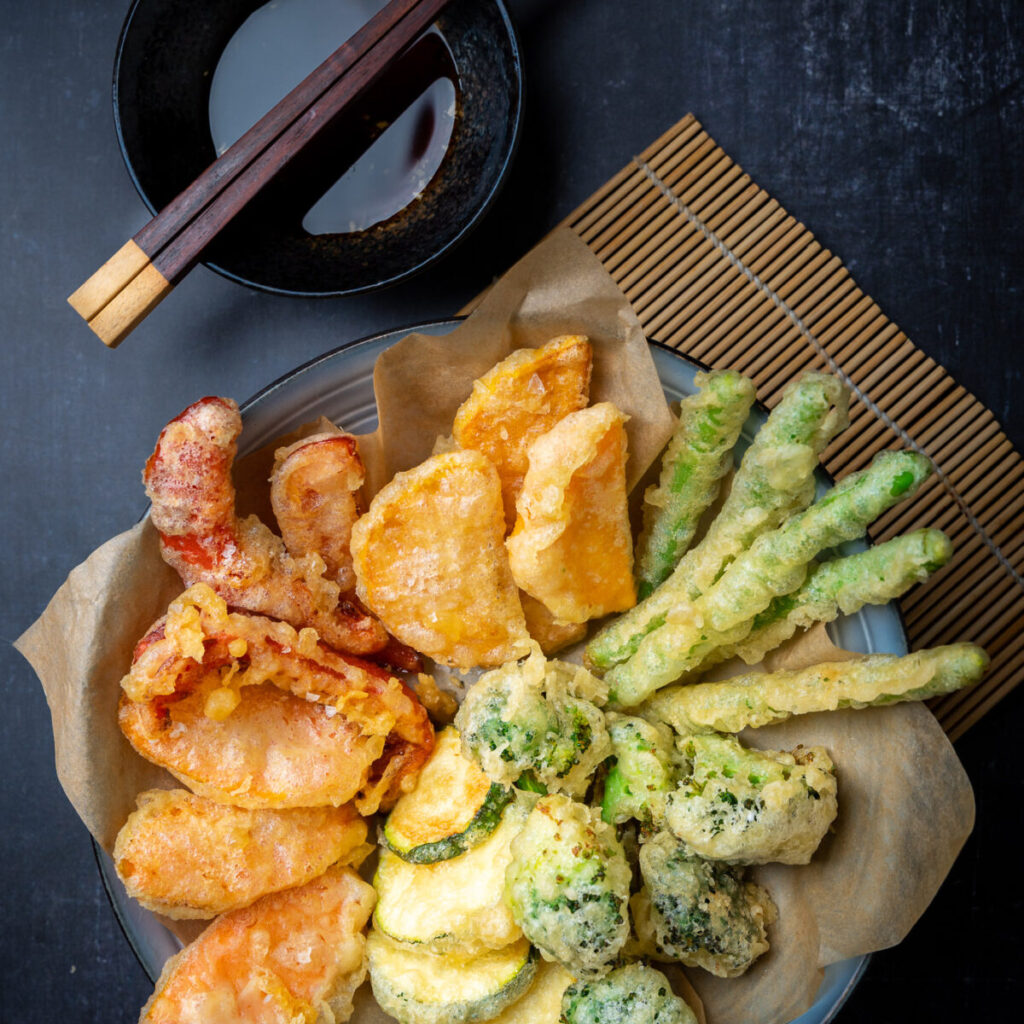
Tempura is best enjoyed hot and fresh—its crispness fades quickly.
- Drain properly: Place fried vegetables on a wire rack (not paper towels) to prevent steam buildup.
- Serve right away: Ideally within 5–10 minutes of frying.
- Keep warm: If cooking multiple batches, keep finished tempura in a low oven (200°F / 90°C) on a wire rack until serving.
Tempura waits for no one—the sooner you serve, the better the crunch.
Secret 8: Pair with Simple Seasonings and Dips
While tempura itself is flavorful, dips and seasonings elevate the experience.
- Classic tempura sauce (tentsuyu): A light dipping sauce made from soy sauce, mirin, and dashi. For a plant-based version, replace dashi with kombu (kelp) broth.
- Salt seasoning: A sprinkle of sea salt, matcha salt, or chili salt adds brightness.
- Creative dips: Try ponzu (citrus-soy), sesame sauce, or spicy chili paste.
Keep accompaniments light to let the delicate crispness shine.
Serving Ideas (All Plant-Based)
Tempura vegetables can be enjoyed in many creative ways:
- As a snack or appetizer – Serve with dipping sauce and tea.
- Over rice – Make a tempura donburi (rice bowl) with vegetables on top.
- With noodles – Pair with soba or udon for a hearty, balanced meal.
- In wraps – Layer inside flatbreads with fresh greens and tahini drizzle.
- Party platter – Combine different vegetables for a colorful shared dish.
Tempura is versatile, making it perfect for everyday meals or festive gatherings.
Extra Tips for Success
- Prep ahead: Cut vegetables before mixing the batter to keep everything cold and quick.
- Oil choice: Use neutral oils with high smoke points, such as sunflower, canola, or peanut oil.
- Texture variety: Mix root vegetables (sweet potatoes, carrots) with light vegetables (bell peppers, zucchini) for balance.
- Experiment: Try herbs like shiso leaves or even edible flowers for unique flavors.
Conclusion
Crispy tempura vegetables are not about complicated recipes—they’re about precision and care. By applying these **eight secrets—choosing the right vegetables, keeping the batter ice-cold, mixing lightly, using the right flour, maintaining oil temperature, frying in small batches, draining properly, and serving with simple dips—you can consistently achieve tempura that is light, crunchy, and restaurant-worthy.
This Japanese classic shows how vegetables, when handled with skill, can become a delicate yet satisfying dish. Entirely plant-based and endlessly versatile, tempura is proof that frying can be elegant, not heavy. With these techniques, your homemade tempura will be crisp, golden, and unforgettable—every single time.