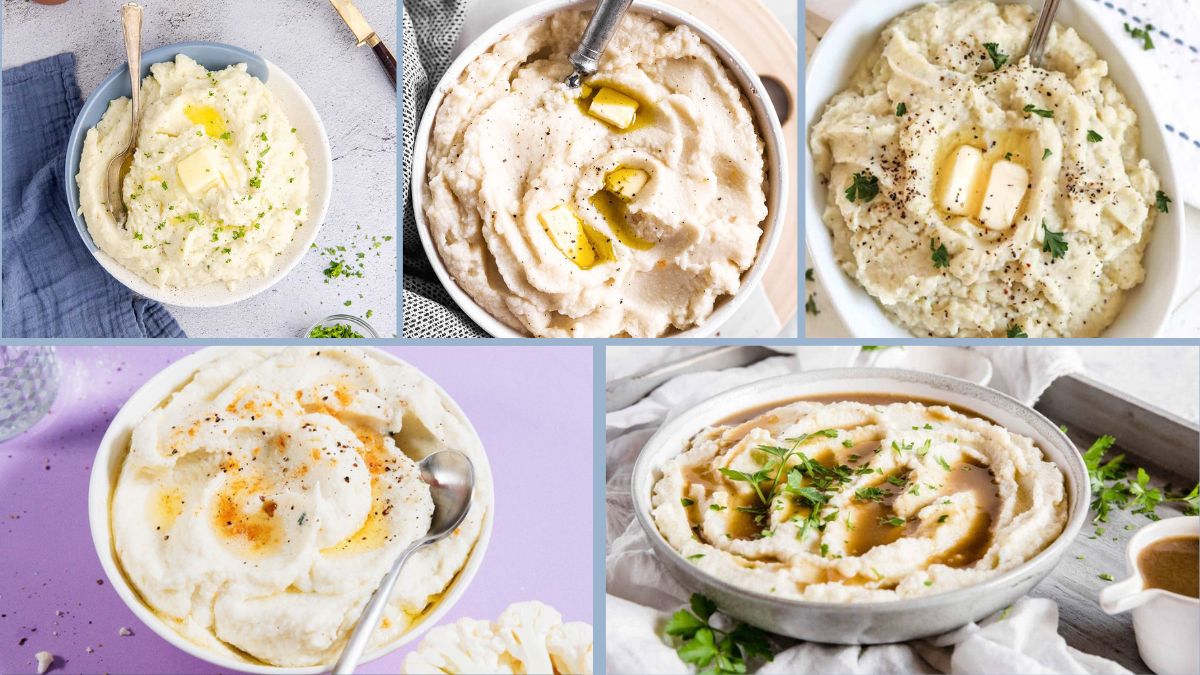
Mashed potatoes have long been the gold standard of comfort food—creamy, fluffy, and deeply satisfying. But in recent years, mashed cauliflower has emerged as a lighter, nutrient-dense alternative. Packed with fiber, vitamins C and K, and fewer calories and carbs than potatoes, cauliflower mash makes a delicious swap without sacrificing flavor or texture.
The challenge? Cauliflower has more water than potatoes, which can easily lead to watery or mushy mash if not handled properly. The key lies in mastering a few techniques to ensure a fluffy, smooth, and flavorful result that rivals traditional mashed potatoes.
Here are seven tips for making perfect, fluffy mashed cauliflower every time.
Tip 1: Choose the Right Cauliflower
Quality starts with the base ingredient.
- Fresh heads: Look for cauliflower heads that are firm, tightly packed, and creamy white in color. Avoid heads with dark spots or loose florets.
- Frozen florets: A convenient option, but be mindful—they release more water. If using frozen, thaw and dry thoroughly before cooking.
- Uniform pieces: Cut into even-sized florets for consistent cooking and texture.
A fresh, dense cauliflower head ensures the mash starts off on the right foot.
Tip 2: Cook Cauliflower the Right Way

How you cook cauliflower makes or breaks the mash. Boiling tends to waterlog florets, so choose methods that preserve texture.
- Best method: steaming – Steams florets gently, keeping them tender without soaking them.
- Alternative: roasting – Roasting adds depth and caramelized flavor while reducing moisture. Roast at 400°F (200°C) for 20–25 minutes before mashing.
- Avoid boiling – Submerging in water results in excess liquid that’s hard to remove later.
Cooking gently but thoroughly ensures the florets mash smoothly without turning watery.
Tip 3: Drain and Dry Thoroughly
Excess moisture is the biggest enemy of fluffy cauliflower mash.
- Drain well: After cooking, transfer florets to a colander and let them sit for a few minutes.
- Dry further: Return cauliflower to a hot, dry pan for 2–3 minutes, stirring occasionally. This helps evaporate lingering water.
- Pat dry if needed: A paper towel can help blot stubborn moisture.
Taking time to remove water ensures a thicker, fluffier mash.
Tip 4: Use the Right Mashing Technique
The texture of your mash depends on your mashing tool.
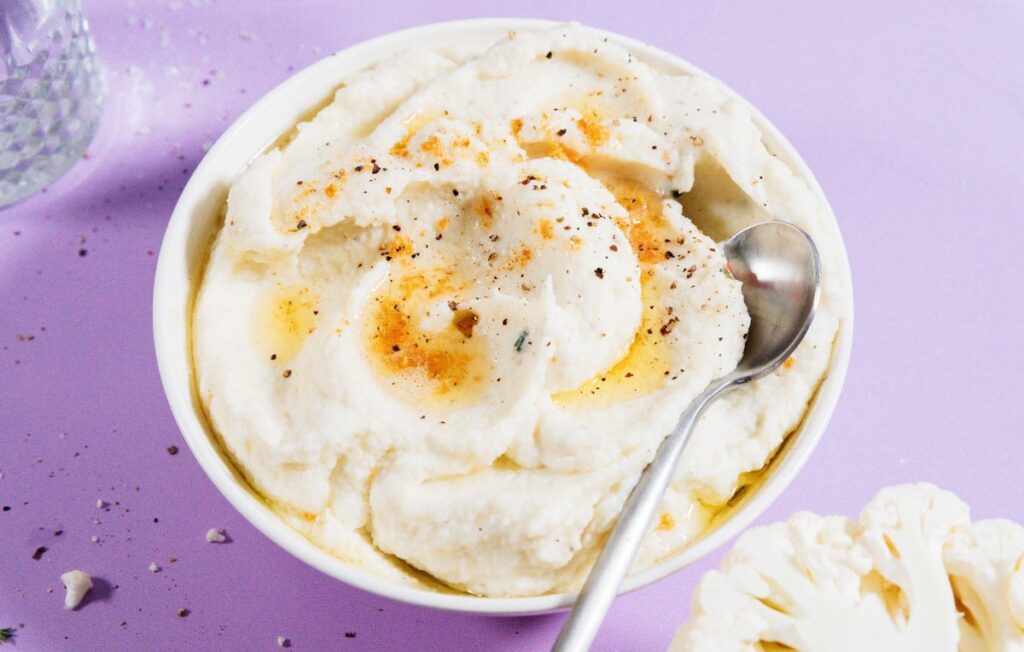
- For smooth mash: Use a food processor or high-powered blender. Pulse gently until silky—don’t overblend, or it may turn gluey.
- For rustic mash: Use a potato masher or fork for a chunkier, homestyle texture.
- For extra fluff: A hand mixer can whip air into the mash for a lighter result.
Choose your method based on the texture you want—smooth and elegant, or chunky and rustic.
Tip 5: Add Creaminess and Flavor
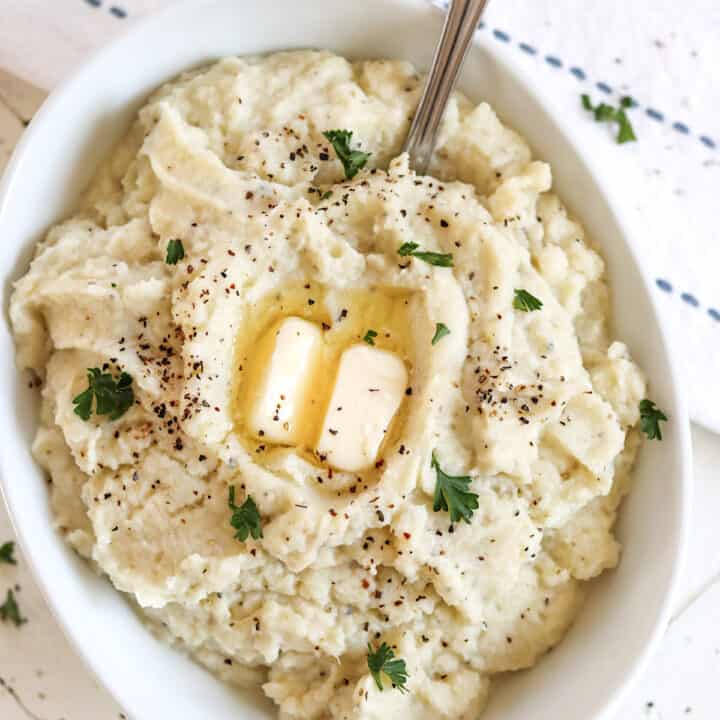
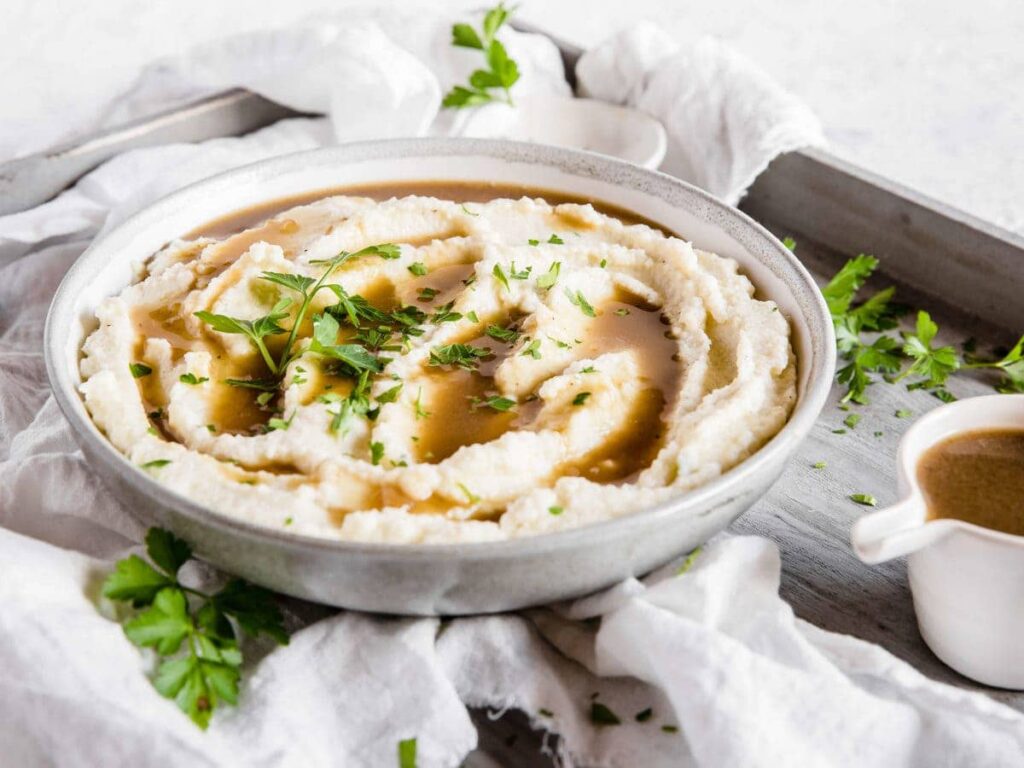
Cauliflower has a mild taste, so the right add-ins elevate it into a flavorful, comforting side.
- Creamy base: Use olive oil, butter, vegan butter, or plant-based cream for richness.
- Flavor boosters: Garlic (roasted or sautéed), fresh herbs (chives, parsley, thyme), or nutritional yeast for cheesy depth.
- Acidity: A splash of lemon juice balances richness and brightens flavor.
- Seasoning: Don’t underestimate salt and pepper—season gradually and taste as you go.
A well-seasoned mash transforms cauliflower from bland to indulgent.
Tip 6: Keep It Light and Fluffy
The hallmark of great mash is lightness. To achieve this:
- Whip with air: Use a hand mixer to incorporate air without overworking.
- Avoid over-blending: Too much processing breaks down fibers, turning mash into puree.
- Balance liquids: Add plant-based milk or cream slowly, a tablespoon at a time, until fluffy but not runny.
Think light and cloud-like—not dense or watery.
Tip 7: Customize with Creative Variations
Once you’ve mastered the basics, get creative. Cauliflower mash is a blank canvas for different flavors.
- Garlic mash: Roast garlic until golden and mash into the cauliflower for a sweet, nutty flavor.
- Herb mash: Mix in fresh dill, basil, or rosemary for aromatic notes.
- Cheesy mash (vegan-friendly): Add nutritional yeast or vegan cheese shreds for creamy “cheese” flavor.
- Spicy twist: Sprinkle smoked paprika, cayenne, or chili flakes for a warming kick.
- Mediterranean flair: Swirl in olive oil, lemon zest, and fresh parsley.
Variations keep this dish exciting and adaptable for any meal.
Serving Ideas (All Plant-Based)

Mashed cauliflower works as more than just a potato substitute.
- Side dish – Pair with roasted vegetables, grilled tofu, or lentil patties.
- Shepherd’s pie topping – Replace mashed potatoes with cauliflower mash for a lighter version.
- Bowl base – Use as a creamy base for grain or veggie bowls.
- Dip alternative – Serve warm as a spread with flatbreads or vegetable sticks.
- Holiday table star – A healthier yet indulgent option for festive meals.
This versatility makes cauliflower mash a staple in both everyday cooking and special occasions.
Extra Tips for Success
- Cook in small batches: Overcrowding the steamer basket leads to uneven cooking.
- Taste as you go: Cauliflower is mild; seasoning is key.
- Batch prep: Make extra and store in the fridge for up to 3 days, or freeze in portions for up to a month.
- Reheat properly: Warm in a saucepan with a splash of milk or olive oil to restore creaminess.
Conclusion
Fluffy mashed cauliflower isn’t just a substitute for mashed potatoes—it’s a dish worth celebrating on its own. By choosing the right cauliflower, cooking it properly, draining thoroughly, using the right mashing technique, adding flavorful enhancements, keeping it light, and experimenting with variations, you’ll achieve a mash that is smooth, airy, and delicious every time.
This dish highlights how simple vegetables can become indulgent comfort food with the right care. Nutritious, versatile, and entirely plant-based, mashed cauliflower proves that healthy swaps can be just as satisfying as the originals. With these seven tips, your cauliflower mash will win over even the most loyal mashed potato fans.