
Autumn brings with it an abundance of seasonal fruits, and among them, pears stand out for their natural sweetness, delicate flavor, and versatile culinary applications. Rich in dietary fiber, antioxidants, and essential vitamins, pears are more than just a tasty fruit—they are a functional ingredient that can enhance both the nutritional quality and flavor of a variety of dishes.
Incorporating pears into your fall diet is not only a celebration of the season but also a health-conscious choice. This article explores seven innovative ways to enjoy pears this fall, blending sweet and savory flavors while keeping the preparations entirely vegetarian. Each method highlights the nutritional benefits of pears, practical cooking techniques, and pairing suggestions.
Nutritional Profile of Pears
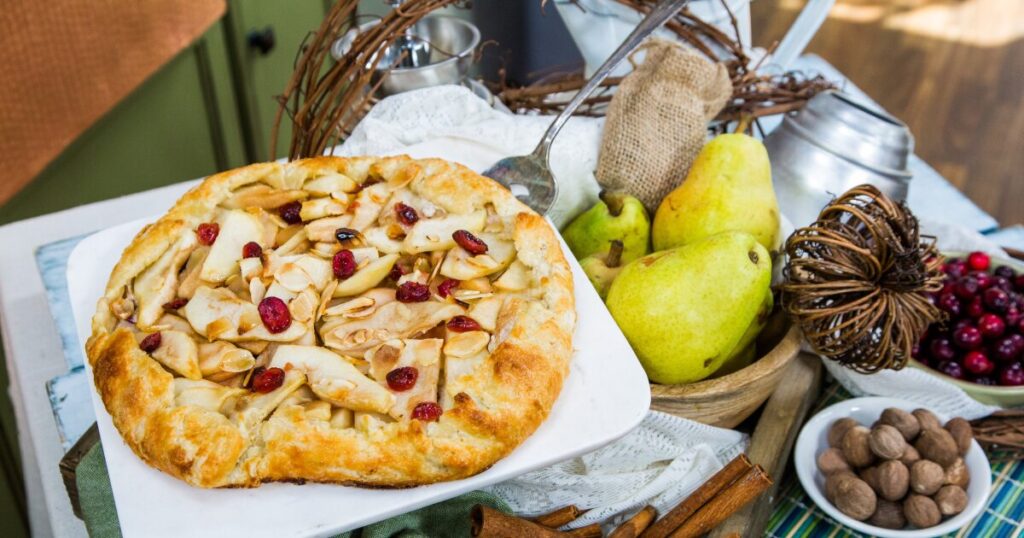
Pears are a low-calorie, nutrient-dense fruit. A medium pear contains approximately:
- Calories: 100 kcal
- Fiber: 6 grams
- Vitamin C: 10% of the daily recommended intake
- Vitamin K: 6% of the daily recommended intake
- Potassium: 200 mg
The high fiber content aids digestion, promotes satiety, and supports heart health. Pears also contain antioxidants, such as flavonoids and carotenoids, which combat oxidative stress and reduce inflammation. Additionally, their low glycemic index makes them suitable for individuals monitoring blood sugar levels.
1. Baked Pears with Cinnamon and Walnuts

Baking pears is a simple yet elegant way to enjoy their natural sweetness. Slice the pears in half, remove the core, and place them in a baking dish. Sprinkle with cinnamon, drizzle with honey or maple syrup, and top with chopped walnuts. Bake at 350°F (175°C) for 20–25 minutes until tender.
- Nutritional Benefits: The combination of fiber from pears and healthy fats from walnuts creates a filling, heart-healthy dessert. Cinnamon adds antioxidant and anti-inflammatory properties.
- Serving Suggestion: Serve warm with a dollop of Greek yogurt or plant-based yogurt for added protein and creaminess.
2. Pear and Arugula Salad with Goat Cheese

For a savory approach, combine sliced pears with peppery arugula, crumbled goat cheese, and toasted pecans. Drizzle with a balsamic vinaigrette for a sweet and tangy finish.
- Nutritional Benefits: This salad is rich in fiber, vitamins A and C, and calcium from the goat cheese. Pears provide natural sweetness that balances the bitterness of arugula.
- Serving Suggestion: Pair with whole-grain bread for a complete, satisfying meal.
3. Pear and Ginger Smoothie
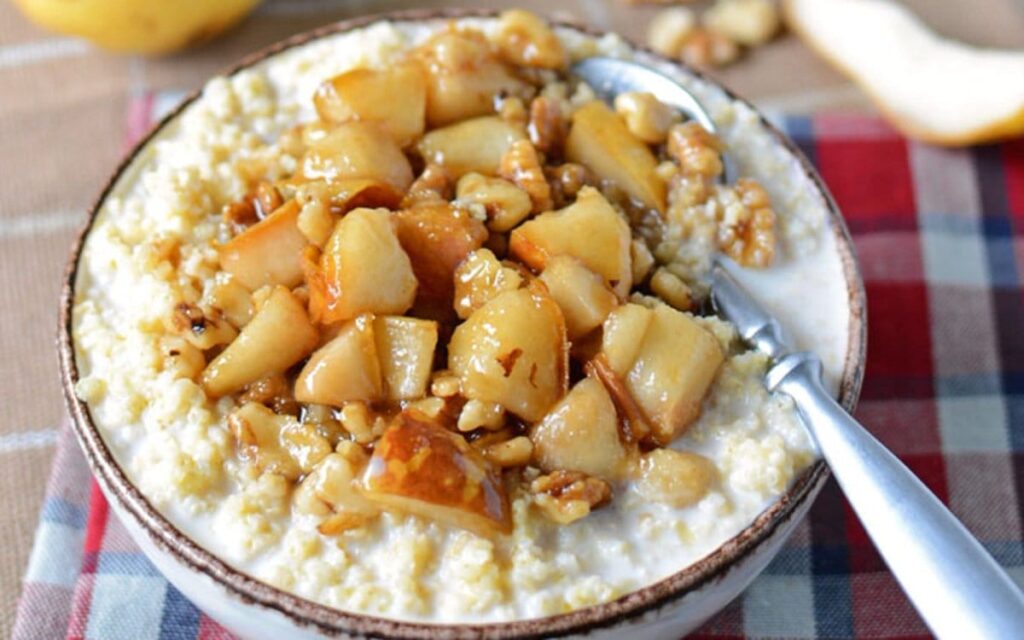
Smoothies offer a quick, nutrient-dense option for busy mornings. Blend ripe pears with fresh ginger, a banana, and a splash of almond milk. Optionally, add chia seeds for extra fiber and omega-3 fatty acids.
- Nutritional Benefits: Pears and ginger both support digestion, reduce inflammation, and provide antioxidants. The banana adds natural sweetness and potassium for heart and muscle health.
- Serving Suggestion: Serve chilled as a refreshing breakfast or post-workout snack.
4. Roasted Pears with Root Vegetables
Roasting pears alongside root vegetables such as carrots, sweet potatoes, and parsnips creates a hearty, savory dish. Toss the ingredients in olive oil, thyme, salt, and pepper, and roast at 400°F (200°C) for 25–30 minutes until tender.
- Nutritional Benefits: The fiber from pears and vegetables, along with healthy fats from olive oil, supports digestion and provides sustained energy. Thyme adds antioxidants and enhances flavor.
- Serving Suggestion: Serve as a side dish with quinoa or lentils for a complete, nutrient-rich vegetarian meal.
5. Pear Chutney
Pear chutney is a versatile condiment that complements both savory and sweet dishes. Cook diced pears with onions, apple cider vinegar, ginger, cinnamon, and a touch of brown sugar until soft and thickened.
- Nutritional Benefits: Pear chutney provides antioxidants, vitamins, and fiber, while the spices add anti-inflammatory properties.
- Serving Suggestion: Serve with roasted vegetables, grain bowls, or spread on whole-grain toast for a flavorful boost.
6. Pear and Brie Flatbread

For a sophisticated snack or appetizer, top whole-grain flatbread with sliced pears, thinly sliced Brie or a plant-based cheese alternative, and a drizzle of honey. Bake at 375°F (190°C) for 10–12 minutes until the cheese is melted and the crust is golden.
- Nutritional Benefits: This dish offers fiber, protein, and healthy fats. Pears add natural sweetness that complements the creamy texture of the cheese.
- Serving Suggestion: Garnish with fresh arugula or thyme before serving for added flavor and presentation.
7. Spiced Pear Compote
A spiced pear compote is a versatile topping for oatmeal, pancakes, or yogurt. Simmer chopped pears with cinnamon, nutmeg, and a splash of orange juice until the fruit is soft and syrupy.
- Nutritional Benefits: Pear compote retains the fiber, vitamins, and antioxidants of fresh pears, while warming spices provide anti-inflammatory benefits.
- Serving Suggestion: Use as a topping for breakfast dishes or as a natural sweetener for desserts.
Health Benefits of Including Pears in Your Fall Diet
In addition to their specific applications in these seven recipes, pears offer several overarching health benefits:
- Digestive Health: High fiber content promotes regular bowel movements and supports gut health.
- Heart Health: Potassium and soluble fiber help regulate blood pressure and cholesterol levels.
- Weight Management: Pears are low in calories yet high in fiber, making them a satisfying snack.
- Antioxidant Support: Flavonoids and carotenoids in pears help reduce oxidative stress and inflammation.
- Immune Support: Vitamin C contributes to immune function and overall wellness.
Tips for Selecting and Storing Pears
- Selection: Choose pears that are firm but slightly yielding at the stem, indicating ripeness. Popular fall varieties include Bartlett, Bosc, and Anjou.
- Storage: Store unripe pears at room temperature to ripen, then refrigerate to extend shelf life.
- Preparation: Wash thoroughly before use, and peel only if necessary. Many nutrients are concentrated in or just under the skin.
Conclusion
Pears are a versatile, nutrient-dense fruit that can be enjoyed in both sweet and savory dishes throughout the fall. From baked pears with cinnamon to savory salads, roasted vegetable medleys, and spiced compotes, these seven creative approaches highlight the fruit’s culinary flexibility and health benefits.
Incorporating pears into your seasonal diet promotes digestive health, supports heart function, and provides antioxidants that combat inflammation. Their natural sweetness allows for reduced added sugars, while their compatibility with vegetables, herbs, and whole grains makes them a cornerstone of vegetarian cuisine.
By experimenting with these sweet and savory preparations, individuals can fully embrace the flavors of fall while enjoying meals that are both nourishing and satisfying. Pears prove that a single fruit can elevate a variety of dishes, offering both health benefits and seasonal culinary delight.