
Fresh herbs are the secret ingredient that elevate home-cooked meals. From the bright punch of cilantro to the soothing aroma of mint or the savory touch of rosemary, herbs bring life to everyday cooking. Unfortunately, these delicate greens are also highly perishable. Many of us have experienced the disappointment of buying a bunch of herbs only to find them wilted, slimy, or discolored within just a few days.
Herbs are living plants, and once they are cut or harvested, they begin to lose moisture and essential oils. Environmental conditions such as humidity, oxygen exposure, and temperature fluctuations accelerate this decline. However, with the right handling and storage techniques, herbs can stay fresh much longer—preserving both their taste and their nutritional value.
This article explores seven effective, vegetarian-friendly kitchen hacks that ensure herbs last longer, with detailed insights into how and why they work.
1. Treat Herbs Like Fresh Flowers

One of the simplest and most effective tricks is to treat soft-stemmed herbs like parsley, cilantro, and basil as you would a bouquet of flowers.
- How It Works: Place the stems upright in a glass of water, ensuring that the leaves remain above water to prevent decay. Cover the top loosely with a perforated plastic bag and store at room temperature (for basil) or in the refrigerator (for parsley, cilantro, and dill).
- Scientific Reasoning: Just like cut flowers, herbs continue to absorb water through their stems, keeping them hydrated and preventing wilting. Covering the herbs with a plastic bag helps maintain humidity, reducing water loss from the leaves.
- Extra Tip: Change the water every 2–3 days to prevent bacterial growth.
This method can extend the freshness of leafy herbs up to two weeks.
2. Store Herbs in Damp Paper Towels
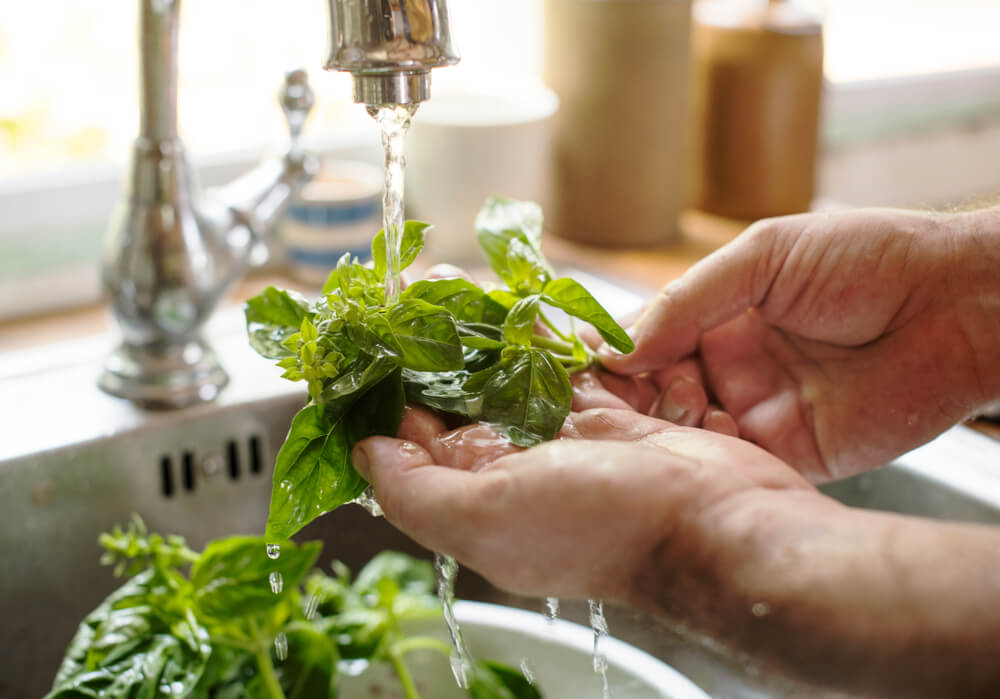
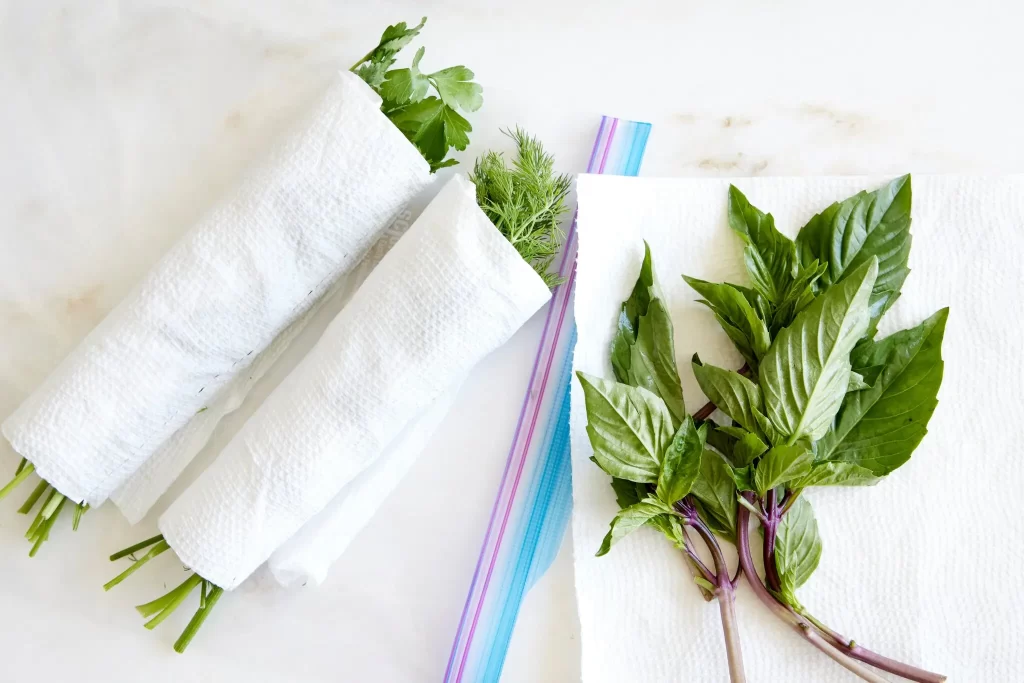
For hardier herbs like thyme, rosemary, sage, and oregano, wrapping them in slightly damp paper towels works wonders.
- How It Works: Wash and dry herbs thoroughly. Wrap them loosely in a barely damp paper towel and place the bundle in a resealable plastic or silicone bag. Store in the crisper drawer of your refrigerator.
- Scientific Reasoning: The damp towel provides gentle humidity that prevents the herbs from drying out, while the plastic bag reduces oxygen exposure. This balance minimizes both wilting and microbial growth.
- Shelf Life Extension: With this method, hard-stemmed herbs often remain fresh for up to 2–3 weeks.
3. Use Glass Jars and Airtight Containers
Another effective hack is to transfer herbs to glass jars or airtight containers before refrigerating.
- How It Works: After washing and thoroughly drying the herbs, place them in a clean glass jar lined with a dry paper towel. Seal tightly and refrigerate.
- Scientific Reasoning: The airtight environment reduces oxygen exposure and slows down oxidation, while the paper towel absorbs excess moisture to prevent sliminess. Glass also doesn’t absorb odors, keeping herbs tasting clean.
- Best For: Delicate herbs like mint, dill, and tarragon benefit greatly from this storage hack.
4. Freeze Herbs in Oil or Water
If you need herbs to last beyond a week or two, freezing them is a practical solution.
- How It Works: Chop fresh herbs, place them in ice cube trays, and cover with either olive oil or water. Once frozen, transfer the cubes into freezer-safe bags or containers.
- Scientific Reasoning: Freezing halts enzymatic activity, preserving flavor and nutrients. Oil reduces freezer burn and makes herbs ready-to-use for cooking, while water cubes work best for soups and stews.
- Shelf Life Extension: Frozen herbs can last up to 6 months without significant loss of flavor.
This method is especially useful for basil, parsley, cilantro, and dill, which often spoil quickly in the fridge.
5. Make Homemade Herb Pastes or Pestos
Transforming herbs into pastes or sauces not only prevents waste but also creates ready-to-use flavor bases.
- How It Works: Blend herbs with olive oil, garlic, and a pinch of salt to create a paste, or make classic vegetarian-friendly pesto with basil, nuts, olive oil, and cheese substitutes if desired. Store in airtight jars topped with a thin layer of oil.
- Scientific Reasoning: Oil acts as a barrier, preventing oxidation and microbial growth, while blending reduces surface area exposed to air.
- Practical Advantage: These pastes can last up to 2–3 weeks in the fridge and several months in the freezer.
This hack is particularly effective for using up large bunches of basil, cilantro, or parsley.
6. Dry Herbs for Long-Term Storage

If you often buy herbs in bulk, drying them is one of the best preservation methods.
- How It Works: Wash herbs, remove excess moisture, and spread them in a single layer on a tray. Allow them to air dry in a cool, dark place for 1–2 weeks, or use a dehydrator for faster results. Store the dried herbs in airtight glass jars away from light and heat.
- Scientific Reasoning: Removing moisture prevents microbial growth and slows down enzymatic reactions. Dried herbs retain their essential oils, although flavor is often more concentrated.
- Shelf Life Extension: Properly dried and stored herbs can last for up to 12 months.
Hardy herbs like rosemary, thyme, oregano, and sage retain strong flavor when dried, making them excellent candidates.
7. Use Herb-Infused Oils, Vinegars, or Salts
Infusing herbs into condiments not only extends their usefulness but also creates gourmet flavoring agents.
- How It Works: Place clean, dry herbs in bottles of olive oil or vinegar. For herb salts, finely chop herbs and mix with coarse salt, then allow to dry before sealing in jars.
- Scientific Reasoning: Oils and vinegars limit oxygen exposure, while salt acts as a natural preservative. These mediums also extract and preserve the herbs’ aromatic compounds.
- Shelf Life Extension: Herb-infused oils should be refrigerated and used within 1 month, while vinegars and salts last several months.
This method works well with herbs like rosemary, thyme, basil, and chili-infused combinations.
Why These Hacks Work: The Science of Herb Preservation
All these methods address the three main enemies of fresh herbs:
- Moisture Loss – Causes wilting and limp leaves. Solutions: water-filled jars, damp towels.
- Oxygen Exposure – Leads to oxidation and discoloration. Solutions: airtight jars, oils, vinegars.
- Microbial Growth – Promotes sliminess and spoilage. Solutions: proper drying, refrigeration, salt.
By balancing hydration, limiting oxygen, and reducing microbial activity, these storage hacks extend freshness while keeping herbs flavorful.
Reducing Food Waste with Smarter Herb Storage
Globally, millions of tons of fresh herbs and vegetables go to waste each year. Much of this waste occurs in households due to poor storage practices. Implementing these seven hacks not only saves money but also contributes to reducing food waste and promoting sustainability.
Furthermore, preserving herbs effectively allows home cooks to access seasonal flavors year-round, making meals more diverse, nutritious, and enjoyable.
Creative Ways to Use Surplus Herbs
Even with the best storage methods, herbs eventually reach the end of their prime. Instead of discarding them, consider these uses:
- Blend into smoothies for a nutrient boost.
- Add to herbal teas or detox waters.
- Make herb butters with plant-based alternatives.
- Incorporate into soups, stews, or marinades.
These strategies ensure herbs are fully utilized, further reducing waste.
Conclusion
Fresh herbs may be delicate, but with smart storage and preservation, they can last significantly longer. From treating herbs like flowers and wrapping them in damp towels to freezing, drying, or infusing them into oils, these seven hacks are practical, sustainable, and vegetarian-friendly.
By applying these techniques, households can extend the shelf life of herbs, cut down on waste, and enjoy the vibrant flavors of nature for days, weeks, or even months.