
Garlic is one of the most essential ingredients in kitchens around the world. From Italian pasta sauces and Indian curries to stir-fries and roasted vegetables, garlic is cherished for its pungent aroma and deep, savory flavor. Beyond taste, garlic is also valued for its health benefits, including antibacterial properties, immune system support, and cardiovascular benefits.
Despite its importance, one step often frustrates home cooks and professionals alike: peeling garlic. The small cloves are wrapped in thin, papery skins that stick stubbornly to fingers. The process can be tedious, leaving the cook with sticky hands and wasted time. Fortunately, there are simple and efficient techniques that allow you to peel garlic quickly—sometimes in just seconds.
This article explores the science behind garlic peeling, the most effective hacks, and additional storage and usage tips. All methods are vegetarian-friendly and focused on making your cooking process more enjoyable and efficient.
Why Is Garlic So Difficult to Peel?
To understand how to peel garlic effectively, it helps to first know why the task is challenging.
- Papery Skin Layers: Garlic bulbs are made up of multiple cloves, each surrounded by a thin, dry, papery skin. This skin is naturally clingy and becomes even harder to separate if the clove is small or slightly dehydrated.
- Sticky Compounds: When garlic is crushed or cut, it releases alliinase, an enzyme that reacts with sulfur compounds to produce allicin, responsible for garlic’s aroma. These sticky sulfur compounds can cause skin to cling more tightly to your fingers and knives.
- Clove Shape: Garlic cloves have curved, tapered ends, making them harder to grip and peel smoothly compared to fruits or vegetables with uniform surfaces.
By targeting these challenges, different peeling techniques have been developed to save time and effort.
The Shake-in-a-Bowl Method
One of the fastest and most effective methods is the shake method.
- How It Works:
- Break apart the garlic bulb into individual cloves.
- Place the cloves in a metal or glass bowl.
- Cover with another bowl of the same size to form a dome.
- Shake vigorously for 15–20 seconds.
- Open the bowls and find the cloves clean and peeled.
- Why It Works: The friction and impact between cloves and the bowl walls loosen the skins, detaching them quickly without crushing the garlic.
- Best Use: Large batches of garlic, such as when preparing sauces, pickles, or curries.
The Microwave Hack
The microwave method is another time-saving option.
- How It Works:
- Place garlic cloves (with skin) in the microwave.
- Heat on high for 10–15 seconds.
- Once slightly cooled, the skins slip off easily.
- Why It Works: Heat causes moisture inside the cloves to expand, loosening the papery skins.
- Caution: Avoid overheating, as cooked garlic can lose its raw flavor needed in some recipes.
- Best Use: Quick kitchen fixes when only a few cloves are needed.
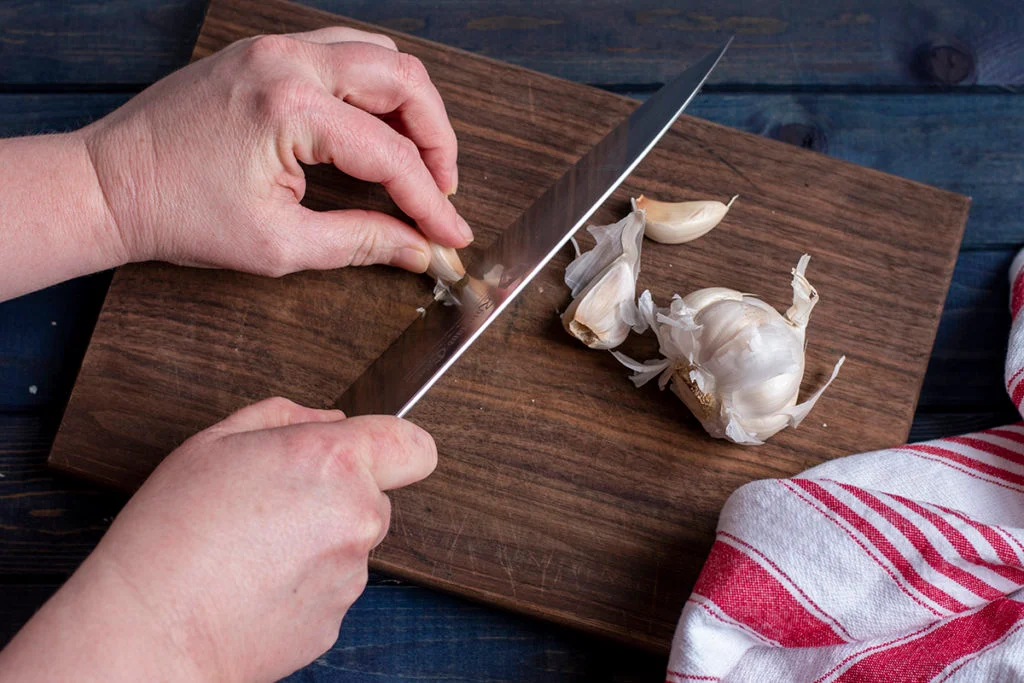
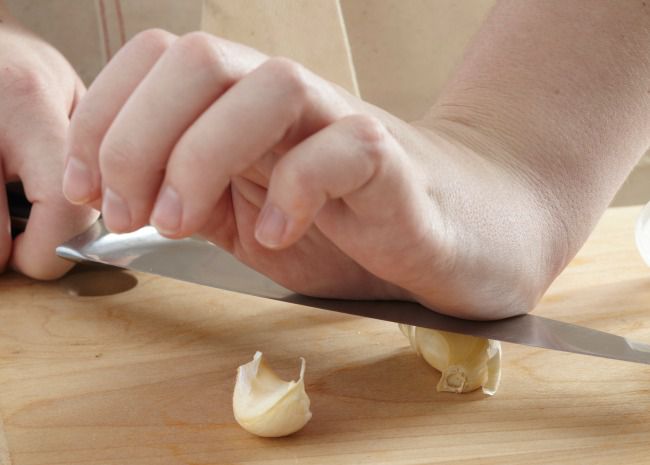
The Smash Method

Perhaps the most traditional technique, the smash method is simple and effective.
- How It Works:
- Place a clove under the flat side of a chef’s knife.
- Apply firm pressure with your hand, giving a gentle but decisive press (or light hit).
- The skin splits instantly and peels away.
- Why It Works: Crushing breaks the bond between the skin and flesh.
- Bonus: This method partially crushes the garlic, releasing flavorful compounds useful for marinades or sautés.
- Best Use: Recipes requiring minced or crushed garlic rather than whole cloves.
The Soak-in-Water Trick

Another effective hack involves using water.
- How It Works:
- Separate cloves from the bulb.
- Soak them in warm water for 5–10 minutes.
- The skins loosen and slip off easily.
- Why It Works: Water hydrates and softens the papery outer layers, making them less adhesive.
- Best Use: When working on other prep tasks simultaneously, as soaking requires minimal effort.
Silicone Garlic Peelers
Specialized kitchen tools like silicone garlic peelers make peeling even easier.
- How It Works:
- Place a clove inside the silicone tube.
- Roll it back and forth on a countertop with gentle pressure.
- The friction causes the skin to separate.
- Advantages: Quick, clean, and requires little force.
- Best Use: Everyday cooking when handling small to medium quantities.
Freezing for Easy Peeling

Freezing garlic not only extends its shelf life but also makes peeling simpler.
- How It Works:
- Freeze whole garlic bulbs or separated cloves.
- Once frozen, the skins become brittle and crack off easily.
- Best Use: Long-term storage, when you buy garlic in bulk.
- Caution: Frozen garlic softens after thawing and works better in cooked dishes than raw applications.
Comparing Garlic Peeling Methods
| Method | Time Required | Best For | Mess Level | Efficiency |
|---|---|---|---|---|
| Shake in Bowl | 20 seconds | Large batches | Low | High |
| Microwave Hack | 10–15 seconds | Small amounts, quick prep | Low | Moderate |
| Smash Method | 5 seconds | Recipes needing crushed garlic | Medium | High |
| Water Soak | 5–10 minutes | Multi-tasking prep | Low | Moderate |
| Silicone Peeler Tube | 10 seconds | Everyday cooking | Very Low | High |
| Freezing | Hours | Bulk storage | Very Low | High |
Storing Peeled Garlic
Once garlic is peeled, proper storage ensures flavor and freshness.
- Refrigeration: Store peeled cloves in an airtight container in the fridge for up to 1 week.
- Oil Submersion: Place peeled cloves in olive oil and refrigerate. This not only preserves garlic but also infuses the oil with flavor. (Important: Always store refrigerated to prevent bacterial growth.)
- Freezing: Peeled garlic cloves can be frozen whole or chopped, lasting up to 6 months.
Creative Ways to Use Garlic
Peeling garlic quickly allows you to incorporate it into recipes more easily. Here are some vegetarian-friendly ideas:
- Garlic Butter (Plant-Based Option): Mix roasted garlic with vegan butter for bread spreads.
- Herb-Garlic Oil: Blend garlic with fresh herbs and olive oil for salad dressings.
- Garlic Paste: Store blended garlic paste for quick seasoning in curries or soups.
- Roasted Garlic Spread: Roast peeled cloves until caramelized and mash them into a sweet, mellow spread.
These uses reduce waste and ensure that peeled garlic enhances your cooking.
Garlic and Health Benefits
Quickly peeling garlic isn’t just about saving time—it also ensures you can easily include garlic in your daily diet. Consuming garlic regularly has been linked to:
- Strengthening immunity.
- Supporting heart health by lowering cholesterol.
- Providing antioxidants that combat free radicals.
- Acting as a natural antibacterial and antifungal agent.
The easier garlic is to peel, the more likely you are to use it consistently in your meals.
Sustainability and Reducing Waste
Garlic waste often occurs when cloves are discarded due to difficulty peeling or improper storage. Using efficient peeling hacks not only saves time but also reduces waste. Scraps such as skins can even be added to vegetable stock for extra flavor, ensuring every part of the bulb is utilized.
Conclusion
Peeling garlic no longer has to be a dreaded kitchen chore. From the energetic shake-in-a-bowl method and the speedy microwave hack to the reliable smash method and convenient silicone peelers, there are plenty of ways to peel garlic in seconds. Each method has unique benefits depending on the quantity of garlic, the recipe at hand, and personal preferences.
By mastering these hacks, you save valuable time in the kitchen, reduce food waste, and ensure that garlic—one of the most powerful flavor enhancers—becomes a more frequent and accessible part of your cooking. Whether you are preparing a quick weekday stir-fry or an elaborate weekend feast, knowing the best way to peel garlic makes cooking simpler, cleaner, and more enjoyable.