Fresh herbs are essential components of healthy vegetarian cooking, valued for their aroma, flavor, and nutritional benefits. However, their delicate nature causes them to wilt, discolor, or lose flavor quickly after harvesting or purchase. This paper examines the biological reasons behind herb spoilage and outlines seven effective, natural methods to extend their freshness. The focus is on plant-based preservation techniques such as proper hydration, temperature control, storage environments, and natural preservation media. Through practical and scientific insights, this study highlights how home cooks can maintain the quality, flavor, and nutritional integrity of herbs longer while reducing food waste.
Introduction
Fresh herbs such as basil, cilantro, parsley, mint, rosemary, and thyme are indispensable in vegetarian cooking. They add vibrancy, aroma, and depth to dishes, turning simple meals into flavorful experiences. However, herbs are among the most perishable kitchen ingredients. Their high moisture content, tender leaves, and sensitivity to temperature changes make them prone to wilting and spoilage.
Preserving herbs effectively requires understanding the conditions that affect freshness—light exposure, humidity, temperature, and air circulation. This paper explores seven clever and practical tricks to make herbs last longer using simple, natural methods suitable for every household. The goal is to promote sustainable kitchen habits while preserving flavor and nutrients in vegetarian cuisine.
The Science Behind Herb Spoilage
Fresh herbs, like all green plants, continue to respire after harvesting. This respiration uses stored energy and moisture, leading to gradual wilting and nutrient loss.
The primary causes of herb deterioration include:
- Moisture Loss: Results in limp, shriveled leaves.
- Excess Moisture: Leads to bacterial or fungal growth.
- Temperature Fluctuations: Accelerates enzymatic activity, causing decay.
- Oxygen Exposure: Promotes oxidation and discoloration.
Therefore, the challenge lies in finding the right balance of moisture, airflow, and temperature to slow these natural processes.
Nutritional Value of Fresh Herbs
Fresh herbs are more than flavor enhancers; they are rich in essential nutrients:
- Vitamins: High in vitamins A, C, and K.
- Antioxidants: Combat free radicals and support cellular health.
- Phytochemicals: Provide anti-inflammatory and antimicrobial properties.
- Minerals: Contain iron, calcium, and magnesium.
Preserving herbs properly helps retain these valuable nutrients, ensuring both culinary and health benefits.
Seven Clever Tricks to Make Herbs Last Longer
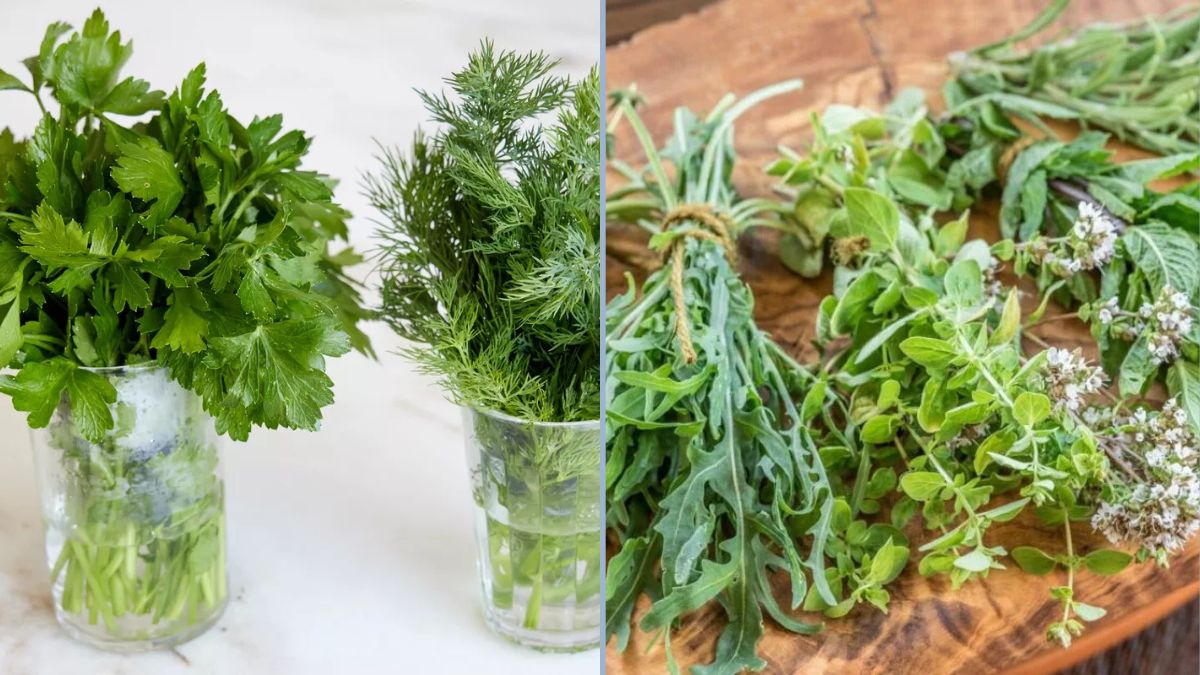
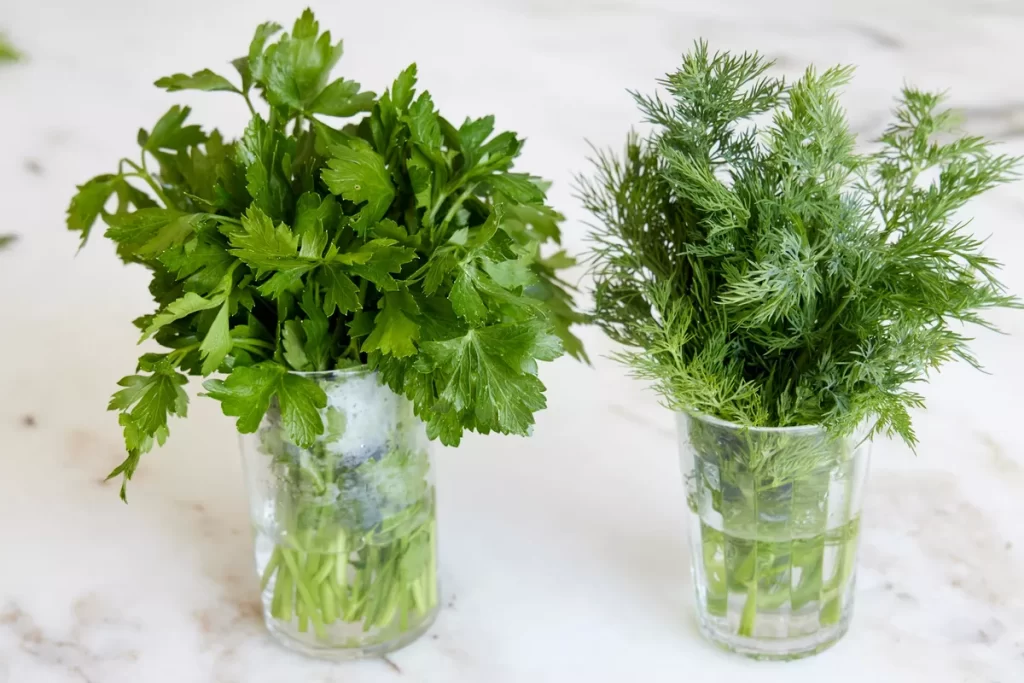
1. Store Herbs Like Fresh Flowers
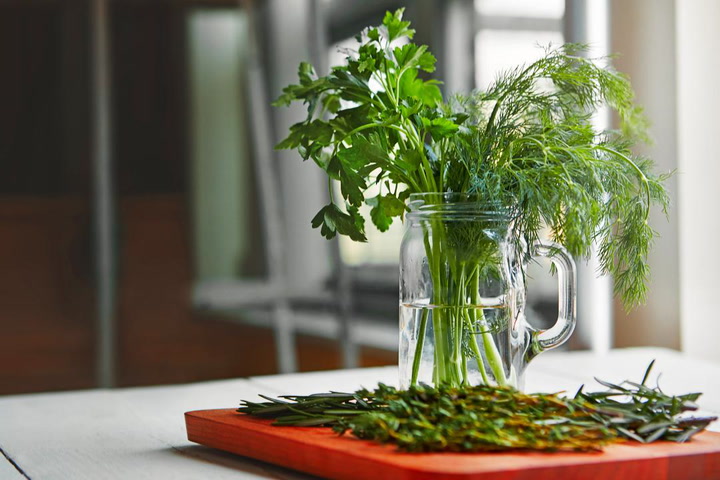
Tender herbs such as cilantro, parsley, and basil last longer when treated like fresh-cut flowers.
Method:
- Trim the stems slightly and place the bunch upright in a glass of water.
- Cover loosely with a plastic bag and store at room temperature or in the refrigerator (depending on the herb type).
- Change the water every two days.
Scientific Reason:
This method maintains hydration through the stem, preventing leaf wilting.
Tip:
Keep basil at room temperature—refrigeration can darken its leaves—while parsley and cilantro stay fresher in the fridge.
2. Wrap in Damp Paper Towels
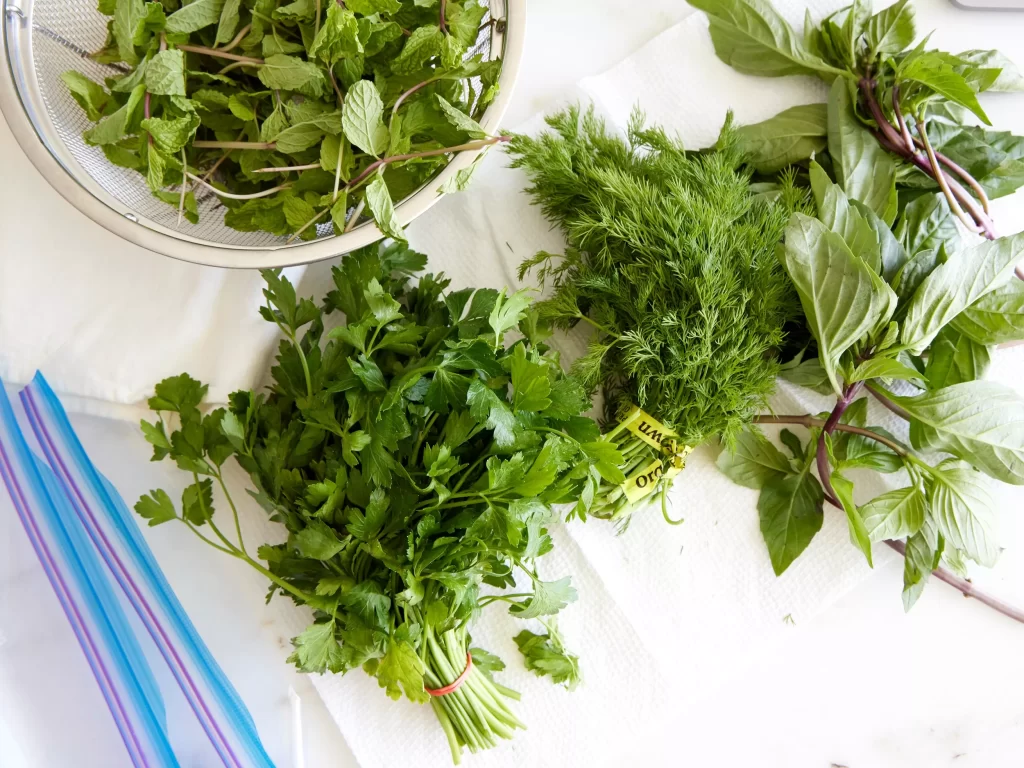
This technique works best for delicate leafy herbs like mint, dill, or chives.
Method:
- Gently rinse herbs, shake off excess water, and pat dry.
- Wrap them loosely in a slightly damp paper towel.
- Place the wrapped herbs in a resealable bag or airtight container and store in the refrigerator.
Scientific Reason:
The damp towel maintains humidity while preventing excess moisture that causes mold.
Tip:
Avoid sealing too tightly; a little airflow prevents condensation buildup.
3. Use Airtight Containers with Paper Liners
For herbs such as thyme, oregano, and rosemary, a drier environment works better.
Method:
- Line a glass or plastic airtight container with a paper towel.
- Add herbs in a single layer and seal.
- Store in the crisper drawer of the refrigerator.
Scientific Reason:
Paper absorbs excess moisture, while the sealed environment minimizes oxidation and dehydration.
Tip:
Check periodically and replace the liner if it becomes damp.
4. Freeze Herbs for Long-Term Use
Freezing is ideal for herbs that may not last fresh for long periods, such as basil, chives, or parsley.
Method:
- Chop herbs finely and place them in ice cube trays.
- Fill each compartment with olive oil or water.
- Freeze, then transfer cubes to labeled freezer bags.
Scientific Reason:
Freezing halts enzymatic degradation, locking in both flavor and color.
Tip:
Use frozen herb cubes directly in soups, stews, or stir-fries for instant freshness.
5. Make Herbal Infusions or Pastes
Creating herbal infusions or pastes extends the usability of fresh herbs in liquid or semi-liquid forms.
Method:
- Blend herbs with olive oil and a pinch of salt to make a thick paste.
- Store in a sterilized glass jar in the refrigerator.
Scientific Reason:
Oil forms a protective barrier against oxygen and moisture loss, preserving essential oils and nutrients.
Tip:
Use this paste as a base for sauces, dressings, or marinades. For longer preservation, freeze in small portions.
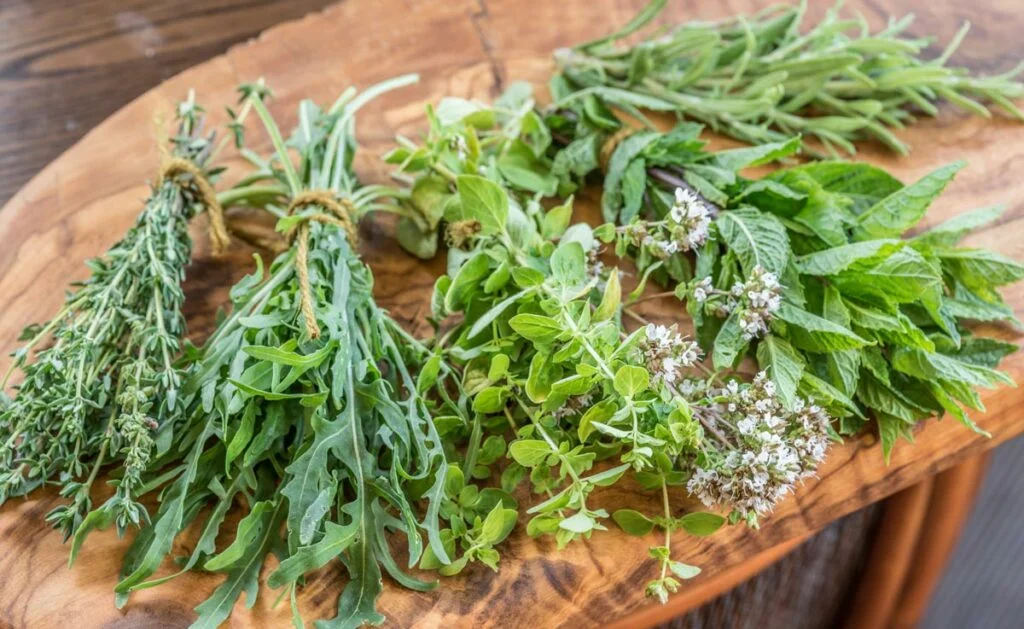
6. Dehydrate or Air-Dry Woody Herbs
Dehydration is best for robust herbs like thyme, sage, and rosemary, which retain flavor even after drying.
Method:
- Wash herbs and pat them dry completely.
- Bundle and hang them upside down in a dry, airy place away from direct sunlight.
- Once dried, store leaves in airtight jars.
Scientific Reason:
Drying removes water—the primary cause of microbial spoilage—while preserving flavor compounds.
Tip:
Avoid over-drying, as herbs may lose volatile oils that contribute to aroma.
7. Use Vinegar or Lemon Juice Preservation
Acidic solutions can also preserve fresh herbs by lowering the pH, inhibiting microbial growth.
Method:
- Place cleaned herbs in a sterilized jar.
- Cover with vinegar or lemon juice and seal tightly.
- Store in the refrigerator for up to a week.
Scientific Reason:
Acidity prevents bacterial activity while allowing herbs to infuse their flavor into the liquid.
Tip:
Use the infused vinegar or lemon juice in salad dressings or sauces.
Additional Tips for Herb Longevity
- Avoid Washing Too Early: Clean herbs just before use to prevent premature moisture exposure.
- Handle Gently: Rough handling damages cell walls, speeding up decay.
- Label and Rotate: Use older herbs first to avoid spoilage.
- Store Separately: Keep herbs away from ethylene-producing fruits like apples or bananas.
Proper care ensures herbs maintain their aroma, texture, and nutrients longer.
Health and Culinary Benefits of Fresh Herbs
- Nutrient Retention: Preserved herbs maintain their vitamin and antioxidant levels.
- Sustainable Eating: Extending shelf life reduces kitchen waste.
- Enhanced Flavor: Fresher herbs contribute to more aromatic, nutrient-rich vegetarian dishes.
- Cost Efficiency: Reducing spoilage saves money and maximizes garden or store purchases.
- Creative Cooking: Preserved herbs inspire culinary experimentation in soups, sauces, and baked goods.
Discussion
Extending the life of herbs is both a practical and environmental concern. With proper preservation, home cooks can enjoy the benefits of fresh herbs without frequent waste. Each preservation method aligns with specific herb types—moist storage for tender leaves and dry methods for woody varieties.
Freezing and infusing offer long-term options, while flower-style storage and damp towel wrapping suit daily use. These methods are entirely plant-based and chemical-free, making them ideal for vegetarian and eco-conscious households.
Moreover, herb preservation encourages seasonal cooking—using garden-fresh herbs at their peak and storing them naturally for later use—promoting both sustainability and flavor diversity in everyday meals.
Conclusion
Fresh herbs bring flavor, aroma, and nutrition to vegetarian cooking, yet their delicate structure makes them highly perishable. By understanding the science of moisture, oxygen exposure, and enzymatic activity, home cooks can use practical, natural methods to extend herb freshness.
The seven techniques—storing like flowers, wrapping in damp towels, using airtight containers, freezing, creating herbal pastes, dehydrating, and preserving in acidic solutions—offer versatile, eco-friendly ways to make herbs last longer.
Ultimately, preserving herbs effectively not only maintains culinary quality but also supports sustainability by reducing food waste. These clever, vegetarian-friendly methods empower cooks to enjoy fresh, aromatic herbs year-round, turning simple meals into flavorful, nutritious creations.