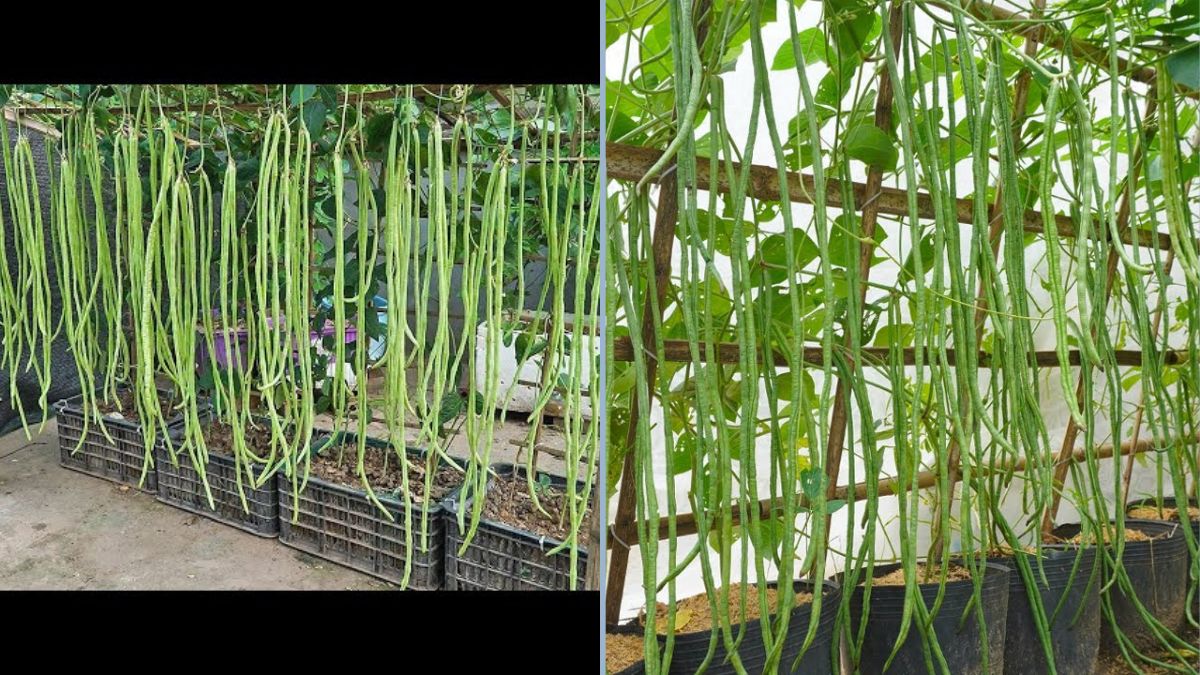
There’s nothing more satisfying than harvesting a fresh crop of long beans from your own container garden—especially when you’re working with limited space! In this blog post, I’ll walk you through a complete guide to growing long beans (also known as yard-long beans or snake beans) in plastic containers, so you can get big yields, even if you have just a balcony, terrace or small backyard. I’ll cover why this works, what you’ll need, step-by-step set up, care & maintenance, and harvest tips. Let’s get started!
Why grow long beans in containers?
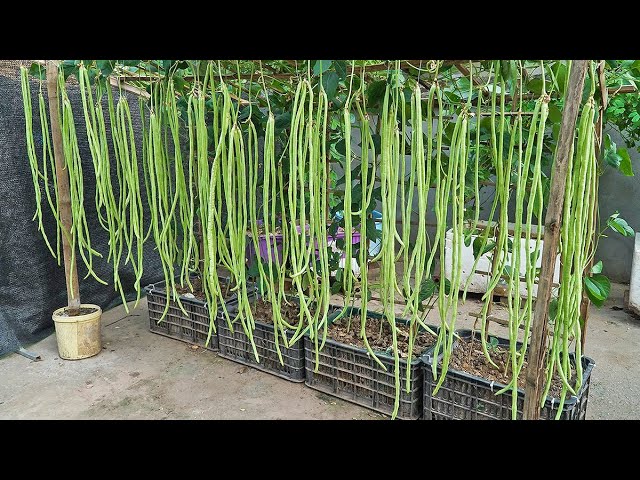
Growing long beans in containers is an excellent idea for several reasons:
- Space-efficient: You don’t need a full garden bed or large patch of soil. A plastic container does the trick.
- High yield potential: With proper setup, these beans can climb, vine and give you lots of beans per plant.
- Great for urban/terrace gardens: If you live in a city or have limited outdoor space (like in Virār, Maharashtra), this approach works beautifully.
- Flexibility & control: Container growing allows you to manage soil, drainage, sunlight and pests more easily than open ground.
A recent YouTube tutorial titled “How To Grow Long Beans In Plastic Containers – Easy, High Yield Gardening Hack!” lays out exactly this idea.
What you’ll need
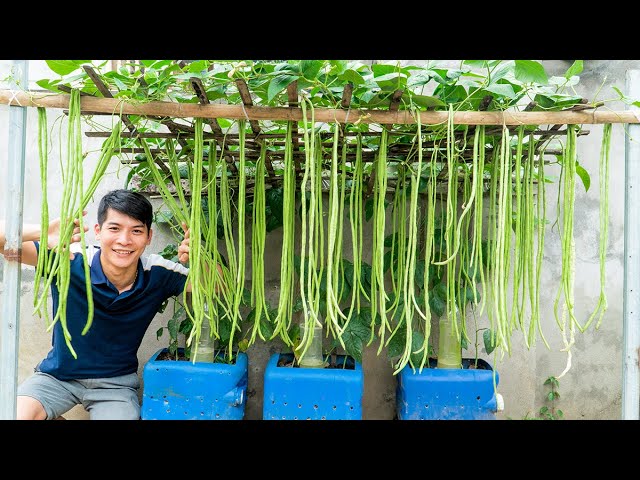
Here’s what you’ll want to gather before planting:
- Plastic container: Choose a large plastic bucket or planter. It should be at least 30-40 cm deep, with good drainage holes at the bottom.
- Quality potting mix/soil: Use a rich potting soil or a mix of garden soil + compost + coco peat or peat moss. Ensure it’s loose, fertile and well-draining.
- Organic compost or manure: This will feed the plants and help with yield.
- Seeds of long bean variety: Choose a climbing yard-long bean variety (also called asparagus bean, snake bean).
- Trellis/support: Because these beans vine, you’ll need a support structure — a bamboo pole, mesh, or trellis mounted on/near the container.
- Sunlight: At least 5-6 hours of direct sunlight per day (Indian terrace/balcony conditions) is ideal.
- Watering can/irrigation: Regular watering is important—especially for container plants that dry out faster.
- Mulch/fertilizer: Optional, but mulching with dry leaves or using a balanced organic fertilizer during the growing period will boost yield.
Step-by-step: Planting to Harvest
1. Choose & prepare the container
Start with a plastic container (say 30-40 cm deep, diameter 35-45 cm or larger). Drill or ensure drainage holes at the bottom so the water can escape—standing water can cause root rot. Place the container in a sunny spot (terrace, balcony edge) where it will get good direct sun.
2. Prepare the soil mix
Fill the container with a mix of potting soil + compost/manure + maybe some coco peat for aeration. A rough ratio could be: 50 % soil, 30 % compost, 20 % coco peat or peat moss. Mix well. Ensure the soil is loose and airy so roots can spread easily.
3. Set up the trellis/support
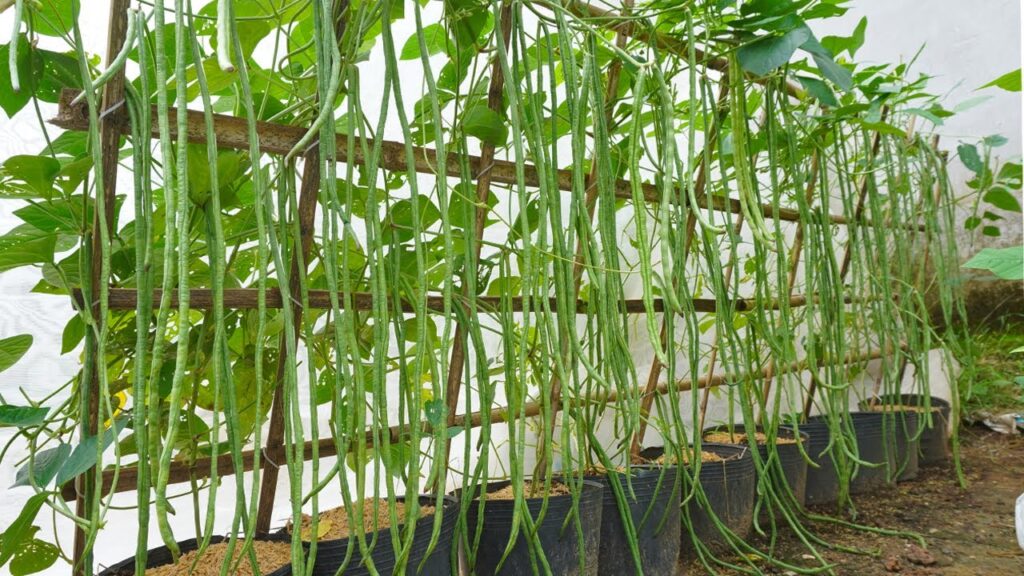
Since long beans are climbers, install your support before planting. You can fix a mesh or vertical poles or bamboo sticks. For example, insert 2 or 3 bamboo poles directly into the container soil and tie horizontal wires or jute strings between them. The vines will use these to climb. Setting up the support early helps you avoid disturbing the soil later.
4. Sow the seeds
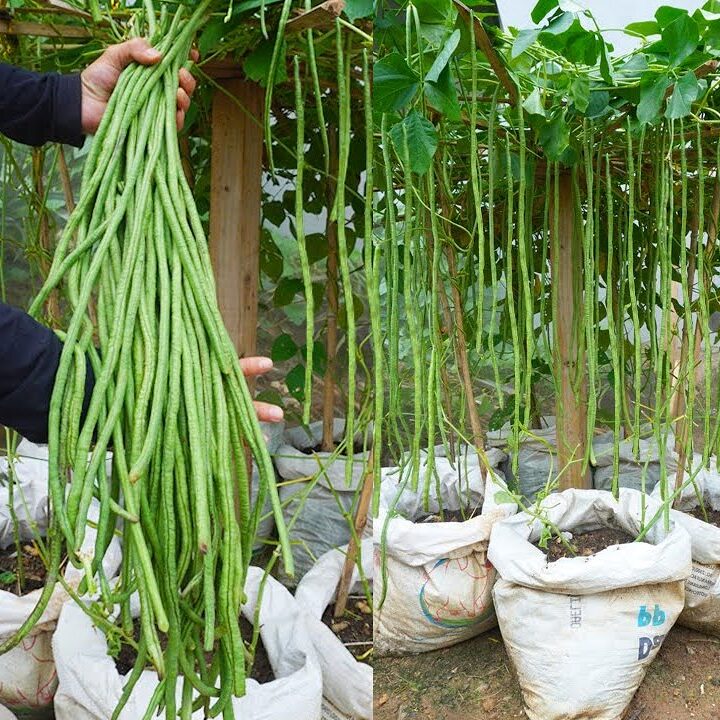
Plant the seeds about 2.5 cm deep into the soil. Depending on container size, you might plant 2-3 seeds spaced evenly around the container edge (if you have a wide bottom) or along one side. Water gently after sowing. Within a week or so, you should see seedlings emerge.
5. Thin & select
Once seedlings are a few centimetres tall, pick the strongest 1-2 plants (if you planted more). Remove weaker ones. This ensures each plant has enough space and nutrients and will produce better yield.
6. Train the vines
As the plants grow, guide the vines onto the support you installed. Use soft ties (cloth strips or jute) to tie large stems gently to the trellis if needed. Encourage them to climb upward. This vertical growth not only saves space but improves air circulation and yields.
7. Watering & fertilizing
Containers tend to dry out faster than ground beds. So:
- Water consistently—soil should be moist but not waterlogged. Try to keep a regular schedule.
- During flowering and bean-forming stage, you can boost nutrition with an organic liquid fertilizer or compost tea every 2-3 weeks.
- Mulching the top of the soil with dried leaves or straw helps retain moisture and keeps weeds down.
8. Pest and disease monitoring
Although beans are fairly hardy, in containers you must keep an eye out for:
- Aphids or leaf-hoppers: Check the undersides of leaves. If seen, spray a mild neem solution.
- Root-rot: Usually if container doesn’t drain well—make sure holes are clear and water is not pooling.
- Yellowing leaves: Could indicate nutrient deficiency or over-watering. Adjust accordingly.
9. Flowering & bean development
Once the vines climb, you’ll see clusters of purple or white flowers (depending on the variety). After pollination (often by wind or insects), pods will begin to form. Keep the vines well-supported and check daily for bean formation.
10. Harvesting
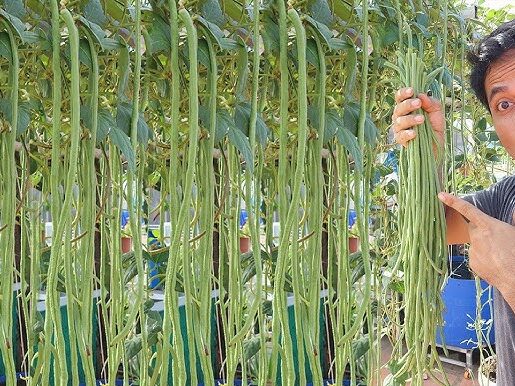
Harvest when the pods are long (often 30-40 cm or more) but before the beans inside become too big/hard. The younger, tender pods are more flavorful. Harvest regularly—this encourages the plant to produce more. With regular picking, you can enjoy a prolonged harvest.
Tips for high yield and best results
- Choose climbing variety: Yard-long beans (also called Vigna sesquipedalis) are ideal for containers because they vine upward and maximize yield.
- Container size matters: Bigger containers allow deeper root growth and more beans. If you have space, use one large container rather than many tiny ones.
- Good soil + compost = big difference: Nutrient rich soil supports heavy bean loads.
- Sunlight and airflow: Place container where it gets good sun and sufficient airflow—this reduces pests and encourages healthy growth.
- Support early and well: If the vines are free-hanging and unsupported, they’ll sprawl and yield less. Vertical growth is more productive.
- Harvest frequently: Don’t let beans get over-mature. Pick when young and tender to stimulate more growth.
- Rotate crops & refresh soil: After one big cycle, maybe replace some soil or compost before planting again to avoid nutrient depletion or disease build-up.
Why this hack works so well
- Container control: You’re controlling soil composition, moisture, drainage, and location—everything a bean plant loves.
- Vertical growth = more yield per foot²: Instead of bush beans that spread horizontally, long beans use vertical space—ideal for balconies or terraces.
- Frequent harvesting = more production: As you harvest, plants continue to flower and produce, giving you long-lasting yield.
- Flexible & scalable: You can scale this up or down—multiple containers, different positions, etc. If one crop finishes, start another.
- Low-maintenance: Compared to full garden beds, containers often mean fewer weeds, less digging, and easier management.
Potential challenges and how to mitigate them
- Drying soil: Containers heat up faster; soil dries faster. Solution: Mulch, water regularly, use a slightly bigger container if possible.
- Overcrowding: If too many seeds/plants are in one container, they compete. Solution: Thin to best plants and give each adequate space.
- Support failure: Without proper support, vines may collapse or tangle. Solution: Invest in a strong trellis or use string mesh anchored to container.
- Heat stress: In very hot climates, containers can overheat roots. Solution: Shade roots slightly during hottest part of day, or use reflective wrapping on pot exterior.
- Nutrient depletion: Because containers have finite soil volume, nutrients run out faster. Solution: Feed plants via compost/organic liquid fertilizer, and refresh soil after harvest.
When and how to plant in a place like Virār (Maharashtra, India)
For a suburb like Virār (coastal Maharashtra), you’ll want to consider local climate:
- Conditions: Warm, tropical/sub-tropical climate, plenty of daylight.
- Best planting times: Early monsoon or post-monsoon (July-September) and then again in cooler months (October-January) can be good. Avoid extreme summer heat if possible.
- Sun-exposure: Ensure the container gets morning sun and some afternoon shade during peak summer heat.
- Space considerations: Terrace balconies often have limited floor space, but vertical containers or hanging setups work well.
Sample planting schedule (for one crop)
- Week 0: Prepare container, soil, and support.
- Week 1: Sow seeds.
- Week 2-3: Seedlings appear; thin to best plants.
- Week 4-6: Vines climb support; flowers begin.
- Week 6-8: Pods start forming.
- Week 8 onwards: Begin harvesting; continue weekly/bi-weekly until plant slows down.
- After ~10-12 weeks: Reduce yield; you may plan a second sowing or replace crop.
Final Thoughts
Growing long beans in plastic containers is a highly rewarding, low-space, high-yield gardening hack that really works. Whether you’re in a small urban terrace in Virār, or a balcony in a larger city, you can have your fresh beans, no big garden required. The key is: good soil, proper container & drainage, support structure, regular harvesting, and a bit of attention to watering and nutrients.