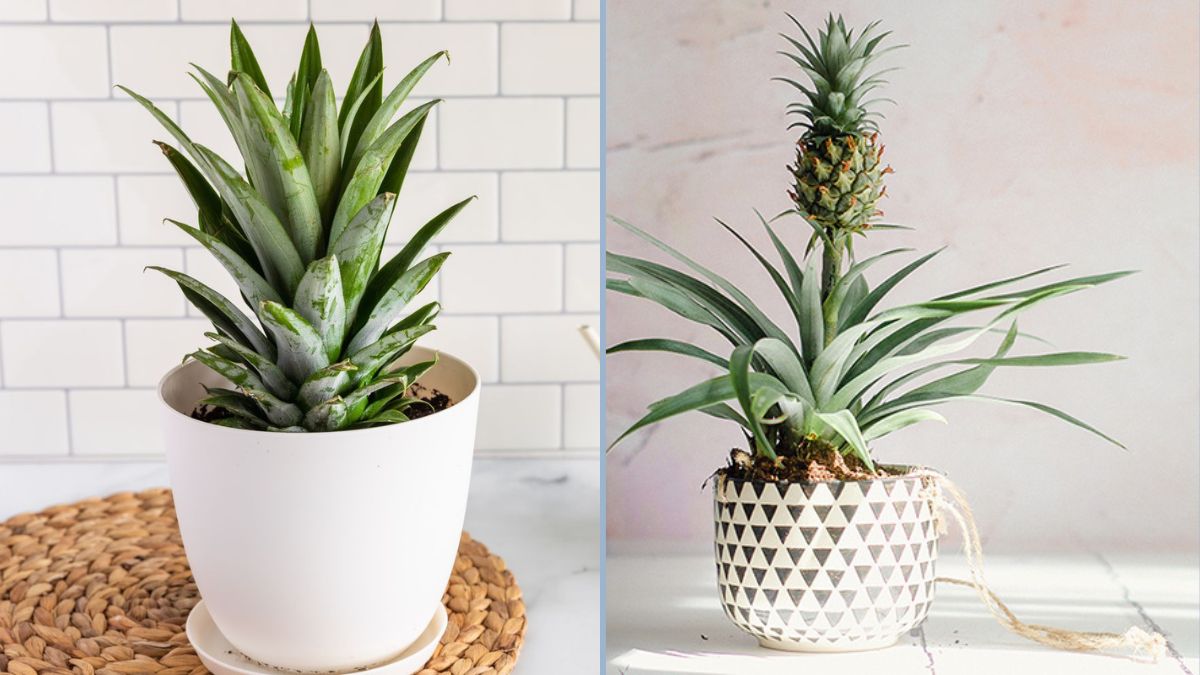
Have you ever sliced into a juicy pineapple and thought, “Could I grow one of these at home?”
The good news: yes, you can — and it’s surprisingly easy! Pineapples are tropical plants that can be grown right from the leafy top, or crown, of a store-bought fruit. With just a bit of patience, sunlight, and care, you can turn that crown into a thriving plant — and eventually, a homegrown pineapple!
This guide walks you step-by-step through the entire process — from preparing the top to watching your very own pineapple grow and bear fruit.
1. Why Grow a Pineapple at Home?
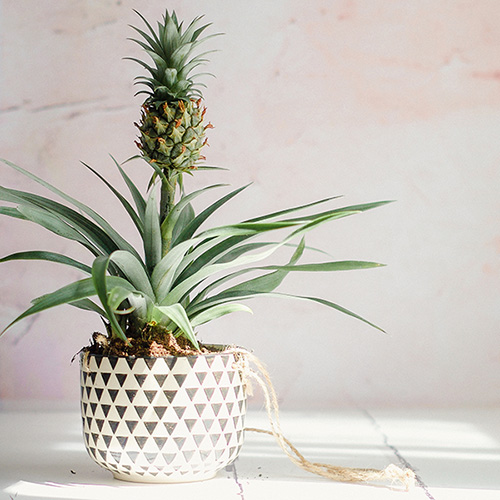
Growing a pineapple from its top isn’t just fun — it’s rewarding and sustainable.
Here’s why gardeners love it:
- Zero waste gardening: You’re using what would normally be thrown away.
- Decorative appeal: Pineapple plants are beautiful tropical houseplants.
- Educational project: Perfect for kids or beginner gardeners to learn about plant growth.
- Eventually, you’ll get fruit: Yes, it takes time, but the joy of harvesting your own pineapple is unmatched.
A pineapple plant takes about 2–3 years to produce fruit, but don’t let that discourage you. Once it starts, it keeps producing offsets (called “pups”), which can grow into more pineapples — starting your very own mini pineapple garden.
2. Choose the Right Pineapple
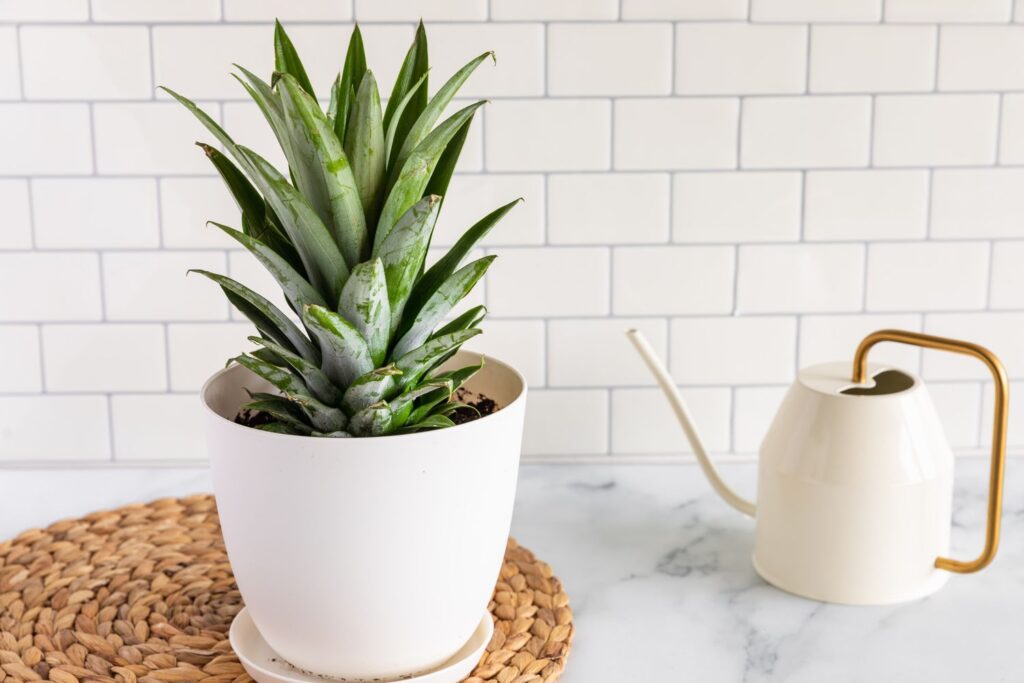
Your success starts with picking a healthy pineapple. When shopping, look for:
- Fresh, green leaves (not dry or brown-tipped).
- A firm, golden-brown fruit with a sweet smell.
- No signs of rot or mold around the base of the leaves.
Avoid pineapples with damaged crowns or very ripe, mushy fruits — they’re less likely to sprout successfully.
3. How to Prepare the Pineapple Top (Crown)
This is the most important step — preparing the crown correctly ensures healthy root growth.
Step-by-step:
- Cut or twist off the top.
Hold the pineapple firmly and twist the leafy crown from the fruit. If twisting feels difficult, you can slice off the top with about 2.5 cm (1 inch) of fruit attached. - Trim the excess fruit flesh.
Remove any leftover fruit flesh from the base — leaving fruit attached may cause rotting. - Peel off the lower leaves.
Strip about 1–2 cm (½ inch) of the bottom leaves to expose the tiny root buds (they look like small brown bumps). - Dry the crown.
Place it upside down or on its side in a warm, airy place for 2–3 days.
This helps seal the wound and prevent rot when it’s planted or placed in water.
4. Rooting the Pineapple Top
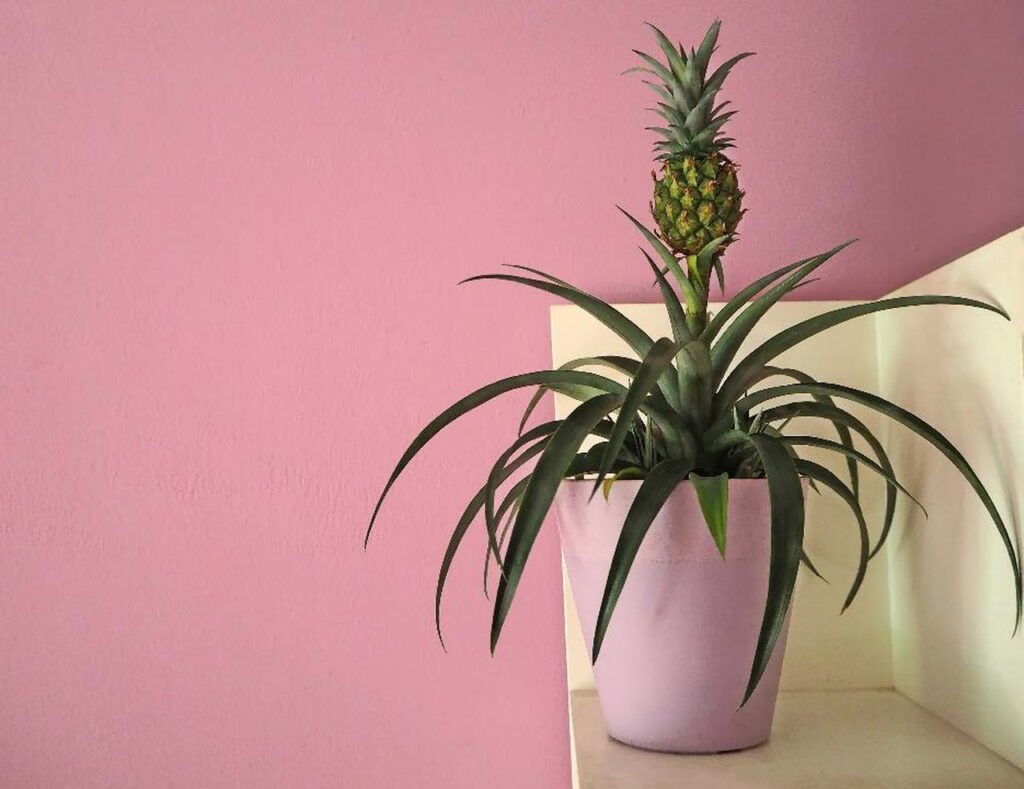
There are two popular methods for rooting a pineapple crown — both work great!
Method 1: Water Rooting
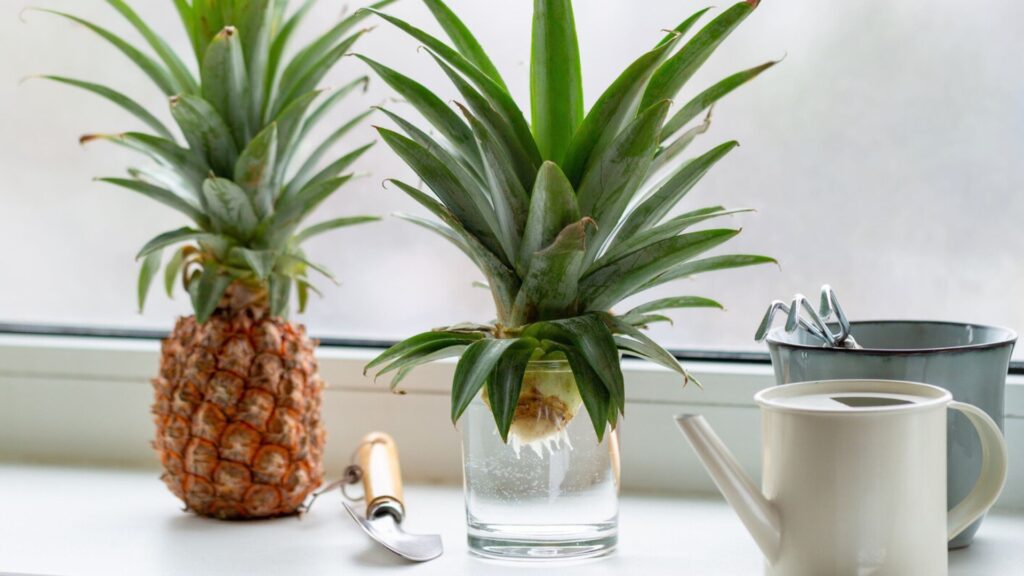
- Fill a glass or jar with water (just enough to cover the base of the crown).
- Suspend the pineapple top so the leaves stay dry — you can rest it on the rim or use toothpicks for support.
- Place it in a bright, warm spot (near a sunny window).
- Change the water every few days to keep it fresh.
- In about 2–3 weeks, you’ll see roots begin to form.
Once the roots are 5–7 cm (2–3 inches) long, your pineapple is ready to plant in soil.
Method 2: Direct Soil Planting
- Fill a small pot (about 15–20 cm wide) with light, well-draining soil. A cactus or succulent mix works great.
- Plant the dried crown into the soil so that the exposed stem is buried and the leaves sit above soil level.
- Water lightly — the soil should be moist, not soggy.
- Place the pot in bright, indirect sunlight.
Roots will start forming in about 3–6 weeks, and you’ll know it’s rooted when new leaves begin to grow from the center.
5. Choosing the Right Soil & Pot
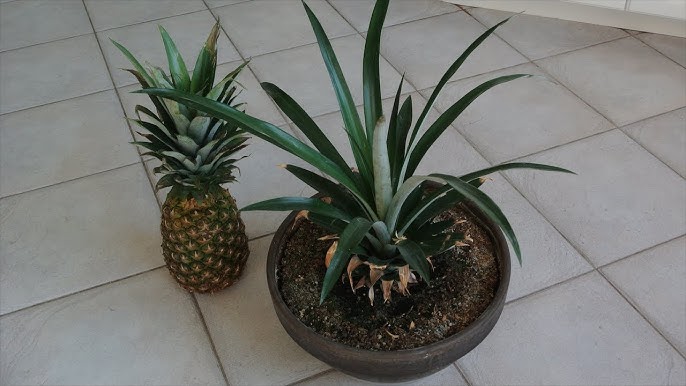
Pineapples are tropical plants that love well-draining soil and warm, bright conditions.
Soil:
- Use a sandy or loamy mix that drains quickly.
- Ideal mix: 2 parts potting soil, 1 part sand, 1 part compost or perlite.
- Avoid heavy clay soils that retain too much moisture.
Pot:
- Start with a 6–8 inch pot with good drainage holes.
- Once your plant grows larger (after a year or so), transplant it into a 12-inch pot or directly into the ground if you live in a tropical region.
6. Watering and Sunlight
Watering:
- Water the soil lightly once or twice a week — let the top inch dry out before watering again.
- Pour a small amount of water into the center of the leaves (the rosette).
- Avoid overwatering, as pineapples are prone to root rot.
Sunlight:
- Pineapples need plenty of light — at least 6 hours of sunlight daily.
- Indoors, place your plant near a sunny window or use a grow light.
- Outdoors, choose a warm, sunny spot sheltered from strong winds.
7. Fertilizing Your Pineapple Plant
Once your pineapple is established and growing new leaves, you can start feeding it.
- Use a balanced liquid fertilizer (10-10-10 or similar) every 6–8 weeks.
- During the growing season (spring and summer), you can also use a diluted organic compost tea or fish emulsion.
- Avoid over-fertilizing — too much nitrogen can cause leafy growth at the expense of fruit.
A trick many gardeners use: occasionally pour a weak fertilizer solution into the center rosette of the plant — this mimics how pineapples absorb nutrients in nature.
8. The Growth Stages of a Pineapple Plant
Growing a pineapple is a slow but rewarding journey. Here’s what to expect:
Year 1: Establishing Roots and Leaves
The first year is all about building a healthy base. You’ll see new leaves sprouting from the center, and the plant will gradually become bushier.
Year 2: Mature Growth
The plant will become larger and stronger, with tough, sword-like leaves. You might even see small “pups” (baby plants) forming at the base — these can be used to grow new pineapples later.
Year 3: Flowering and Fruiting
When conditions are right, your pineapple will send up a tall flower stalk from the center. The flowers form a tight cluster that develops into a pineapple fruit over several months.
From flower to ripe fruit, it usually takes about 5–7 months.
9. How to Encourage Flowering
Sometimes, pineapples need a little push to start flowering — especially if grown indoors.
Here’s a simple trick:
- Place your mature pineapple plant (2+ years old) in a large plastic bag.
- Add one or two ripe apples or bananas inside the bag.
- Seal the bag for about 5–7 days.
The fruits release ethylene gas, which triggers flowering in pineapples.
After a month or two, you should see a red or pinkish bud appear from the center — that’s the start of your fruit!
10. Harvesting Your Homegrown Pineapple
Once your pineapple turns golden-yellow and gives off a sweet aroma, it’s ready to harvest!
To harvest:
- Twist or cut the fruit off near the base of the stalk.
- Let it ripen indoors at room temperature for a few days if needed.
After harvesting, your plant won’t produce another fruit from the same stalk, but don’t worry — it will start producing “pups” (side shoots). You can remove these and plant them just like the original crown, starting the cycle again.
11. Common Mistakes to Avoid
Growing a pineapple is simple, but here are a few pitfalls to avoid:
- Overwatering: Root rot is the most common issue. Let the soil dry between waterings.
- Lack of light: Pineapples need bright, direct light to thrive.
- Planting too deep: Keep the base of the leaves above the soil.
- Skipping the drying step: If you don’t let the crown dry before planting, it can rot.
- Expecting fast fruit: Pineapples take patience — but it’s worth it!
12. Final Thoughts: A Tropical Treasure at Home
Growing a pineapple from its top is one of the easiest and most rewarding DIY gardening projects you can do — whether you live in the tropics or keep it as an indoor plant in a sunny window.
All you need is:
- A healthy pineapple top.
- Warmth, sunlight, and patience.
- A little love and consistency.
In a few years, you’ll not only have a stunning tropical plant but the sweet satisfaction of enjoying fruit you grew yourself — straight from a pineapple top!
So next time you slice up a pineapple, don’t toss the crown.
Plant it, nurture it, and watch it grow — because yes, it really works every time.