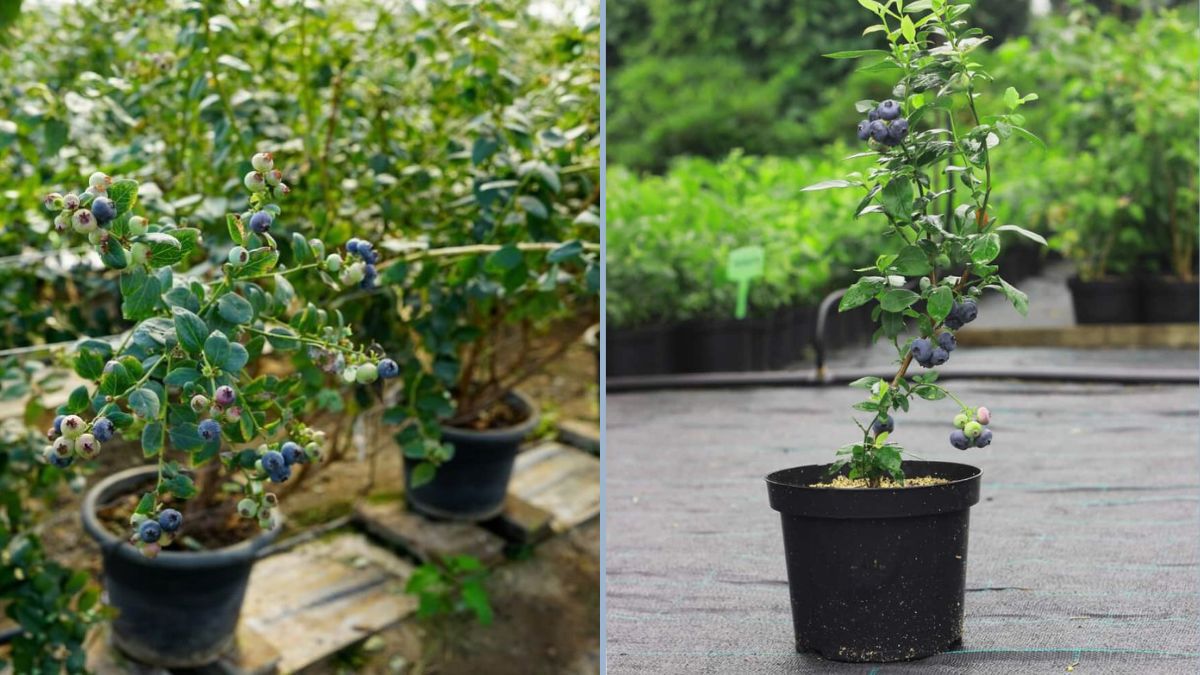
Blueberries — those tiny, juicy, nutrient-packed fruits — are one of nature’s most powerful superfoods. They’re rich in antioxidants, improve heart health, and taste absolutely divine in smoothies, pancakes, or straight off the plant.
But did you know you don’t need a garden or orchard to grow them? With the right soil, containers, and care, you can grow blueberries right at home in pots — whether you live in a small apartment, have a sunny balcony, or a cozy terrace garden.
This guide will walk you through everything you need to know about growing blueberries in containers — from choosing the right variety and soil mix to planting, watering, and long-term care.
By the end, you’ll be ready to enjoy handfuls of sweet, homegrown blueberries from your own potted plants!
1. Why Grow Blueberries in Containers?
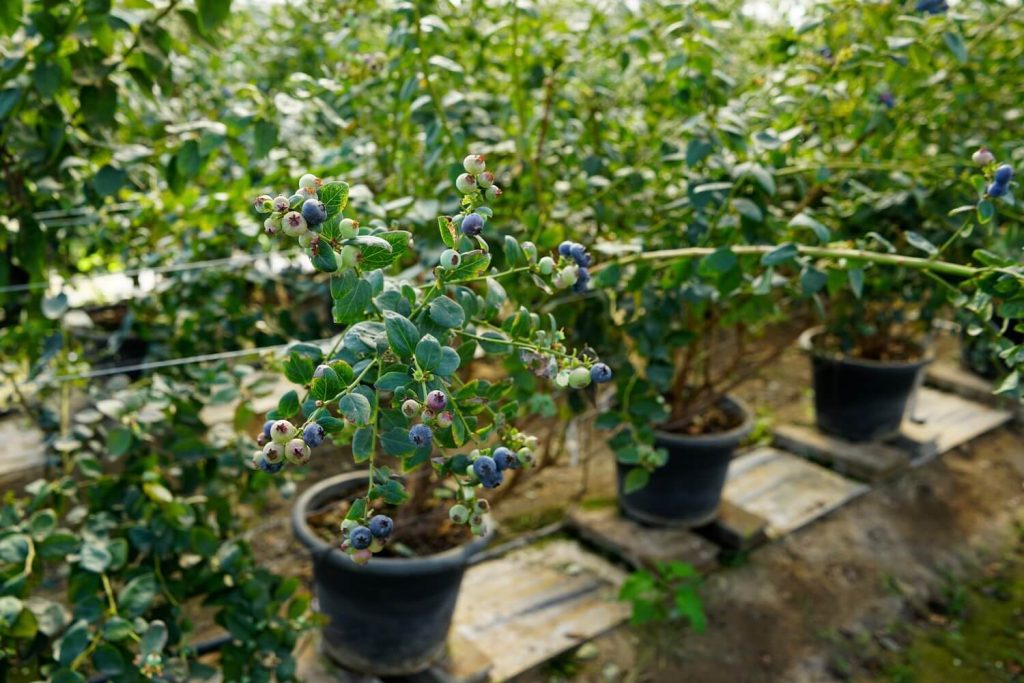
Blueberries (Vaccinium spp.) are traditionally grown in garden beds, but container growing offers several unique benefits — especially if your garden soil isn’t suitable.
Advantages of container-grown blueberries:
- Perfect soil control: You can easily create the acidic environment blueberries love.
- Space-saving: Great for small patios, balconies, or decks.
- Mobility: Move the pots to follow sunlight or protect them from harsh weather.
- Pest control: Easier to monitor and protect from soil-borne diseases.
- Aesthetic value: Blueberry bushes look beautiful — green foliage, white blooms, and blue fruits!
If you live in an area with alkaline soil, containers are actually the best way to grow blueberries successfully.
2. Choosing the Right Blueberry Variety
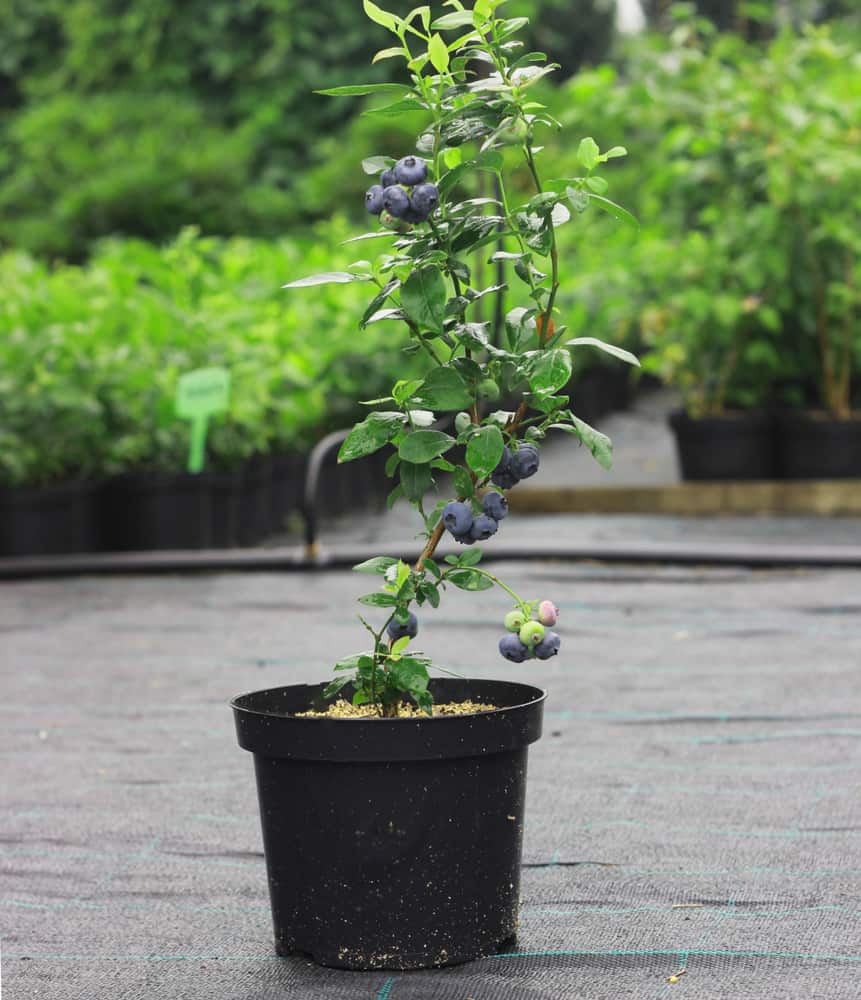
Not all blueberry varieties are created equal — especially for container growing.
You’ll want compact or dwarf varieties that thrive in pots and still produce a good harvest.
Best varieties for container growing:
- ‘Top Hat’ – Compact, only 18 inches tall, great for small pots.
- ‘Sunshine Blue’ – Semi-dwarf, self-pollinating, and tolerant of warmer climates.
- ‘Northblue’ – Cold-hardy, medium-sized fruits, excellent yield.
- ‘Jelly Bean’ – Short, bushy plant with very sweet berries.
- ‘Patriot’ – Slightly larger, still suitable for large containers.
If possible, plant two different varieties for better cross-pollination and bigger yields — even self-pollinating types benefit from a pollination partner.
3. Choosing the Right Container
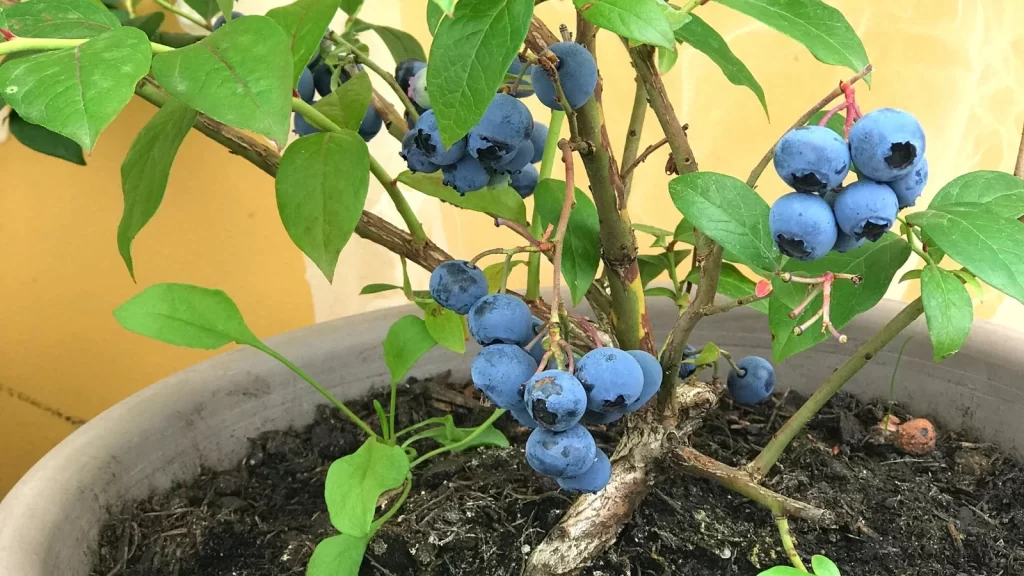
Container choice is crucial to blueberry success. These plants have shallow, fibrous roots and need room to spread while maintaining consistent moisture.
Container requirements:
- Size: Minimum 16–20 inches deep and 18–24 inches wide.
- Material: Plastic, ceramic, or wooden barrels. Avoid metal (heats up too fast).
- Drainage: Must have multiple holes at the bottom.
Start with a medium pot for young plants, then repot into a larger one after 2–3 years as the plant matures.
Place containers on stands or saucers with pebbles to allow excess water to drain away freely.
4. Understanding Blueberry Soil Needs
The most important factor in growing blueberries is the soil.
Blueberries are acid-loving plants, requiring a soil pH between 4.5 and 5.5. Regular garden soil is usually too alkaline and can lead to nutrient deficiencies, yellowing leaves, and stunted growth.
Ideal soil characteristics:
- Acidic (pH 4.5–5.5)
- Well-draining but moisture-retentive
- Rich in organic matter
- Aerated and loose
5. The Perfect Soil Mix for Container Blueberries
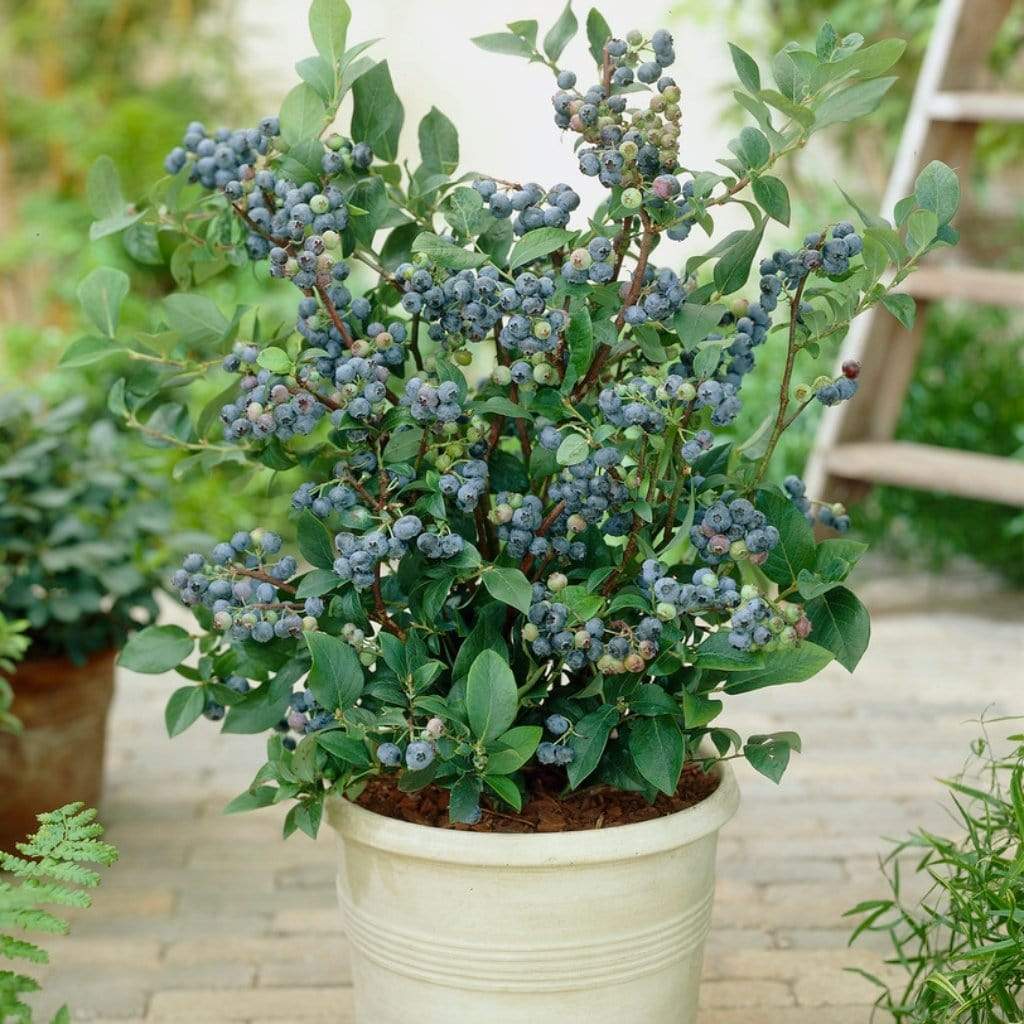
Creating the right soil mix ensures your blueberry plants stay healthy and produce large, sweet fruits.
Here’s a tried-and-tested DIY soil mix recipe for containers:
Option 1:
- 50% coco peat or peat moss (for acidity and moisture)
- 30% pine bark or sawdust (for aeration and structure)
- 20% perlite or coarse sand (for drainage)
Option 2 (Organic alternative):
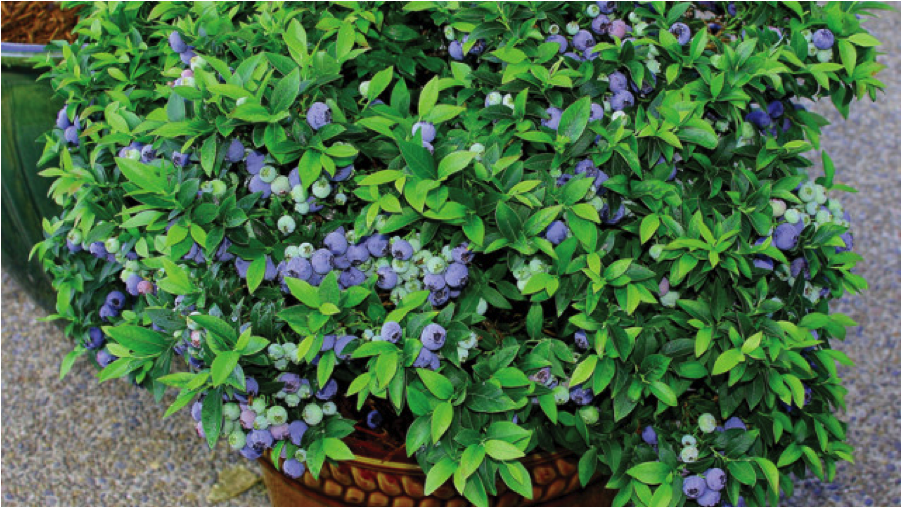
- 50% coco peat
- 30% composted leaf mold
- 10% garden soil
- 10% perlite or rice husk
To further acidify, mix in:
- 1 tablespoon elemental sulfur per 10 liters of soil, or
- 1 teaspoon of citric acid dissolved in water every few weeks.
Tip: Never use limestone, wood ash, or alkaline compost near your blueberry plants — they raise soil pH and harm the roots.
6. Planting Blueberries in Containers
Once your soil and pot are ready, it’s time to plant!
Steps for planting:
- Prepare the pot: Fill two-thirds with your soil mix.
- Remove the plant: Gently take the blueberry from its nursery pot.
- Loosen the roots: Blueberry roots often circle around the pot — gently tease them apart.
- Plant depth: Set the plant so the root ball is just below the rim of the pot.
- Fill and press: Add soil around the base and press lightly to remove air pockets.
- Water thoroughly: Use rainwater or distilled water (tap water may be too alkaline).
- Mulch: Add a 1–2 inch layer of pine needles, shredded bark, or dry leaves to maintain acidity and moisture.
7. Watering: Keep Soil Moist, Not Wet
Blueberries need consistent moisture, especially during flowering and fruiting. However, they dislike standing water.
Watering tips:
- Check the top 1 inch of soil — if dry, it’s time to water.
- Use rainwater or filtered water whenever possible.
- Avoid hard (calcium-rich) tap water, as it raises soil pH.
- Mulching reduces evaporation and maintains ideal moisture.
During hot summers, you may need to water every 1–2 days; in cooler weather, once or twice a week is sufficient.
8. Fertilizing Your Blueberry Plant
Blueberries are light feeders but need the right nutrients at the right time. Overfeeding can harm the delicate roots.
Feeding schedule:
- Spring (before flowering): Use an acidic fertilizer or organic compost tea.
- Mid-summer (during fruiting): Apply a balanced fertilizer with more potassium and phosphorus.
- Late summer: Stop feeding — this helps the plant prepare for dormancy.
Recommended organic options:
- Fish emulsion
- Cottonseed meal
- Coffee grounds (moderately)
- Liquid seaweed extract
Avoid fertilizers with lime or nitrates — they raise pH and harm your plant.
9. Sunlight and Temperature
Blueberries thrive in full sun — the more sunlight they get, the better the fruit quality.
Ideal conditions:
- Sunlight: 6–8 hours of direct sunlight daily.
- Temperature: 15–30°C (59–86°F).
- Winter: Blueberries require chill hours (below 10°C/50°F) for fruit set, depending on variety.
If you live in a hot region, give some afternoon shade to prevent leaf burn. In cold areas, wrap pots in burlap or move them indoors during frost.
10. Pruning and Maintenance
Pruning helps your blueberry plant stay productive and encourages new, fruit-bearing growth.
Pruning guide:
- First year: Remove flowers to let the plant establish roots.
- Second year onward: Prune out old, weak, or crossing stems after harvest.
- Keep 6–8 healthy canes per mature bush.
This promotes air circulation, reduces disease, and results in larger berries.
11. Pollination and Fruit Development
Many blueberry varieties are self-pollinating, but having two different varieties nearby can significantly increase yield and fruit size.
Encourage pollinators by planting nearby flowers like marigolds or lavender.
If you’re growing indoors, gently shake the plant or use a soft brush to transfer pollen between flowers.
After successful pollination, you’ll notice tiny green berries that gradually swell and turn deep blue over 6–8 weeks.
12. Pests and Diseases
Blueberries are generally hardy but can face a few issues in containers.
Common problems:
- Leaf yellowing: Often due to high soil pH — add acidic water or sulfur.
- Aphids or spider mites: Spray neem oil once every 10–15 days.
- Bird damage: Cover plants with netting when fruits ripen.
- Root rot: Caused by overwatering — ensure good drainage.
With proper care, your container plants can stay pest-free and healthy for years.
13. Harvesting Blueberries
Blueberries typically bear fruit in the second year, and full production starts by the third year.
When to harvest:
- Berries turn deep blue and soft to touch.
- Wait 4–5 days after full color appears — they sweeten while still on the bush.
- Gently twist and pick; ripe berries come off easily.
A mature plant in a large container can yield 1–3 kilograms (2–6 lbs) of berries each season!
14. Winter Care and Repotting
In cold regions, blueberries go dormant in winter.
- Move pots to a sheltered spot or cover with mulch to protect roots from freezing.
- Water sparingly during dormancy — just enough to keep roots moist.
- Every 2–3 years, repot with fresh acidic soil to rejuvenate growth.
Regular maintenance ensures your container blueberries remain productive for 10 years or more!
15. Final Thoughts: The Joy of Growing Blueberries in Containers
Growing blueberries in containers isn’t just about convenience — it’s about creating a little oasis of health and beauty right at home.
With the right acidic soil, consistent moisture, and sunny spot, your blueberry bush will reward you with luscious, nutrient-rich fruits year after year.
Whether you’re in an apartment, balcony, or terrace, a few potted blueberry bushes can transform your space into a productive mini orchard.
So, grab a pot, mix up that perfect soil, and start planting. In just a couple of seasons, you’ll be picking bowls of plump, juicy blueberries — straight from your container garden to your breakfast table.