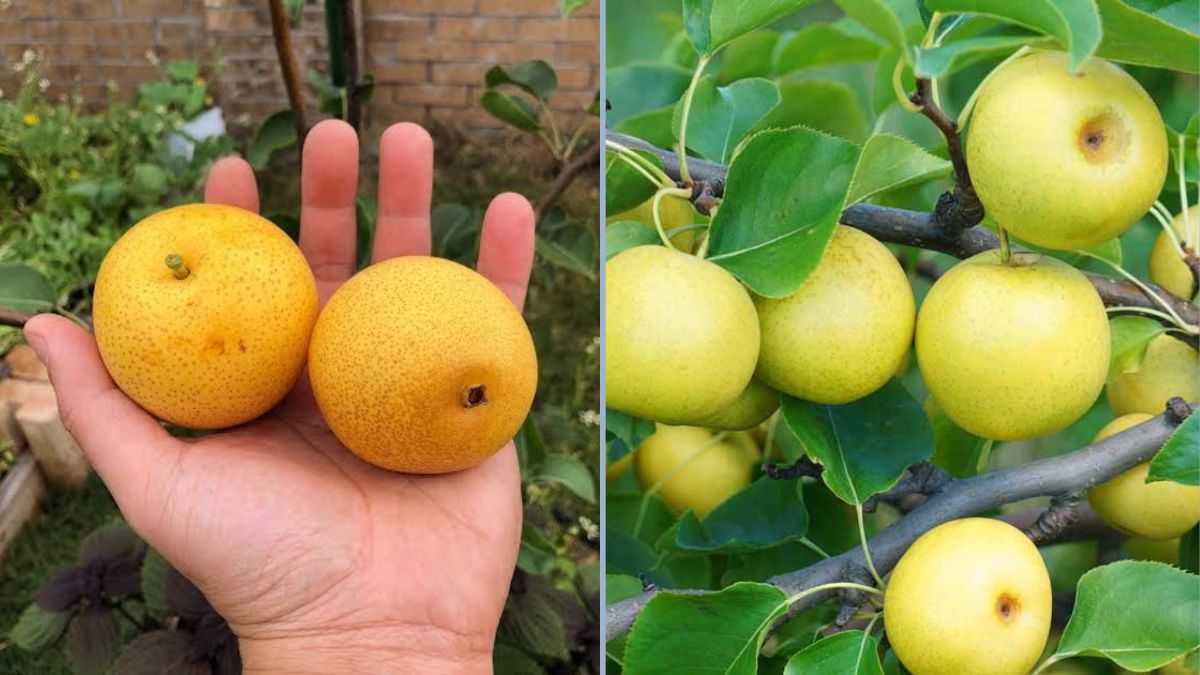
Asian pears, often called apple pears because of their crisp texture and round, apple-like shape, are one of the most rewarding fruit trees you can grow in your home garden. Known for their delicate sweetness, refreshing crunch, and golden glow, these pears combine the best of both worlds — the juicy flavor of a pear with the crisp bite of an apple.
In this comprehensive guide inspired by Raintree Nursery’s Asian Pear Growing Guide, we’ll walk you through everything you need to know about planting, caring for, and harvesting Asian pears. Whether you’re a backyard gardener or a small orchard enthusiast, this step-by-step resource will help you grow healthy, productive trees that yield delicious fruit for years to come.
1. What Are Asian Pears (Apple Pears)?
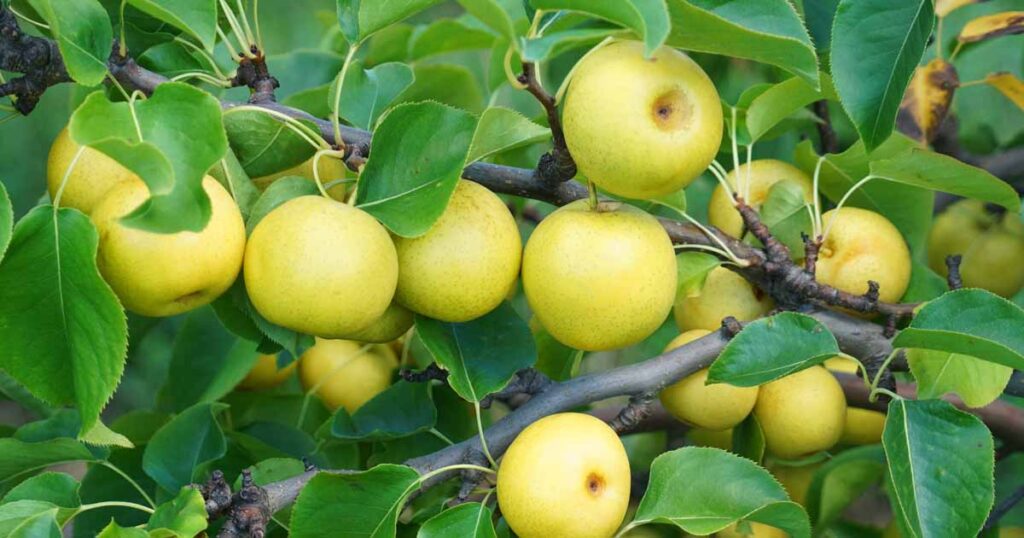
Asian pears (Pyrus pyrifolia) are native to East Asia — particularly Japan, China, and Korea — where they have been cultivated for thousands of years. Unlike European pears, which soften as they ripen, Asian pears are firm, crisp, and juicy even when fully ripe.
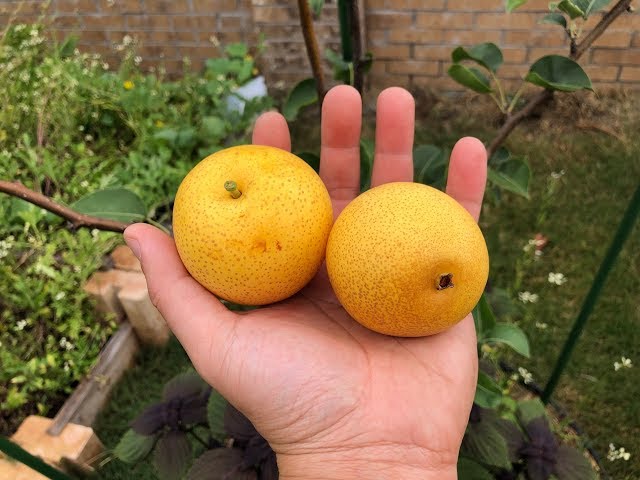
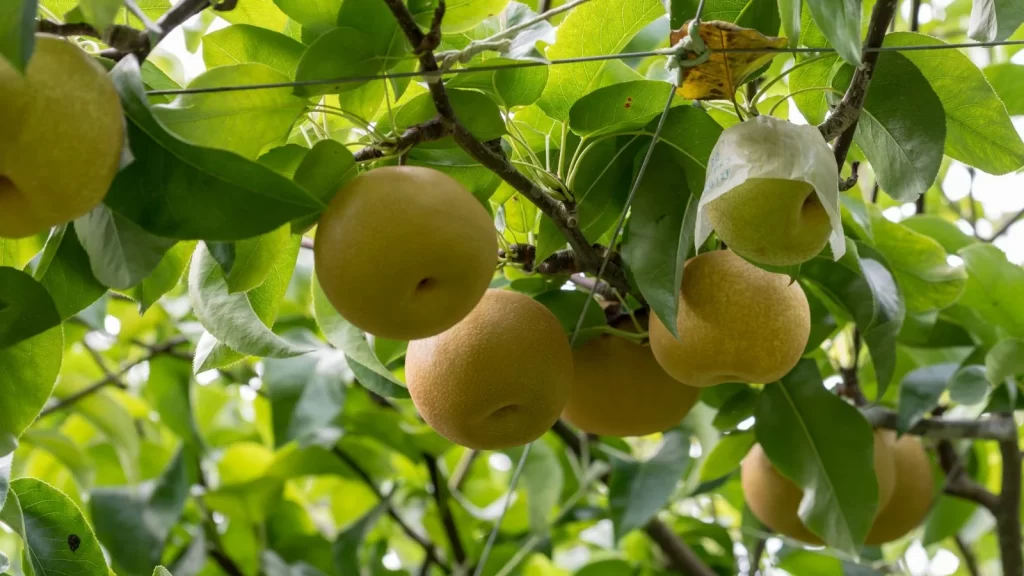
They are often called “apple pears” because they share an apple-like texture and shape, though the taste is distinctly pear-like — sweet, floral, and mildly aromatic. The fruit ranges in color from pale yellow to golden bronze, depending on the variety.
Commonly grown varieties include:
- ‘Hosui’ – Golden-brown skin, rich and sweet flavor.
- ‘Shinseiki’ – Pale yellow skin, crisp and mild.
- ‘Nijisseiki’ (20th Century) – Bright yellow, juicy, and aromatic.
- ‘Chojuro’ – Bronze-colored, with honeyed flavor and excellent storage ability.
- ‘Korean Giant’ – Large fruit with a sweet, crunchy texture.
Asian pears are not just delicious; they are nutrient-dense — rich in vitamin C, fiber, and antioxidants.
2. Why Grow Asian Pears?
There are plenty of reasons gardeners love Asian pears:
- Early Bearing: They start producing fruit as early as 3–4 years after planting.
- Long Shelf Life: Asian pears store for months without losing flavor or crispness.
- Beautiful Trees: Their glossy leaves and spring blossoms add ornamental value.
- Low Maintenance: With proper care, they are hardy and resistant to many pests and diseases.
- High Yields: One mature tree can produce 100–300 fruits annually!
If you enjoy crisp, refreshing fruit straight from the tree, Asian pears are a perfect addition to your edible landscape.
3. Choosing the Right Location
Asian pears thrive in full sun and well-drained soil. Here’s what they need to grow successfully:
- Sunlight: At least 6–8 hours of direct sunlight daily.
- Soil: Rich, loamy, well-draining soil with a pH between 6.0 and 7.0.
- Drainage: Avoid heavy clay or waterlogged areas; poor drainage can cause root rot.
- Airflow: Good air circulation helps prevent fungal diseases.
- Frost Protection: Flowers can be sensitive to late frosts, so choose a site with some protection or elevation.
If space is limited, consider dwarf or semi-dwarf varieties, which grow well in smaller gardens or even large containers.
4. Planting Asian Pear Trees
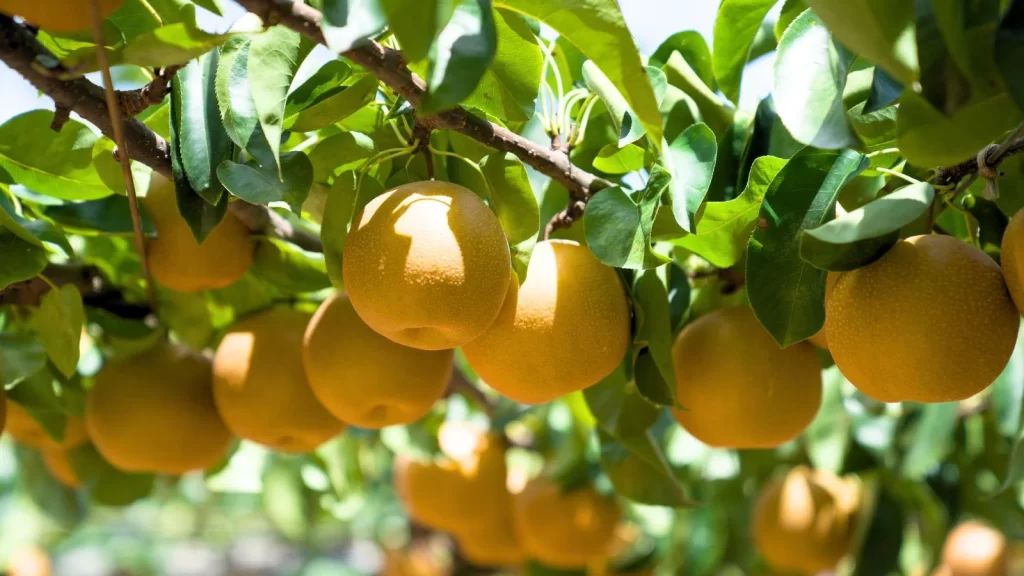
Asian pear trees can be planted either bare-root (in late winter or early spring) or container-grown (spring to early autumn).
Step-by-Step Planting Guide:
- Dig the Hole: Make it twice as wide and just as deep as the root ball.
- Amend the Soil: Mix organic compost or aged manure into the removed soil.
- Position the Tree: Set the tree so the graft union (the bulge near the base of the trunk) sits about 2 inches above soil level.
- Backfill and Firm: Refill with soil, gently firming it around the roots.
- Water Thoroughly: Give it a deep watering to settle the soil.
- Mulch: Apply a 2–3 inch layer of mulch around the base, keeping it away from the trunk.
If you’re planting multiple trees, space them 12–15 feet apart for standard varieties or 8–10 feet apart for dwarf types.
5. Pollination: Do You Need More Than One Tree?
Most Asian pears are partially self-fertile, but they produce significantly better when cross-pollinated with another compatible variety.
To ensure abundant fruit, plant two different varieties that bloom around the same time — for example:
- Pair ‘Hosui’ with ‘Shinseiki’, or
- ‘Chojuro’ with ‘20th Century’.
Pollinators like bees are essential, so avoid using chemical sprays during flowering. Planting bee-friendly flowers nearby can also encourage better pollination.
6. Watering and Fertilizing
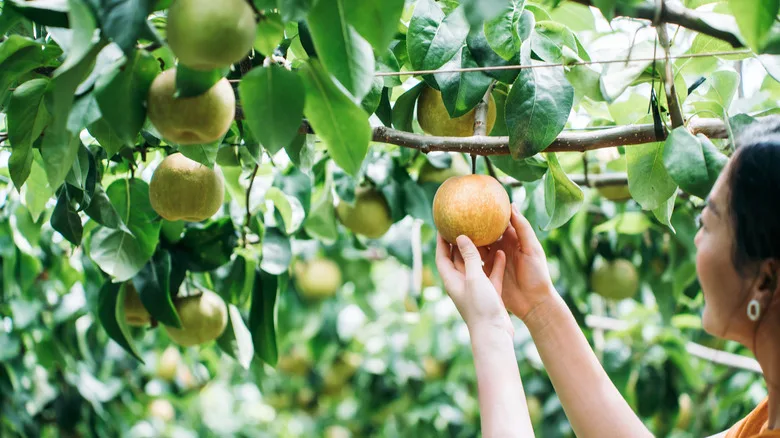
Asian pears require regular water, especially during dry spells and the fruiting season.
Watering:
- Keep soil consistently moist but not soggy.
- Deep watering once a week is better than frequent shallow watering.
- Use mulch to retain moisture and reduce weeds.
Fertilizing:
- In early spring, before new growth appears, apply a balanced organic fertilizer (10-10-10) or a composted manure mix.
- Avoid over-fertilizing — too much nitrogen can lead to lush leaves but fewer fruits.
- Stop feeding by midsummer to allow the tree to prepare for dormancy.
7. Pruning and Training
Pruning is crucial to shaping the tree, encouraging sunlight penetration, and improving fruit quality.
Initial Training:
- Train young trees into an open-center (vase) shape or modified central leader structure.
- This improves airflow and allows light to reach all branches.
Annual Pruning:
- In late winter (before bud break), remove dead, crossing, or crowded branches.
- Thin out small shoots and water sprouts.
- Maintain 4–5 strong scaffold branches evenly spaced around the trunk.
During summer, lightly trim vigorous new shoots to direct energy toward fruit ripening.
8. Pest and Disease Management
Asian pears are generally hardy, but like most fruit trees, they can attract a few pests and diseases. Here’s how to manage them organically:
Common Pests:
- Aphids: Spray with neem oil or insecticidal soap.
- Codling Moth: Use pheromone traps or remove affected fruit.
- Pear Psylla: Wash with a strong stream of water and use dormant oil spray in winter.
Diseases:
- Fire Blight: Avoid excessive nitrogen; prune infected wood and disinfect pruning tools.
- Rust or Leaf Spot: Maintain good airflow and remove fallen leaves.
- Root Rot: Ensure well-drained soil.
Healthy soil and regular pruning are your best defenses against disease.
9. Flowering and Fruit Development
Asian pear trees bloom beautifully in early spring, with clusters of white blossoms that attract pollinators. Fruits develop through late spring and summer, depending on the variety.
- Fruit thinning: Once fruits reach marble size, thin clusters to one or two fruits per spur. This improves fruit size and prevents limb breakage.
- Support branches: Heavily laden branches may need staking to avoid snapping.
- Patience pays off: Expect your first substantial harvest by the third or fourth year.
10. Harvesting Asian Pears
Unlike European pears, Asian pears ripen on the tree, not after picking. You’ll know they’re ready when:
- The skin turns golden-yellow or bronze (depending on the variety).
- The fruit emits a sweet aroma.
- It detaches easily from the stem with a gentle twist.
Harvest carefully to avoid bruising the fruit. Handle them gently, as even small bruises can affect storage life.
Storage:
Asian pears are excellent keepers — they can last up to 3–4 months in a cool, humid environment or refrigerator. Store them unwashed until ready to eat.
11. How to Enjoy Your Asian Pears
Asian pears are naturally sweet, crisp, and refreshing — perfect for enjoying fresh off the tree. But they’re also incredibly versatile in plant-based cooking. Try these delicious ideas:
- Fresh Fruit Snack: Slice and enjoy chilled Asian pears for a refreshing treat.
- Salads: Combine with greens, walnuts, and a light vinaigrette.
- Desserts: Use in fruit tarts, crisps, or pear sorbet.
- Juice or Smoothies: Blend with apple, ginger, or lemon for a hydrating drink.
- Preserves: Make pear jam, chutney, or dried pear chips.
Their unique texture holds up well in both sweet and savory recipes.
12. Winter Care and Long-Term Maintenance
Asian pears are deciduous and will lose their leaves in winter. During dormancy:
- Mulch: Add a fresh layer of mulch to insulate the roots.
- Water sparingly: Only water if the soil becomes dry.
- Prune: Do your major pruning before spring bud break.
- Inspect: Check for overwintering pests and apply dormant oil spray if needed.
With proper care, an Asian pear tree can live 25–40 years and provide a lifetime of delicious fruit.
13. Final Thoughts
Growing Asian pears — or apple pears — is one of the most satisfying gardening experiences you can have. They are beautiful, productive, and surprisingly low-maintenance once established. From their fragrant spring blossoms to their crisp, golden fruits, they add both beauty and flavor to your garden.
Following Raintree Nursery’s growing tips, you can enjoy baskets of homegrown pears each year — fresh, juicy, and packed with nutrition. Whether you’re planting a single tree in your backyard or starting a small orchard, Asian pears reward your care with abundance and elegance.
So, grab your gardening gloves, prepare your soil, and start your own Asian pear adventure. You’ll soon discover why gardeners around the world call them the perfect blend of apple crispness and pear sweetness.