There’s a certain kind of magic that hides in familiar places. Not the kind of magic that needs grand journeys or distant landscapes, but the kind that lives quietly along our daily paths — waiting for us to notice.
On a late-summer afternoon, I set out for what I like to call my three portal walk — a simple loop through the nearby fields, woods, and hedgerows. I didn’t plan for it to become a ritual, but over the years, walking these same paths has become something sacred: a way of slipping through invisible thresholds into the layered world of nature’s small miracles.
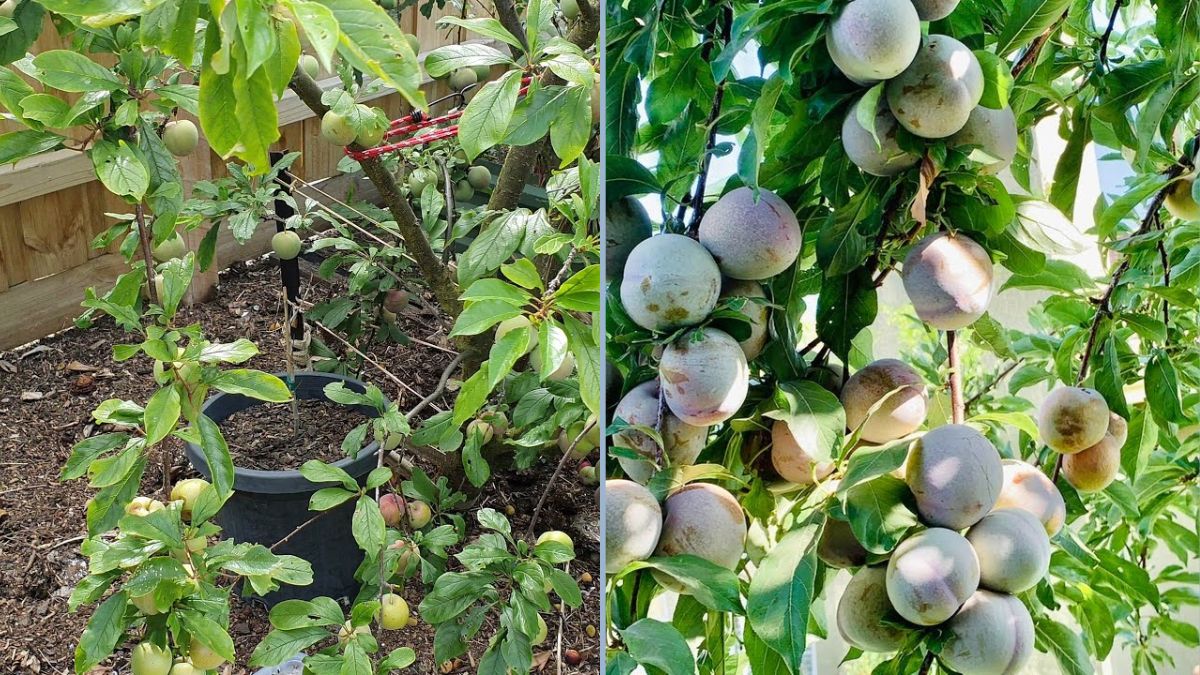
This time, the journey began with a discovery that stopped me in my tracks — clusters of wild plums, glowing golden-red beneath their leaves like drops of sunset light.
The First Portal: The Familiar Becomes Enchanted
The first portal, for me, is the simplest one: it’s the moment the ordinary becomes extraordinary.
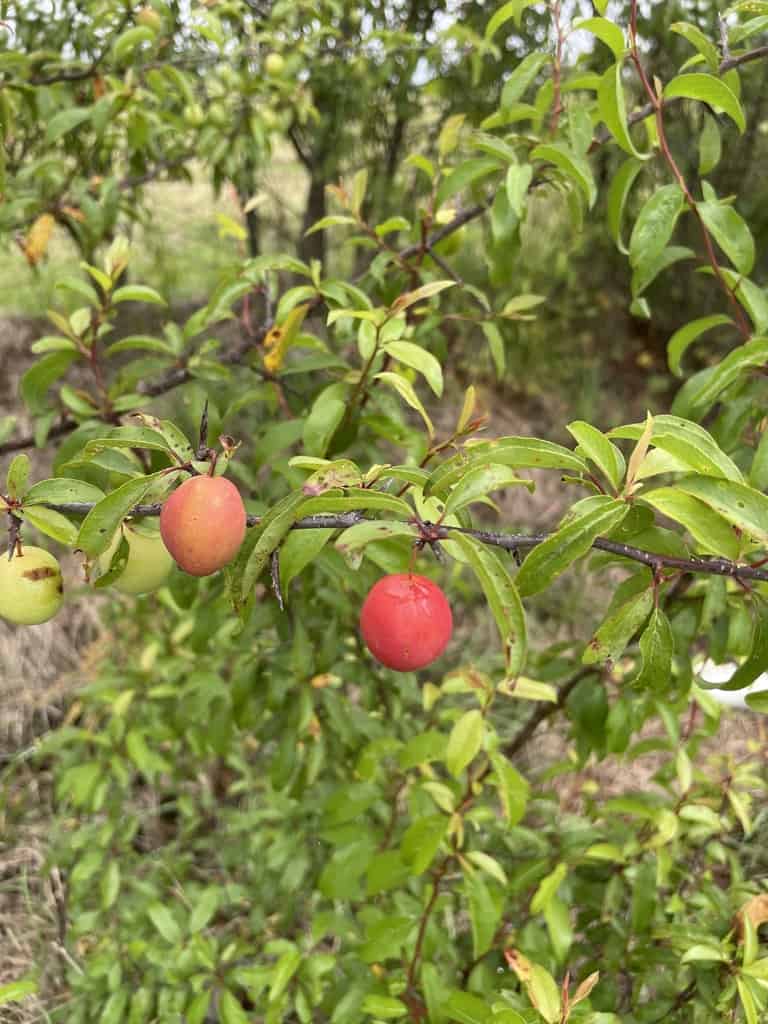
Just beyond my driveway, the old hedgerow stands — tangled with hawthorn, blackberry, and young maples. I’ve passed it a hundred times, hardly noticing anything but the change of leaves. But this time, as the wind shifted, I caught a sweet, honeyed scent. Beneath the branches hung dozens of small, round fruits — wild plums, or Prunus americana.
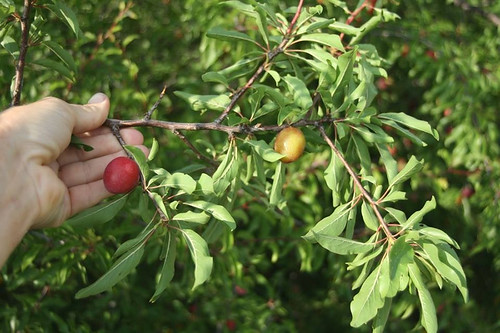
Their color was astonishing: deep red on one side, soft gold on the other, where the sun had touched them less. Some were already beginning to fall, dotting the ground with little bruised orbs that bees and ants were happily feasting upon.
I picked one gently, rubbed off the dusty bloom, and tasted. It was tart at first — a sharp bite that made my mouth water — then sweet and perfumed, with a flavor no supermarket fruit could ever match.
That’s the moment when I felt the first portal open — when the landscape shifted from being just a backdrop to becoming alive with presence and meaning.
Wild plums, it turns out, are more than wild fruit. They’re one of North America’s native treasures — trees that have nourished both wildlife and people for centuries. Deer browse their branches, birds feast on the fruit, and early settlers used the plums to make jam, wine, and sauces. Indigenous peoples valued them as both food and medicine, their tart skins and seeds rich with nutrients and tannins used for healing and dyeing.
But for me, standing there in the afternoon light, they represented something even simpler — the reminder that wonder is never far away. Sometimes it’s growing unnoticed, right at the edge of our own front yards.
The Second Portal: Walking Between Worlds
The second portal always seems to appear once I step deeper into the woods — that quiet space where the noise of the world fades and a softer rhythm takes over.
As I followed the narrow trail past the plum thicket, the sound of leaves brushing against one another seemed to shift into a kind of language — the rustle and hum of an older world. The sunlight slanted through the trees, flickering like candlelight. Every step felt like entering another layer of time.
It’s here that I start noticing the small companions of wild places: a toad half-buried in damp soil, the slow flicker of a dragonfly, the faint sweetness of fallen fruit fermenting underfoot.
I passed a stand of goldenrod just beginning to bloom, its tiny yellow blossoms swaying with the hum of bees. The air smelled faintly of warm grass and ripening fruit.
As I walked, I found myself thinking of how easy it is to overlook the places closest to us — the small woodland patches between neighborhoods, the forgotten fence lines that hold wild hedges, the quiet corners of local parks. These are the “portals” we often ignore: the spaces where the human and the natural still mingle freely.
In the age of travel and constant novelty, we forget that discovery isn’t always about going far. It’s about going deep. It’s about paying attention.
The wild plum tree taught me that — that beauty and abundance exist even in the overlooked margins. The woods that I walk every week suddenly seemed vast again, layered with meaning and stories that I’d missed before.
The Third Portal: Returning Changed
Eventually, the trail opened into a small clearing — the third and final portal, the place of return.
By this point, the late sun had turned golden, and the world seemed to shimmer with the quiet fullness of early autumn. I could see the distant outline of my house beyond the trees — the ordinary world waiting — but I didn’t want to rush back just yet.
I sat down on a mossy log and watched the breeze move through the branches. A small flock of cedar waxwings darted overhead, swooping down to snatch the last of the season’s berries. In that stillness, I realized that these little walks — these moments of slowing down and noticing — are a kind of alchemy. They transform not the world, but the way we see it.
The “three portals” aren’t literal places. They’re thresholds of perception:
- First, the eye opens — we see the wild plum and remember to notice.
- Second, the heart opens — we feel part of something larger, something living.
- Third, the self opens — we return home, but changed, carrying a piece of that magic with us.
When I finally stood up to walk back, I picked a few ripe plums to take home. I knew I’d make a small jar of jam later that evening — not because I needed it, but because it felt like a way to hold onto the experience a little longer.
The Magic of Wild Plums
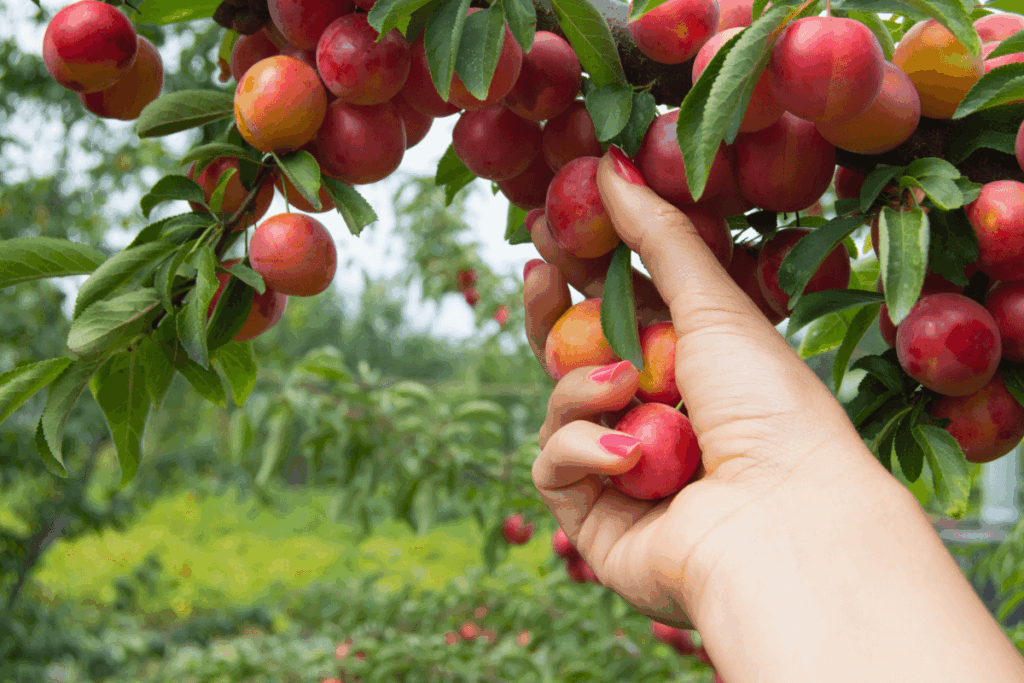
Wild plums aren’t just beautiful; they’re practical gifts of the landscape. If you’re lucky enough to find them growing near you — or if you want to plant your own — they’re worth celebrating and protecting.
1. Growing Wild Plums at Home
Wild plums are hardy, resilient trees that thrive in most temperate climates. They prefer full sun and well-drained soil, though they tolerate partial shade. Once established, they require little care, apart from occasional pruning to shape the branches.
They bloom in early spring with clusters of white flowers that attract bees, butterflies, and early pollinators. By midsummer or early fall, the small plums ripen — perfect for fresh eating, preserving, or making into syrups and wines.
2. A Gift for Wildlife
Birds, foxes, raccoons, and even bears feed on the fruit, making wild plums a cornerstone species in natural food webs. Planting them or preserving existing trees supports local ecosystems and biodiversity.
3. A Symbol of the Wild Edge
There’s something symbolic about the wild plum. It often grows along boundaries — fence lines, old fields, forgotten pastures — those transitional spaces where civilization meets wilderness. It reminds us that nature doesn’t stop where lawns begin.
Wild plums thrive in the in-between places, and perhaps that’s why they feel so magical. They invite us to notice the edges of our own lives — the spaces where mystery still seeps through the everyday.
Bringing the Magic Home
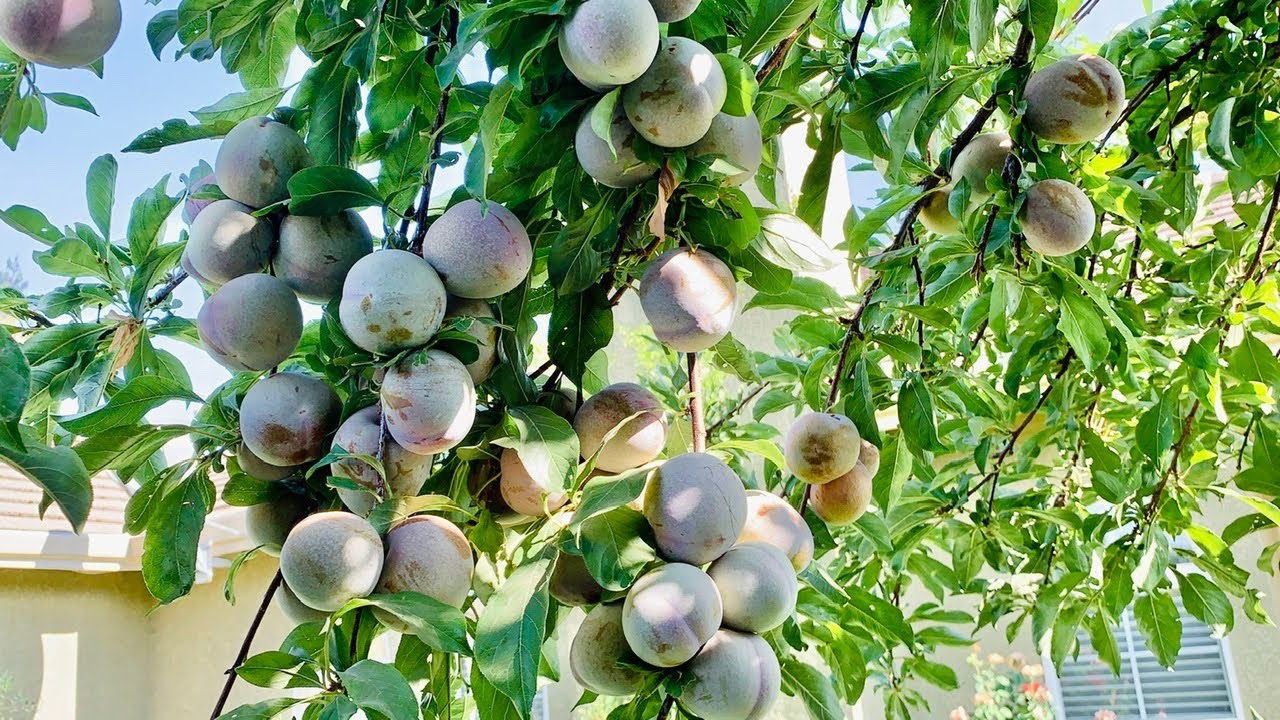
That evening, I stood in my kitchen stirring a pot of simmering wild plum jam. The scent filled the air — sweet, tart, and faintly floral. Outside the window, dusk settled over the trees.
As I spread a spoonful on toast, I realized that this simple ritual — walking, noticing, gathering, preserving — was a form of connection I’d been missing. The wild plum had guided me back to it.
You don’t have to live in a forest to find this kind of magic. You only need to step outside and look closely — at the hedgerow, the roadside, the forgotten corner of your own yard. The wild world is still there, waiting for you to cross its thresholds.
Final Reflections: The Everyday Sacred
The “three portal walk” isn’t about distance — it’s about transformation. It’s about remembering that even near home, the natural world hums with wonder.
The wild plums in the hedgerow remind us that life is abundant and generous. The woods remind us to listen. And the walk itself reminds us that every step outdoors can be a form of quiet prayer — a return to belonging.
Magic isn’t hidden far away. It’s growing right at the edge of your lawn, ripening in the sun, whispering in the wind — waiting, always, to be noticed.