
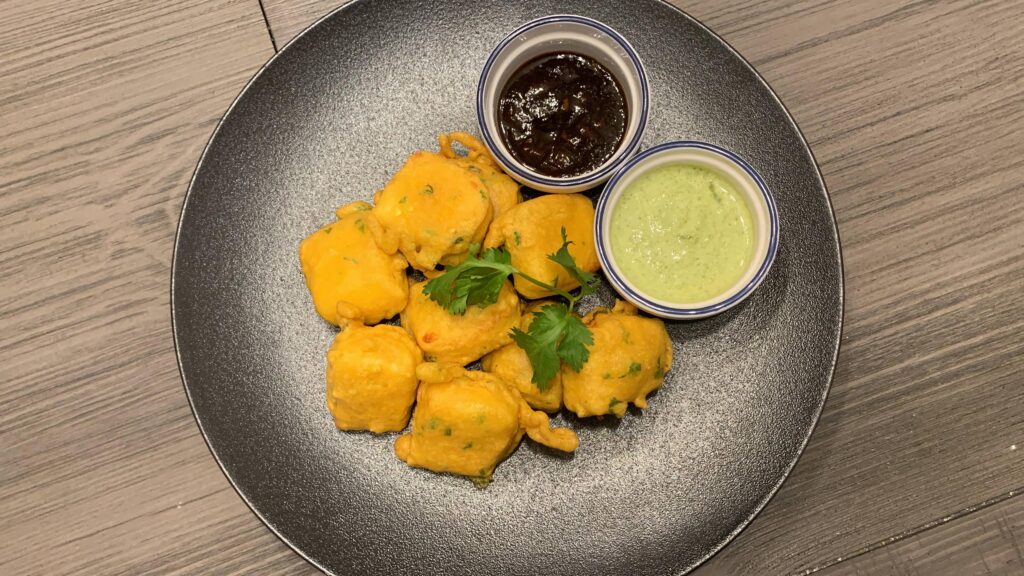
Paneer pakora is a beloved Indian snack known for its crispy exterior and soft, creamy interior. Traditionally, it is deep-fried, resulting in a golden, crunchy coating over soft paneer cubes. While delicious, deep frying significantly increases the calorie and fat content, making it less ideal for health-conscious individuals.
Fortunately, with the right techniques, it is possible to prepare paneer pakoras without deep frying, retaining their taste, crispiness, and indulgent feel while making them healthier. This version can be baked or air-fried, offering the same satisfying crunch without excess oil.
This article will provide a 5-step guide to preparing healthier paneer pakoras, complete with tips, variations, and nutritional insights to make it suitable for a wholesome snack or appetizer.
Step 1: Selecting and Preparing Paneer
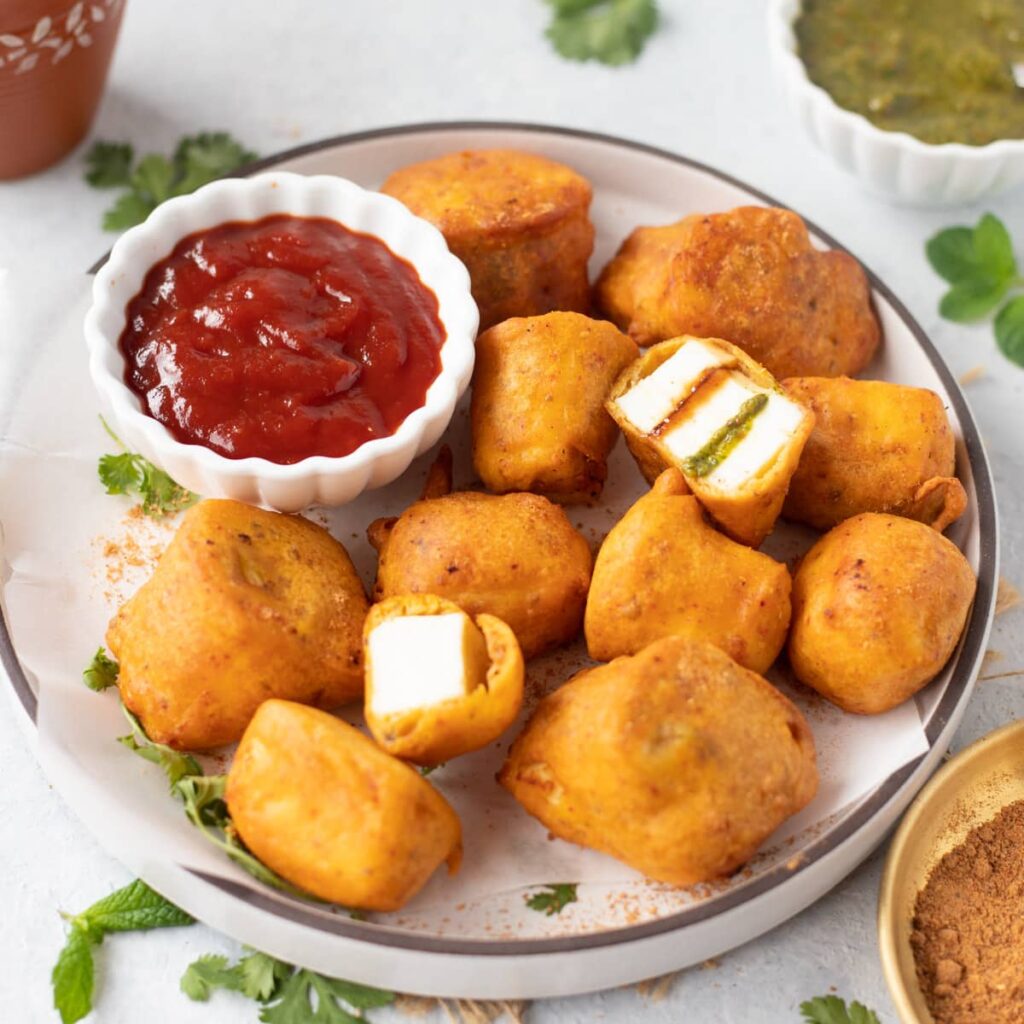
The key to perfect pakoras lies in the quality of paneer.
Choosing Paneer
- Use fresh, firm paneer. Soft paneer tends to break during coating and cooking.
- Homemade paneer is preferred for freshness, but store-bought paneer works well if drained and patted dry.
Preparing Paneer Cubes
- Cut paneer into uniform cubes (approximately 1-inch pieces) for even cooking.
- Pat the cubes dry with a kitchen towel to remove excess moisture—wet paneer can make the batter soggy.
Pro Tip: Lightly sprinkle a pinch of salt and turmeric on the paneer cubes before coating to enhance flavor from within.
Step 2: Preparing the Besan (Gram Flour) Batter
A flavorful batter ensures a crispy coating even without deep frying.
Ingredients for the Batter
- Besan (gram flour): 1 cup
- Rice flour: 2 tablespoons (adds extra crispiness)
- Turmeric powder: ½ teaspoon
- Red chili powder: 1 teaspoon (adjust to taste)
- Garam masala or chaat masala: ½ teaspoon
- Carom seeds (ajwain): ¼ teaspoon (aids digestion)
- Salt: to taste
- Water: enough to make a thick but smooth batter
Method
- In a mixing bowl, combine all dry ingredients.
- Gradually add water while stirring to form a medium-thick batter.
- The batter should coat the back of a spoon without dripping off too quickly.
Pro Tip: For extra flavor, add finely chopped green chilies, fresh coriander, or ginger paste to the batter.
Step 3: Coating Paneer Cubes
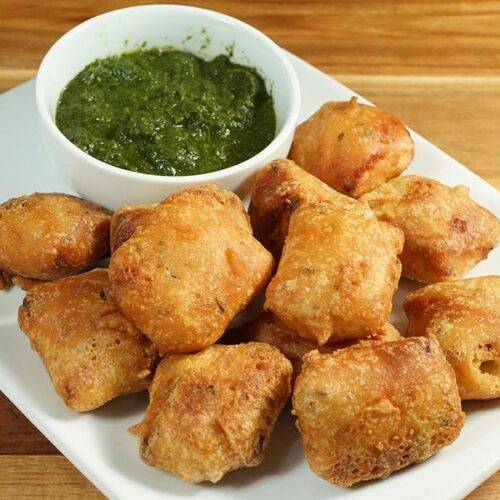
Proper coating ensures crispiness and even cooking.
- Preheat the oven or air fryer to 180°C (350°F).
- Dip each paneer cube into the batter, ensuring it is fully coated.
- Shake off excess batter to prevent clumping.
- Place coated cubes on a baking tray lined with parchment paper or in the air fryer basket.
Pro Tip: Space the cubes slightly apart to allow hot air to circulate for even browning.
Step 4: Cooking Without Deep Frying
Baking or air-frying replaces the traditional deep-frying method while maintaining texture.
Oven Method
- Preheat oven to 180°C (350°F).
- Place the coated paneer cubes on a greased or parchment-lined baking tray.
- Lightly brush or spray oil on top for enhanced crispiness.
- Bake for 15–20 minutes, flipping halfway to ensure even browning.
Air Fryer Method
- Preheat air fryer to 180°C (350°F).
- Place the coated cubes in the basket in a single layer.
- Air fry for 10–12 minutes, shaking the basket halfway through.
Pro Tip: Keep an eye on the pakoras to prevent over-browning. They should be golden and crispy on the outside while soft inside.
Step 5: Serving and Garnishing
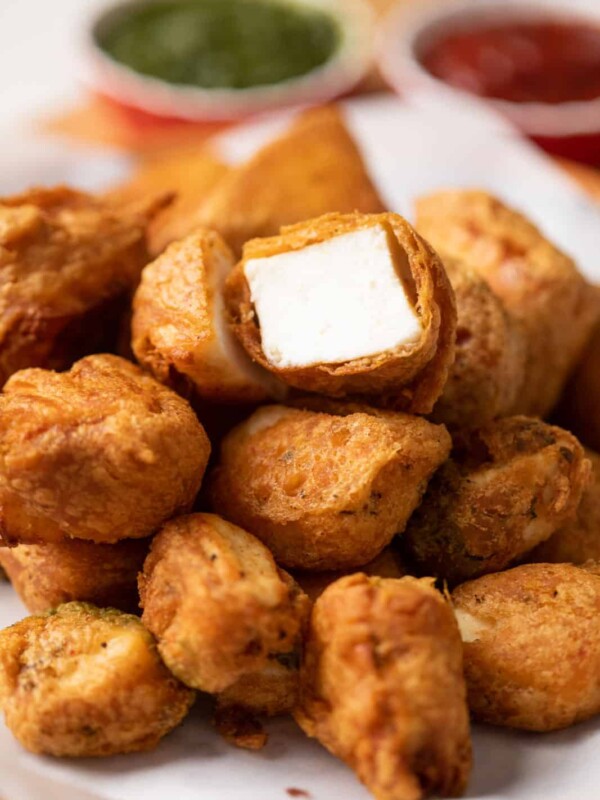
Presentation and accompaniments make paneer pakoras more enjoyable.
Garnishing Ideas
- Sprinkle chaat masala or crushed black pepper for extra flavor.
- Garnish with finely chopped coriander or mint leaves.
- Serve with lemon wedges for a fresh, tangy touch.
Serving Suggestions
- Pair with green chutney, tamarind chutney, or tomato ketchup.
- Serve as a snack during tea time or as an appetizer at parties.
- Combine with a light salad for a wholesome starter.
Pro Tip: Serve immediately while hot to enjoy maximum crispiness.
Nutritional Benefits
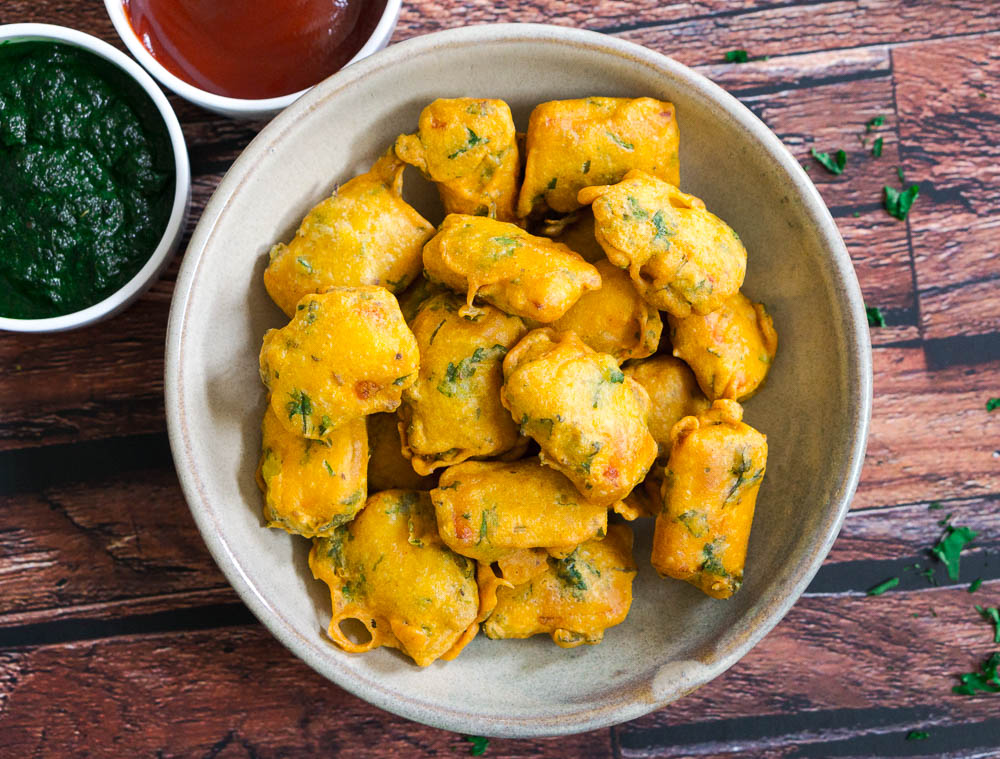
By avoiding deep frying, this version of paneer pakora offers several health advantages:
- Protein-Rich: Paneer provides high-quality vegetarian protein, supporting muscle and bone health.
- Low in Unhealthy Fat: Baking or air-frying uses minimal oil compared to traditional deep frying.
- Rich in Calcium: Paneer is an excellent source of calcium, promoting strong bones and teeth.
- Digestive Benefits: Besan and carom seeds aid digestion and provide fiber.
This makes baked or air-fried paneer pakoras a guilt-free snack suitable for children, adults, and health-conscious individuals.
Variations and Enhancements
- Stuffed Paneer Pakoras: Add finely chopped vegetables (capsicum, carrot, spinach) or grated cheese inside the paneer cube before dipping in batter.
- Spicy Version: Increase green chili or red chili powder in the batter.
- Herb-Infused: Add dried oregano, basil, or curry leaves powder for a fusion flavor.
- Multigrain Batter: Mix besan with whole wheat flour or rice flour for extra fiber and crunch.
Pro Tip: Experimenting with spices and herbs allows customization without adding extra oil or calories.
Common Mistakes to Avoid
- Skipping drying paneer: Wet paneer results in soggy pakoras.
- Batter too thin: Leads to uneven coating and less crispiness.
- Overcrowding the tray: Reduces airflow in the oven or air fryer, leading to uneven cooking.
- Skipping flipping/basting: Ensures uniform browning and crispiness.
- Serving late: Pakoras lose crispiness if left to sit too long; serve hot for best texture.
Conclusion
Paneer pakora is a classic snack that can be enjoyed without deep frying by following these five steps—selecting fresh paneer, preparing a flavorful batter, coating carefully, baking or air-frying, and serving with garnishing.
This healthier method maintains the crispy exterior and soft, creamy interior of traditional pakoras while significantly reducing oil content. By using wholesome ingredients and minimal oil, you can indulge in this snack without guilt.
Whether served at tea time, as an appetizer at parties, or even as a light starter during meals, these baked or air-fried paneer pakoras are versatile, nutritious, and full of flavor. They showcase how traditional favorites can be adapted to modern dietary needs without compromising taste, making them a perfect addition to a healthy vegetarian menu.