
Rajma curry, the iconic North Indian dish made from red kidney beans, is a comforting, protein-rich staple. Traditionally served with steamed rice, rajma is beloved for its thick, spiced gravy that envelops the tender beans, offering both warmth and nutrition. While many restaurant-style versions include cream to enhance richness, it is entirely possible to achieve a creamy texture without using cream, making it lighter and healthier while retaining authentic taste.
This article provides a 6-step recipe to prepare rajma curry that is wholesome, flavorful, and suitable for a vegetarian, health-conscious diet.
Step 1: Selecting and Preparing the Rajma

The foundation of a perfect curry is high-quality beans.
Choosing Rajma
- Opt for medium-sized red kidney beans (rajma) for optimal texture.
- Avoid beans with wrinkles, discoloration, or cracks.
Preparing Rajma
- Wash 1 cup of rajma thoroughly under running water.
- Soak in 3–4 cups of water for 8–10 hours or overnight. Soaking reduces cooking time and enhances digestibility.
- Drain and rinse before cooking.
Pro Tip: For faster cooking, soak rajma in warm water for 4–5 hours if short on time.
Step 2: Pressure Cooking Rajma

Properly cooked rajma is tender but not mushy.
- Transfer soaked rajma to a pressure cooker with 3–4 cups fresh water.
- Add 1 teaspoon salt and optional ½ teaspoon baking soda (softens beans faster).
- Pressure cook for 5–6 whistles on medium flame. Let the pressure release naturally.
- Drain excess water and keep some cooking liquid aside for adjusting curry consistency later.
Pro Tip: Overcooked rajma turns mushy and loses shape; monitor the cooking time carefully.
Step 3: Preparing the Onion-Tomato Masala
The masala forms the flavorful base of the curry.
Ingredients for Masala
- Oil: 1–2 tablespoons
- Cumin seeds: 1 teaspoon
- Onion: 1 medium, finely chopped
- Ginger-garlic paste: 1 teaspoon
- Green chili: 1, finely chopped (optional)
- Tomato: 2 medium, pureed
- Spices: turmeric powder (½ teaspoon), red chili powder (1 teaspoon), coriander powder (1 teaspoon), cumin powder (½ teaspoon)
- Salt to taste
Method
- Heat oil in a pan and add cumin seeds. Let them splutter.
- Add chopped onions and sauté until golden brown.
- Add ginger-garlic paste and green chili; sauté for another 1–2 minutes until raw smell disappears.
- Stir in tomato puree and cook until oil separates from the mixture.
- Add dry spices and cook for 1–2 minutes to enhance flavor.
Pro Tip: Cooking masala on low to medium flame ensures deeper flavor without burning the spices.
Step 4: Combining Rajma with Masala
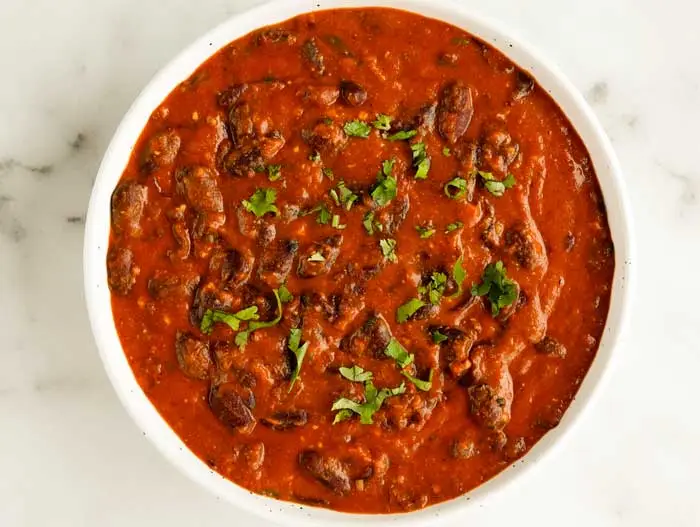
This step brings together tender beans and aromatic masala into a unified curry.
- Add cooked rajma to the prepared masala.
- Pour some reserved cooking water gradually to reach the desired curry consistency.
- Stir well and simmer on low flame for 10–15 minutes. This allows beans to absorb the spices and develop a creamy texture naturally.
- Adjust salt and spice levels to taste.
Pro Tip: Mash a few rajma lightly with the back of a spoon to thicken the curry without using cream.
Step 5: Adding Finishing Touches
Even without cream, the curry can be rich, flavorful, and aromatic.
- Garnish with finely chopped fresh coriander leaves.
- Add a few drops of lemon juice to enhance freshness and balance flavors.
- For extra depth, sprinkle ½ teaspoon garam masala and stir gently.
Pro Tip: Avoid overcooking after adding garnishes to preserve freshness and color.
Step 6: Serving Rajma Curry
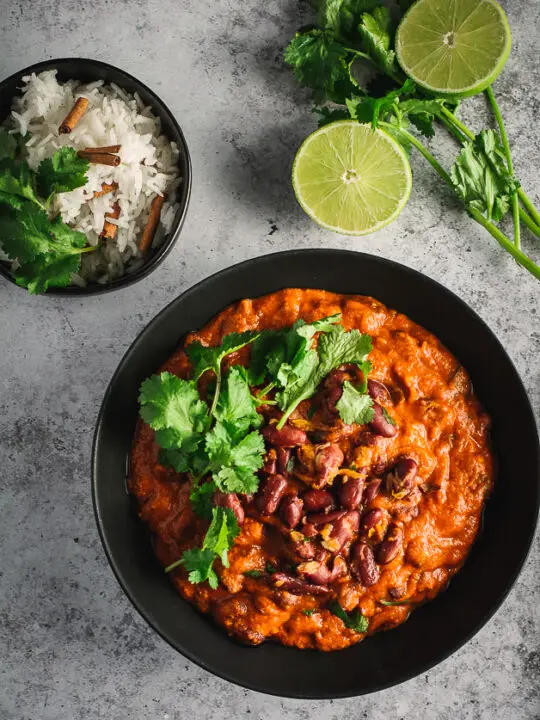
Rajma curry is best enjoyed with complementary sides:
- Steamed Basmati Rice: The classic “rajma-chawal” combination.
- Chapati or Paratha: For a complete Indian meal.
- Salad and Pickle: Fresh onion, cucumber, and lemon slices add crunch and tang.
Presentation Tips
- Serve in a deep bowl to retain heat.
- Garnish with a coriander sprig and a drizzle of water from the cooked beans to create a glossy, appetizing look.
Pro Tip: Rajma tastes even better the next day as flavors intensify over time.
Nutritional Benefits
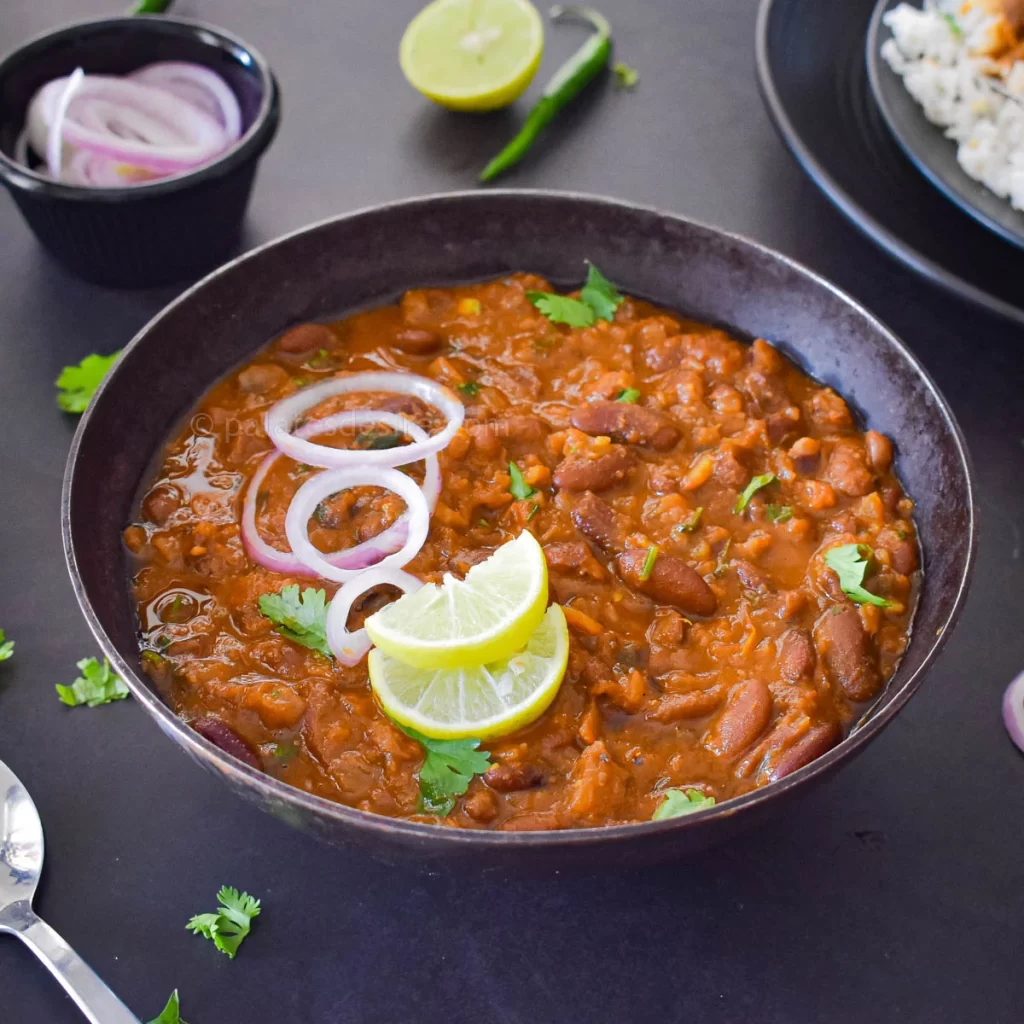
Rajma curry without cream is wholesome and nutrient-rich:
- High in Protein: Red kidney beans are an excellent plant-based protein source.
- Rich in Fiber: Promotes digestive health and satiety.
- Low in Saturated Fat: Eliminating cream reduces calories and fat without compromising taste.
- Packed with Micronutrients: Iron, magnesium, potassium, and folate support overall health.
- Spices Aid Digestion: Turmeric, cumin, coriander, and chili enhance digestion and provide anti-inflammatory benefits.
This makes it suitable for daily meals, weight-conscious diets, and vegetarian protein intake.
Variations and Enhancements
- Smoky Rajma: Roast cumin and coriander seeds before grinding into a powder for a smoky flavor.
- Vegetable Rajma: Add diced carrots, beans, or bell peppers for added nutrition and color.
- Coconut Twist: Stir in 1–2 tablespoons coconut milk at the end for mild sweetness and creaminess.
- Low-Sodium Option: Use minimal salt and substitute half the cooking water with unsalted vegetable broth.
Pro Tip: Experimenting with spices and vegetables allows you to create unique versions while keeping the dish healthy.
Common Mistakes to Avoid
- Skipping soaking: Leads to hard, undercooked beans.
- Overcooking beans: Causes mushy texture and loss of flavor.
- Burning the masala: Low to medium heat prevents bitterness and ensures rich aroma.
- Adding salt too early: Can toughen beans; adjust salt after cooking.
- Too watery or too thick curry: Gradually add reserved cooking water to reach desired consistency.
Conclusion
Rajma curry without cream is a nutritious, flavorful, and wholesome dish that maintains the comforting essence of traditional rajma while being lighter and healthier. By following these six steps—selecting quality beans, pressure cooking, preparing onion-tomato masala, combining with rajma, adding finishing touches, and serving properly—you can create a restaurant-style curry at home.
This method allows health-conscious individuals to enjoy a protein-rich, fiber-packed, and aromatic curry without excess fat. Whether served with rice, roti, or parathas, rajma curry is versatile, easy to prepare, and perfect for both everyday meals and festive occasions.
Enjoy the comforting taste of North India with this wholesome, cream-free rajma curry that delights the taste buds while supporting a balanced diet.