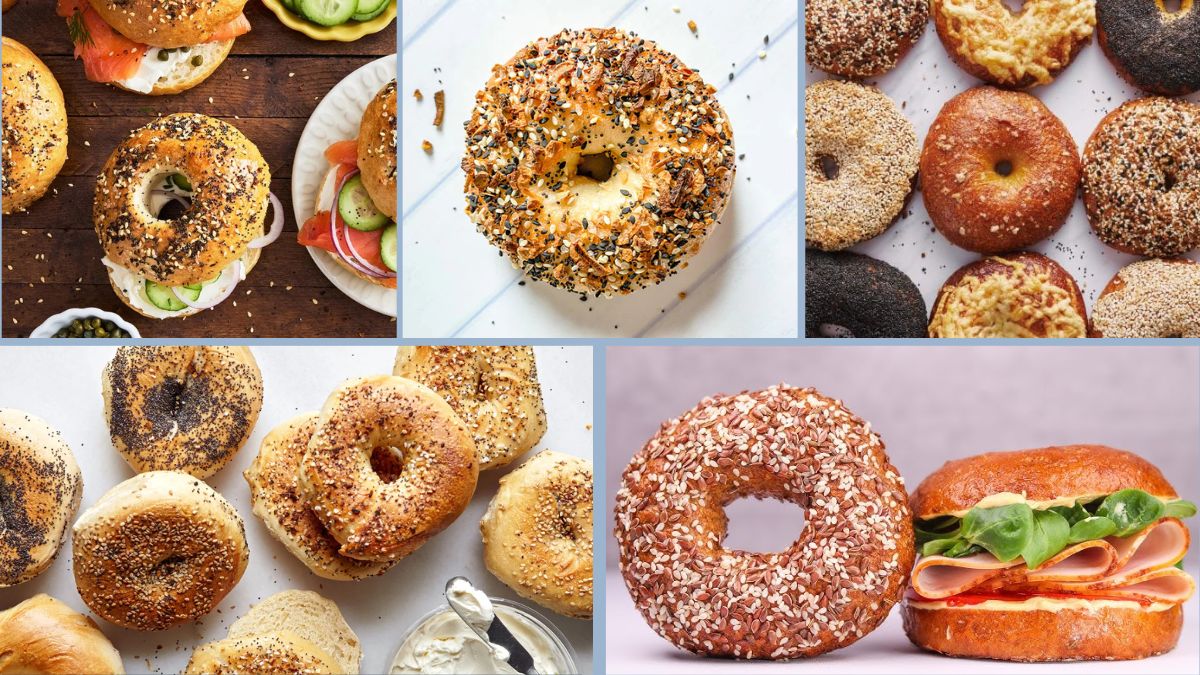
Bagels are iconic, chewy bread rolls that have captivated food lovers worldwide. Known for their dense, chewy texture and shiny crust, authentic bagels require precise techniques and quality ingredients to perfect. Baking chewy bagels at home can be challenging, especially when aiming for that signature texture without using any animal-based ingredients.
This article presents 8 essential tricks to help you make chewy, delicious bagels at home using entirely vegetarian-friendly methods. Designed for culinary students, home bakers, and food researchers, this guide dives deep into the science behind each step, offering practical advice for perfecting bagels every time.
Why Focus on Chewy Bagels?
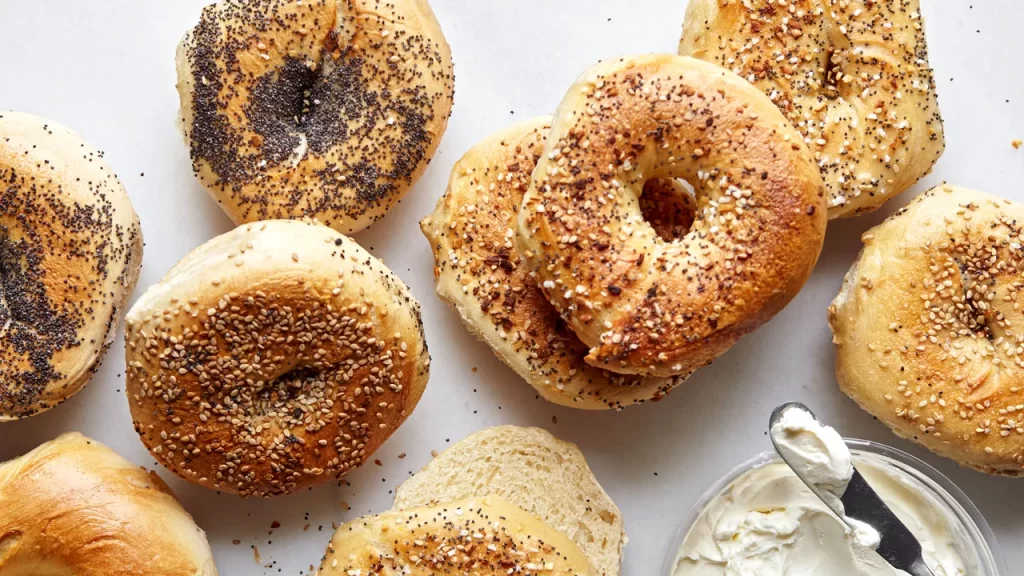
- Texture: The unique chewiness of bagels differentiates them from regular bread rolls.
- Flavor: The traditional boiling process caramelizes the exterior for a distinct taste.
- Versatility: Bagels serve as excellent bases for a variety of vegetarian toppings and fillings.
- Nutritional Benefits: Homemade bagels allow control over ingredients, avoiding preservatives and excess fats.
Understanding Bagel Dough Basics
Bagel dough is denser than typical bread dough, with a higher protein content flour (usually bread flour) to develop strong gluten networks. This gluten structure contributes to the chewiness that bagels are famous for.
Trick 1: Use High-Protein Bread Flour
Choosing the right flour is foundational:
- Bread flour with higher protein (12-14%) supports stronger gluten development.
- Gluten formation is key for elasticity and chewiness.
- Avoid all-purpose flour alone, as it can lead to softer, less chewy bagels.
Trick 2: Knead the Dough Thoroughly
Kneading develops gluten and creates structure:
- Knead for 10-15 minutes by hand or 8-10 minutes in a stand mixer with a dough hook.
- Look for a smooth, elastic dough that springs back when pressed.
- Adequate kneading ensures bagels hold their shape and achieve that satisfying chew.
Trick 3: Let the Dough Rest and Rise Properly
Fermentation enhances flavor and texture:
- Allow the dough to rise until doubled in size, typically 1 to 1.5 hours at room temperature.
- A cold retardation step (refrigeration for 12-24 hours) can further develop flavor and improve texture.
- Proper fermentation creates gases that expand the dough while strengthening gluten.
Trick 4: Shape Bagels with Tightness and Uniformity
Shaping impacts final texture:
- Shape dough into smooth, tight balls to promote even rising.
- Use the classic bagel hole technique by poking a hole in the center and stretching it gently.
- Uniform size ensures even cooking and consistent chewiness.
Trick 5: Boil Bagels Before Baking
Boiling is crucial for chewy crust:
- Boil bagels in water for 1-2 minutes per side to gelatinize the starches on the surface.
- Adding a tablespoon of barley malt syrup or brown sugar to the boiling water enhances caramelization and flavor.
- Boiling seals the crust, leading to that shiny, chewy exterior.
Trick 6: Use Malt Syrup or Honey for Flavor and Color
Sweeteners aid browning and taste:
- Adding malt syrup or honey to the dough boosts Maillard reaction during baking, creating a rich crust color and depth of flavor.
- Malt syrup is traditional, but honey is an excellent vegan-friendly alternative.
- This step contributes to both aesthetics and taste complexity.
Trick 7: Bake at High Temperature with Steam
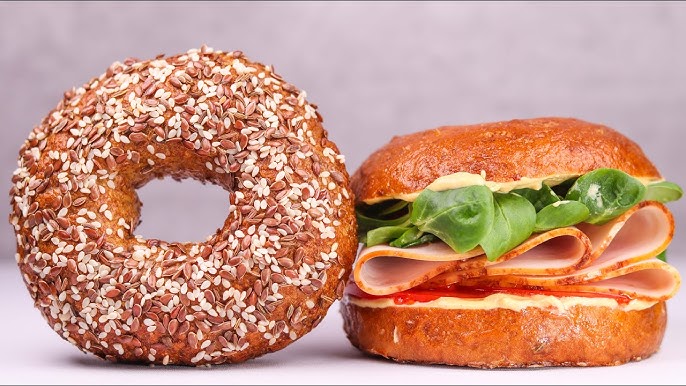
Proper baking techniques finalize texture:
- Bake bagels at 220°C (425°F) to achieve a crisp crust.
- Introduce steam in the oven by placing a pan of water or spraying water during the first 5 minutes of baking.
- Steam delays crust formation, allowing expansion, and contributes to a shiny crust.
Trick 8: Cool Bagels Properly Before Slicing
Final texture setting is important:
- Allow bagels to cool completely on a wire rack to set the crumb.
- Slicing too soon can result in gummy texture due to residual steam inside.
- Proper cooling preserves the chewiness and overall mouthfeel.
Additional Tips for Flavor Variations
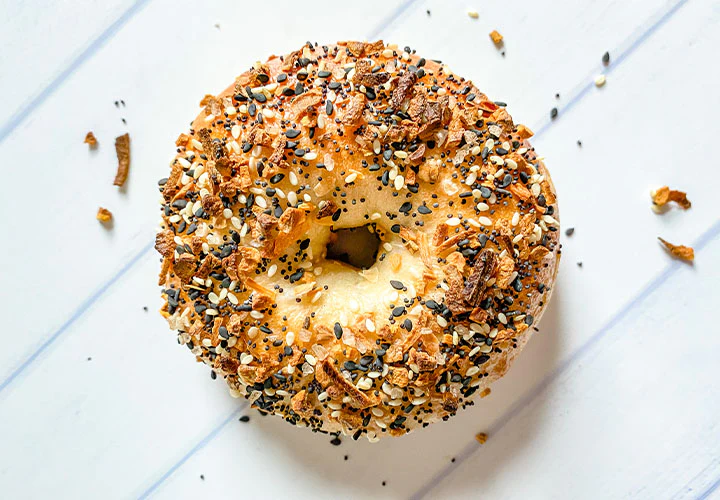
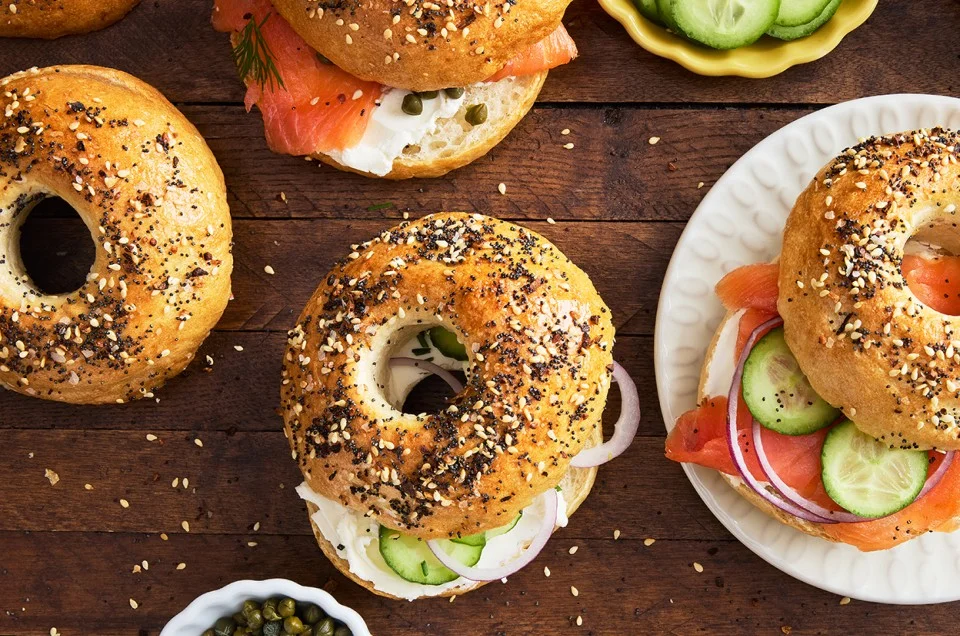
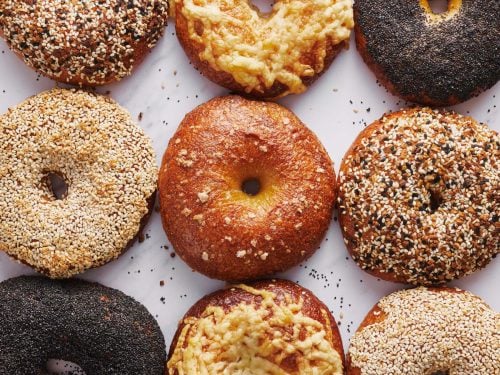
- Seeds and Toppings: Add sesame seeds, poppy seeds, or everything seasoning before baking for enhanced texture and flavor.
- Herbs and Spices: Incorporate dried herbs or spices into the dough for unique twists.
- Whole Wheat or Multigrain Flours: For nutritional enhancement and flavor complexity.
Nutritional Benefits of Homemade Bagels
- Control Over Ingredients: No preservatives or artificial additives.
- Reduced Unhealthy Fats: Customize fats and oils to suit dietary needs.
- Whole Grain Options: Boost fiber and micronutrients by using whole wheat or multigrain flours.
- Vegetarian-Friendly: Suitable for vegan diets when animal products are excluded.
Conclusion
Achieving chewy bagels at home involves understanding the science of gluten development, fermentation, boiling, and baking. These **8 tricks—selecting high-protein flour, thorough kneading, proper fermentation, precise shaping, boiling, sweetener use, high-temperature baking with steam, and careful cooling—**combine to create bagels with authentic texture and flavor.
This comprehensive guide empowers home bakers and food scientists alike to master vegetarian bagel baking. Exploring ingredient variations and fermentation conditions can further advance research into texture and flavor optimization in plant-based baking.