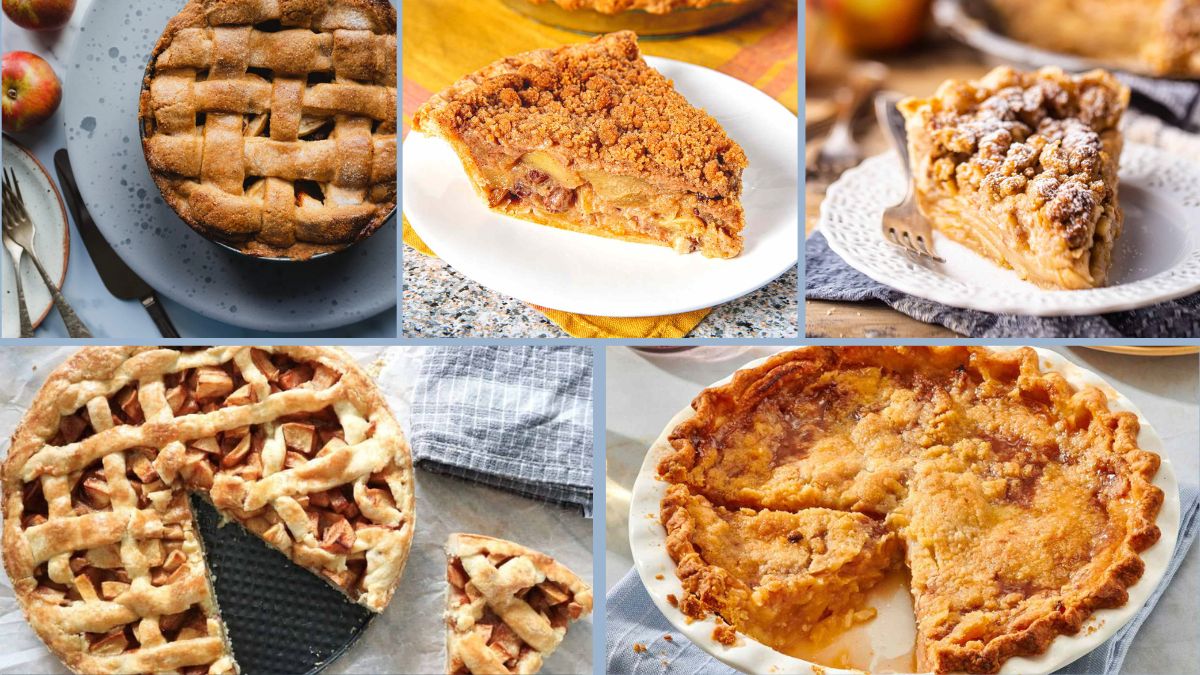
Dutch Apple Pie, also known as Appeltaart, is a centuries-old dessert rooted in the culinary traditions of the Netherlands. Unlike American apple pie, which features a double crust, the Dutch version typically includes a rich, buttery crust filled with spiced apples and topped with either a streusel topping or a beautiful lattice pattern.
While traditionally made with butter and sometimes eggs, this article presents a 100% vegetarian-friendly version, keeping the integrity and flavor of the original while omitting any animal-derived ingredients (no eggs, no gelatin, no lard, etc.).
Perfect for culinary arts research, food science studies, and those interested in European desserts, this guide explores 6 essential steps to create an authentic Dutch apple pie from scratch—crust to filling to baking.
What Makes Dutch Apple Pie Unique?
- Deep Dish Style: The pie is typically taller than standard pies, offering a generous apple filling.
- Cinnamon-Rich Apples: The filling is heavily spiced with cinnamon and sometimes nutmeg or cloves.
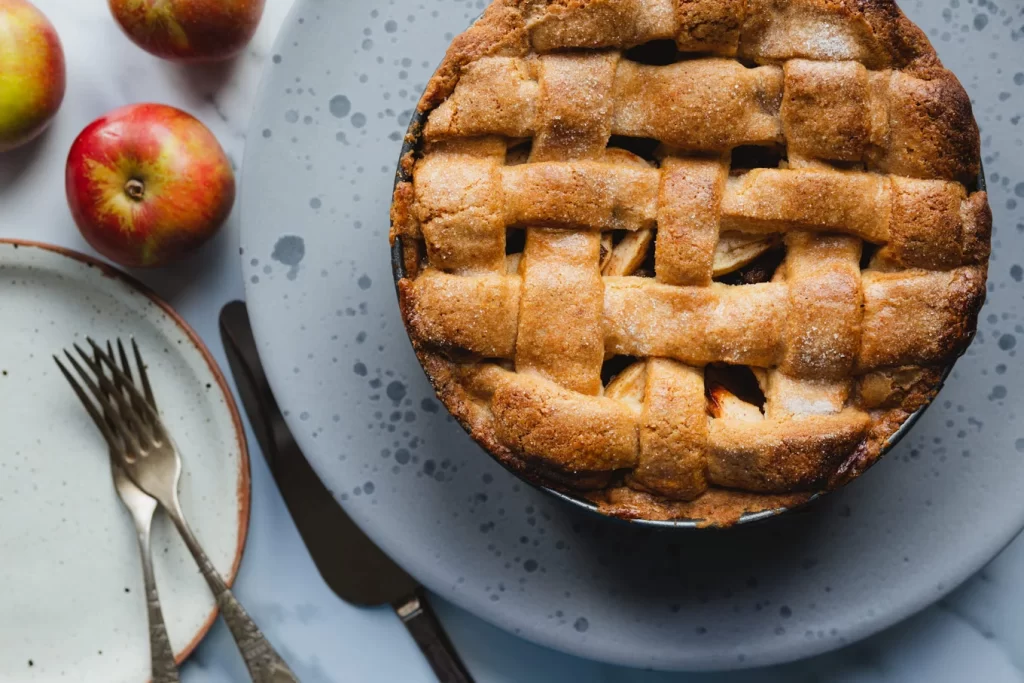
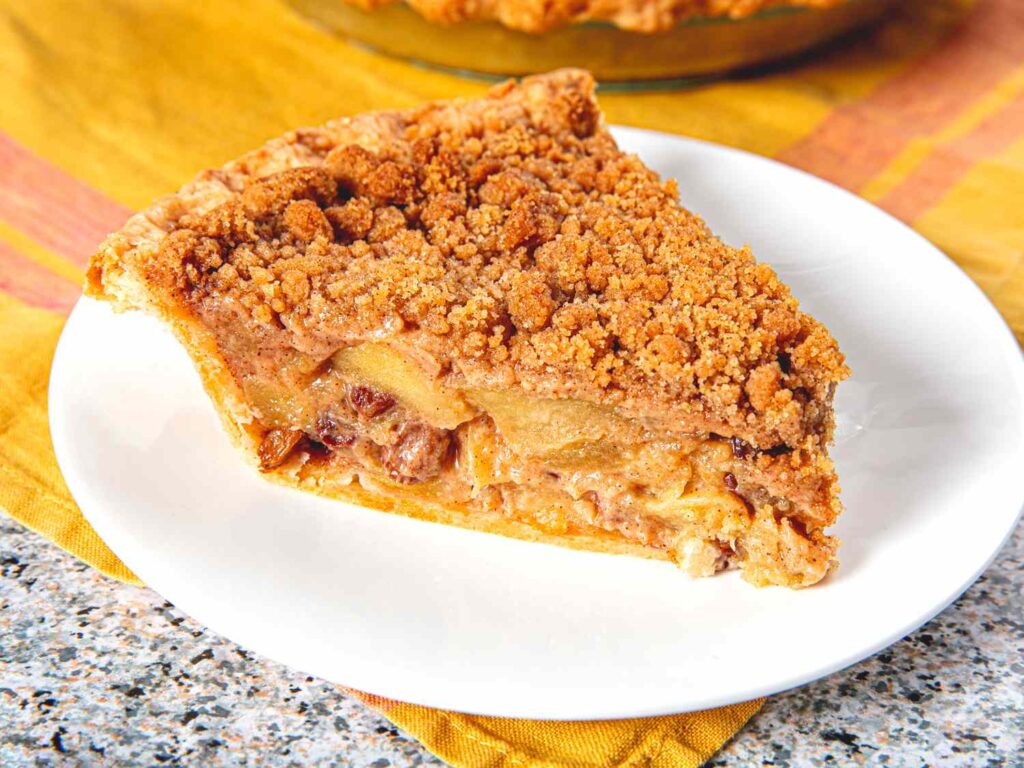
- Lattice or Streusel Top: A decorative top is a signature feature, often made with the same dough as the crust.
- Shortcrust Base: Uses a buttery shortcrust pastry, distinct from flaky pie crusts.
- Vegetarian by Nature: Easily adapted without compromising flavor or texture.
Ingredients Overview (Vegetarian-Friendly)
For the crust:
- 2½ cups (300g) all-purpose flour
- ½ cup (100g) granulated sugar
- 1 tsp baking powder
- Pinch of salt
- ¾ cup (170g) unsalted plant-based butter (e.g., vegan butter)
- 2 tbsp plant-based milk (oat, almond, soy)
- 1 tsp vanilla extract
For the filling:
- 5–6 medium tart apples (like Granny Smith or Jonagold), peeled and sliced
- ⅓ cup (70g) brown sugar
- 2 tbsp lemon juice
- 2 tsp ground cinnamon
- 1 tsp cornstarch (optional, to thicken juices)
- Optional: a handful of raisins or chopped nuts
For finishing:
- Extra plant-based milk for brushing
- Optional: turbinado sugar for sprinkling
Step 1: Prepare the Shortcrust Dough
The base of a Dutch apple pie is its sturdy, cookie-like crust. It holds the weight of the tall apple filling and provides a tender bite.
Instructions:
- In a large bowl, combine flour, sugar, salt, and baking powder.
- Add chilled plant-based butter in cubes. Use your hands or a pastry cutter to blend until the mixture resembles coarse breadcrumbs.
- Add plant milk and vanilla. Mix gently until a soft dough forms.
- Divide into two portions (1 slightly larger for the base, 1 smaller for the top).
- Wrap and refrigerate for at least 30 minutes to firm up.
Pro Tip: Overworking the dough will make it tough. Mix only until just combined.
Step 2: Make the Apple Filling
Choose firm, tart apples for best results—they hold their shape and contrast beautifully with the sweet crust.
Instructions:
- Peel, core, and slice apples uniformly for even baking.
- Toss apples with lemon juice to prevent browning.
- Add brown sugar, cinnamon, and cornstarch (if using) to coat the apple slices.
- Let the filling rest for 10–15 minutes so the juices begin to release.
Optional Add-ins: Soaked raisins, dried cranberries, or chopped walnuts for extra flavor and texture.
Step 3: Line the Baking Pan
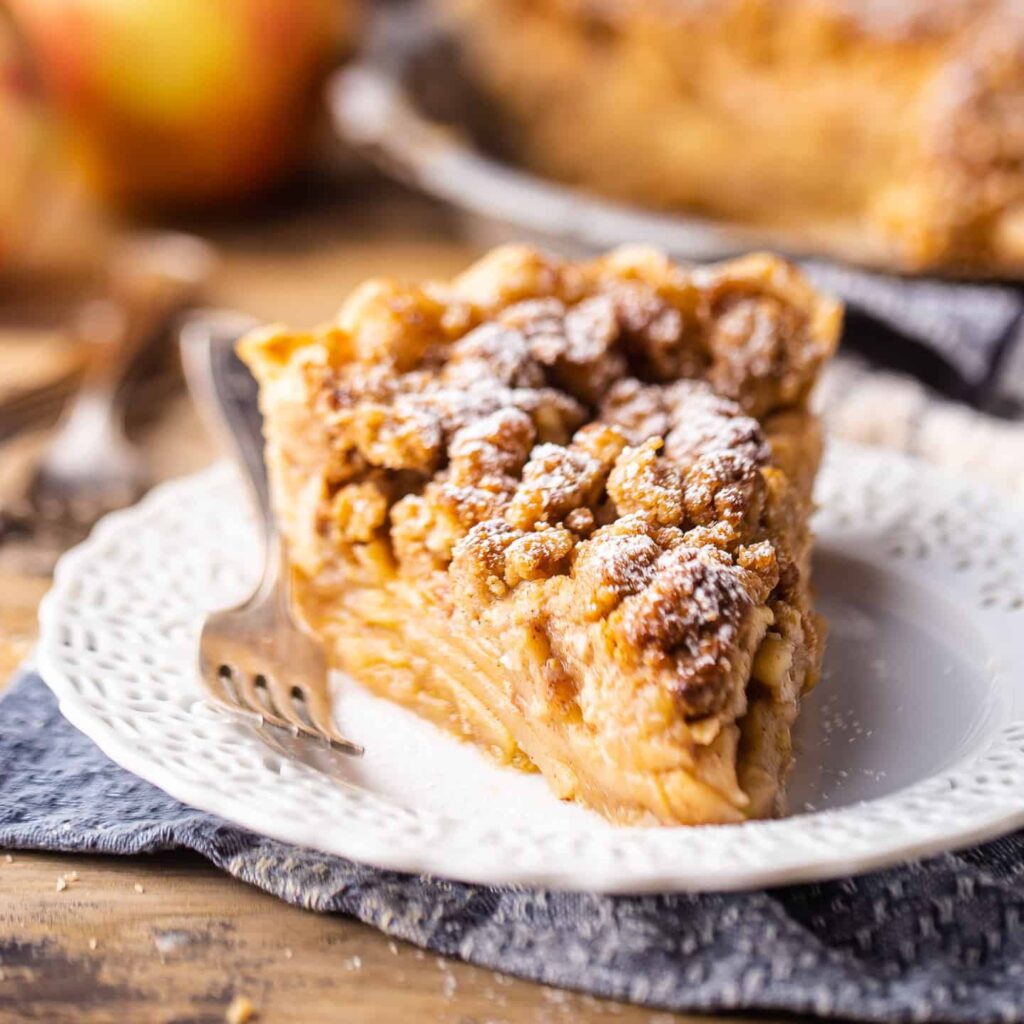
A springform pan (8 or 9-inch) is traditionally used for Dutch apple pies because of their depth and ease of release.
Instructions:
- Preheat oven to 180°C (350°F).
- Grease the pan with a little plant butter or line with parchment paper.
- Roll out the larger portion of the dough between two sheets of parchment to about ¼-inch thickness.
- Press into the bottom and sides of the springform pan, trimming the top edges neatly.
Tip: Patch any cracks with excess dough to prevent leakage.
Step 4: Assemble the Pie
Instructions:
- Pour the apple filling into the prepared crust and press it down gently to fit.
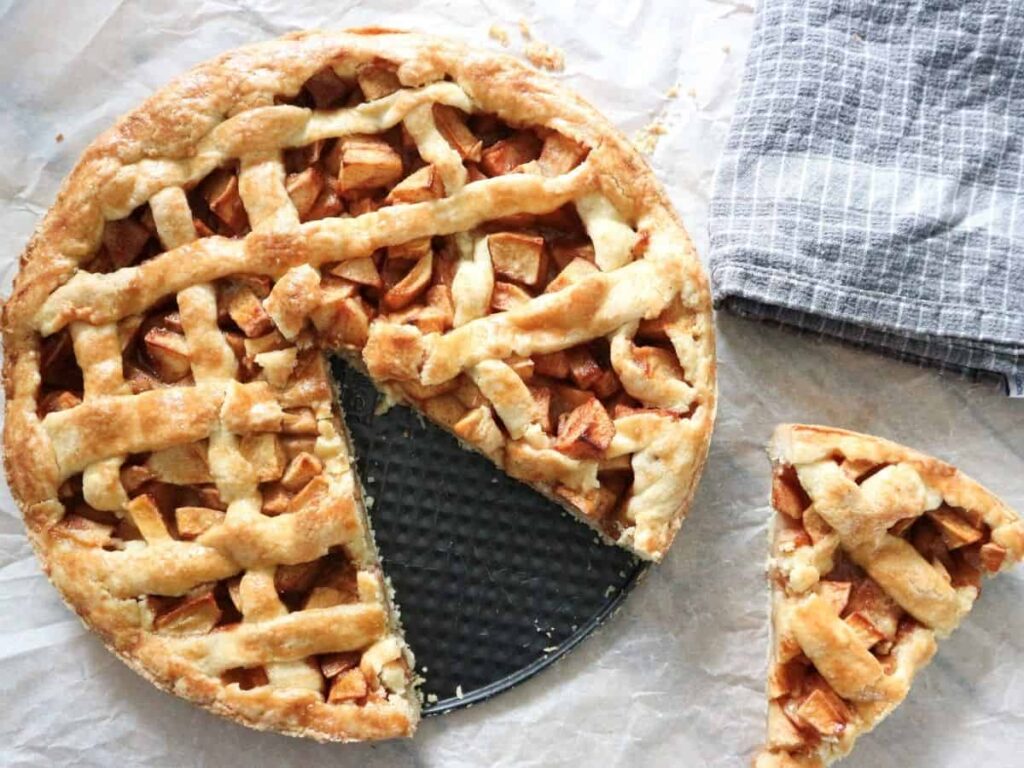
- Roll out the remaining dough and cut into strips for a lattice pattern or cover entirely and cut slits for steam.
- Lay strips over the top in a criss-cross fashion or weave into a classic lattice. Press edges to seal.
Optional Step: Brush the top with plant-based milk for shine and sprinkle with turbinado sugar for crunch.
Step 5: Bake to Golden Perfection
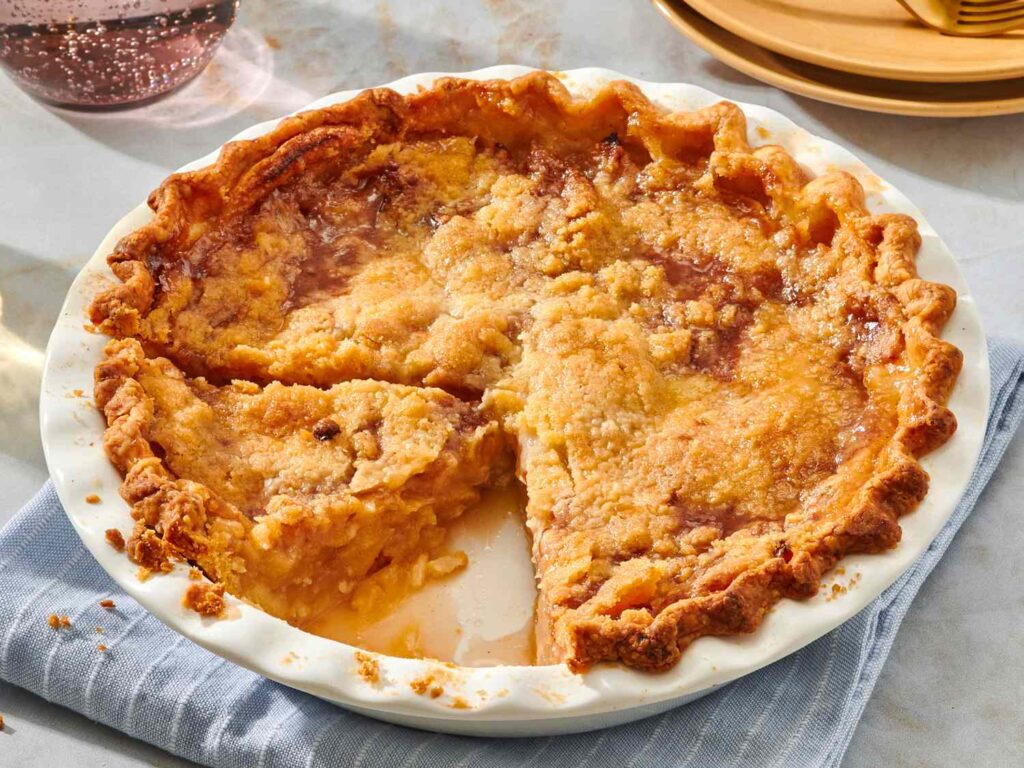
Dutch apple pie requires a longer baking time than flatter pies due to its height.
Instructions:
- Place pie in the preheated oven.
- Bake for 50–60 minutes, or until the top is golden brown and the filling is bubbling.
- If the top browns too quickly, tent loosely with foil halfway through.
Tip: Place a baking tray under the pan to catch any drips during baking.
Step 6: Cool and Serve
Instructions:
- Allow the pie to cool in the pan for 15 minutes, then release the springform ring.
- Let cool fully on a wire rack for at least 1 hour—this helps the filling set and flavors develop.
- Serve warm or at room temperature.
Serving Suggestions:
- With vegan whipped cream or dairy-free vanilla ice cream
- A dusting of powdered sugar
- Drizzled with maple syrup or caramel (vegan-friendly)
Nutritional Highlights (Per Slice Estimate)
| Nutrient | Approx. Value |
|---|---|
| Calories | 300–350 kcal |
| Total Fat | 12–15g |
| Saturated Fat | ~3g (depending on butter) |
| Carbohydrates | 50g |
| Fiber | 3–5g |
| Protein | 3–4g |
| Cholesterol | 0mg (fully plant-based) |
Note: These values vary based on portion size and specific ingredients.
Why This Recipe Works (Food Science Insight)
- High-Fat Shortcrust: Creates a tender yet sturdy structure due to low water and high fat.
- Apple Acidity: Lemon juice preserves color and balances the pie’s sweetness.
- Cinnamon Activation: Warming spices enhance aroma during baking, and sugar helps draw out apple moisture.
- Juice Thickening: Cornstarch prevents sogginess by gelling apple juices during baking.
- Tall Crust Walls: Traditional deep-dish style allows for generous apple filling without spillage.
Conclusion
Baking an authentic Dutch apple pie at home is both a rewarding culinary experience and an excellent example of how traditional recipes can be adapted to vegetarian and plant-based diets without losing authenticity. By following these 6 detailed steps—from crafting the perfect shortcrust to layering spiced apples and creating a beautiful lattice—you’ll achieve a rich, flavorful pie with a soft yet structured bite and warm, fragrant filling.
Whether you’re presenting this as part of a culinary thesis, teaching a baking class, or simply exploring plant-based European desserts, this recipe balances tradition with modern dietary preferences.