
Minestrone soup is a cornerstone of Italian home cooking. Its hearty blend of vegetables, beans, and pasta or grains makes it a nourishing, all-in-one meal. Traditionally, recipes may include meat or cheese, but a plant-based approach can produce a soup just as flavorful, filling, and comforting. The key lies in choosing ingredients thoughtfully, layering flavors, and respecting cooking techniques that bring out the best in each component.
This article explores seven essential tips to craft a cozy, wholesome, and fully vegetarian minestrone soup.
Tip 1: Start with Fresh, Seasonal Vegetables

The soul of minestrone is its vegetables. Using fresh, seasonal produce ensures optimal flavor and nutrition.
- Core Vegetables: Carrots, celery, zucchini, and potatoes form the base.
- Seasonal Additions: Tomatoes, green beans, bell peppers, or leafy greens enhance color, flavor, and nutrients.
- Aromatics: Onion and garlic provide foundational savory notes.
Pro Tip: Chop vegetables uniformly for even cooking. Hard vegetables like carrots and potatoes should be cut slightly smaller than softer ones, ensuring a consistent texture in the finished soup.
Food Science Insight: Vegetables release soluble fibers and natural sugars when simmered, which contribute both to body and subtle sweetness in the broth.
Tip 2: Choose the Right Beans for Body and Protein

Beans are essential in minestrone, adding heartiness and plant-based protein.
- Traditional Options: Cannellini, borlotti, or kidney beans are ideal.
- Preparation: Soak dried beans overnight or use canned beans (rinsed) for convenience.
- Cooking Note: Add dried beans early to ensure they soften fully. Canned beans should be added later to prevent overcooking.
Science Insight: Beans contain soluble fiber, which thickens the soup naturally and supports digestive health. Cooking beans with aromatics enhances their flavor through absorption of surrounding compounds.
Tip 3: Layer Flavors with Herbs and Spices
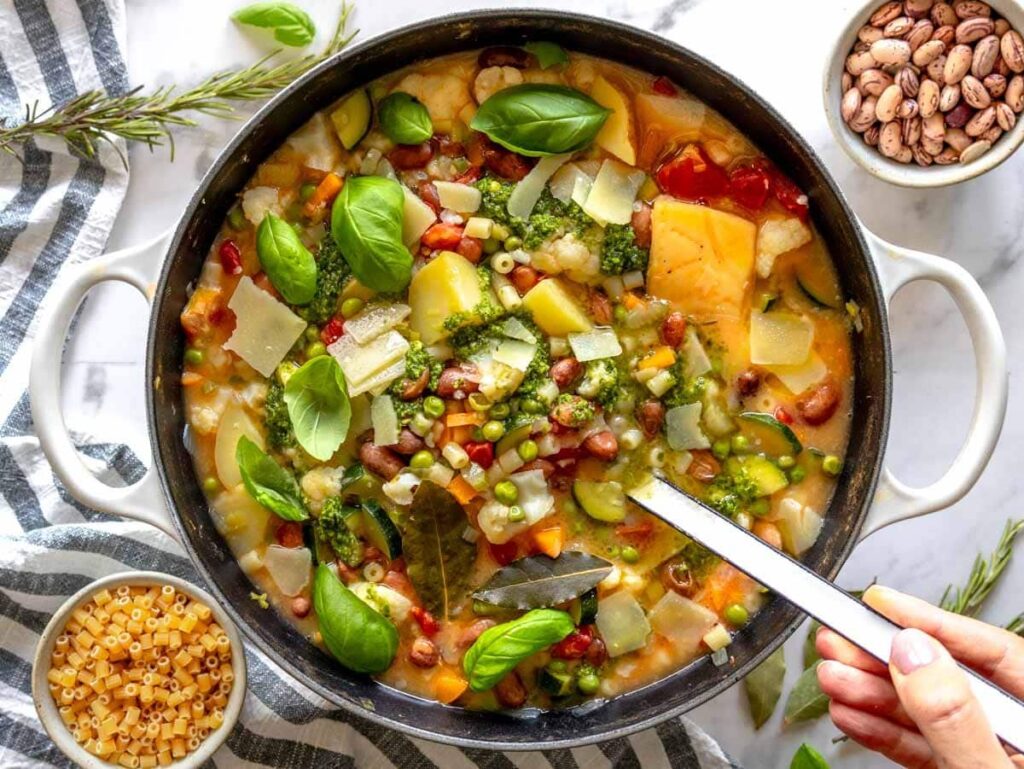
Minestrone is all about layered flavor. Season gradually to build complexity.
- Dried Herbs: Thyme, oregano, rosemary, and bay leaves create an aromatic base.
- Fresh Herbs: Basil, parsley, or cilantro added at the end provide brightness.
- Spices: A pinch of black pepper or crushed red pepper flakes adds subtle warmth.
- Umami Boosters: Add tomato paste, roasted vegetables, or a splash of soy sauce for depth.
Pro Tip: Toast dried herbs lightly in oil before adding vegetables to release their essential oils and enhance aroma.
Food Science Note: Layered seasoning balances sweetness, acidity, and saltiness, creating a soup that tastes richer without extra fat or animal products.
Tip 4: Select the Perfect Liquid Base
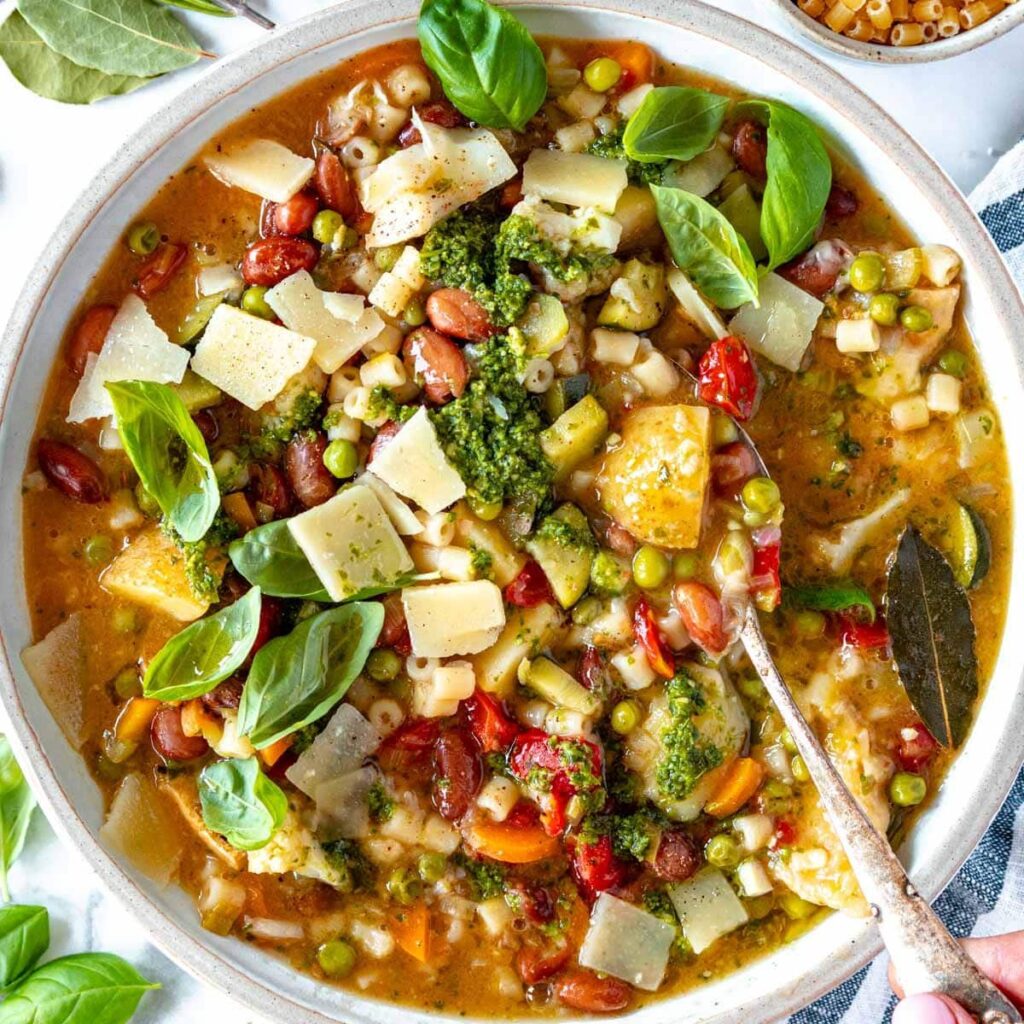
The cooking liquid binds the ingredients and influences the soup’s character.
- Vegetable Broth: Provides depth and a savory foundation. Homemade broth is ideal for maximum flavor.
- Tomato-Based Broth: Crushed tomatoes or passata add color, acidity, and natural umami.
- Water: Can be used in a pinch, though flavor may be lighter.
Pro Tip: Combine broth with crushed tomatoes for a classic minestrone profile, balancing savory depth and tangy brightness.
Science Insight: Slow simmering allows water-soluble flavor compounds from vegetables, herbs, and beans to infuse into the liquid, creating a unified and aromatic broth.
Tip 5: Cook Pasta or Grains Separately
Traditional minestrone often includes pasta, rice, or barley. Cooking them correctly prevents mushy textures.
- Separate Cooking: Boil pasta or grains in a separate pot and add them to individual servings to maintain integrity.
- Timing: Add grains or small pasta shapes in the final 5–10 minutes for batch cooking, ensuring they remain al dente.
- Alternative Grains: Quinoa, farro, or barley provide extra nutrition and texture variety.
Science Insight: Cooking pasta separately prevents it from absorbing too much liquid, which could thicken the soup excessively and alter texture. It also allows better portion control.
Tip 6: Simmer Gently for Maximum Flavor
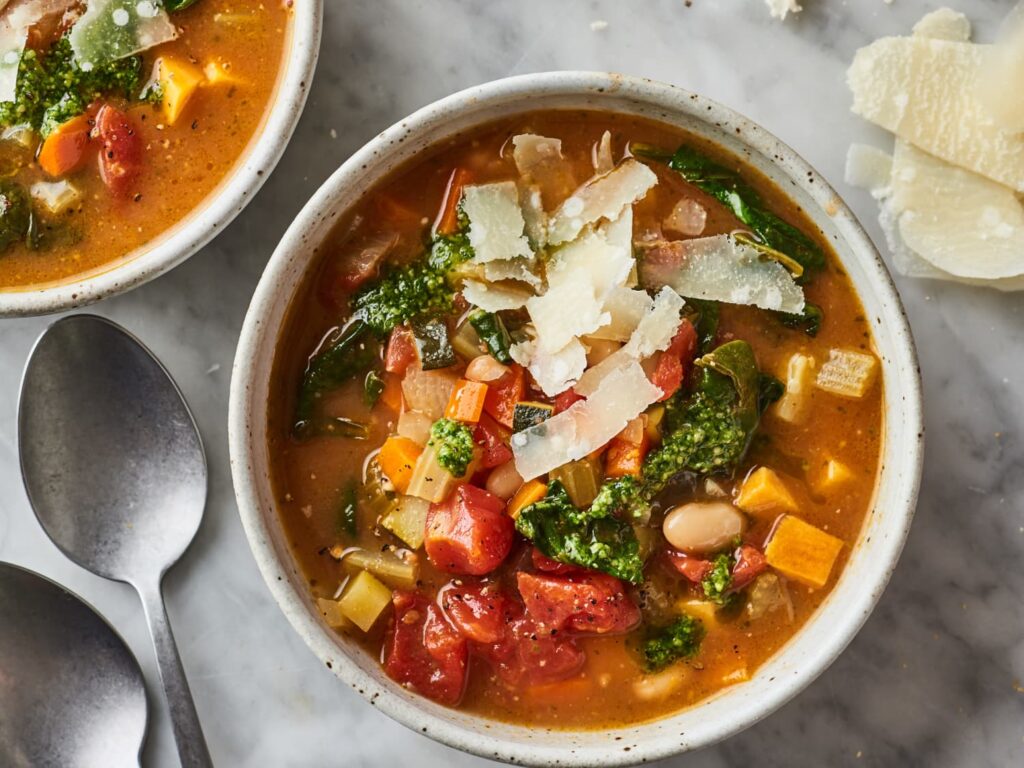
Minestrone requires time for flavors to meld.
- Low and Slow: Simmer on low heat to allow vegetables and beans to soften evenly.
- Stir Occasionally: Prevents sticking and ensures even cooking.
- Consistency Check: If the soup is too thick, adjust with broth or water; if too thin, simmer uncovered to reduce.
Pro Tip: Cover partially to retain steam but allow evaporation for flavor concentration.
Science Insight: Slow simmering promotes gelatinization of starches from potatoes, beans, or grains, naturally thickening the soup and enhancing mouthfeel.
Tip 7: Finish with Fresh Herbs and Textural Accents
Finishing touches elevate the soup from good to unforgettable.
- Fresh Herbs: Parsley, basil, or chives brighten flavor and add visual appeal.
- Acidity: A splash of lemon juice or vinegar at the end balances richness and enhances flavors.
- Texture: Toasted nuts, seeds, or croutons provide crunch and contrast.
- Serving Suggestions: Serve with warm rustic bread, focaccia, or whole-grain rolls to complement the hearty soup.
Cultural Note: In Italy, minestrone is often served family-style as a warming midday meal, especially in autumn and winter. Its adaptability reflects both practicality and tradition.
Conclusion
Minestrone soup is more than a dish—it is a celebration of vegetables, beans, and herbs, showcasing how simple ingredients can create a deeply nourishing and satisfying meal. By following these seven tips—selecting fresh vegetables, choosing the right beans, layering herbs and spices, selecting an appropriate liquid base, cooking grains separately, simmering gently, and finishing with fresh herbs and textures—you can craft a vegetarian minestrone that is both cozy and authentic.
Plant-based minestrone proves that flavor, richness, and satisfaction do not require meat or dairy. Instead, the natural starches, fibers, and aromatic compounds in vegetables, beans, and grains combine to create a soup that is hearty, balanced, and versatile.
Whether enjoyed on a crisp winter evening, shared with friends, or packed for lunch, a well-prepared minestrone soup embodies comfort, nutrition, and the timeless joy of homemade cooking. With attention to ingredients and technique, every spoonful delivers warmth, flavor, and a true taste of Italian culinary heritage.