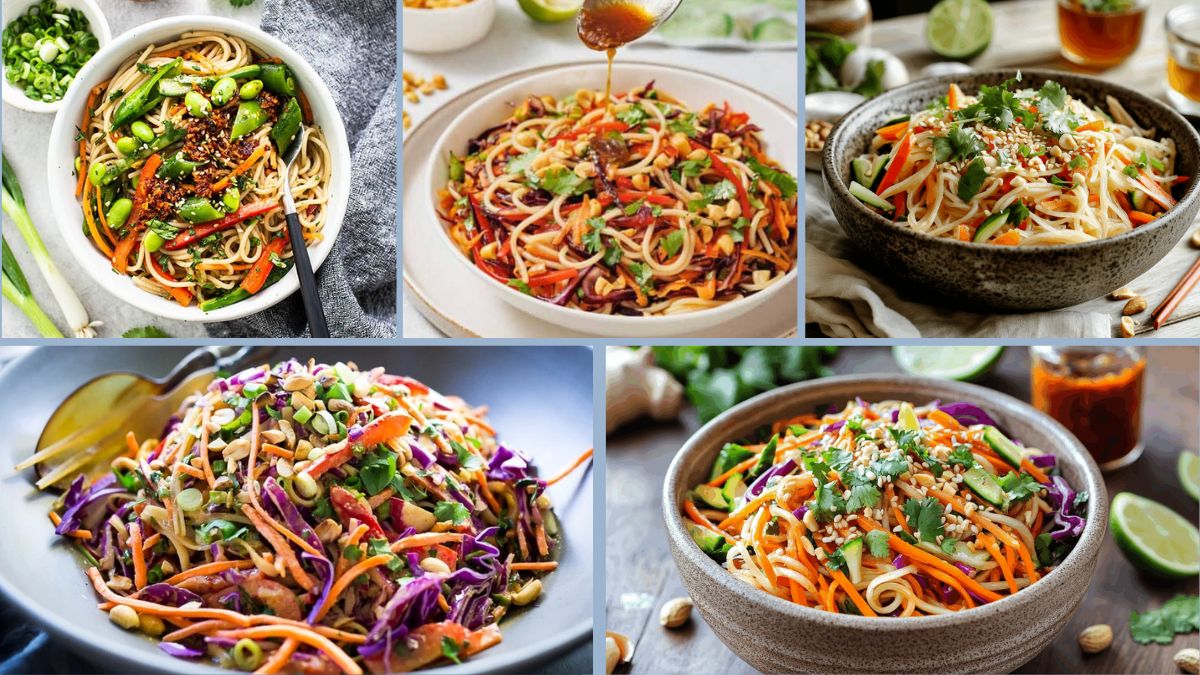
Asian noodle salads are beloved for their freshness, versatility, and bold flavor combinations. Unlike heavy pasta salads, these bowls bring together crisp vegetables, vibrant herbs, chewy noodles, and lively dressings that harmonize sweet, sour, salty, spicy, and umami notes. When done right, every bite is refreshing, balanced, and deeply satisfying.
However, achieving the perfect balance of flavors in an Asian noodle salad requires more than simply tossing noodles with vegetables. It’s about understanding the interplay of textures, aromas, and seasonings. Here are six secrets to help you master the art of flavor harmony in Asian noodle salads, creating dishes that are both nourishing and irresistible.
Secret 1: Choose the Right Noodles
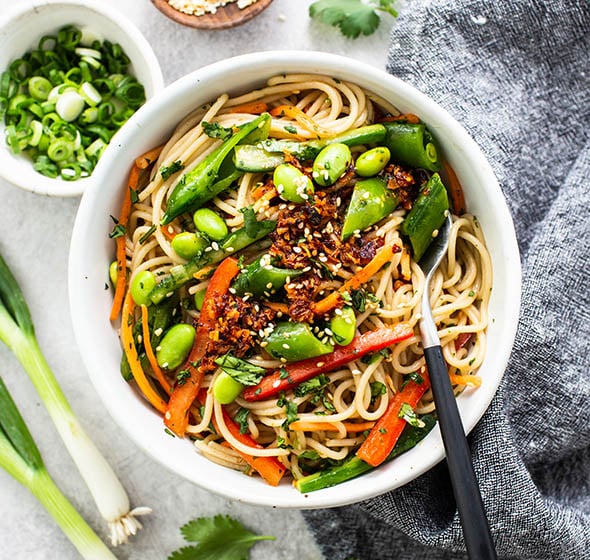
The noodle forms the foundation of the salad, influencing both texture and how flavors are absorbed.
- Rice Noodles: Light and slightly chewy, they soak up dressings beautifully. Ideal for Thai- or Vietnamese-inspired salads.
- Soba (Buckwheat) Noodles: Nutty and earthy, with a firm bite. Excellent for Japanese-style salads.
- Glass Noodles (Mung Bean or Sweet Potato): Transparent and slippery, perfect for lighter salads.
- Whole Wheat or Brown Rice Pasta: A nutritious option for those seeking extra fiber.
Pro Tip: Cook noodles until just al dente, then rinse under cold water to stop cooking and prevent clumping. Toss with a teaspoon of sesame oil to maintain separation and add subtle aroma.
Science Insight: Starch on noodle surfaces thickens dressings and helps them cling. Rinsing reduces excess starch but retains enough for flavors to adhere effectively.
Secret 2: Balance the Five Key Flavors
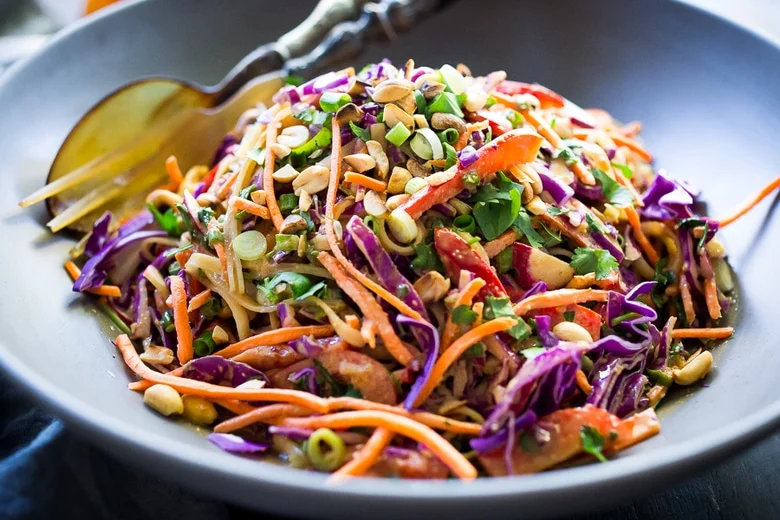
Asian cuisine is known for balancing five core tastes: sweet, sour, salty, spicy, and umami. Mastering this balance is the heart of a great noodle salad.
- Sweet: Maple syrup, agave, or palm sugar soften acidity and heat.
- Sour: Rice vinegar, lime juice, or tamarind brighten flavors.
- Salty: Soy sauce, tamari, or sea salt enhance natural notes.
- Spicy: Fresh chilies, chili flakes, or sriracha bring warmth.
- Umami: Miso paste, nutritional yeast, or mushrooms add depth.
Pro Tip: Start light with each flavor and build gradually, tasting frequently until the balance feels right.
Food Science Insight: Taste receptors for sweet, sour, salty, bitter, and umami interact synergistically, so when properly balanced, flavors appear more complex and satisfying.
Secret 3: Layer Crunchy, Fresh Vegetables
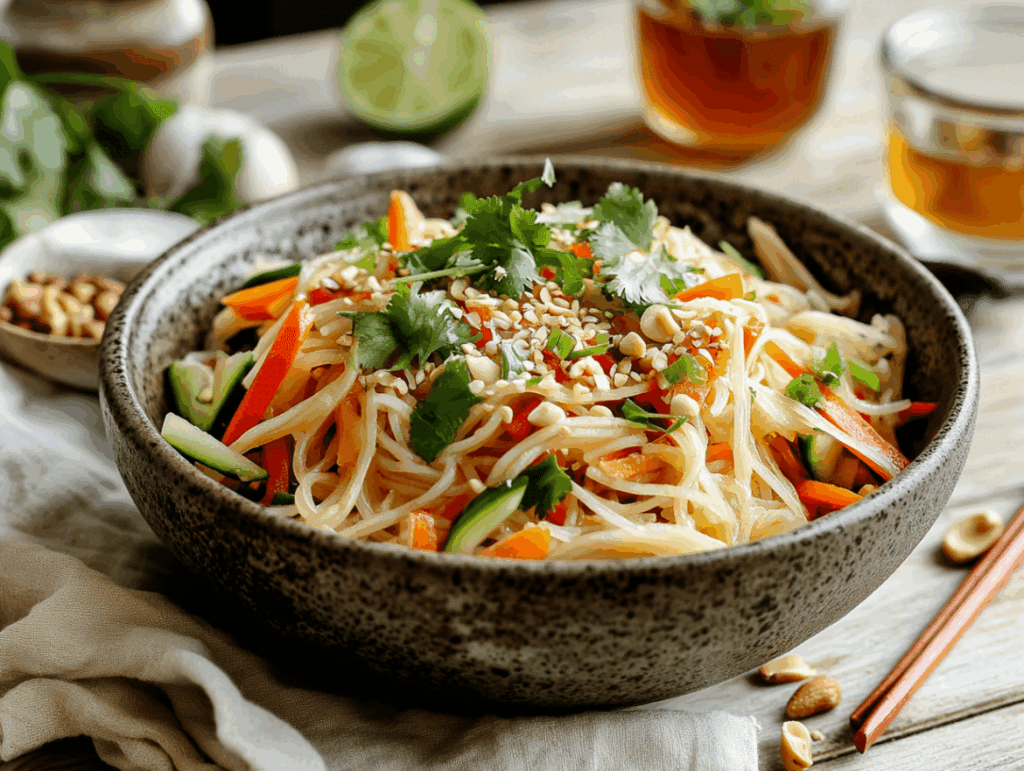
Vegetables add texture, freshness, and nutritional value, transforming noodles into a vibrant salad.
- Classic Choices: Shredded carrots, bell peppers, cucumbers, and cabbage.
- Leafy Additions: Spinach, napa cabbage, or bok choy for bulk and crunch.
- Creative Extras: Edamame, bean sprouts, radishes, or snow peas.
Pro Tip: Slice vegetables thinly (julienne or ribbon-cut) for elegant presentation and easier eating with chopsticks.
Nutrition Insight: Raw vegetables provide vitamins, antioxidants, and hydration. The combination of crisp vegetables and chewy noodles makes each bite texturally exciting.
Styling Hack: Group vegetables in sections before tossing. This not only enhances presentation but also allows eaters to see the rainbow of ingredients before mixing.
Secret 4: Build Flavor with Herbs and Aromatics
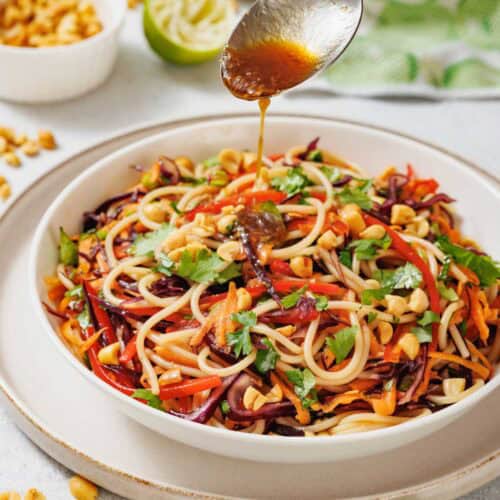
Herbs and aromatics elevate the salad from good to extraordinary.
- Herbs: Cilantro, mint, basil, and Thai basil add brightness and fragrance.
- Aromatics: Garlic, scallions, ginger, and lemongrass create depth.
- Method: Mince aromatics finely and mix into the dressing for maximum flavor distribution.
Pro Tip: Add delicate herbs just before serving to preserve color and aroma.
Science Insight: Herbs contain volatile oils that are sensitive to heat and air exposure. Adding them at the end keeps flavors vibrant and aromatic.
Secret 5: Create a Bold, Harmonious Dressing
The dressing ties the noodles, vegetables, and proteins together into a cohesive dish.
- Base Ingredients: Soy sauce or tamari for salt, lime juice or rice vinegar for acid, sesame oil for richness.
- Creamy Option: Peanut or almond butter whisked into the dressing creates a nutty, hearty variation.
- Balancing Trick: Add a small amount of water to thin the dressing without diluting flavor.
Pro Tip: Whisk dressing until emulsified, or shake in a jar for quick blending. Toss noodles with half the dressing first, then add more as needed to avoid overdressing.
Science Insight: Oil and vinegar-based dressings rely on emulsification, where small droplets of fat are suspended in water-based liquids, ensuring even coating and flavor distribution.
Secret 6: Garnish for Texture and Visual Appeal
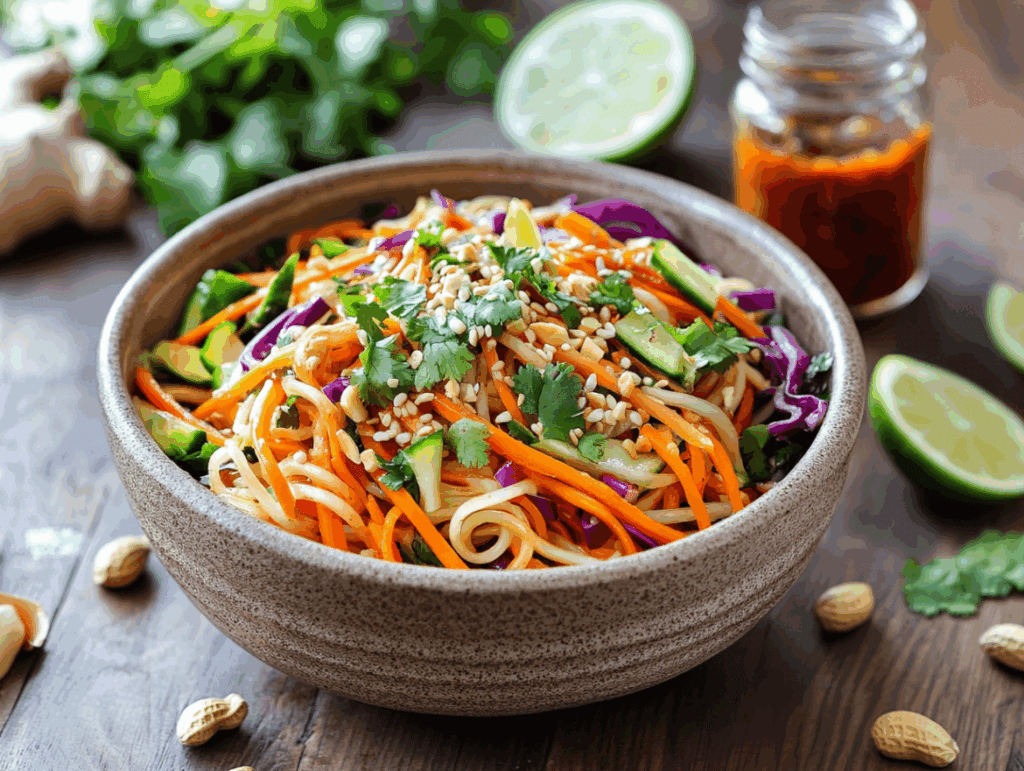
The final touch makes your salad Instagram-worthy and enhances flavor contrast.
- Crunch: Toasted peanuts, sesame seeds, or crispy baked tofu cubes.
- Freshness: Lime wedges, microgreens, or thinly sliced scallions.
- Heat Boost: A drizzle of chili oil or a sprinkle of crushed chili flakes.
Pro Tip: Garnish strategically—sprinkle seeds diagonally or cluster herbs in one corner for a professional look.
Cultural Note: In many Asian cuisines, garnishes are not just decorative; they signal freshness, provide balance, and enhance the overall sensory experience.
Bonus Tips for Success
- Make Ahead: Prep vegetables and dressing in advance, but toss just before serving to preserve crunch.
- Protein Boost: Add marinated tofu, tempeh, or seitan for extra satiety.
- Portioning: Assemble in wide, shallow bowls so every element is visible.
- Temperature: Serve slightly chilled or at room temperature; overly cold noodles can dull flavor perception.
- Photography Tip: Arrange components in sections for a colorful, layered look before mixing.
Conclusion
An Asian noodle salad is a celebration of balance: chewy noodles, crisp vegetables, fresh herbs, bold dressings, and thoughtful garnishes. By applying these six secrets—choosing the right noodles, balancing the five key flavors, layering fresh vegetables, building with herbs and aromatics, creating a bold dressing, and finishing with garnishes—you can craft a salad that is both nourishing and visually stunning.
This dish embodies the best of plant-based cooking, demonstrating that rich flavor and texture come from mindful ingredient selection and technique rather than animal products. Each element, from the chewiness of soba to the zing of lime juice, plays a role in achieving harmony.
Whether enjoyed as a light lunch, a centerpiece for dinner, or a show-stopper on Instagram, Asian noodle salad offers a perfect blend of nutrition, artistry, and culinary satisfaction. With these strategies, every bowl can deliver not only nourishment but also an explosion of balanced flavors and vibrant colors.