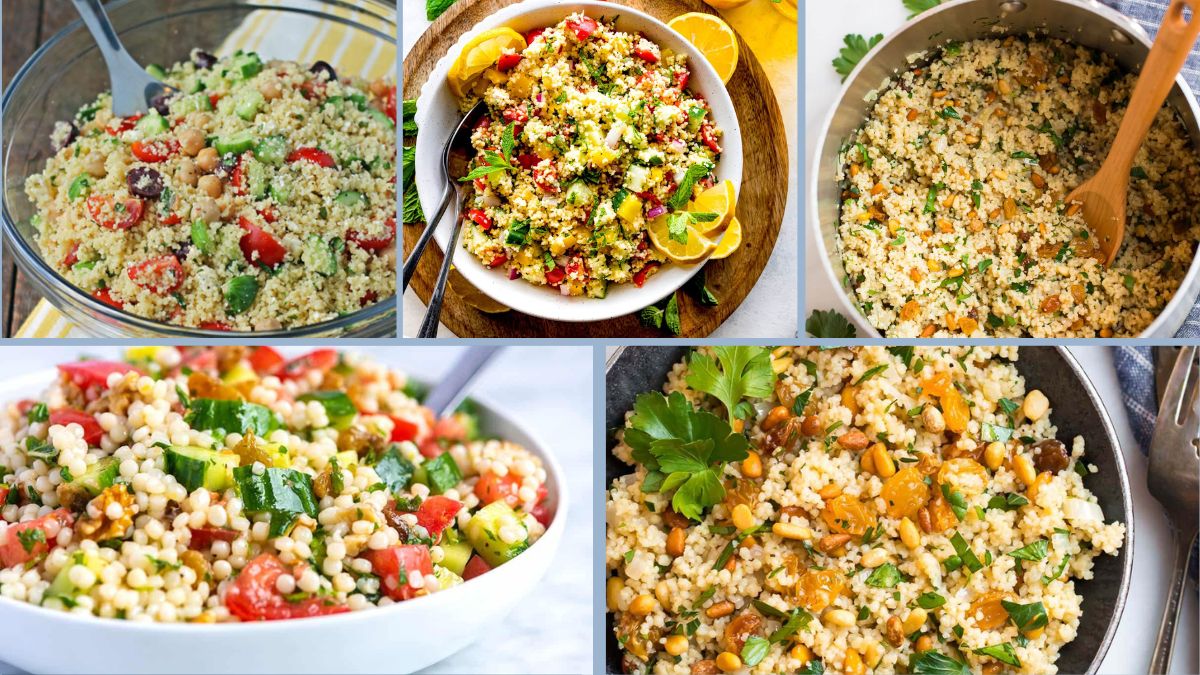
Couscous has long been a staple in North African and Mediterranean kitchens, known for its light texture, quick cooking time, and adaptability to various flavors. It’s more than just a grain substitute—it’s a canvas that beautifully absorbs herbs, spices, and dressings. A couscous salad is not only vibrant and satisfying but also naturally vegetarian-friendly, making it an excellent option for plant-based diets.
Despite its simplicity, a perfectly balanced couscous salad requires thoughtful preparation. It’s not just about tossing grains with vegetables—it’s about texture, flavor layering, and freshness. Here are ten clear, practical steps to guide you toward creating a delicious couscous salad every time.
Step 1: Choose the Right Couscous
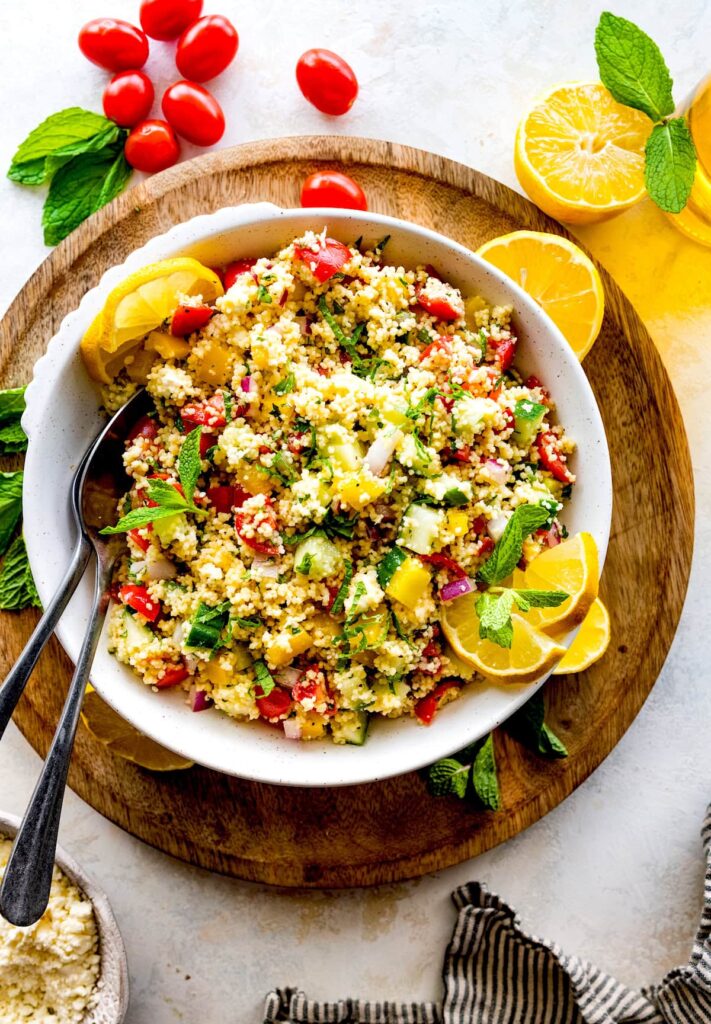
Not all couscous is the same. There are three main varieties:
- Moroccan couscous – the smallest and fastest-cooking type. It fluffs up easily and works wonderfully in salads.
- Israeli (pearl) couscous – larger, rounder pearls that give a chewy, pasta-like bite. Excellent for heartier salads.
- Lebanese couscous – the largest type, requiring longer cooking. It creates a rustic, grainy texture.
For salads, Moroccan couscous is most common because of its quick preparation and light texture. However, using pearl couscous adds a modern twist if you want more chew.
Step 2: Cook with Precision
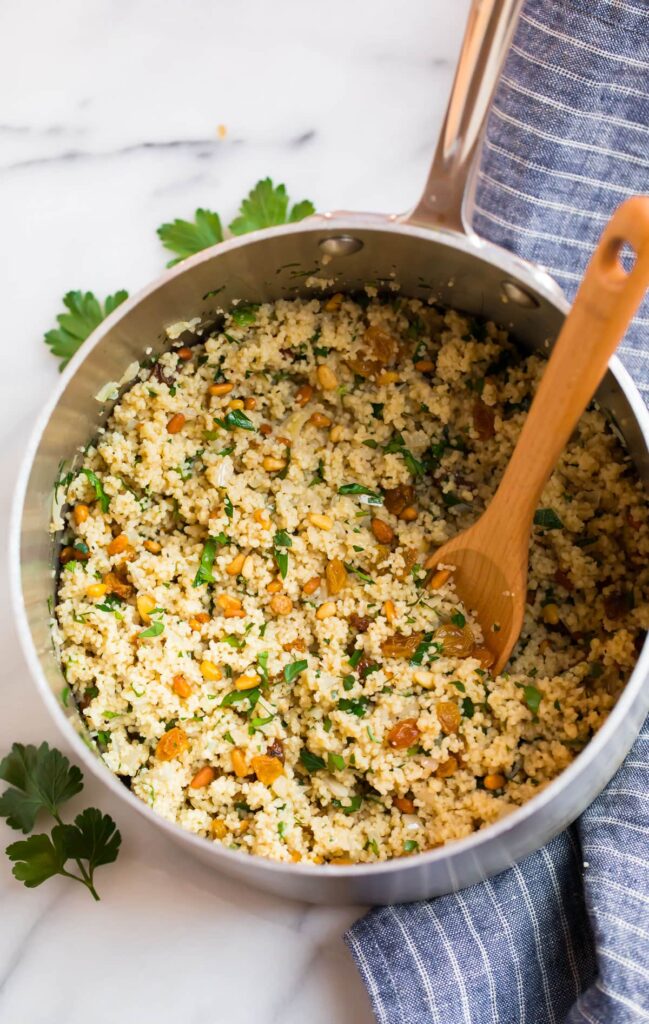
Couscous cooks quickly, but precision makes the difference between fluffy grains and a sticky clump.
- General ratio: 1 cup couscous to 1 cup boiling water or broth.
- Method: Bring liquid to a boil, add couscous, remove from heat, cover, and let sit for 5 minutes.
- Fluffing: After resting, use a fork to separate the grains. Avoid stirring with a spoon, which compresses the texture.
If you are using pearl couscous, cook it like pasta in salted boiling water for 8–10 minutes, then drain and rinse lightly.
Step 3: Infuse Flavor Early
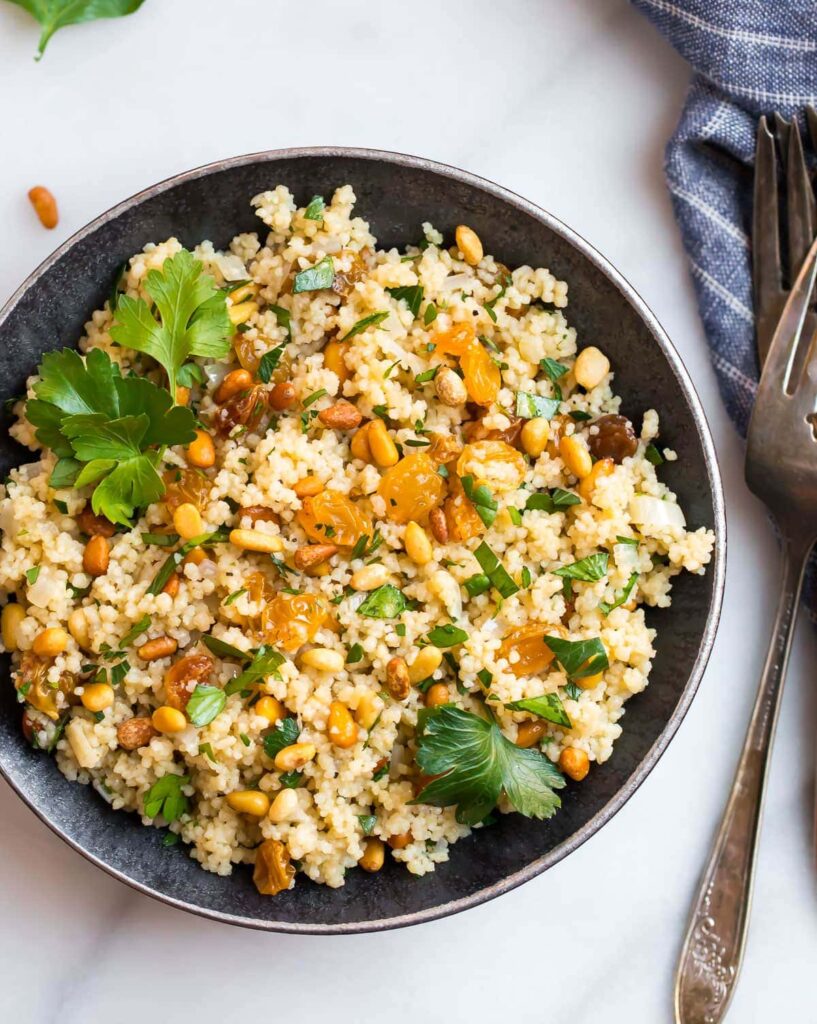
Plain couscous can taste bland. Infusing flavor at the cooking stage elevates your salad.
- Replace water with vegetable broth.
- Add a drizzle of olive oil and a pinch of sea salt before covering.
- Incorporate warm spices like cumin, coriander, or turmeric into the liquid for depth.
This ensures the grains carry flavor rather than relying only on the dressing later.
Step 4: Choose Seasonal Vegetables
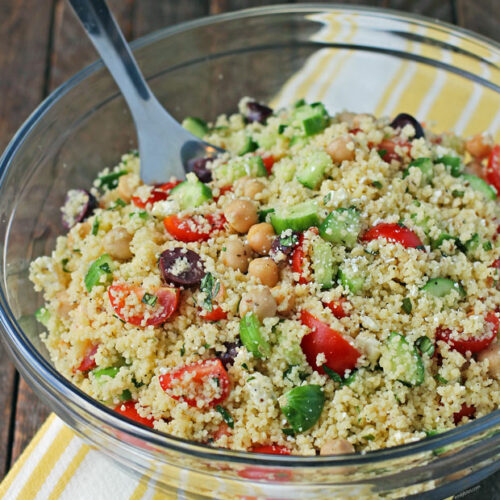
Vegetables bring crunch, freshness, and nutrition. Think beyond cucumber and tomato—seasonality makes your salad vibrant.
- Spring/Summer: Cherry tomatoes, cucumbers, zucchini, bell peppers, corn, fresh herbs.
- Autumn/Winter: Roasted pumpkin, carrots, beetroot, Brussels sprouts, kale.
- Year-round staples: Red onion, celery, spinach, or arugula.
For extra flavor, roast vegetables in olive oil with a touch of paprika or smoked chili before adding them to the couscous. Roasting caramelizes sugars, enhancing taste and aroma.
Step 5: Add Plant-Based Protein
To transform couscous salad from a side dish into a complete meal, add protein-rich plant ingredients:
- Legumes: Chickpeas, black beans, lentils.
- Nuts and seeds: Almonds, pumpkin seeds, sunflower seeds.
- Tofu or tempeh (for fusion variations).
Chickpeas, in particular, pair beautifully with Mediterranean flavors. Toast them with a little olive oil, paprika, and garlic for a crunchy addition.
Step 6: Balance Textures
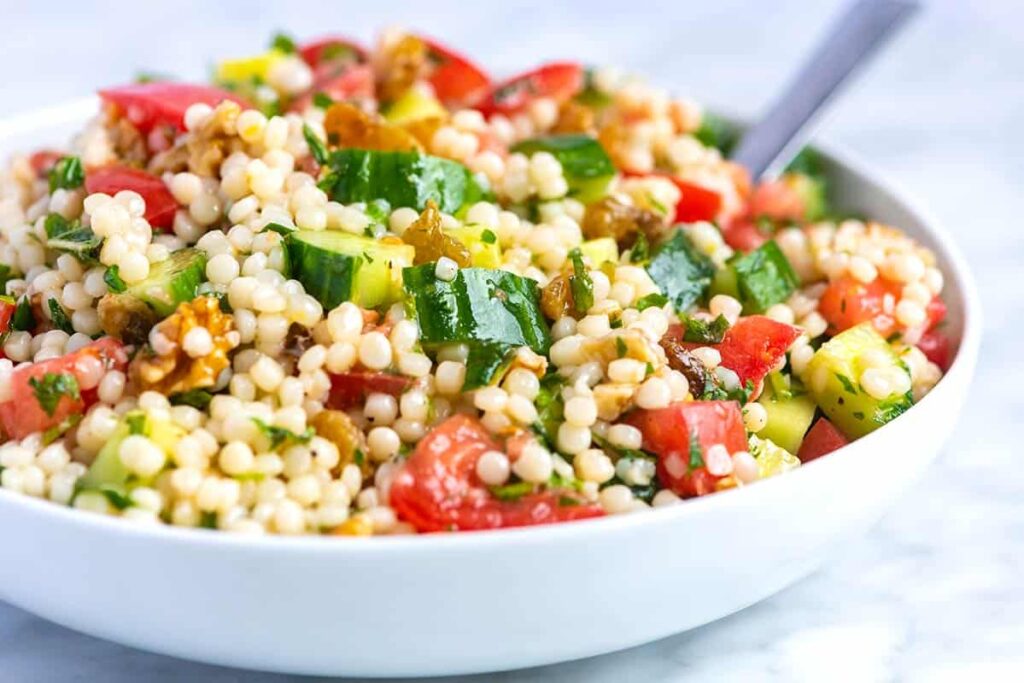
A memorable salad balances softness, crunch, and chewiness. Couscous provides a soft base, but contrast is key.
- Crunch: toasted nuts, seeds, cucumbers, raw carrots.
- Creaminess: avocado chunks, tahini dressing.
- Chewiness: dried fruits like cranberries, apricots, or raisins.
Texture layers prevent monotony and make each bite satisfying.
Step 7: Build a Flavorful Dressing
The dressing ties everything together. A couscous salad benefits from fresh, zesty, and herb-forward dressings.
Classic Lemon-Herb Dressing:
- Juice of 1 lemon
- 3 tablespoons olive oil
- 1 teaspoon Dijon mustard
- 1 clove garlic (minced)
- Fresh herbs: parsley, mint, cilantro
- Salt and pepper to taste
Whisk until emulsified and toss lightly with warm couscous so it absorbs evenly. For variety, try balsamic vinaigrette, tahini-lemon dressing, or harissa-spiced dressing.
Step 8: Use Fresh Herbs Generously
Herbs are not just garnish—they are central to couscous salad flavor. Mint, parsley, cilantro, dill, and basil all work beautifully.
- Use at least ½ cup chopped herbs for every 2 cups of couscous.
- Mix herbs at the last stage to preserve their fragrance and color.
Fresh herbs add a refreshing aroma that elevates the dish from ordinary to gourmet.
Step 9: Allow Time to Marinate
A secret to great couscous salad is patience. When couscous sits with dressing and vegetables, flavors mingle and deepen.
- Let salad rest for 20–30 minutes before serving at room temperature.
- If refrigerating, allow it to come back to room temperature before eating—cold couscous can taste dull.
This step ensures every bite is flavorful, not just the top layer.
Step 10: Garnish and Serve Creatively
Presentation matters, especially for a dish as colorful as couscous salad.
- Sprinkle with pomegranate seeds for brightness.
- Add toasted nuts or seeds for crunch on top.
- Finish with a drizzle of high-quality extra virgin olive oil.
Serve in a large shallow bowl so colors and textures are visible, inviting guests to dive in.
Serving Ideas (All Plant-Based)
Couscous salad is versatile and works across meals:
- As a light lunch – paired with hummus and pita bread.
- As a dinner side – alongside roasted vegetables or stuffed peppers.
- As a picnic dish – easily portable and best served at room temperature.
- As a meal prep option – lasts 3–4 days in the fridge, making it a reliable weekday lunch.
- As a festive dish – with roasted nuts, dried fruits, and colorful garnishes for celebrations.
Conclusion
Creating a delicious couscous salad is both art and technique. It’s about more than simply cooking grains—it’s about selecting seasonal vegetables, layering flavors, balancing textures, and allowing time for flavors to meld. By following these 10 steps, you can craft a couscous salad that is light yet satisfying, nutritious yet indulgent, and always plant-based.
Couscous may be humble, but when prepared thoughtfully, it transforms into a vibrant, colorful, and versatile dish suitable for any occasion. Whether you serve it as a side, main course, or festive centerpiece, couscous salad will always shine with freshness and flavor.