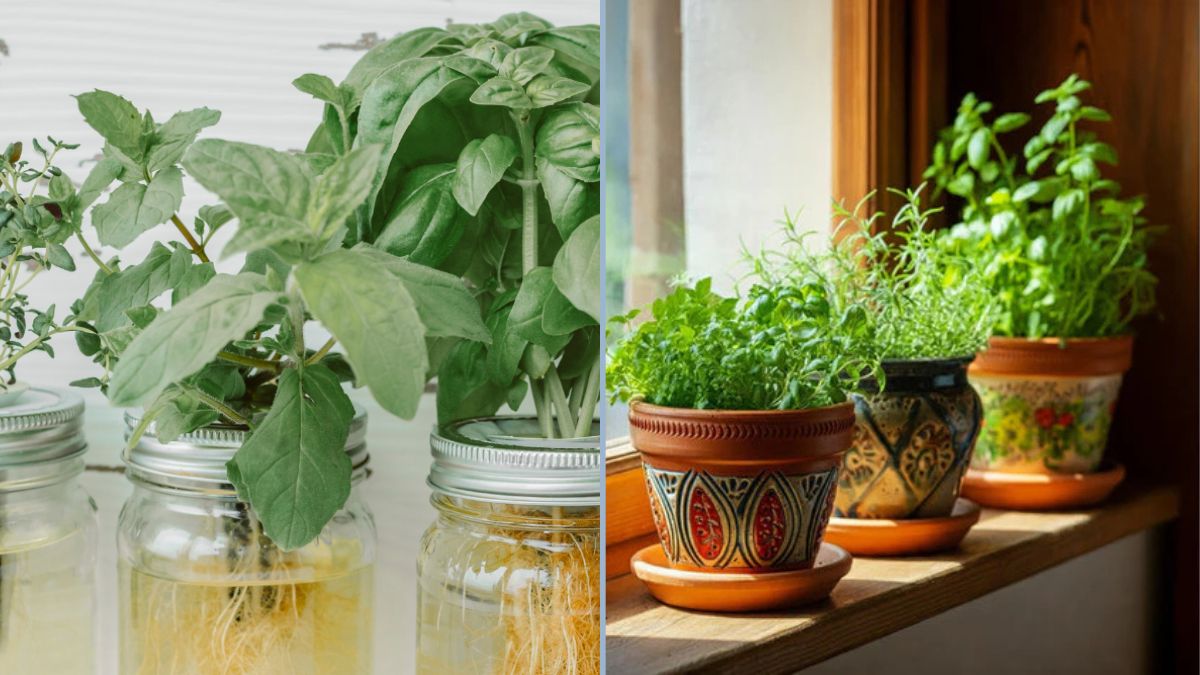
Growing herbs at home no longer requires a sprawling garden or backyard. A simple windowsill with moderate sunlight can become a miniature herb garden that adds freshness, flavor, and fragrance to your cooking. Herbs grown indoors are not only convenient but also chemical-free, budget-friendly, and visually appealing.
Whether you live in a small apartment or a spacious home, growing herbs on your windowsill is one of the easiest and most rewarding gardening methods. This article explores the best herbs for indoor growing, how to plant and care for them, maintenance tips, harvesting techniques, and creative setups—all without using any non-vegetarian materials.
Benefits of Growing Herbs on a Windowsill
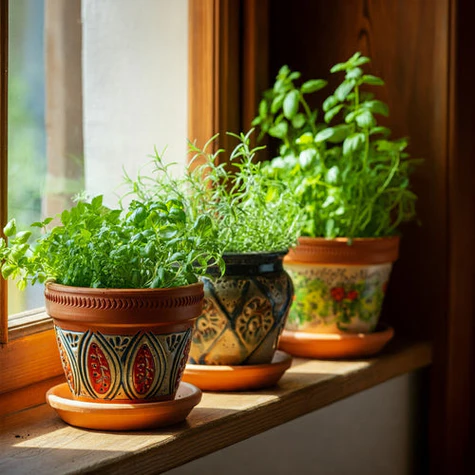
Creating a windowsill herb garden offers multiple advantages:
Freshness at Your Fingertips
Herbs like basil, coriander, mint, and thyme are always available for cooking without last-minute market runs.
Saves Money
Buying herbs regularly can be costly. Growing your own cuts expenses significantly.
Space-Friendly
A windowsill requires no extra room, making it ideal for apartments and compact homes.
Organic and Chemical-Free
You control the growing medium and avoid pesticides and synthetic fertilizers.
Aesthetic and Fragrant
Greenery enhances indoor air quality and adds charm to your living space.
Sustainable Living
Growing herbs supports eco-conscious, zero-waste practices.
Choosing the Right Windowsill
Not every windowsill is ideal for herbs. Here’s what to look for:
Sunlight
Most herbs need 4–6 hours of sunlight daily. East- and south-facing windows are best.
Ventilation
Fresh air prevents mold and pests, but avoid placing plants in direct wind or near extremely cold drafts.
Temperature
Keep the temperature between 18–25°C (65–77°F). Avoid very cold or hot spots.
Space
Ensure there’s enough space to place multiple pots side by side or stacked vertically.
Best Herbs to Grow on a Windowsill
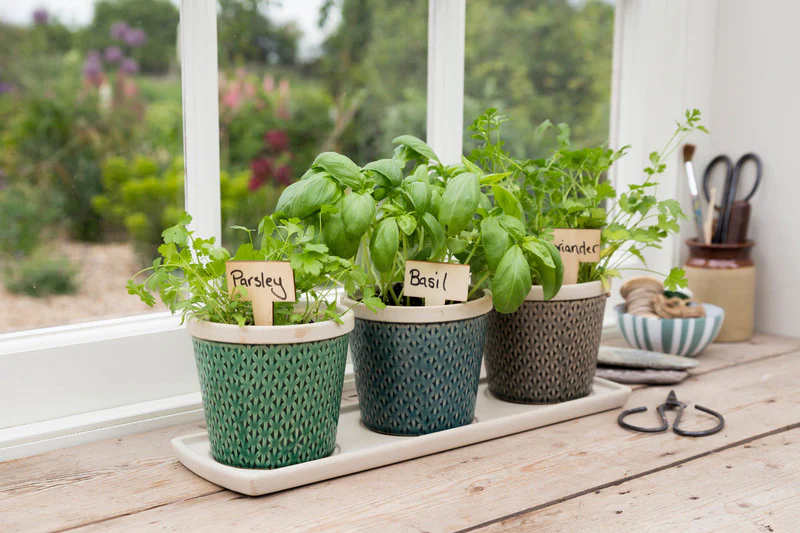
Below are easy-to-grow, low-maintenance herbs perfect for indoor conditions:
1. Basil
- Light: Needs plenty of sunlight.
- Water: Keep soil slightly moist.
- Use: Sauces, salads, teas, and garnishing.
2. Mint
- Light: Tolerates moderate sunlight.
- Water: Prefers consistently moist soil.
- Use: Beverages, chutneys, and desserts.
3. Coriander (Cilantro)
- Light: 4–5 hours daily.
- Water: Light watering every other day.
- Use: Curries, soups, and toppings.
4. Parsley
- Light: Moderate to bright indirect light.
- Water: Don’t let soil dry completely.
- Use: Salads, dips, and garnishes.
5. Thyme
- Light: Full to partial sunlight.
- Water: Let the topsoil dry between sessions.
- Use: Soups, baked dishes, and seasoning.
6. Oregano
- Light: 5–6 hours of sunlight.
- Water: Minimal watering needed.
- Use: Italian cooking, sauces, and marinades.
7. Chives
- Light: Bright light preferred.
- Water: Moist but not soggy soil.
- Use: Salads, stir-fries, and dips.
8. Rosemary
- Light: Needs bright light.
- Water: Water sparingly.
- Use: Soups, roasted vegetables, and bread.
Containers and Pots
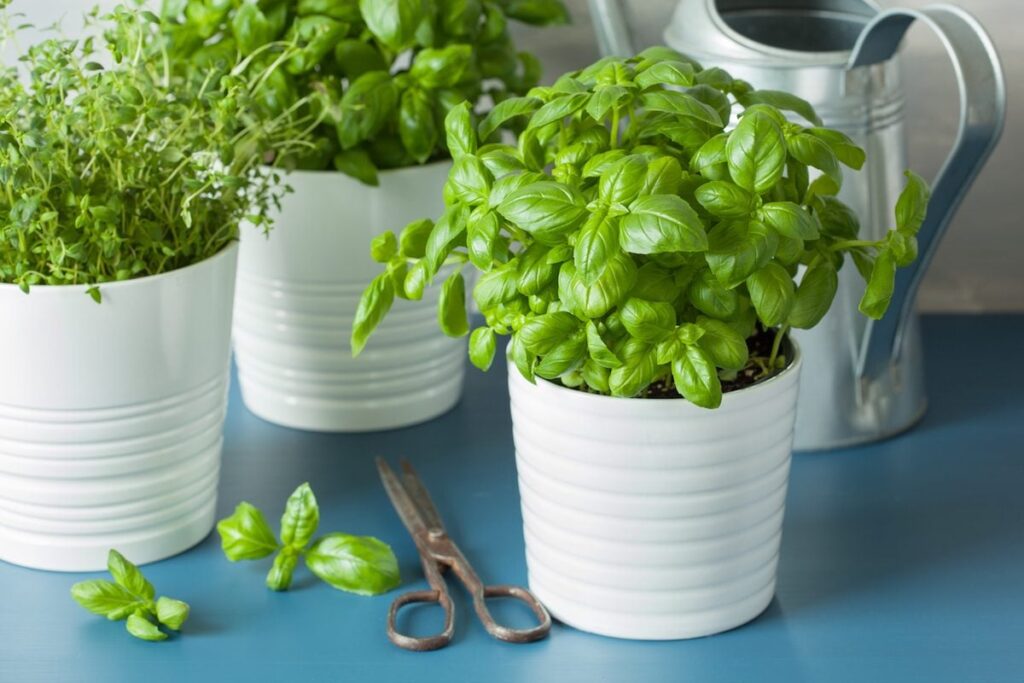
Selecting suitable containers helps herbs grow effectively:
Best Options:
- Ceramic pots
- Terracotta planters
- Recycled jars or cans
- Wooden boxes
- Self-watering containers
Drainage Is Essential:
- Every pot must have drainage holes.
- Place trays underneath to catch excess water.
Size Tip:
- For most herbs, use 4–6 inch pots.
- Deep-rooted herbs like rosemary may need bigger pots.
Soil and Growing Medium
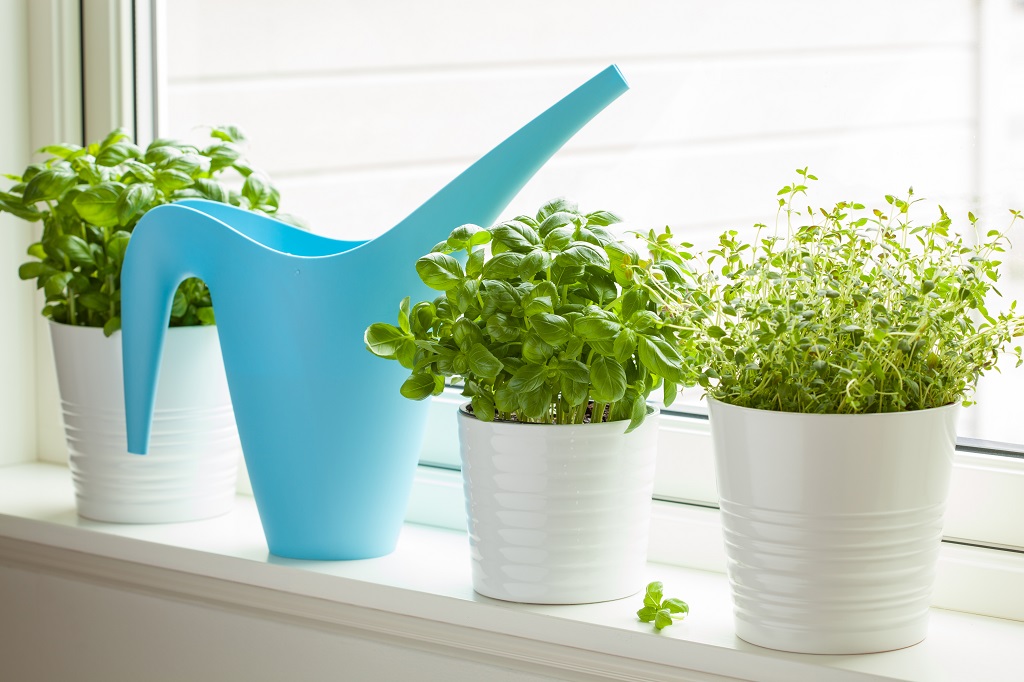
Herbs need light, airy soil that drains well.
Ideal Soil Mix:
- 40% compost
- 30% cocopeat or potting mix
- 20% sand or perlite
- 10% organic manure or vermicompost
Avoid heavy garden soil as it retains water and may harbor pests.
Sowing Seeds or Using Cuttings
You can start herbs in two main ways:
Option 1: Growing from Seeds
- Sow seeds 0.5–1 cm deep.
- Mist lightly with water.
- Use a transparent cover to retain moisture during germination.
- Most seeds sprout in 7–14 days.
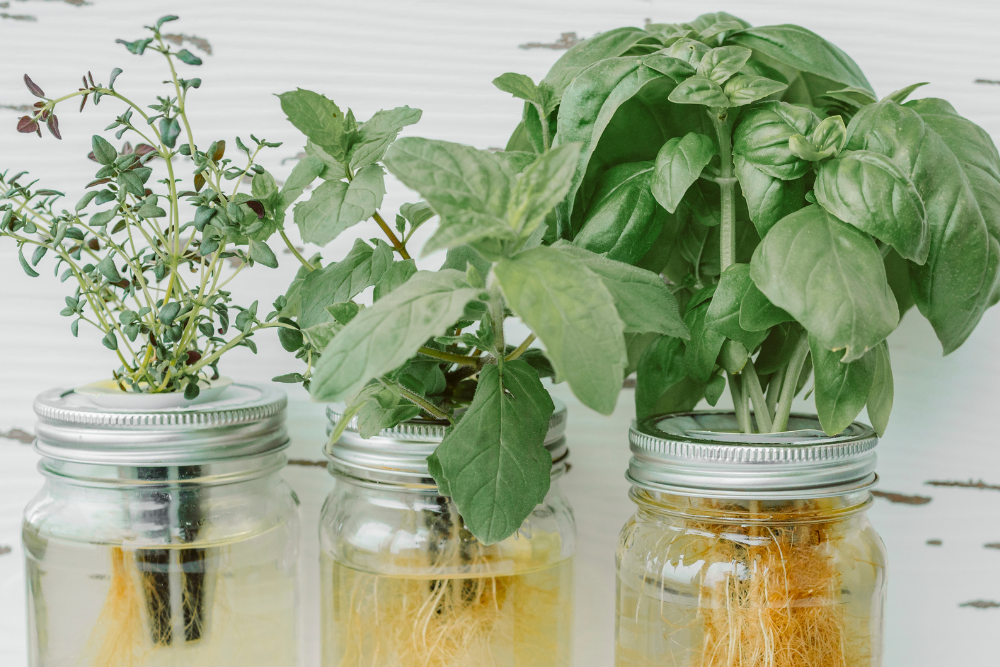
Option 2: Growing from Cuttings
- Basil, mint, rosemary, and oregano grow well from stems.
- Place cuttings in a glass of water until roots appear.
- Transfer to soil-filled pots.
Watering Practices
Overwatering is the biggest mistake in herb care.
Watering Guidelines:
- Check soil moisture with your finger.
- Water gently at the base of the plant.
- Avoid wetting leaves too often.
- Use a spray bottle for seedlings.
Avoid:
- Waterlogging
- Letting pots sit in excess water
Fertilizing the Right Way
Herbs grown indoors need nutrition but only in moderation.
Best Organic Fertilizers:
- Vermicompost
- Banana peel powder
- Compost tea
- Diluted seaweed extract
- Cow dung compost (vegetarian usage)
Apply fertilizer lightly once every 3–4 weeks.
Managing Pests and Diseases
Even indoors, herbs can attract pests.
Common Issues:
- Aphids
- Whiteflies
- Fungal growth
Natural Remedies:
- Neem oil spray
- Garlic-chili spray
- Soap water solution
- Removing damaged leaves early
Keep plants dust-free and ensure airflow.
Pruning and Harvesting
Proper cutting encourages bushy growth.
Harvesting Tips:
- Use clean scissors.
- Cut only the top 1/3 of the plant at a time.
- Avoid pulling stems by hand.
- Start harvesting once plants grow 4–6 inches tall.
Regular harvesting stimulates fresh leaf growth and prevents flowering.
Creative Setup Ideas
Make your windowsill herb garden visually pleasing and efficient.
Ideas:
- Use a wooden tray with multiple pots.
- Upcycle old mugs, cups, or tins.
- Create vertical stands or hanging shelves.
- Label each pot with chalk tags or wooden sticks.
- Mix herbs with air-purifying indoor plants.
Maintaining Your Herb Garden
Quick Maintenance Checklist:
- Turn pots every few days for even light.
- Clean leaves often.
- Trim dead stems and yellow leaves.
- Monitor for pests regularly.
- Replace topsoil every 3–4 months.
With minimal upkeep, herbs can thrive year-round indoors.
Conclusion
Growing herbs on your windowsill is one of the simplest and most rewarding forms of gardening. With minimal space, affordable materials, and basic care, you can harvest fresh, aromatic, and chemical-free herbs anytime you need them.
From basil and mint to parsley and thyme, these plants enhance both your kitchen and your well-being. A windowsill herb garden promotes sustainable living, reduces waste, and inspires healthier cooking—all while adding beauty and greenery to your home.
With the right setup, even a small window can become a thriving, year-round herbal paradise.